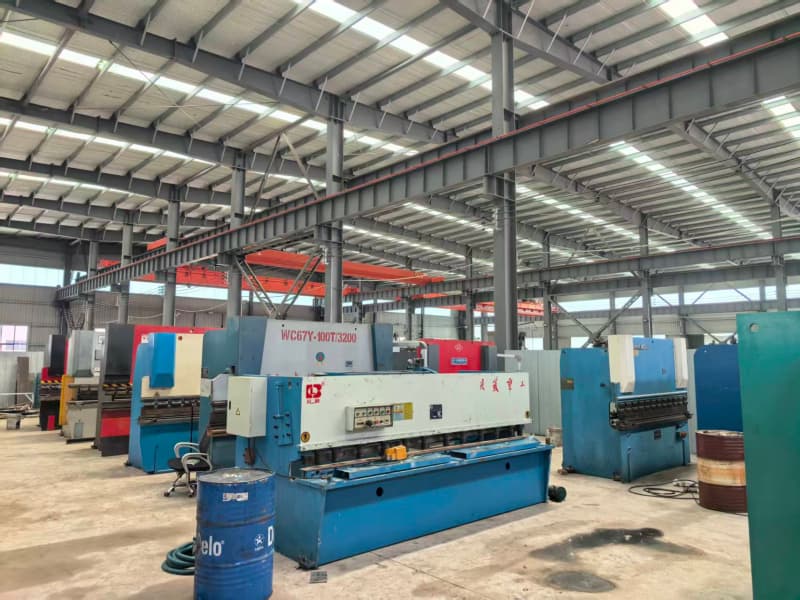



A used shearing machine that looked perfect in photos can arrive at your port with a worn blade, a leaking hold-down cylinder, or a warped ram. That mistake costs you weeks of downtime and a repair bill nobody budgeted for. Here is the exact inspection routine we run before every export shipment.
Inspect a used shearing machine before shipment by checking blade condition and clearance, running a loaded test cut, verifying hold-down force and back gauge accuracy, testing hydraulics under pressure, and confirming export packing with fixing bolts and anti-rust protection. Skip any one of these and the risk moves to you.
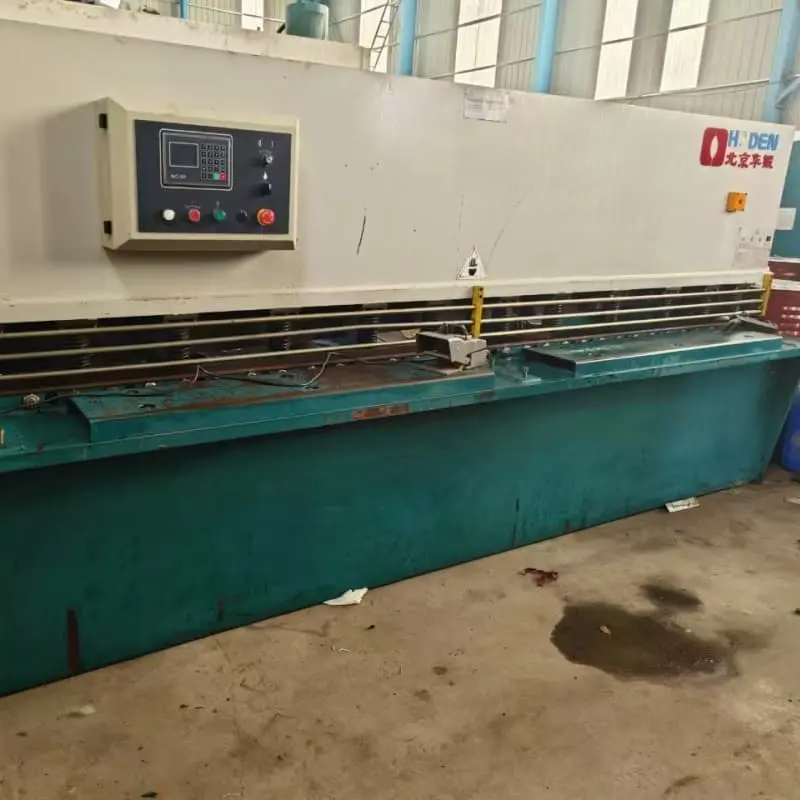
I run a used machinery warehouse in Liaocheng, Shandong, and we ship shearing machines to Vietnam, Saudi Arabia, Mexico, and the Philippines every month. Over the years I have learned that the inspection a buyer never sees is the one that decides whether the machine works on arrival. So in this article I will walk you through the same checks our team performs on the shop floor, the numbers we accept or reject against, and what you should demand from any supplier before the container doors close. Some of this you can verify remotely through video. Some of it you should delegate to a third-party inspector. All of it is learnable.
Which Checks Matter Most Before a Used Shearing Machine Leaves the Warehouse?
A machine can look clean and still cut crooked. The frame, the blades, and the hold-downs decide everything, and each one hides its problems in a different place. Here is where I look first, and why.
The three checks that matter most before shipment are blade condition and clearance, hold-down force, and ram-to-bed parallelism. Blades with worn edges produce burrs, weak hold-downs let the sheet creep, and a non-parallel ram twists every cut. All three are testable in under an hour with simple tools.
Start With the Blade, Because the Blade Tells the Story
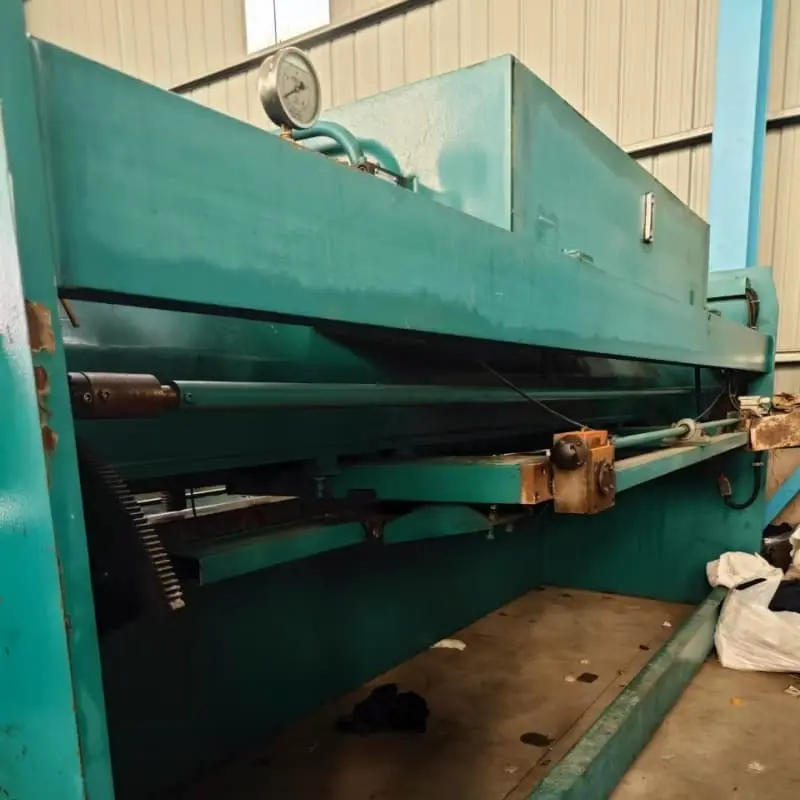
The blade is the cheapest part to fix and the most expensive to ignore. Most shearing blades have four cutting edges, so a blade can be rotated to a fresh edge before anyone needs a professional regrind. When I walk up to a machine, I first ask how many times the blades have been rotated and whether they were ever resharpened. A serious seller knows the answer. A reseller who never ran the machine does not.
Next I look at the cut edge on scrap left near the machine. A healthy sheared edge shows four zones: rollover, shear zone, fracture zone, and a small burr. If the burr is bright, stretched, and taller than about twenty percent of the shear zone, the clearance is too wide or the blades are dull. That single piece of scrap tells me more than an hour of conversation. Then I measure the actual gap. With the ram jogged down to bottom dead center, I slide a feeler gauge between the blades at three points: left, center, and right. If the readings differ by more than 0.1 mm, the blade beam is likely warped or out of parallel, and that is a structural problem, not a maintenance problem. I walk away from those machines for export orders, because a buyer two oceans away cannot shim a blade beam by video call.
For carbon steel, the clearance we accept matches this table. For stainless steel, add roughly ten percent.
| Material Thickness (mm) | Acceptable Blade Clearance (mm) |
|---|---|
| 1 – 3 | 0.1 – 0.2 |
| 3 – 6 | 0.2 – 0.4 |
| 6 – 10 | 0.4 – 0.6 |
| 10 – 16 | 0.6 – 1.0 |
One personal rule I follow: on a machine I plan to sell abroad, I leave the clearance slightly loose, about 0.2 mm extra on fresh or newly sharpened blades. A gap that is perfectly tight cuts beautifully for a week and then micro-chips the fresh edge. A short run-in period protects the blade through the weeks of transit and commissioning that follow.
The Chalk Test Reveals What the Eye Cannot See
Weak hold-downs are the sneakiest defect on a used shear. The sheet shifts microscopically the instant the blade touches it, and the cut comes out slanted or wavy for no obvious reason. We make this visible with chalk. I coat the clamping strip of a scrap sheet with white chalk, cycle the hold-downs without cutting, then lift them and read the marks.
Even, clear chalk impressions mean the hold-downs grip correctly. Trailing smears along the cutting direction mean the hold-downs engage too late, usually a PLC timing delay or a slow valve. Blank patches mean a hold-down cylinder seal is leaking, and that section of the sheet will creep. On a 4-meter shear, one dead cylinder out of fifteen is enough to ruin a full-length cut. I count every hold-down on the machines we ship, and I ask the video operator to cycle them one by one when a buyer watches remotely. On one QC12Y machine we inspected this year, the middle cylinders left weak chalk marks and the seals were replaced before the machine was listed. That repair cost us very little. Shipping that fault to a customer would have cost us the account.
Frame, Bed, and Ram Come Before Any Cosmetic Claim
Before anything moves, I check the machine sits level and its foundation bolts are tight. A shear that ran for years on an unlevel floor can carry a twist in its own frame. I check the bed surface for scoring, the weld joints for hairline cracks, and the ram guide clearance by hand. Then I put a precision square against the squaring arm and a dial indicator along the back gauge bar. The back gauge must sit parallel to the bottom blade, and the squaring arm must be square to the cut line. If either is off, every part the customer cuts will be tapered or out of square, and no blade adjustment will fix it.
How Do You Run a Test Cut That Actually Proves the Machine Works?
An empty cycle proves nothing. Any machine can stroke smoothly without material in it. The real test is a loaded cut on thickness close to what you will run in production, and the way you read the results matters more than the test itself.
A valid pre-shipment test cuts mild steel at seventy to one hundred percent of rated thickness, then reads the edge profile, measures burr height, checks bowing and twist, and watches hydraulic pressure and oil temperature through the whole stroke. A machine that passes all five has proven its hydraulics, blades, and geometry at once.

Read the Edge Like an Inspector, Not Like a Visitor
When the test cut is done, do not just admire the shiny edge. Read it. A proper sheared edge tells you exactly how the machine is set up. Large burrs above 0.2 mm with bright drawn streaks point to excessive clearance or dull blades. A strip that bows upward in the middle means hold-down force was too low and clearance too wide, so the sheet lifted and drifted during the cut. A strip that twists like a propeller is worse news: it points to poor blade-beam parallelism or an excessive rake angle, and that is geometry, not tooling.
I also listen. A loud bang at the end of the stroke can be normal fracture shock, but an unusually hard bang suggests the nitrogen return cylinders are low on pressure or the blade gap is tight enough for the edges to clash. Slow ram return is another quiet giveaway of low nitrogen pressure. None of these faults stop the machine from working on the seller’s floor, which is precisely why the seller never mentions them. You have to ask.
Watch the Hydraulics Under Real Load
The hydraulic system is the heart of any hydraulic shear, and it hides its age better than any other part. During the test cut I watch three things. First, pressure: the gauge should reach the rated pressure smoothly and hold it through the cut. Second, leaks: I check hoses, cylinder rods, and seals with a flashlight and a white rag while the system is pressurized, not before. Third, temperature and oil condition: I pull the filler cap and look at the oil, and I check that the machine runs ISO VG 46 or 68 anti-wear oil as most manuals specify. Milky oil means water contamination. Glittering oil means pump wear. Either one is a reason to renegotiate or walk.
Pump noise counts too. A healthy pump runs quietly and the machine holds accuracy from the first cut in the morning to the last in the afternoon. If cutting accuracy drifts as the oil warms up, the oil cooler is missing, failed, or undersized, and a buyer in a hot climate like the Gulf will feel that problem within one summer.
Check the Electricals and the Safety Chain
I power up the control panel, run the back gauge through repeated moves in both directions, and compare the commanded position with the physical stop. I test the foot pedal, the emergency stop, and any light curtain or finger guard the machine carries. On older machines, a missing safety retrofit is normal, but a buyer in the EU or under OSHA-style rules will need one fitted, and it is cheaper to know that before the machine ships than after it lands. I also confirm the motor voltage matches the buyer’s local supply, because 400V 50Hz machines bound for a 220V 60Hz country need a transformer or a motor change arranged before shipment, not after.
What Packing and Documentation Steps Protect the Machine at Sea?
Passing the tests on our floor is only half the job. The other half is making sure the same machine emerges from a container in Dammam or Ho Chi Minh City in the same condition it left. Packing and paperwork are part of the inspection, whether suppliers admit it or not.
Protect a shearing machine at sea by bolting it to a wooden case base or steel skid, draining or sealing hydraulic lines as needed, applying anti-rust oil to blades and machined surfaces, fixing loose parts, and providing photos, a test report, and third-party inspection support before the container is sealed.
Packing Details That Decide the Arrival Condition
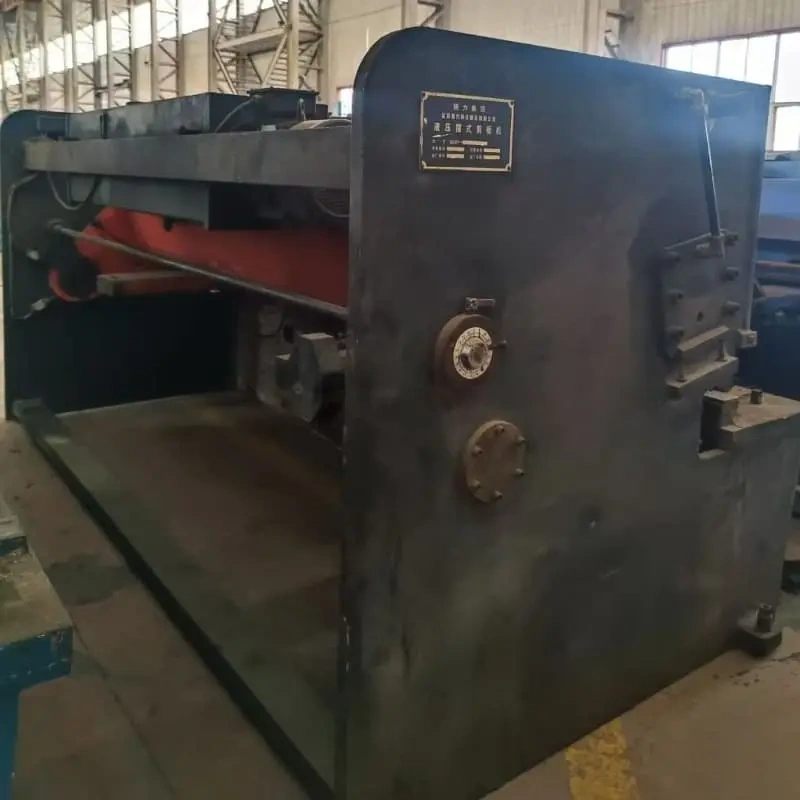
A shear is a heavy, top-heavy machine with a long overhanging ram. Inside a container it must be bolted down, not just strapped. We fix the machine to a steel skid or heavy timber base, anchor the ram in the down position, disconnect and coil remote cables, and bag small parts like wrenches and feeler gauges inside the cab or electrical cabinet. Blades and all bright machined surfaces get a coat of anti-rust grease and film. The hold-down cylinders get their rods greased too, because a pitted rod will chew a seal within weeks of restart in a humid port climate.
One habit I picked up after a customer complained about minor transit damage: I photograph the machine from all four corners after packing, with the container number visible in one frame. That photo set settles any dispute about what left our yard and in what condition. Our Saudi customer, Gulf Industrial Equipment LLC, told us this was the first time a used machinery supplier offered that level of packing evidence, and it is now standard on every export order we ship.
Paperwork: What the Buyer Should Demand Before the Container Closes
Before the doors are sealed, every export buyer should hold four things. A machine test report with the cut samples measured and photographed. A video of the loaded test cut, filmed close enough to read the pressure gauge. A packing list matching every loose item. And the option of third-party inspection, SGS or equivalent, arranged at our yard before payment balance. We support all four as standard, and I would be suspicious of any supplier who resists them. If a seller cannot show you a loaded cut on video, you are not buying a machine, you are buying a story.
The choice of machine type also changes what the inspector should focus on, so here is how the two common designs compare for export buyers.
| Aspect | Swing Beam Shear | Hydraulic Guillotine Shear |
|---|---|---|
| Blade motion | Arc swing on roller bearings | Straight linear ram |
| Blade gap adjustment | Fast, often simple manual setting | Precise, sometimes motorized |
| Cut quality on thin sheet | Clean, distortion-free vertical cut | Very good, configurable rake angle |
| Blade life | Longer, less friction against material | Standard four-edge rotation |
| Typical inspection focus | Beam bearing wear, swing arc smoothness | Ram guide clearance, beam parallelism |
| Common price range for used units | Roughly USD 3,500 – 9,000 | Roughly USD 5,000 – 20,000 depending on size |
| Best fit | Light to medium sheet, high stroke rates | Heavy plate, tight tolerance work |
The price ranges above are market observations from current listings, not quotes. Size, controller, and blade condition move the numbers a lot. A used 4×2500 swing beam machine in fair condition trades near the low end, while a 12mm x 3200 CNC guillotine with a Estun or Cybelec controller sits near the top.
One last thing I tell every overseas buyer: schedule the pre-shipment inspection for the same week as container loading, not before. Machines sit. Seals settle. A test report from three months ago describes a different machine than the one that enters the container. When the inspection and the loading happen together, the report describes the machine that actually sails, and that is the only report worth the paper it is printed on.
Conclusion
Check blades, hold-downs, geometry, hydraulics, and packing in that order, and demand video plus third-party inspection. A used shearing machine inspected this way arrives ready to cut.