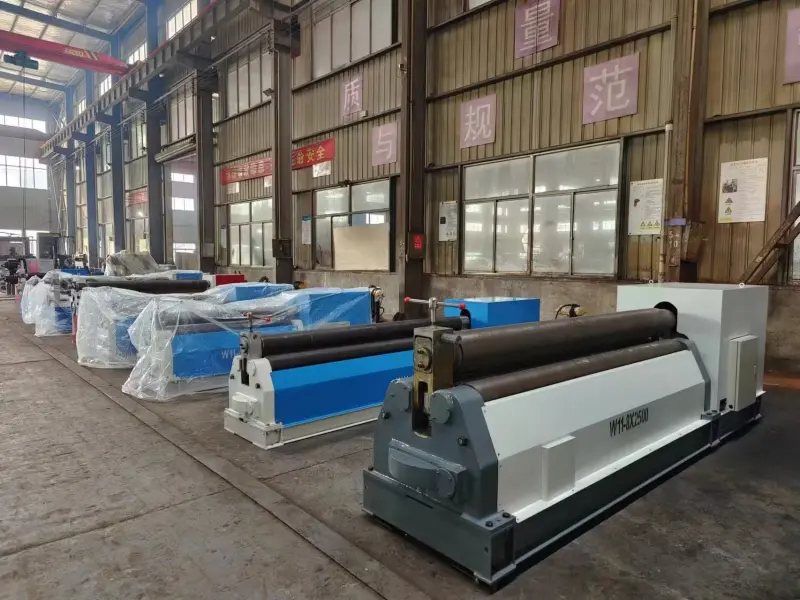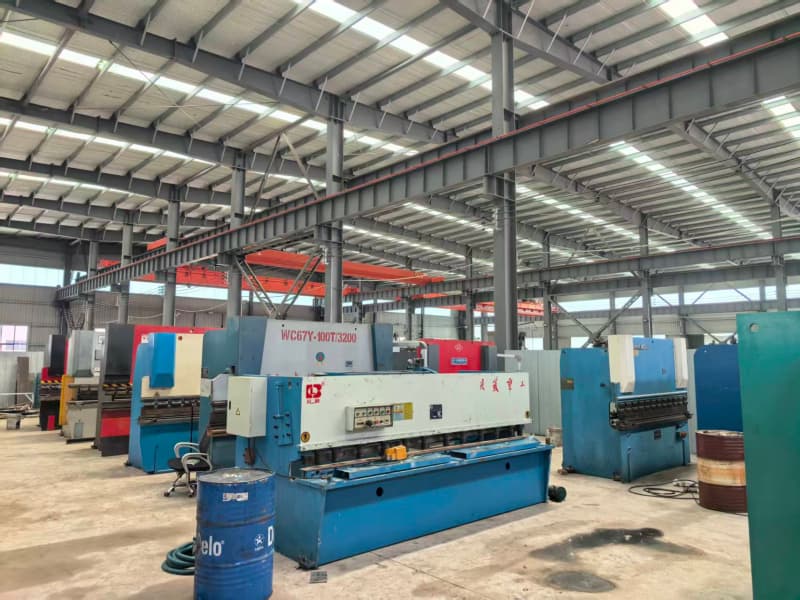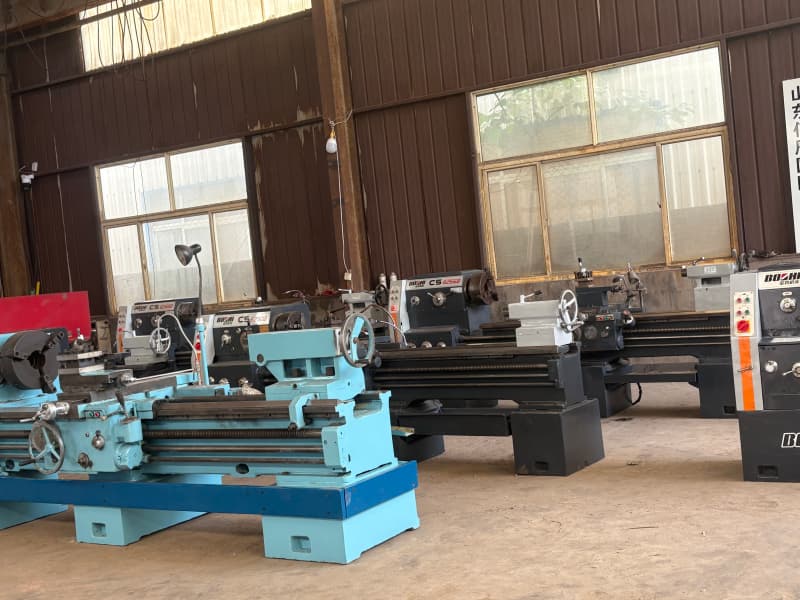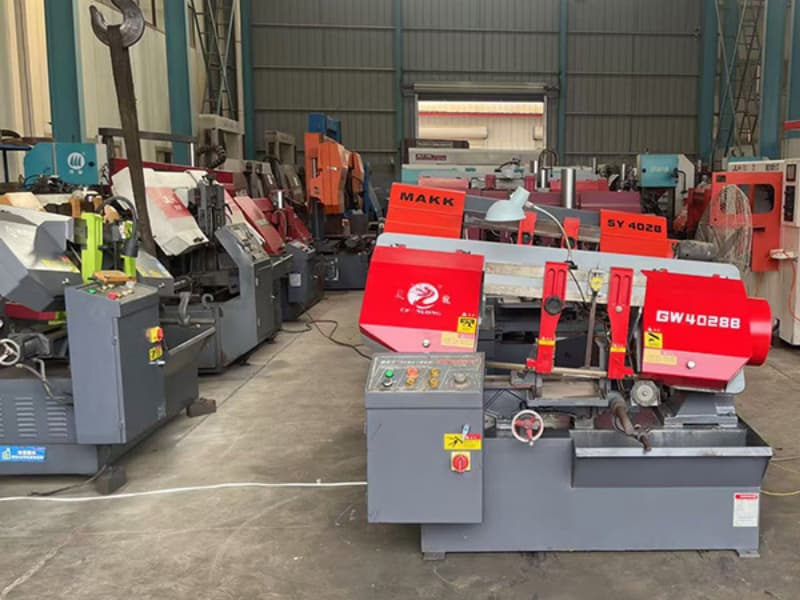


Buying the wrong used milling machine drains a small workshop’s cash. A worn spindle or bent leadscrew means downtime, repair bills, and missed orders. Here is how we screen ours.
A used milling machine suits a small workshop when its table size and axis travel match your largest part, spindle runout measures under 0.001 inch, backlash stays within about 0.002 inch, and the seller proves condition with a power-on video, a test cut, and an inspection report.
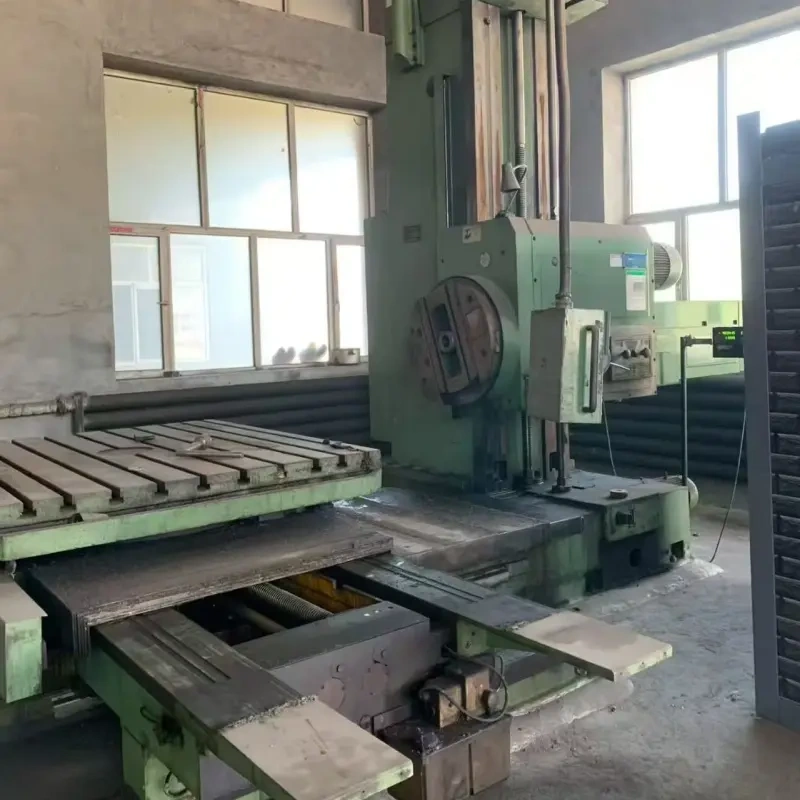
I have sold used machine tools out of Liaocheng for years, and milling machines cause more buyer hesitation than lathes do. The reason is simple. A lathe wears on the outside where you can see it. A milling machine hides its wear inside the spindle bearings, the leadscrew nuts, and the knee ways. Two machines can look identical in photos and behave completely differently under a cutting load. So in this guide I want to walk through the exact checks our team runs before a milling machine gets a shipping date, and the questions I would ask if I were the one buying for a small shop overseas.
What Size Used Milling Machine Does a Small Workshop Actually Need?
Most small workshops overbuy size and underbuy rigidity. That combination wastes floor space, inflates power bills, and still leaves you fighting chatter on steel.
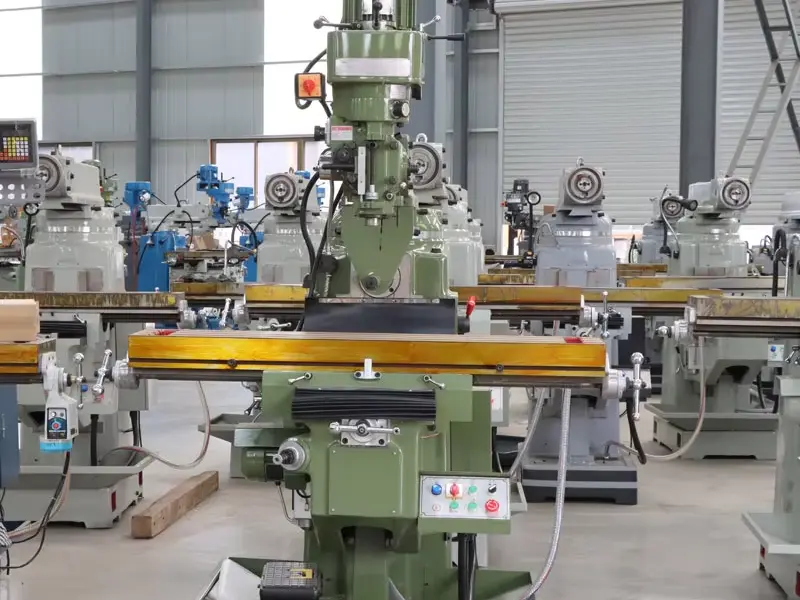
Match the machine to your largest regular part, not your dream part. For most small shops a vertical knee mill with a 9 x 49 or 10 x 50 inch table, 30 to 40 inches of X travel, and a 2 to 3 HP spindle covers brackets, housings, fixtures, and repair work with room to grow.
Vertical Knee Mills: The Default for Small Shops
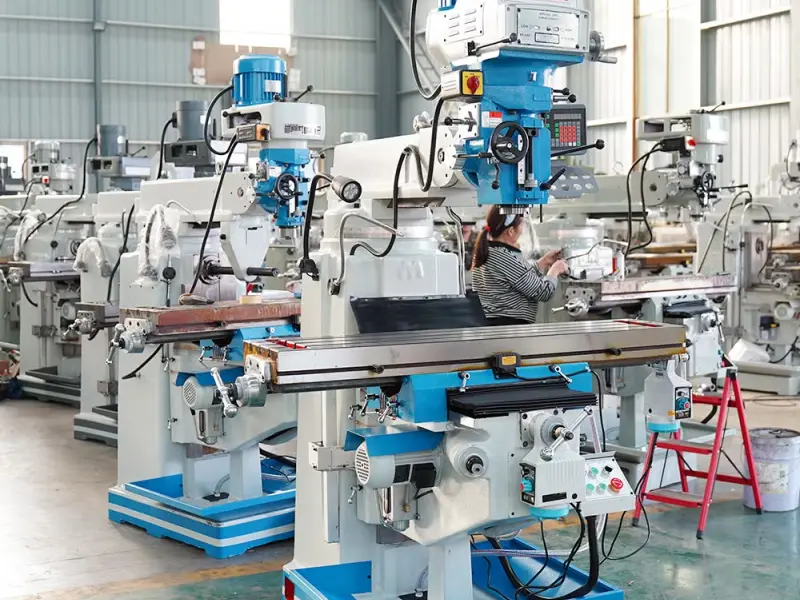
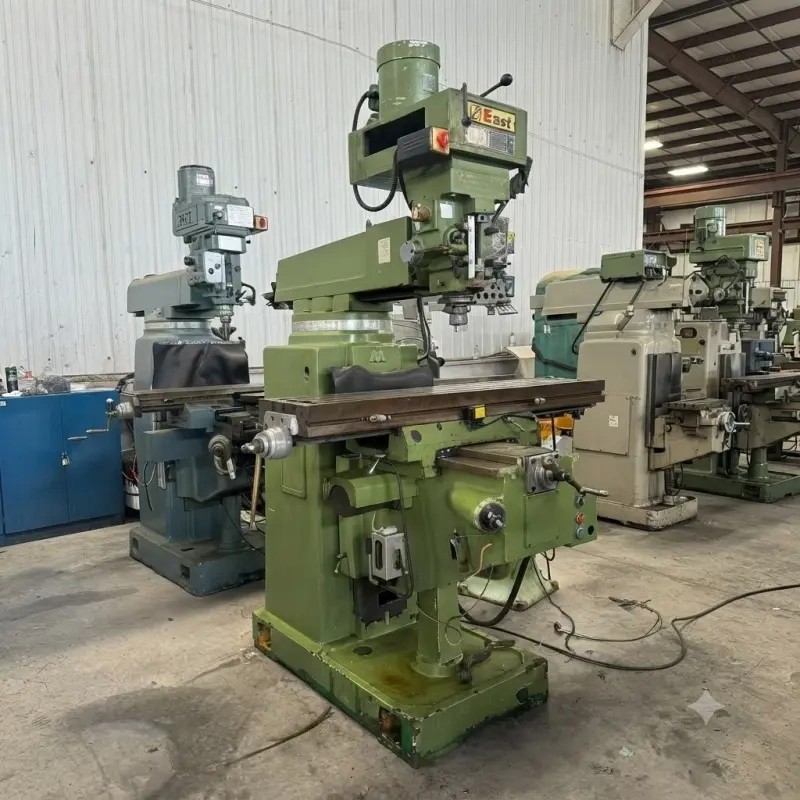
When a workshop owner tells me they machine “a bit of everything,” I almost always steer them to a vertical knee mill. The knee-and-column design gives you a big Z envelope for tall work, the spindle head tilts for angled work, and tooling is cheap and everywhere. Most classic knee mills run an R8 spindle taper, which means collets, shell mill holders, and end mill holders cost a fraction of what ISO 40 tooling costs.
The numbers that matter on a knee mill are boring but decisive. Table size controls the biggest part you can clamp. A 9 x 42 or 9 x 49 inch table is the classic small-shop layout. X-axis travel on a common knee mill runs about 30 to 40 inches, Y about 12 to 16 inches. If your parts are bigger than the table, you can reposition, but every reposition adds setup time and tolerance stacking, and on a small machine that wear shows up fast.
Weight matters too. A heavy cast-iron machine damps vibration. Two mills with identical spec sheets can finish completely differently if one weighs 1,000 kg and the other weighs 2,200 kg. On a used machine, that mass is an asset you cannot retrofit later.
Universal and Horizontal Mills: When Versatility Pays
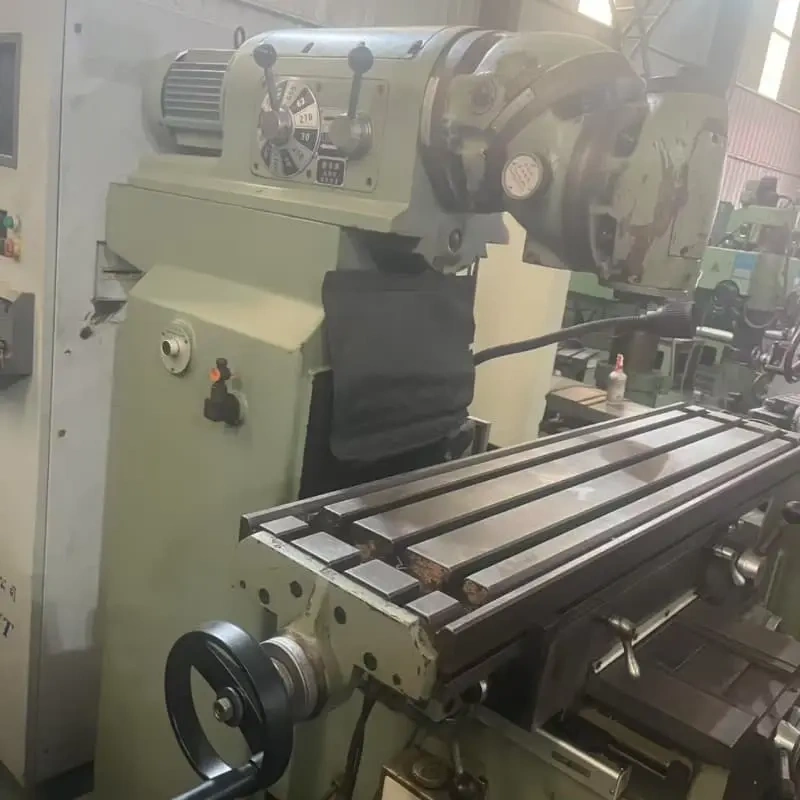
If your shop cuts keyways, gears, splines, or long slots, look hard at a universal milling machine. The swiveling table handles helical work, and many universal machines carry both a vertical head and a horizontal spindle. In our warehouse the universal rotating-head machines move fastest to repair shops and maintenance departments, because one machine covers work that would otherwise need two.
Horizontal mills earn their floor space when material removal is the job. Arbor-mounted slab cutters chew through steel far faster than a vertical end mill of the same power. But they are awkward for drilling and small precision work, and tooling costs run higher. On the European used market, prices give you a rough anchor: universal mills typically list between about €6,000 and €18,000 depending on size and condition, while fixed-bed machines sit higher and CNC mills higher still. These are listing prices, not our quotes, and our own export pricing is different, but the relative order holds everywhere.
| Machine type | Best for | Typical used price band (EU listings) | Watch out for |
|---|---|---|---|
| Vertical knee mill | General small-shop work, fixtures, repair | $3,000–$10,000 | Knee and way wear, quill play |
| Universal mill | Keyways, gears, helical and mixed work | €6,000–€18,000 | More complex head, more maintenance |
| Horizontal mill | Heavy stock removal, slotting, batch work | €7,000–€15,000 | Tooling cost, limited drilling |
| Bed-type mill | Large, heavy parts | €8,000–€25,000 | Footprint, power demand |
| Used CNC mill | Repeated batches, complex profiles | €15,000–€60,000 | Control obsolescence, spindle hours |
One more thing on sizing: check your building before you check the machine. I have seen buyers in [Zora will replace] order a 2.5-ton bed mill and then discover their workshop slab and door opening were never going to accept it. Measure the door, the ceiling, and ask your power supplier about the supply. A mismatch in infrastructure turns a bargain into a storage problem.
How Do You Inspect a Used Milling Machine Before You Pay?
Photos hide everything that matters. Spindle play, backlash, and dry ways are invisible until the machine is on your floor and your parts are out of tolerance.
Run the spindle through every speed, measure runout at the spindle nose with a dial indicator, push-pull each axis to check backlash, test the quill and power feeds, and finish with a test cut in mild steel. Anything that rumbles, lags, or chatters becomes your negotiation or your walk-away.
Spindle and Bearings: The Most Expensive Things to Get Wrong
The spindle is the heart of the machine and the most expensive component to rebuild, so I always start there. Mount a dial indicator on the spindle nose and measure radial runout. On a healthy used mill you want to see under 0.001 inch, and the best machines we measure come in near 0.0005 inch. Anything around 0.002 inch or worse means the bearings are tired, and a spindle bearing rebuild on this class of machine typically runs a few hundred dollars in labor plus parts — real money against a low purchase price.
Sound tells you almost as much as the indicator. Run the spindle from low gear to top speed with no cutter mounted. A healthy spindle is nearly silent, with just a light gear whine in backgear. Growling, clicking, or a rhythmic thump points at brinelled bearings or worn backgear. Here is a trick I use on our own floor: mount a piece of bar stock in the spindle and run it slow, around 60 to 100 RPM. Worn bearings that hide at speed will knock audibly at low RPM under that imbalance.
Then grab the quill, not the spindle nose, and try to rock it. Any detectable end float means the upper bearing preload has relaxed. On the taper, look at the collet slot: a sharp R8 slot grips well, a rounded polished one means the machine has been run hard with worn collets.
Backlash, Ways, and Gibs
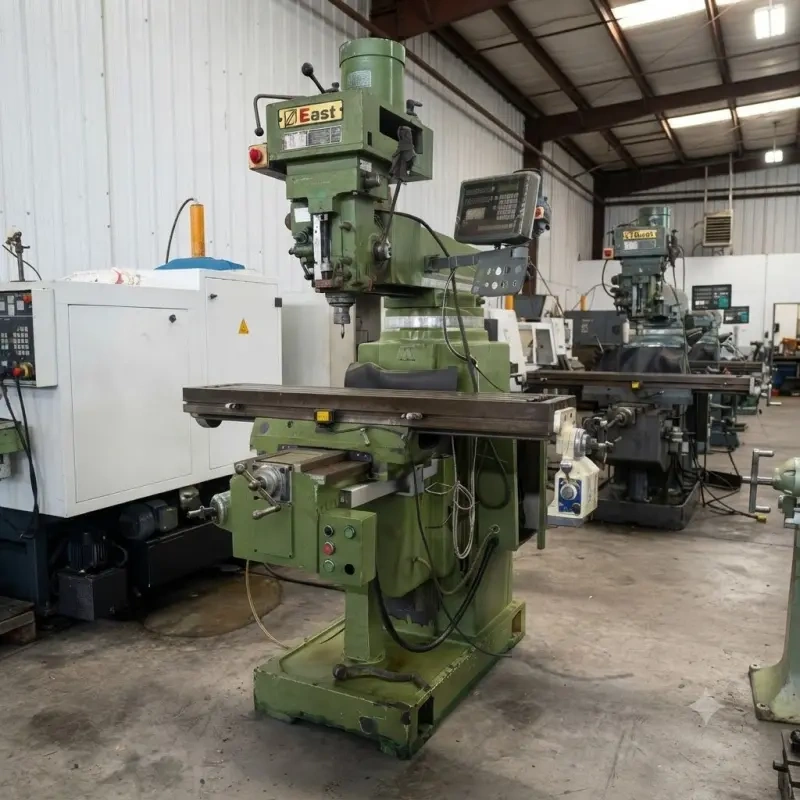
Backlash is the free play between the handwheel and the actual table movement. Every used machine has some. The question is how much. Set a dial indicator against the table, jog or wind the axis forward, then reverse, and read the lag. Under about 0.001 to 0.002 inch is excellent. Past 0.003 inch you are budgeting for new leadscrew nuts. And if the whole table shifts more than 0.010 inch under hand pressure, I walk away unless the price reflects a rebuild.
Wear the ways evenly? That is the other check. Wind each axis through full travel and feel for tight spots and stick-slip. A tight spot mid-travel means the ways have worn unevenly, usually because the machine spent years working one narrow zone. Lift the way wipers and look for scoring. Dry, rusty ways suggest a dead or missing lubrication system, and dry ways wear fast. Open the lubrication panel, check the oil level, and click a metering valve — if lubricant does not move, the internal passages may be blocked.
Do not skip the electrical cabinet. Burnt contactors, overheated wire insulation, and missing strain reliefs are cheap to see and expensive to ignore. Hit the emergency stop while the spindle runs: on a sound machine it should cut power in under half a second. Check the DRO scales if fitted, and run any power feed through its full range.
The Test Cut That Decides the Deal
I never let a machine ship to a customer before someone cuts metal on it, and I would never buy one without seeing the same. A test cut in mild steel or aluminum with a decent end mill tells you more than an hour of idle running. Listen for chatter and look at the finish. A well-tuned mill leaves a smooth, almost shimmering surface. Chatter marks point at loose gibs, tired spindle bearings, or a head that is not trammed.
Tram matters more than buyers expect. Sweep a dial indicator on the spindle nose across the table; the head should read within about 0.001 inch over 12 inches. An out-of-tram head can make a mechanically sound machine cut out of square, and buyers blame the machine when the real fault is setup. When we prepare a machine for export we tram the head, adjust the gibs, and record the readings on our inspection sheet. One customer told me our test videos were the first time a supplier had ever shown him the spindle actually turning before payment — that is exactly the standard I would demand as a buyer.
| Check | Pass | Fail / walk-away |
|---|---|---|
| Spindle runout at nose | Under 0.001 in | 0.002 in or worse |
| Radial spindle play (by hand) | Not detectable | Any detectable play |
| Backlash per axis | 0.001–0.002 in | Over 0.003 in |
| Table shift under hand pressure | Under 0.005 in | Over 0.010 in |
| Spindle noise at all speeds | Light gear whine only | Rumble, knock, click |
| Quill depth stop | Within 0.005 in of target | Overshoots or drifts |
| Emergency stop | Cuts power in under 0.5 s | Slow or no cut-out |
| Lubrication system | Oils all points when cycled | Dry lines, blocked passages |
| Test cut finish | Smooth, no chatter | Chatter marks, torn surface |
Which Specs and Extras Deliver the Best Value for Small Workshops?
Small workshops waste money twice: once on options they will never use, and once on missing the cheap upgrades that make an old machine cut like a new one.
Spend on condition first, then on a DRO and good tooling. A tight knee mill with a two-axis digital readout and quality collets will hold 0.001 inch all day, while a tired machine with every option is still a tired machine.
The Spec Sheet Numbers That Matter
Spindle power and speed come first. For light work in aluminum or soft steel, 5 to 10 kW class machines are comfortable, and even a 2 to 3 HP knee mill handles most small-shop cuts. Heavy roughing in carbon steel or cast iron wants more, ideally with a gearbox that holds torque at low RPM. On speed, a range from roughly 60 to 4,500 RPM covers everything from big shell mills in steel to small carbide tools in aluminum. The relationship is mechanical: softer material wants more RPM, harder material wants torque. Aluminum cuts around 600 surface feet per minute, mild steel around 250, 4140 steel down near 80 — pick the machine whose speed range lets you hit those numbers with the tools you own.
Spindle taper decides your tooling budget before you spend a cent. R8 is the most common on used knee mills and the cheapest to tool up. ISO 40 appears on heavier heads and opens up a much bigger, more expensive tooling ecosystem. If the machine you are looking at wears an odd taper, price the conversion before you commit.
Then come the cheap wins. A digital readout with glass scales turns a manual mill into a repeatable production machine and removes most human drift. A power feed on the X axis saves shoulders on long passes. Quality collets and a solid vise matter more than a shiny paint job. I have watched a machinist bore thirty holes in hardened steel on an old knee mill with a DRO and hit tolerance on every one — the machine was older than he was, but the gibs were tight and the scales were honest. That combination costs a few hundred dollars and beats many mid-range CNC installs for simple repetitive work.
Hidden Costs and Supplier Due Diligence
The purchase price is never the whole price. Rigging, freight, unloading, installation, leveling, and any immediate maintenance all belong in the budget. Knee mills are sensitive to twist, so leveling matters: shim until the table reads flat in both directions, then re-adjust the gibs before the first cut. Budget for a spindle break-in too — a machine that has sat for months should run stepwise through its speed range to redistribute bearing grease before real work.
Cross-border buyers carry extra risk, and this is where supplier behavior separates the good deals from the expensive lessons. A buyer we work with in Saudi Arabia told us his previous machines arrived not matching their photos, with no test videos and no inspection support, and minor transport damage from weak packing. So now, before any order confirms, he receives real machine photos and running test videos, SGS or third-party inspection is welcome before shipment, and every machine travels in a wooden case with anti-rust protection. His feedback was blunt: it was the first supplier who showed him the machine actually running before payment. That is not a premium service; that is the baseline I would insist on for any used machine.
Ask any exporter these questions and watch how they answer: Can I see the spindle running at low and high speed? What do your runout and backlash readings say? May I send a third-party inspector? What exactly does your export packing include? A supplier with real stock answers in hours with evidence. A broker with someone else’s machine answers in days with excuses.
To put the whole decision side by side:
| Factor | Used mill from a stock supplier | Used mill bought locally / auction | New entry-level mill |
|---|---|---|---|
| Condition evidence | Test videos, runout and backlash readings, inspection welcome | Whatever you can check on one visit | Full warranty |
| Price | Roughly 40–70% below new | Low, but condition risk is on you | Highest |
| Lead time | Days — machine is on the floor now | Immediate if it suits | Weeks to months |
| Tooling | Often negotiable with the machine | Rarely included | Separate purchase |
| Spares and support | Export packing, documentation, remote support from supplier | None — as-is, where-is | Dealer network |
| Main risk | Mitigated by inspection and videos | Hidden wear, no recourse | Budget and lead time |
The right answer for most small workshops is a used machine from a supplier who proves condition, with your budget weighted toward the DRO, tooling, and correct installation. Buy the tightest machine you can inspect, not the biggest one you can afford, and let it earn its keep for the next twenty years.
Conclusion
Match the machine to your real parts, measure the spindle and backlash yourself, demand a test cut, and buy from a supplier who shows running videos before payment. Do those four things and a used mill will outearn its price for decades.