

A new plate rolling machine carries a price that pushes many small fabricators out of the market. A wrong used buy costs months of downtime instead. Here is how one Vietnamese buyer avoided both traps.
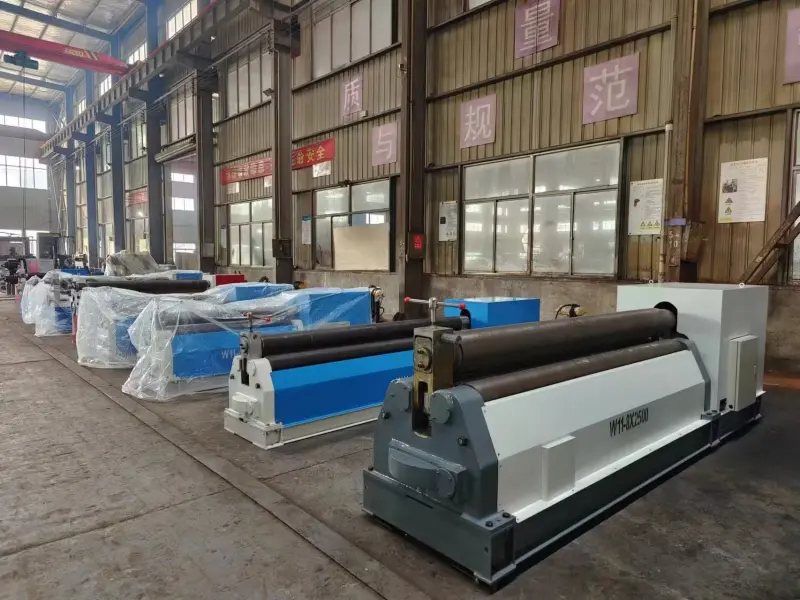
A used plate rolling machine exported to Vietnam for carbon steel processing was chosen after a two-day inspection in our Liaocheng warehouse: roll surface condition, a hydraulic holding test, and a live carbon steel test roll. The machine now rolls Q235 plate for tank shells.
I have sold used metalworking machinery to Vietnam, Saudi Arabia, and the Philippines for years, and plate rolling machines are among the hardest to judge from photos alone. The rolls, the hydraulics, and the frame all carry history you cannot see in a JPEG. So when a fabrication-shop owner from southern Vietnam contacted us about rolling carbon steel plate for storage tanks, I invited him to treat our warehouse as his inspection ground. The rest of this article walks through that visit: why he chose used over new, how we matched the machine type to his carbon steel work, and the exact checks we ran before the machine was packed for export. If you are planning a similar purchase, this is the same playbook I would hand you across the table.
Why Did a Vietnamese Fabricator Choose a Used Plate Rolling Machine Over a New One?
A new heavy-duty rolling machine can cost more than a small workshop earns in a year. The buyer needed rolling capacity now, for carbon steel work with thin margins. Used stock made that equation work.
The buyer chose a used plate rolling machine because a well-maintained used machine still rolls carbon steel to specification, costs far less than a comparable new one, and could be tested on real Q235 plate in our warehouse before any money changed hands.
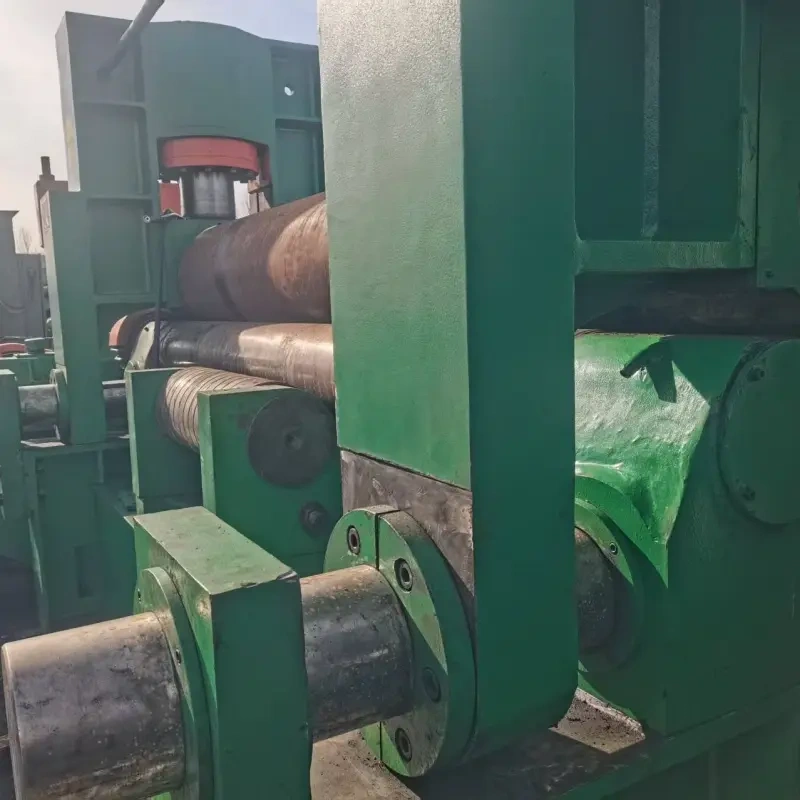
Carbon Steel Demand in Vietnam Right Now
Vietnam is one of the fastest-growing steel markets in Southeast Asia. Industry reports put the country’s total steel demand in the 22 to 23 million ton range for recent years, and fabrication demand grows alongside it. Most Vietnamese metallurgical enterprises run electric-arc-furnace routes, and high-end plate still depends on imports, so local fabricators work hard to add value downstream. Storage tanks, silos, pressure vessels for light service, ducting, and structural cylinders — all of these start with plate that has to be rolled. A fabricator who owns his own plate rolling machine captures margin that would otherwise go to a subcontractor.
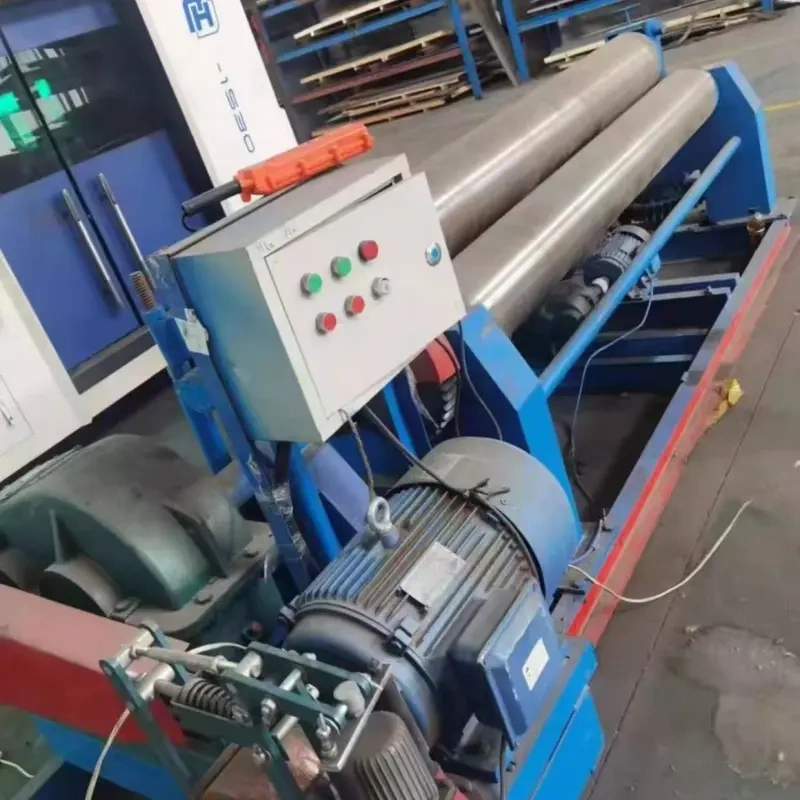
Our buyer works in exactly that space. His shop takes carbon steel plate — mostly Q235 and S235 grade — and rolls it into cylindrical shells for industrial storage tanks and ventilation ducting. Orders had been growing, and his old machine, a small mechanical three-roll unit, could no longer handle the plate widths his customers asked for. He evaluated new machines at two trade fairs and got quotes that made him step back. Then he found our listing for used plate rolling machines and asked the question I hear every week: can a used machine really do this work reliably?
What a Used Machine Still Delivers on Carbon Steel
My answer is always the same: it depends on the machine’s history, not its age. A ten-year-old machine from a well-maintained fabrication shop can outroll a five-year-old machine that ran double shifts in a shipyard. Carbon steel is a forgiving material for rolling — it does not demand the surface finish discipline that stainless does — so what matters most is frame rigidity, hydraulic health, and roll condition. A used machine that passes those three checks will roll Q235 or A36 plate to acceptable roundness for years.
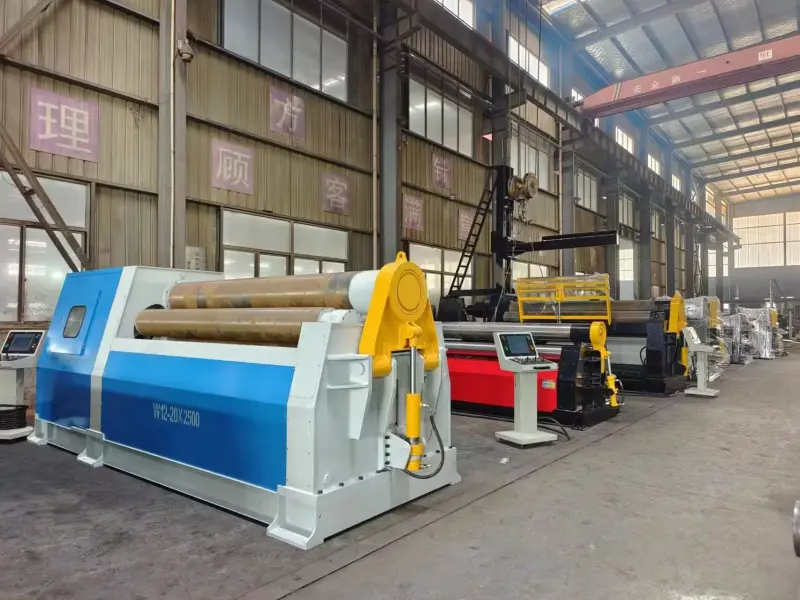
When we buy stock for the yard, we look for machines with low roll wear, documented service history where possible, and hydraulic systems that hold pressure. The machine we proposed to our Vietnamese buyer was a hydraulic three-roll unit [Zora will replace: exact model, rated plate thickness and width]. It came from a shuttered tank-fabrication workshop here in Shandong, had been under power until the shop closed, and showed even roll surface wear with no deep scoring. That is the profile I look for, and it is the profile I would want if I were the one spending the money.
Three Rolls or Four: Which Used Plate Rolling Machine Suits Carbon Steel Work?
Buyers often arrive convinced they need a four-roll machine because that is what the catalog hero shots show. The truth is less glamorous. The right answer depends on plate thickness, straight-edge tolerance, and budget — not on which machine looks more advanced.
A three-roll machine suits general carbon steel tank and duct work where a modest flat end is acceptable; a four-roll machine suits thick plate and tight roundness work where pre-bending both ends in one setup matters. For most carbon steel fabricators, a healthy used three-roll machine is the smarter buy.
Pre-Bending Decides Your Scrap Rate
The single biggest practical difference between roll configurations is the straight edge. On a conventional symmetrical three-roll machine, the plate ends stay flat because they cannot be gripped and bent at the same time as the middle. You handle this by pre-bending the ends in a separate pass, often with the plate flipped. On a four-roll machine, the bottom side roll clamps the plate so both ends can be pre-bent in one setup with almost no flat remainder.
For tank shells that get welded at the seam, a straight edge of [Zora will replace: typical remaining flat length on this machine class] may be perfectly acceptable — the weld prep can absorb it. For architectural cylinders or tight-tolerance pressure work, it is scrap. I ask every buyer one question before recommending a configuration: what do you do with the seam? If the answer is “weld it and nobody measures the flat spot,” a used three-roll hydraulic machine does the job. If the answer involves roundness inspection reports, we start looking at four-roll stock or an asymmetric three-roll machine with self pre-bending.
Springback and Incremental Passes on Used Machines
Carbon steel springs back after rolling. Every roller knows this in their hands: the plate relaxes slightly once the roll pressure releases, so you over-bend to compensate. On a used machine, springback behavior also tells you about the machine’s health. Worn bearings or a tired hydraulic pump give inconsistent pressure between passes, and inconsistent pressure means oval shells.
The technique that works, and what we demonstrated to our Vietnamese buyer during his test, is incremental rolling: several passes with gradually increasing pressure instead of one aggressive pass. This is especially important for plate above moderate thickness, where forcing a full circle in one pass risks cracking the plate edges and overloading an older hydraulic system. A healthy used machine handles incremental passes without drama — the pressure gauge holds steady, the rolls track parallel, and the cylinder comes out round within a few passes. That steady behavior under repeated load is exactly what our two-day test confirmed, and it is what no photograph can show you.
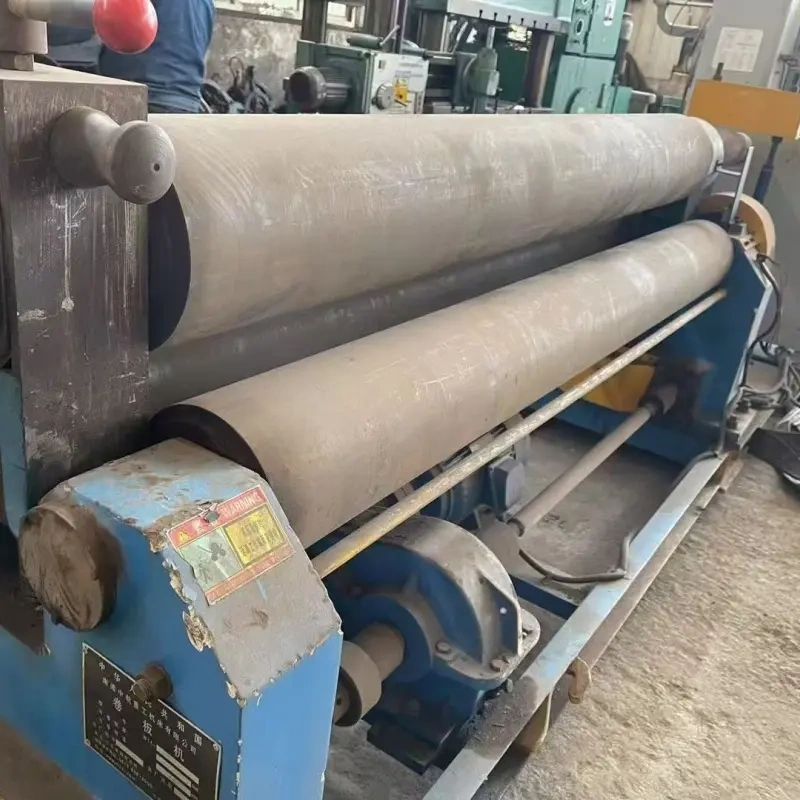
| Configuration | Typical carbon steel capability | Straight edge after rolling | Pre-bending | Best suited for |
|---|---|---|---|---|
| W11 symmetrical three-roll | Medium thickness plate | Noticeable flat ends, needs plate flip for pre-bend | Separate pass, plate flipping | General tank, duct, and silo work on a budget |
| Asymmetric / eccentric three-roll (W11NC type) | Thin to medium plate | Short flat ends | Self pre-bending in one setup | Small-diameter cylinders, ventilation, lighter precision work |
| W12 four-roll | Medium to heavy plate | Minimal to zero flat ends | Both ends pre-bent in one setup | Pressure vessels, wind tower sections, high roundness specs |
For our buyer’s Q235 tank shells, the three-roll hydraulic machine we selected hit the sweet spot: enough capacity for his plate widths, acceptable straight edges for welded seams, and a price that left budget for delivery and commissioning.
How Should You Inspect a Used Plate Rolling Machine Before Export?
This is where the money is saved or lost. Two machines can look identical in photos and behave completely differently under load. Our buyer flew in for two days, and I want to share the exact sequence we ran, because it works whether the inspection happens in our warehouse or on your supplier’s floor.
Inspect a used plate rolling machine with a hydraulic holding test, a roll parallelism check, a roll surface examination, and a live test roll on real carbon steel plate. Machines that hold pressure and roll round in these four checks are safe export candidates.
The Hydraulic Holding Test That Catches Hidden Leaks
Here is my favorite check, and the one I most often see skipped: park the machine at working pressure and watch the gauge. With the pump idle, a healthy hydraulic system should hold pressure with almost no drift. As a rule of thumb I use with buyers, a noticeable pressure drop within ten minutes points to internal leakage in the main cylinder or a control valve — and internal leakage in a plate rolling machine is exactly the kind of fault that hides until the machine is loaded with thick plate, then costs you a seal overhaul and weeks of downtime.
We also open the inspection covers and look at the oil. Dark, burnt-smelling oil suggests overheating; milky oil means water contamination. Neither is automatically a dealbreaker, but both move the price and set expectations for a filter and oil change on arrival. I always tell buyers the same thing: ignore the paint, watch the pressure gauge. Fresh paint hides a decade of leaks; a steady gauge under holding pressure cannot be faked in the moment.
Roll Surface, Parallelism, and a Live Test Roll
Next we worked the machine mechanically. We ran the rolls through their full travel and listened — a bearing on its way out announces itself with a roughness you feel through the frame before you hear it. We checked the alignment between the top roll and the bottom rolls with a level; on a well-maintained machine the gap difference between the two ends stays within a few hundredths of a millimeter, and any visible misalignment predicts tapered or barrel-shaped shells. We cleaned a section of each roll and inspected the surface under a work light: light scratches polish out, but deep pits or scoring marks that would print onto every plate are a pass.
Then came the part our buyer cared about most: the live test. We loaded a piece of Q235 carbon steel plate [Zora will replace: test plate dimensions] and rolled a full cylinder over several incremental passes. We measured the finished cylinder, checked the seam gap by eye and by feel, and watched the pressure gauge across every pass. This single test compresses everything — hydraulics, alignment, roll condition, drive train — into one visible result. If a seller refuses a live test roll, that refusal is the answer.
Packing and Shipping to Vietnam
After the test, the buyer signed off on the machine and we moved to export preparation. Plate rolling machines are heavy, top-weighted, and awkward, so packing matters. We fixed the moving parts, drained nothing (hydraulic systems ship filled and sealed against moisture), protected the roll surfaces with anti-rust coating, and loaded the machine into steel crating [Zora will replace: packing and shipping details for this order]. Documentation — commercial invoice, packing list, bill of lading — went out the same week, and our buyer’s forwarder handled customs at the Vietnamese port.
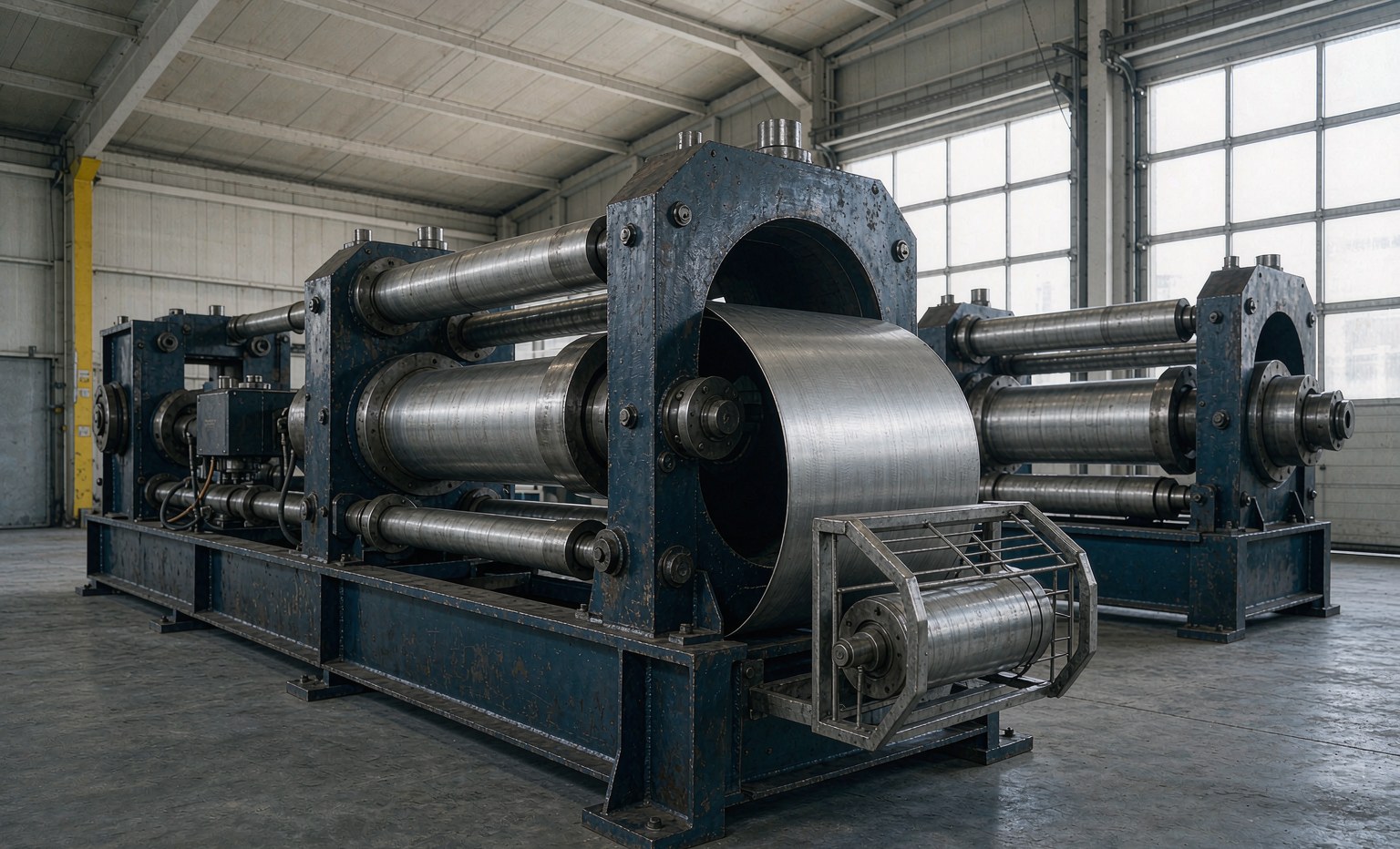
| Check | Pass standard | Sign of trouble |
|---|---|---|
| Hydraulic holding test | Pressure holds steady with pump idle, minimal drift in 10 minutes | Visible pressure drop — internal cylinder or valve leakage |
| Roll parallelism | Even gap across roll width, within a few hundredths of a mm | Measured difference at the two ends — predicts tapered shells |
| Roll surface | Smooth, even wear, light marks only | Deep pits or scoring that will print onto rolled plate |
| Drive and bearings | Smooth full-travel travel, no roughness or knocking | Rumble under the frame, noise rising with speed |
| Live test roll on carbon steel | Round cylinder after incremental passes, even seam gap | Oval shape, wandering seam gap, unstable gauge readings |
The same sequence applies to any used plate rolling machine you evaluate, from any supplier, in any country. It costs a day of your time and protects an investment worth many multiples of that.
Conclusion
A used plate rolling machine, honestly inspected and live-tested on carbon steel, gives Vietnamese fabricators real capacity without new-machine pricing. The inspection sequence above is the difference.