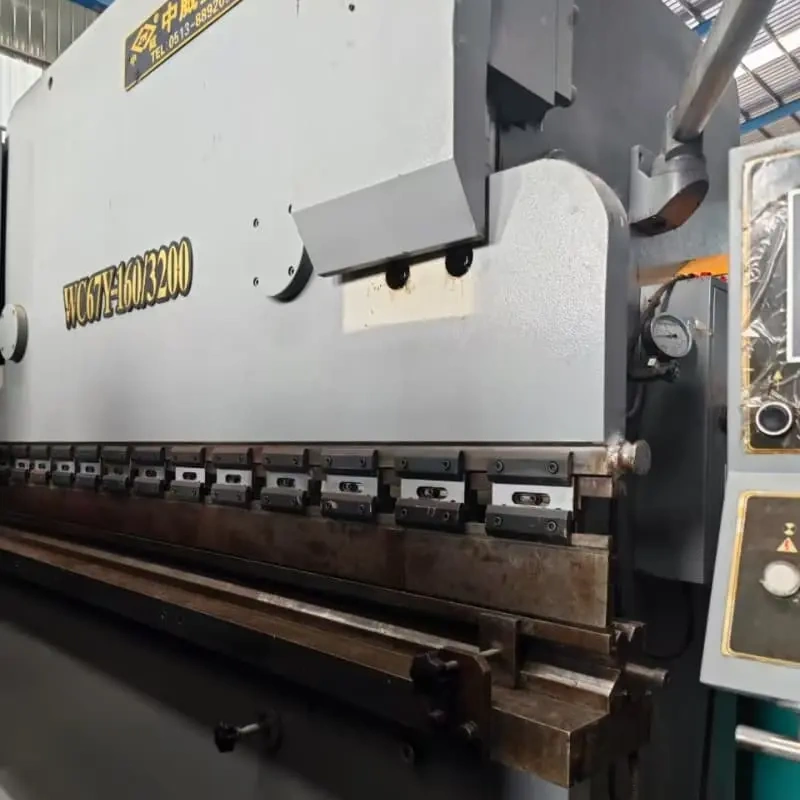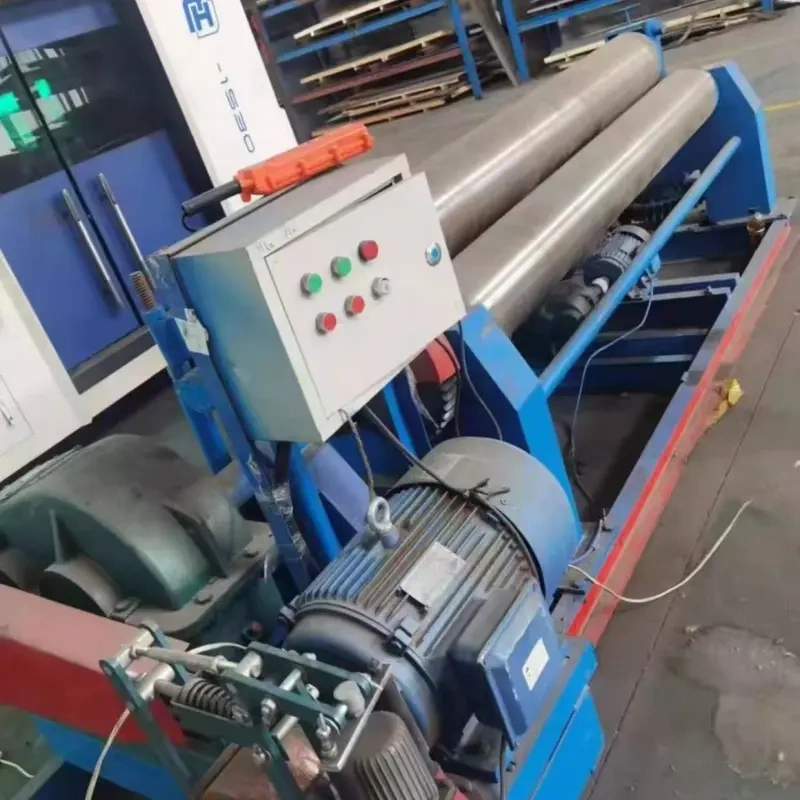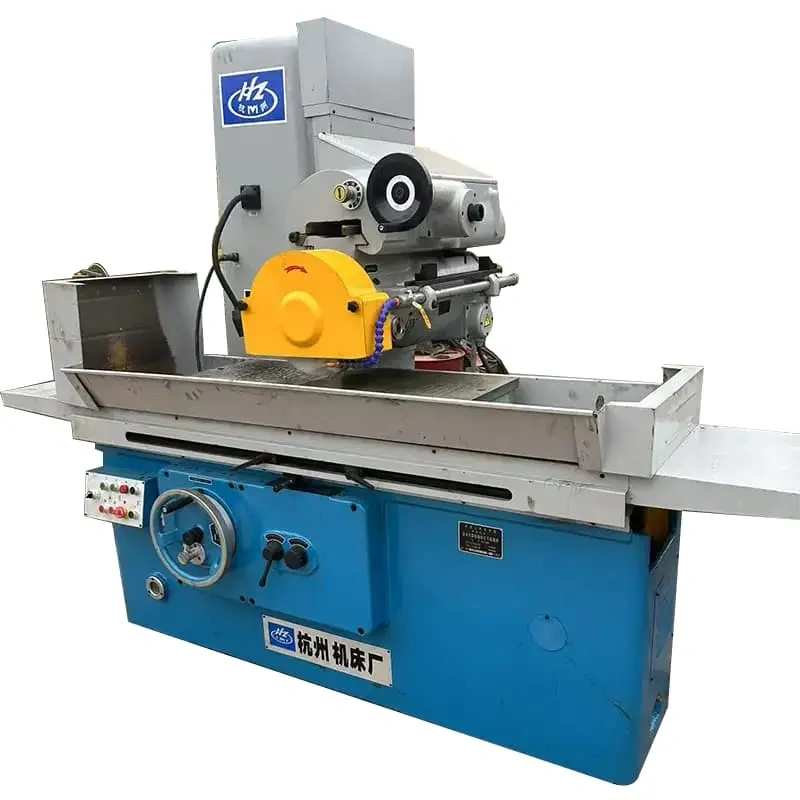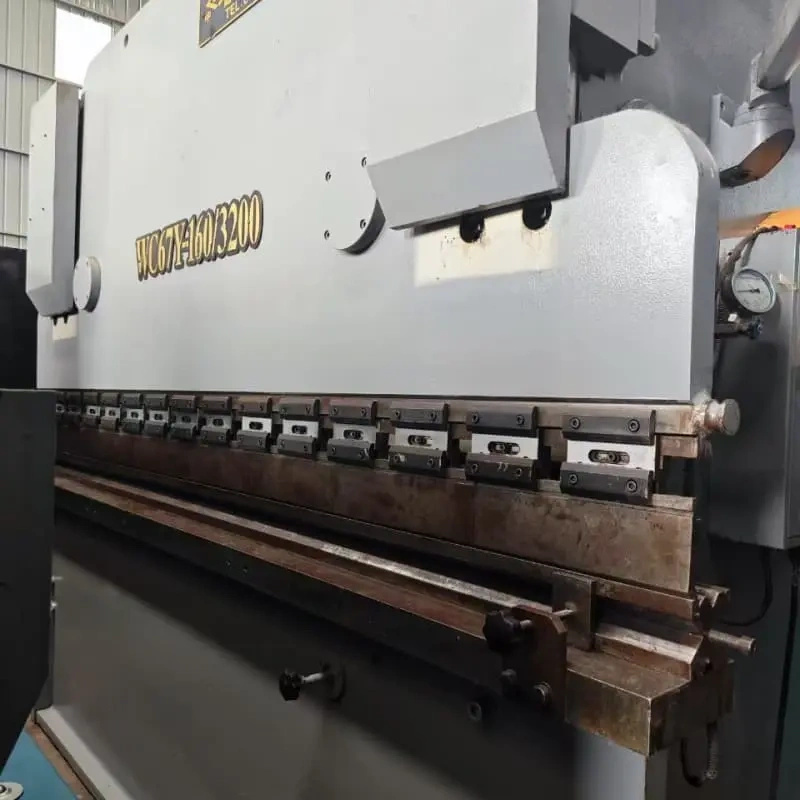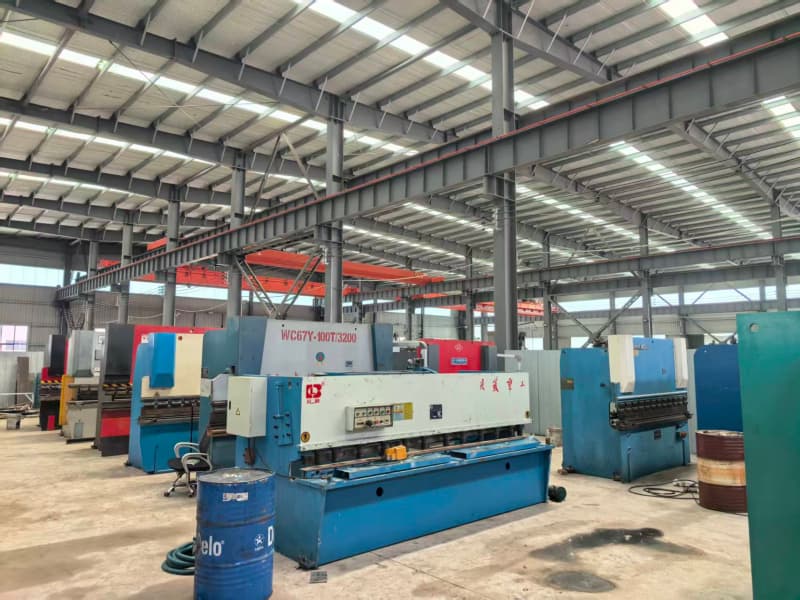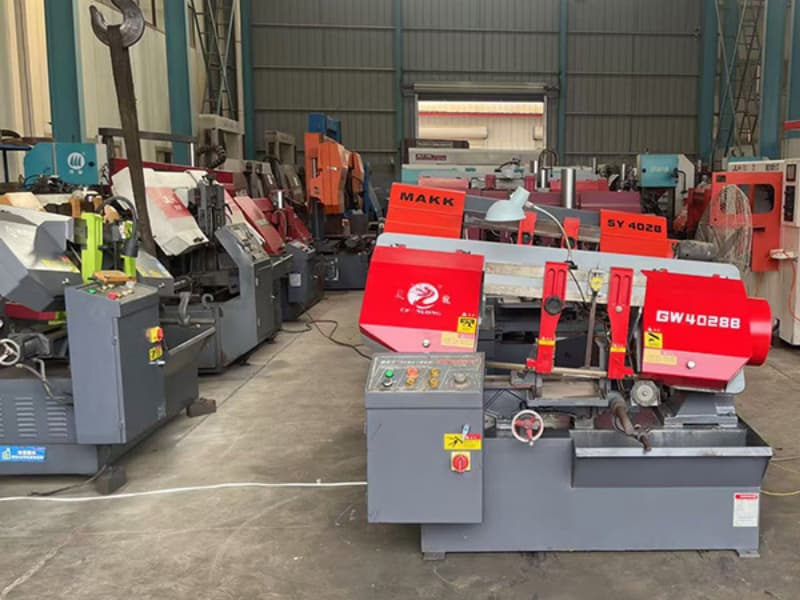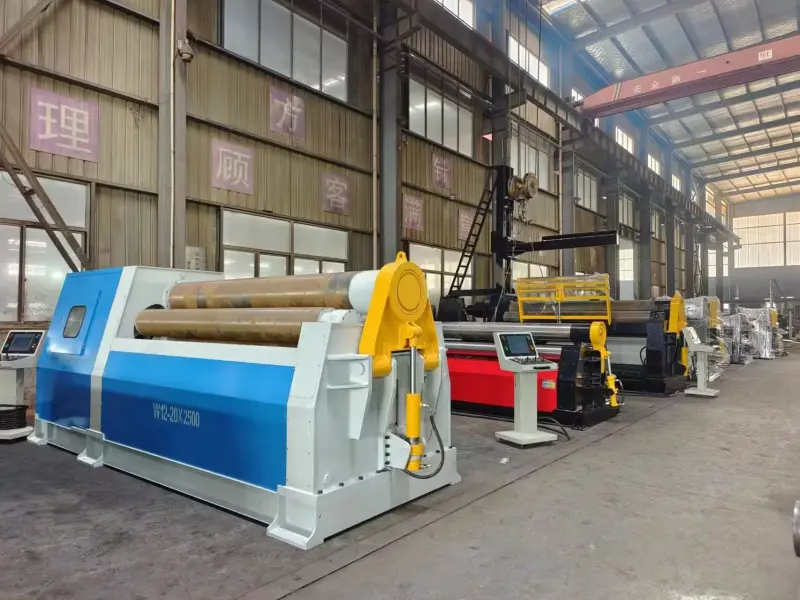


New shearing machines force Indonesian fabrication shops into long waits and heavy capital outlays. Last month we packed two used shearing machines for a metal fabrication company there, and the whole story fits in this article.
Two used shearing machines can be inspected, test-cut, export-packed and shipped from China to Indonesia far faster and cheaper than new equipment. Before these two left our yard in Liaocheng, the buyer checked blade condition, hydraulic pressure, back gauge accuracy and our export packing, piece by piece.
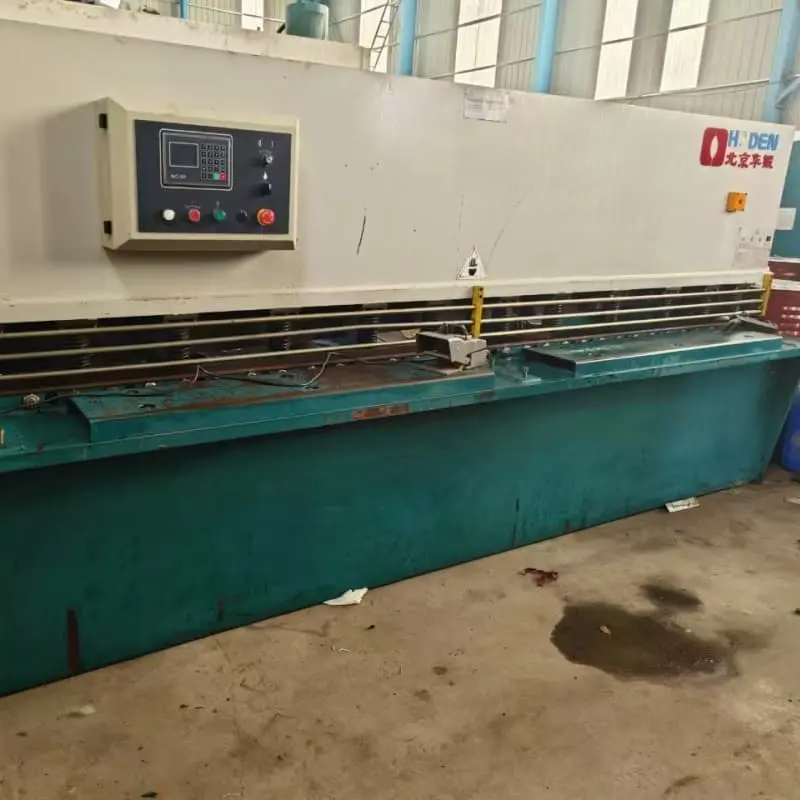
Both machines went into a single container, both passed a cutting test the buyer watched on video, and both are now on the water. If you buy used sheet metal machinery from China, the checks and decisions in this article are the same ones you should demand from any supplier. I run export sales for a used machinery yard in Liaocheng, Shandong, so I have sat on the supplier side of this exact conversation many times. Let me walk you through why the buyer chose used, what we inspected, and how two heavy shearing machines actually travel from our floor to a fabrication shop in Indonesia.
Why Would an Indonesian Fabricator Buy Two Used Shearing Machines Instead of New Ones?
The buyer needed more cutting capacity but could not justify the price and lead time of brand-new machines. So the question became whether used machines could deliver the same daily output at a fraction of the landed cost.
Buying two used shearing machines cut this buyer’s equipment spend roughly in half and removed the multi-month wait for new units. Indonesia imports more than 90 percent of its metal folding and forming machinery, so used Chinese stock is a fast, proven alternative to waiting on a new-machine order.
Import Dependence Shapes Every Buying Decision
Indonesia has one of the liveliest sheet metal fabrication markets in Southeast Asia. Cabinet makers, electrical panel builders, steel furniture workshops and general fabricators from the Jakarta industrial belt to Surabaya all need straight, clean cuts as the first step of every job. But the country produces very little of this equipment itself. Industry analysis shows that more than 90 percent of Indonesia’s metal folding and forming machine demand is met through imports, with China leading on unit volume while Japan and Germany dominate the high-precision end of the market. That import dependence means a new machine order usually carries a factory lead time, a shipping window, and then clearance time at Tanjung Priok or Surabaya. For a fabrication shop with orders piling up, those weeks are lost margin. I have had more than one Indonesian buyer tell me the same thing: the machine that is already standing in a supplier’s yard and running today beats the machine that arrives “sometime next quarter”. Used stock wins on speed almost every time.
The Landed-Cost Math Behind a Used Machine
Price is the other half of the decision, and it is worth being precise about it. A shearing machine imported into Indonesia under heading HS 8462 typically attracts a Most-Favoured-Nation duty of around 15 percent on the CIF value, plus VAT (PPN) of 12 percent and an advance income tax (PPh) of about 2.5 percent for a properly licensed importer. Those percentages apply to the declared value of the machine. So every dollar you save on the machine itself also saves the duty and the tax stacked on top of it. A used hydraulic guillotine shearing machine in the 6 x 3200 mm class commonly lists in the region of $11,000 to $13,000, while a comparable new machine typically starts well above that and climbs quickly with CNC controls and longer blades. The saving is even sharper on a pair of machines, because freight per machine drops when two units share one container. Certification adds a small cost either way: Indonesia applies SNI certification to certain electrical equipment and a surveyor report can be required for machinery above certain values, so we advise buyers to budget for documentation on both new and used routes.
New vs Used at a Glance
| Factor | New shearing machine | Used shearing machine (our stock) |
|---|---|---|
| Typical lead time | Factory build plus shipping, often 3–6 months | Ready in yard, days to prepare plus sailing time |
| Purchase price | Highest, climbs fast with blade length and NC controls | Often 40–60% lower for similar capacity |
| Duty and VAT base | 15% duty and 12% PPN on the higher new-machine value | Same percentages applied to a lower declared value |
| Condition risk | Low, covered by warranty | Managed through inspection, test videos, third-party checks |
| Resale value | Depreciates steeply in the first two years | Already absorbed most of its early depreciation |
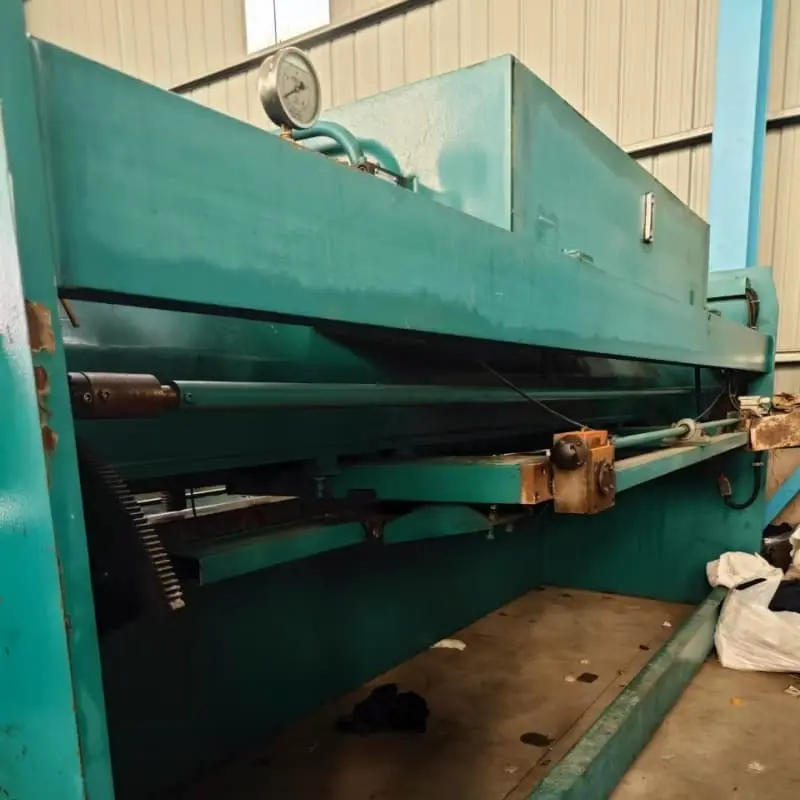
One honest warning from our side: used does not mean risk-free. It means the risk moves from the factory to the inspection process, which is exactly why the next section matters more than any price negotiation.
What Did We Check Before the Two Machines Left Our Yard?
A shearing machine can look excellent in photos and still cut badly. The buyer therefore asked us to prove condition, not claim it, and we ran our standard inspection sequence on both machines before any money moved.
We verified blade edge condition and clearance, hydraulic pressure and seals, hold-down performance, back gauge accuracy and frame integrity on both used shearing machines, then filmed a full cutting test. The buyer approved the machines on that evidence, not on our word alone.
Blades, Clearance and the Chalk Test
Blades are the heart of a shearing machine, and they are also the part most often abused by a previous owner. On both machines we pulled the blade holders and examined the cutting edges under work light. Good used blades show a bright, continuous wear line with no chips, no visible stepping and no signs of regrinding that has eaten into the usable height. We also checked the blade clearance setting against the material the buyer plans to cut. The working rule I use on the floor is roughly 8 percent of the material thickness for mild steel, adjusted down for stainless and up for softer plate. Set the clearance wrong and you get a ragged, burr-heavy edge, excessive machine load and blades that dull in weeks. Because the buyer could not stand next to us, we filmed the classic chalk test: run a chalked edge across the lower blade and watch where the mark fades, which reveals high and low spots along the full blade length. Both machines passed with an even line, which told us the blades sit true in their seats and the machine has not been crashed or badly repaired.
Hydraulics, Hold-Downs and Back Gauge
After the blades we worked down the mechanical chain. The hydraulic system on a used shear tells you how hard its life has been. We checked oil condition and level, cycled the ram continuously and watched for pressure drop, listened for cavitation, and inspected cylinder rods and seals for weeping. Hold-down feet came next: they must clamp the plate firmly before the blade arrives, or the sheet climbs and the cut wanders. We tested the back gauge travel across its full range and compared readout against a steel rule, since a shear with a lazy back gauge wastes more operator time than any other single fault. Here is the checklist we ran, which I would suggest any buyer copy:
| Check | What we did | What a buyer should accept |
|---|---|---|
| Blade edges | Removed holders, inspected full length under light | Even wear line, no chips, no stepped edges |
| Blade clearance | Verified setting vs planned material thickness | Adjustable, locks securely, roughly 5–10% of thickness |
| Hydraulic system | Continuous cycling, oil and seal inspection | Steady pressure, no visible leaks, quiet pump |
| Hold-down feet | Test cut with thin sheet | Plate clamped before cut, no climbing |
| Back gauge | Travel test, readout vs steel rule | Position accuracy within about ±0.02 mm on ball-screw gauges |
| Frame and tooling posts | Visual and straightedge check | No cracks at welds, ram returns squarely |
The Test Cut the Buyer Watched on Video
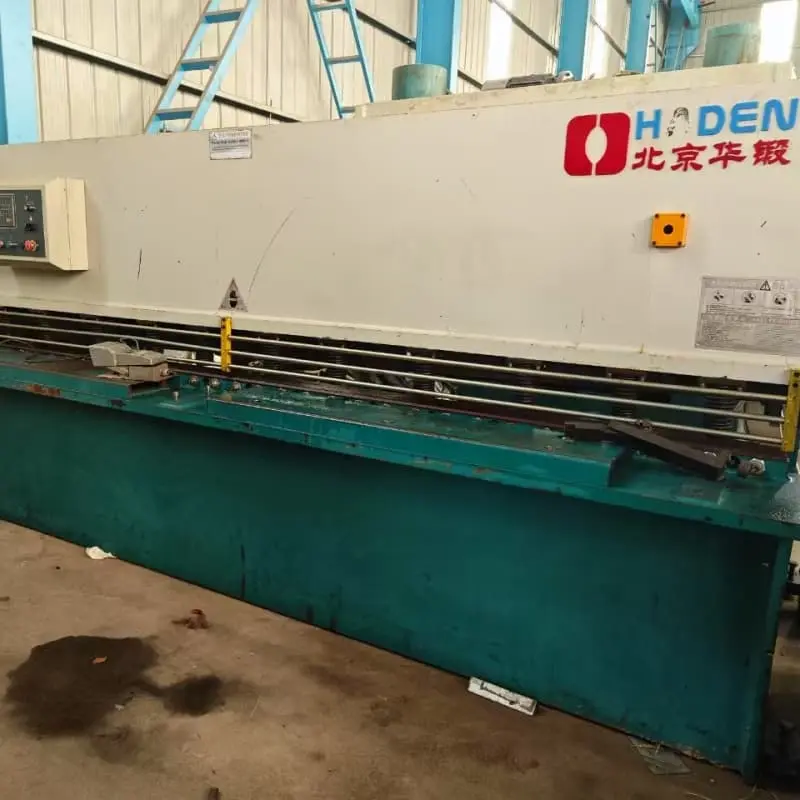
Specs and checklists convince an engineer, but a cutting test convinces the workshop manager. On each machine we sheared a series of plates from thin sheet up to the rated capacity, filming the whole sequence: the operator squaring the sheet against the back gauge, the hold-downs clamping, the ram coming down, and then the close-up of the cut edge. The buyer’s technician reviewed the burr height and the squareness of each blank on the video and sent back two questions about oil pressure at full stroke, which we answered with a second recording of the pressure gauge. That back-and-forth took two days. Compare that with flying to China and standing in our yard for a week, and you can see why video inspection has become the default for our Indonesian customers. If a supplier resists filming a cut test, that reluctance tells you everything you need to know before you wire any money.
How Do You Pack and Ship Two Shearing Machines from Liaocheng to Indonesia?
Passing inspection is only half the job. Two machines weighing several tonnes each have to survive a truck ride, a port crane, weeks at sea and clearance before they ever cut a single sheet in Indonesia.
Each used shearing machine is coated in anti-rust oil, fixed to a steel base, crated in a reinforced wooden case and supervised into the container. The export file uses HS 8462.39 for conventional shearing machines, with invoice, packing list and bill of lading prepared for Indonesian clearance.
Export Packing, Step by Step
Packing is where cheap suppliers quietly save money and buyers pay for it later. We treat packing as part of the product. First, every bright machined surface on both machines was wiped down and coated with anti-rust oil, and all exposed precision faces were wrapped in VCI paper. Then each machine was lowered onto a heavy steel skid and bolted down, because a shearing machine must never be allowed to shift inside its case; the ram and back gauge are not items you want arriving bent. Around each machine we built a wooden case with steel-reinforced corners, and the case was marked with lifting points so the crane crew at both ends grabs the right spots. When the container was loaded, we supervised the blocking and bracing ourselves and photographed every stage, from the empty box to the sealed doors. The buyer received the full photo set before the container left the yard. I will give you my personal rule from years of watching containers come back: a supplier who photographs the loading process is a supplier who expects the machine to work on arrival, and that mindset shows up in the machine you receive too.
Documents and the HS Code Path
Paperwork rarely excites anyone, but it decides how fast a machine clears Tanjung Priok. Both machines were declared under heading HS 8462, which covers machine tools for shearing metal, using the subheading for non-numerically-controlled shearing machines. The commercial invoice, detailed packing list, bill of lading and machine condition report were issued together so the buyer’s customs broker could file the import declaration (PIB) without chasing us for corrections. Under Indonesian rules the importer of record handles the declaration, so our job is to make the documents accurate and complete the first time. The buyer also planned around the tax picture we discussed earlier: duty on the declared CIF value, PPN on top of it, and the advance income tax tied to their import licence. For machinery above certain values a surveyor report can come into play, and where an electrical cabinet is involved it is worth asking your broker early whether any SNI documentation applies. None of this is difficult when your supplier has exported to Indonesia before. It becomes painful only when a first-time exporter guesses at descriptions and the broker has to argue with customs over wording.
Swing Beam or Guillotine: Matching the Pair to the Work
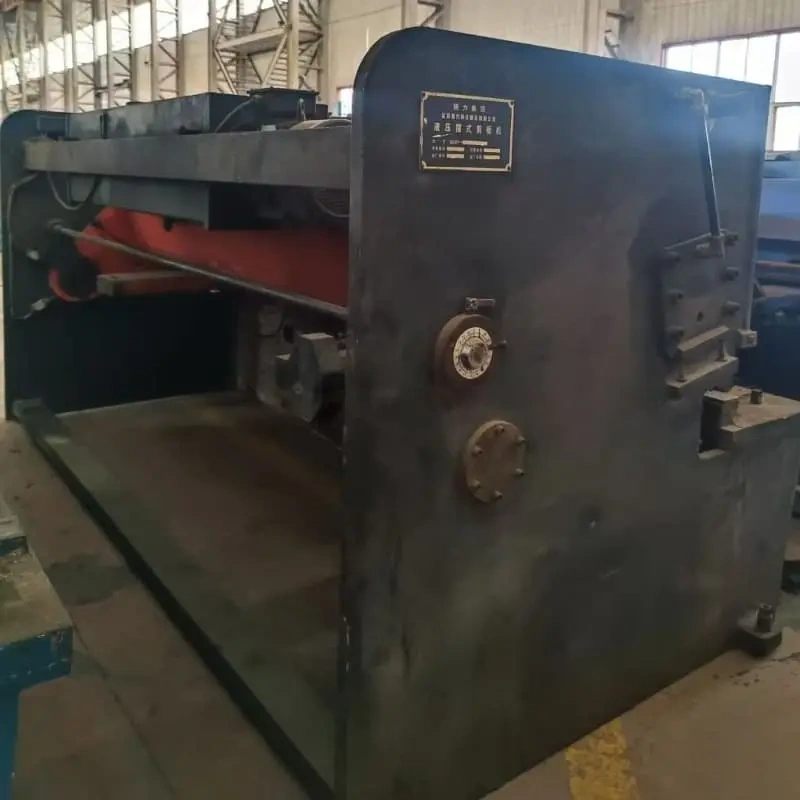
The two machines the buyer chose were not identical, and that was deliberate. Many fabricators are better served by one swing beam machine for high-volume thin sheet and one guillotine for thicker plate, rather than two copies of the same machine. Here is how the two types differ:
| Feature | Swing beam shearing machine (e.g. QC12Y type) | Guillotine shearing machine (straight ram) |
|---|---|---|
| Blade motion | Upper blade rocks on an arc | Upper blade moves straight down |
| Blade clearance | Varies along the cut as the beam swings | Constant and independently adjustable |
| Cut quality on thick plate | Good, slight edge twist possible | Cleaner, more square edge on heavy plate |
| Typical working range | Thin to medium sheet, high stroke rate | Medium to thick plate, precision work |
| Maintenance | Simpler linkage, fewer adjustments | Blade adjustment more involved |
| Best suited for | Cabinet, duct and enclosure work | Structural steel and thicker plate cutting |
The buyer put the swing beam machine on their high-volume cabinet line and reserved the guillotine for heavier plate jobs, which fits exactly how we matched the pair to their stated production mix. When you order two machines, think about the pair rather than each unit in isolation.
Conclusion
Two inspected, video-proven and properly crated used shearing machines gave this Indonesian fabricator more cutting capacity in weeks, at a landed cost no new-machine order could match.