

Buying a used surface grinder is risky when you cannot see the machine run, and a bad spindle or a scored table turns a cheap purchase into months of scrapped parts. Last month a buyer from [Zora will replace: customer country] nearly made that mistake, and the way we worked through it is worth sharing.
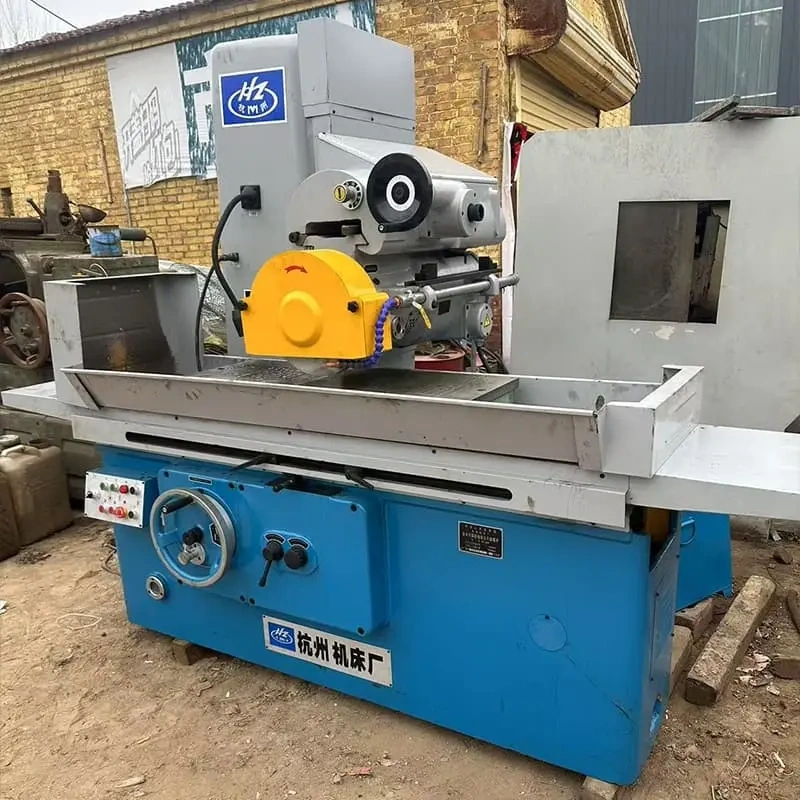
A used M7130G surface grinding machine is a 320×1000 mm hydraulic reciprocating-table grinder with a 7.5 kW wheelhead, a φ350 mm wheel, a 0.01 mm vertical feed dial, and a rated finish of Ra 0.63 µm. It suits job shops that grind flat, parallel faces on steel parts up to about 400 mm tall, and it stays affordable on the used market.
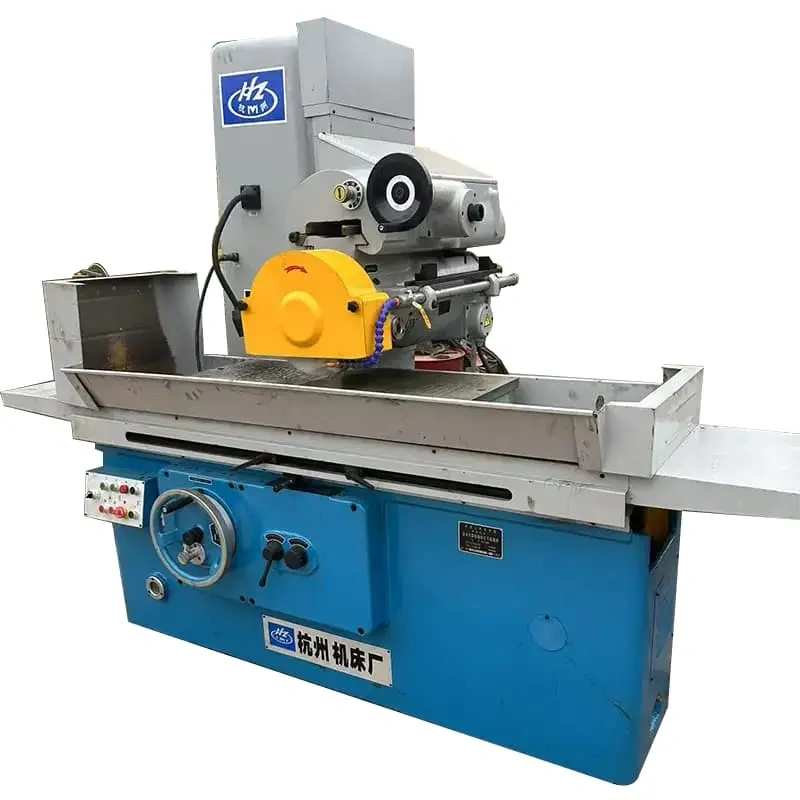
I want to walk you through this purchase the way it actually happened, because the M7130G is one of the most common horizontal-spindle surface grinders we export, and the questions this customer asked are the questions you should ask too. He runs a maintenance workshop that rebuilds hydraulic blocks and pump mounting faces. His old grinder finally lost its table reversals, and he needed a replacement that could hold 0.01 mm class work without paying for a new machine.
Why Did This Customer Choose a Used M7130G Surface Grinding Machine?
His first instinct was a small manual 6×18 grinder, because the price looked friendly. I pushed back, and I was right to do so, and here is why.
He chose the M7130G because its hydraulic table travel of up to 1110 mm covers parts longer than any manual 6×18 can clamp, the 500 kg table load handles heavy steel blocks, and the hydraulic drive keeps a consistent finish across the full stroke, which manual feeds cannot match on long parts.
The Part Mix Decided the Machine, Not the Price
Start from your parts, always. His typical workpiece is a hydraulic manifold around 600–800 mm long, milled first, then ground flat on both faces to get a sealing surface. A small manual grinder forces him to re-clamp such a part two or three times, and every re-clamp adds a stacking error. On the M7130G, the electromagnetic chuck holds the whole part in one setup, the table runs under hydraulic power at 3–25 m/min, and the wheelhead cross-feeds 3–30 mm per table stroke on intermittent feed. One setup, one pass pattern, done.
I asked him to send me his three largest monthly parts. We checked them against the machine envelope: maximum grinding size 320 mm wide × 1000 mm long × 400 mm high, table load about 500 kg including the chuck. Everything fit with margin. That is the kind of arithmetic that settles a machine choice faster than any brochure, and I wish more buyers did it before they fell in love with a price tag.
What the M7130G Actually Is
The M7130G family comes in a few variants — M7130G/F, M7130G/D, M7132-GM — but the core layout is the same: a moving wheelhead over a hydraulic reciprocating table, with the grinding motor built into the wheelhead housing. That built-in motor matters on the used market. Shorter belt-free spindle drive means fewer hidden wear points, and the spindle nose runs in an inner-column, outer-cone sliding bearing that is cheap to re-scrape compared with cartridge bearings. Here is the spec sheet we sent him, condensed from the manufacturer data:
| Item | M7130G (typical) | What it means for you |
|---|---|---|
| Table surface (W×L) | 300–320 × 1000 mm | Fits most manifold and die blocks in one setup |
| Max grind size (W×L×H) | 320 × 1000 × 400 mm | Tall parts OK with risers under the chuck |
| Table travel (hydraulic) | 200–1110 mm | Stepless 3–25 m/min, smooth reversals |
| Wheelhead motor | 5.5–7.5 kW @ 1440 rpm | Enough for 0.5 mm passes on mild steel |
| Grinding wheel | φ350 × 40 × φ127 mm | Common size, easy to source worldwide |
| Vertical feed dial | 0.005–0.01 mm per graduation | Fine infeed for finish passes |
| Rated parallelism | 0.008 mm over 300 mm | Machine-new accuracy target |
| Rated finish | Ra 0.63 µm | Good for sealing faces and die plates |
| Net weight | ~3200–3500 kg | Needs a proper skid and a 20GP container plan |
One thing I told him on the call, and I will repeat it here: those accuracy numbers are what the machine left the factory with. A used machine holds them only if the ways, spindle, and hydraulic system survived the years. That is exactly what the inspection in the next section was for.
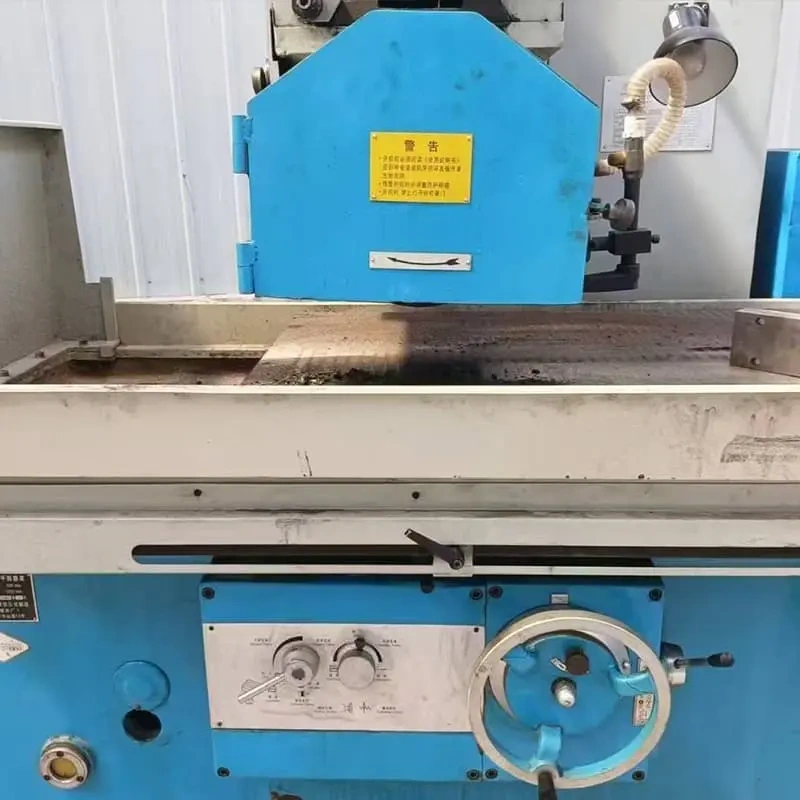
How Did We Inspect the Used M7130G Before the Customer Committed?
He could not fly to our yard, so the whole deal depended on videos, measurements, and a live test cut. Here is the exact sequence we ran.
We inspected the machine in five gates: spindle noise and runout, table and way condition over full travel, hydraulic oil and pressure hold, electromagnetic chuck pull, and a filmed wet test cut on hardened steel measuring flatness, parallelism, and finish. The machine passed with spindle runout around 0.005 mm and a clean test cut.
Gate 1: Spindle Sounds and Spindle Numbers
Spindle first, every time, because a spindle rebuild can cost 5,000 to 20,000 dollars and can quietly erase the savings of a used purchase. We let the wheelhead run unloaded for 30 minutes and recorded audio at the housing. No rumble, no whine, no growl that changes on coast-down. Then a dial indicator on the wheel flange: runout came in around 0.005 mm, which is acceptable for a general-purpose rebuild shop, though a precision toolroom buyer should hold out for less. Housing temperature stayed warm to the touch, not hot. Any bearing that shakes harder after 30 minutes than it did at minute two is telling you something, and I have learned to listen before I look at the price.
Gate 2: Ways, Table, and the Straightedge Trick
Next we swept the table through full hydraulic travel and filmed the hand feel, then laid a precision straightedge across the table surface and shot light-gap photos at three positions: near the headstock end, mid-table, and near the tail end. Daylight at the middle with contact at both ends means a dished or worn table — the classic signature of years of heavy center work. Our machine showed only minor wear at the most-used zone, well within re-scraping tolerance, and we showed him the light gaps honestly rather than hiding them. Way scoring matters more than paint, so tell your seller you want straightedge photos, not showroom angles. Nobody walks away from a machine because the paint is tired; people lose money because the ways are.
Gate 3: Hydraulics and the Chuck Pull
The hydraulic unit is the heart of a reciprocating grinder. We opened the tank on camera: oil clean and amber, not milky and not dark. Milky oil means water in the system; dark burnt oil means the machine has been worked hot, and both are negotiating leverage. We ran the pump and watched table reversals for crispness — no hesitation, no drift at the stroke ends. Then a 10-minute pressure hold; a system that bleeds down fast is leaking past seals internally, and hydraulic resealing adds 2,000–8,000 dollars later. Finally the electromagnetic chuck: we clamped a steel test block, ran the table full stroke, and pushed the block with a bar. Zero movement, uniform pull across the face, no dead zones. Weak or dead-patch chucks are a common silent failure, and a replacement runs into four figures.
Gate 4: The Test Cut That Closed the Deal
Everything above is static checks. The only check that actually predicts your parts is a wet grind. We dressed the wheel, mounted a ground flat plate, and took finish passes with coolant running, filming the spark-out. We measured the plate afterward: flatness held well inside 0.01 mm across the length, parallelism to the base around 0.008 mm over 300 mm, and the surface finish read at the Ra 0.63 µm class the factory rate promises. That film, plus the dial readings, went to the customer before he transferred anything. Here is the checklist we followed, which you can reuse with any seller:
| Check | Method | Accept | Reject / investigate |
|---|---|---|---|
| Spindle runout | Dial on wheel flange | ≤ 0.005–0.01 mm | > 0.02 mm |
| Spindle noise | 30 min unloaded run, listen | Quiet, stable | Rumble, coast-down growl |
| Table flatness | Straightedge + light gap | Even contact, no mid-gap | Visible mid-span daylight |
| Way condition | Visual + full-travel sweep | Fine wear lines | Scoring, galling, pitting |
| Hydraulic oil | Tank inspection on camera | Clean amber | Milky or burnt dark |
| Pressure hold | 10 min idle watch | Minimal drop | Fast decay |
| Chuck pull | Test block, full stroke, push test | Zero slip, uniform | Dead zones, slipping |
| Test cut | Wet grind, measure plate | Flat + parallel per spec | Seller refuses the test |
That last row is my strongest rule after years of this job: if a seller will not film a wet test cut on real steel, assume he has something to hide. [Zora will replace: customer name] told me afterward that this single video, more than any spec sheet, is what made him wire the deposit.
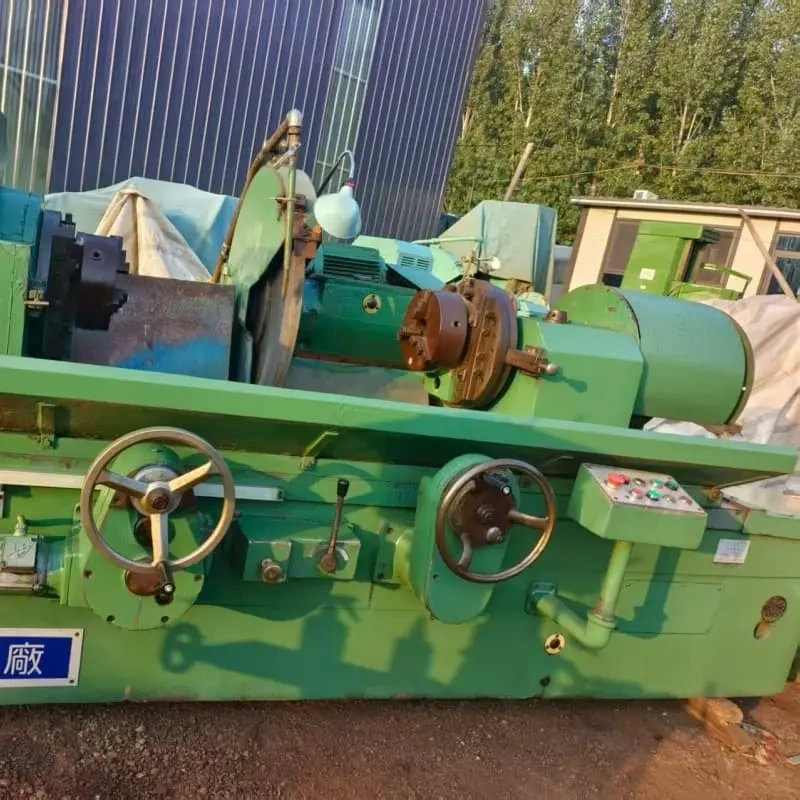
What Does a Used M7130G Surface Grinding Machine Cost in 2026?
He budgeted for a new machine at first and nearly priced himself out of the deal. The used market numbers are worth laying out clearly.
A used M7130G in good working condition typically lands between 8,000 and 20,000 US dollars depending on year, condition grade, and accessories, against roughly three to four times that for a comparable new build; grade the machine honestly — condition beats the badge on a used grinder every single time.
How Condition Grades Map to Price
Used grinders do not have one price; they have a condition ladder. From what we see moving through the trade, an unrebuilt machine in honest working order sells at roughly 20–40% of its new equivalent, while a properly rebuilt unit — ways re-scraped, spindle bearings replaced, hydraulics resealed, geometry re-certified — runs 50–70% of new with a service life that starts to look new again. A mid-size hydraulic reciprocating grinder in good condition trades from about 8,000 dollars on the modest end to 20,000 and beyond for larger or better-documented machines, and hydraulic 12×24 class machines often list at 15,000–35,000 when they are late-model and complete. Our M7130G sat in the middle of that band: 2018 vintage, original ways in decent shape, complete with chuck, wheel, balancer, and dresser.
| Condition grade | Typical age | Price vs new equivalent | What you actually get |
|---|---|---|---|
| Grade A, near-rebuilt | 3–5 years | ~50–70% | Fresh geometry report, minimal wear, low risk |
| Grade B, honest working | 5–10 years | ~20–40% | Passing inspection gates, some wear, best value |
| Grade C, tired | 10+ years | Under ~20% | Cheapest to buy, likeliest to need a spindle or hydraulic budget |
I steer most buyers to Grade B with a passed test cut, and that is where this deal landed. Grade C only makes sense when you have a rebuild shop nearby and the price reflects the spindle risk. Paying Grade A money for an unverified Grade B machine is the most common overpayment I see, so ask for the geometry numbers, not the adjectives.
Comparing the M7130G Against Neighbors in Our Stock
He also asked us to quote alternatives before committing, which I always encourage. We lined the M7130G up against two other grinders we had in stock that week, and the comparison is a good template for your own shortlist:
| Machine | Table / capacity | Spindle drive | Typical used price | Best for |
|---|---|---|---|---|
| Used M7130G | 320 × 1000 mm, 500 kg load | Built-in motor, sliding bearing | ~8–15k USD | Long flat parts, sealing faces, general job shop |
| Used M7140 | 400 × 1000 mm class | Built-in motor | ~12–20k USD | Wider die plates and molds |
| Used M7150 × 1 m | 500 × 1000 mm class | Built-in motor | ~15–25k USD | Heavy blocks, toolroom work |
How Did We Pack and Ship the M7130G to the Customer’s Port?
Winning the machine is half the job; delivering a 3.5-ton precision tool intact is the other half. His previous supplier had shipped him machines that arrived with minor transport damage, so packing was a formal requirement in this order, not a courtesy.
We packed the grinder on a steel skid with a wooden export case, blocked the table and wheelhead, bagged the controls with desiccant, photographed every packing stage, and shipped to his nominated port with a full document set; the machine arrived level and passed his on-arrival spindle check.
Anchoring a Precision Machine for Container Transit
A surface grinder is top-heavy iron, and inside a container it sees real shock loads at sea. We bolted the machine to a heavy skid, blocked the table centrally so the hydraulic cylinder is not under preload, locked the wheelhead at its lowest position, and wrapped the exposed slideways in anti-rust compound and film. Solid wood for the case is heat-treated and stamped for IPPC compliance, which most destination customs offices want to see. Desiccant bags went inside the electrical cabinet and the chuck, because container humidity can climb above 90% on long routes and a moisture-puffed chuck face or a corroded contactor is an avoidable loss. Every stage got photos, and we sent the full album before the container even left the yard.
| Packing element | What we do | Why it matters |
|---|---|---|
| Skid | Steel-frame, machine bolted down | Stops toppling and shifting |
| Blocking | Table and wheelhead secured | Protects ways and spindle from transit shock |
| Rust protection | Compound + film on slideways | Weeks of humid sea air |
| Desiccant | In cabinet and on chuck | Container RH can exceed 90% |
| Documentation | Invoice, packing list, B/L, CO | Smooth customs clearance |
The Arrival Check He Ran on His Own Floor
I gave him a short arrival protocol before the container sailed, and it took his team under an hour. Level the machine on its pads first, then check spindle runout against the pre-shipment numbers, sweep the table full travel to feel for new tight spots, and power the chuck with the test block again. His readings matched ours within a hair, and the machine went into daily service the same week grinding manifold faces to his sealing spec. That is the whole point of the exercise: a used machine deal should end with the buyer filming his own numbers and comparing them against yours. If a supplier resists that comparison, you have your answer about them. We have since quoted him two more machines for the same workshop, and both deals started from the same trust loop — real videos, real numbers, real packing photos.
Conclusion
Match the machine to your part envelope, force a filmed wet test cut, price by condition grade rather than age, and pack a precision grinder like the precision tool it is. Do those four things and a used M7130G is one of the safest bargains in metalworking.