

Most buyers share one fear about used lathes: the machine that arrives will not match the turning work they quoted to their own customers. One worn bed or one wrong spindle bore can stall a production plan for weeks.
A used lathe machine meets a buyer’s turning requirements when its swing, spindle bore and bed condition match the part drawings, the spindle runout measures 0.005 mm or less, and a documented test cut holds taper under 0.02 mm over 200 mm. We verify all three before the order is confirmed.
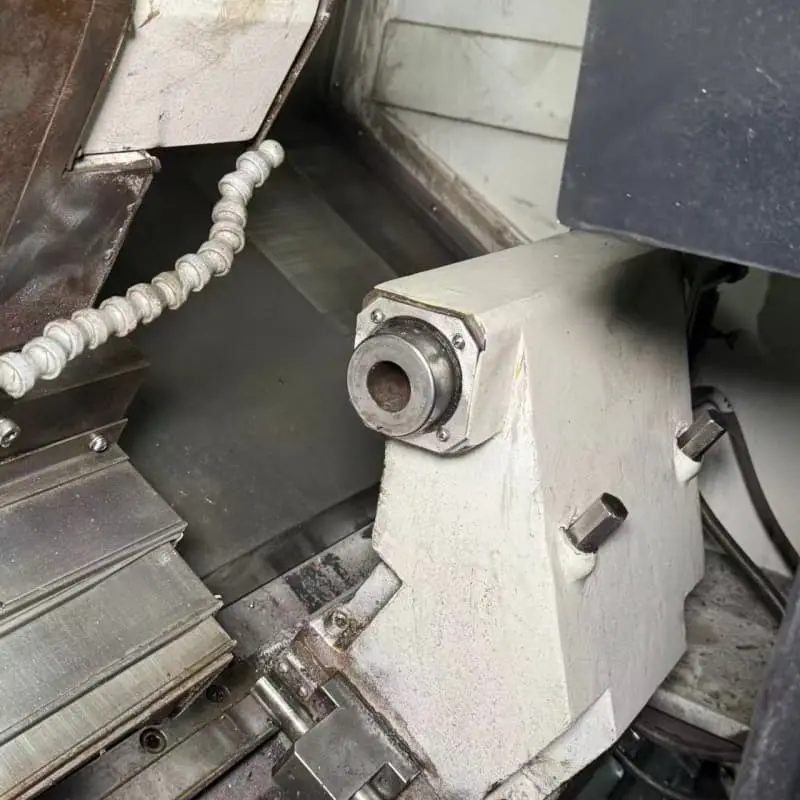
Last month a workshop owner from Vietnam [Zora will replace] came to us with a stack of shaft drawings and one hard condition: he would not pay until he saw the machine meet his turning requirements himself. He had been burned before. The lathe he bought from a reseller two years ago turned fine near the chuck and tapered badly toward the tailstock, and he scrapped three batches of pump shafts before he found the cause. So this time he wrote his requirements down as numbers instead of adjectives, and he asked us to prove every one of them. I want to walk you through how that conversation went, because the same checklist will protect you whether you buy from us or from anyone else.
How Do We Match a Used Lathe to a Buyer’s Turning Requirements?
Buyers often send photos of finished parts and hope the supplier picks a suitable machine. When the guess is wrong, the lathe arrives too small or too weak, and the money is already spent on freight.
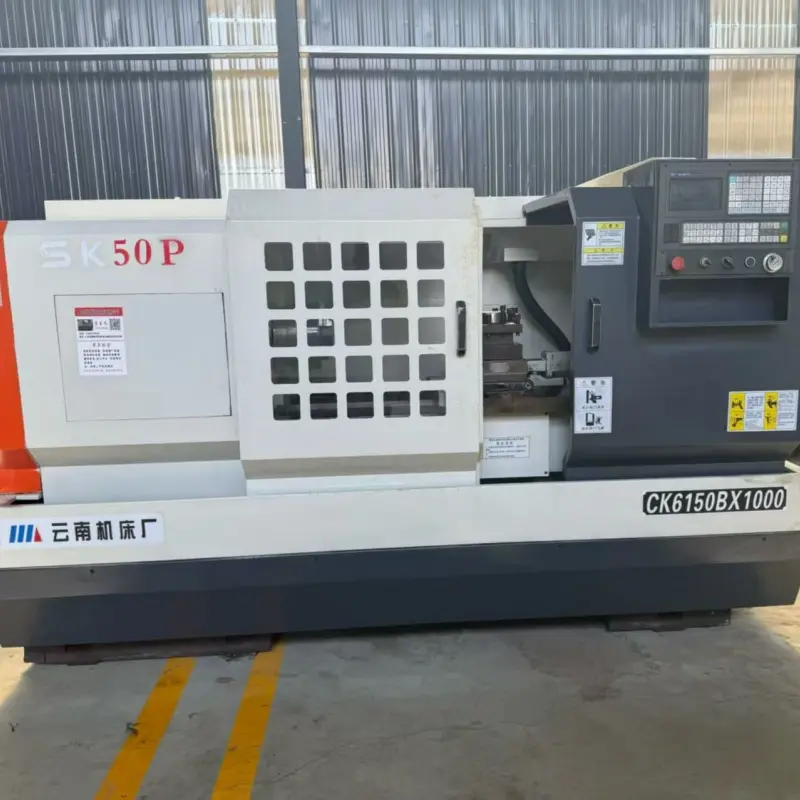
We match a used lathe to turning requirements by working backwards from the part drawings: maximum part diameter sets the swing, part length sets the distance between centres, and the bore and speed range decide whether bar stock and finish cutting both fit in one setup.
Start From the Drawing, Not From the Machine
The first thing I asked our Vietnamese buyer for was not a budget. I asked for the three largest parts he turns in a normal month and the material they are made of. That single email tells me more than an hour of talking.
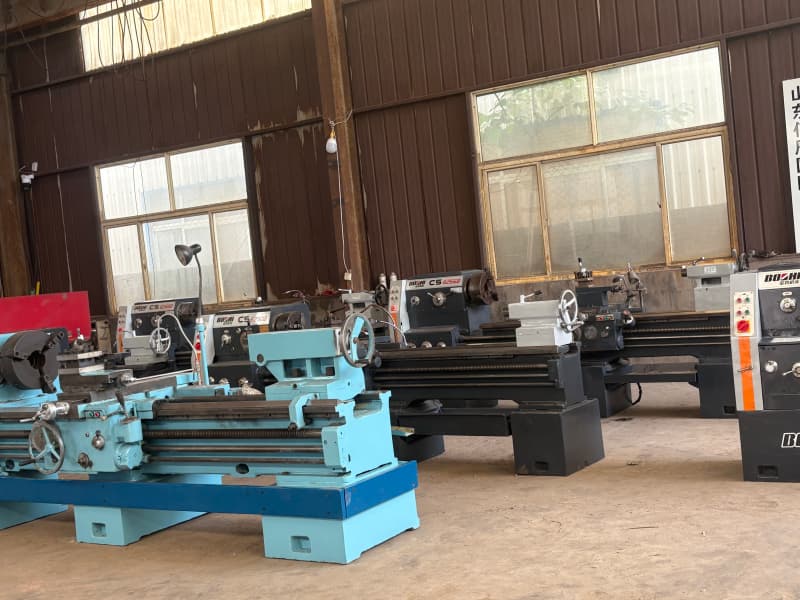
For shaft work, swing over the bed is the headline number, but it is rarely the binding one. On a typical CW6163-class lathe, the swing is 630 mm over the bed, about 350 mm over the cross slide, and roughly 550 mm over the gap if the machine has one. A shaft of 200 mm diameter clears every one of those numbers. What actually decides the purchase is the distance between centres, because his longest shaft was 1,600 mm [Zora will replace], and a short-bed machine that looks impressive in photos cannot hold it.
Spindle bore matters next. He runs 45 mm bar stock through the chuck for coupling sleeves, so a 52 mm bore machine would force him to saw every bar into short pieces. We pointed him to machines with a 105 mm bore, which swallows his stock with room to spare. Then came the speed range. His finish cuts on alloy steel run around 0.15 mm per revolution, and at 300 mm diameter that puts the useful spindle speed near 150 rpm. A machine whose lowest speed is 300 rpm would make ugly finish cuts. Ours run 7.5 to 1,000 rpm in steps, so low-speed torque for big diameters and enough speed for small ones are both covered.
Translate Requirements Into a Spec Table
I find that buyers accept a machine much faster when the match is written as a table instead of an email paragraph. So we put it on one page:
| Buyer requirement | Part data from drawings | Machine spec we matched | Verdict |
|---|---|---|---|
| Max turned diameter | 200 mm shaft | 630 mm swing over bed | Pass, wide margin |
| Max part length | 1,600 mm shaft | 1,500 mm between centres on 1000 model, 2,000 mm option | Pass with the 2000 model [Zora will replace] |
| Bar work through spindle | 45 mm stock | 105 mm spindle bore | Pass |
| Finish cut quality | Ra 1.6–3.2 µm as-machined | Low speed 7.5 rpm, rigid bed | Pass after test cut |
| Power for alloy steel | 2.5 mm depth per side roughing | 11 kW main motor | Pass |
| Weight limit for his floor | 4.5 t crane rating [Zora will replace] | About 4 t machine weight | Pass, tight |
That last row is the one buyers forget. A used lathe weighs between 3.8 and 4.2 tonnes in this class, and several customers have discovered too late that their workshop crane or floor slab could not take it. Ask for the shipping weight early.
One thing I always tell people at this stage: do not buy capacity you will never use. We had a customer last year who insisted on a 1250 mm swing machine because a salesperson convinced him “bigger is safer”. It cost more, took a bigger container, and now turns parts under 300 mm all day. The extra swing is dead money. Size the machine for the work you actually quote, and keep a 20 to 30% margin on top, no more.
Budget expectations also belong in the matching conversation, because the size class decides the price band before condition is even discussed. Public dealer listings give a fair picture of the used market right now. A 15 by 54 inch LeBlond Regal engine lathe was listed at around 12,500 dollars, a heavy Lodge and Shipley 40 by 77 inch lathe at 7,500 dollars, and a large 52 by 204 inch TUDA gap-bed CNC lathe at 17,500 dollars [Zora will replace — verify current listings]. In our own market, conventional machines in the 630 mm swing class typically trade between 4,000 and 9,000 dollars, the 800 mm class between 8,000 and 14,000 dollars, and the 1250 mm class between 7,000 and 20,000 dollars depending on age and refurbishment depth. Condition, not size, is what separates the top of each band from the bottom, which is exactly why the inspection checklist in the next section matters more than the nameplate.
What Did the Buyer Check Before Confirming the Order?
A spec sheet tells you what the machine was when it left the factory. It says nothing about the twenty years in between, and that is where used equipment deals go wrong.
Before confirming the order, the buyer checked spindle runout with a dial indicator, bed wear near the headstock, tailstock alignment on a test bar, gearbox noise at every speed, and finally a warm test cut on steel bar held to a 0.02 mm taper limit over 200 mm.
The Five Measurements That Decide the Deal
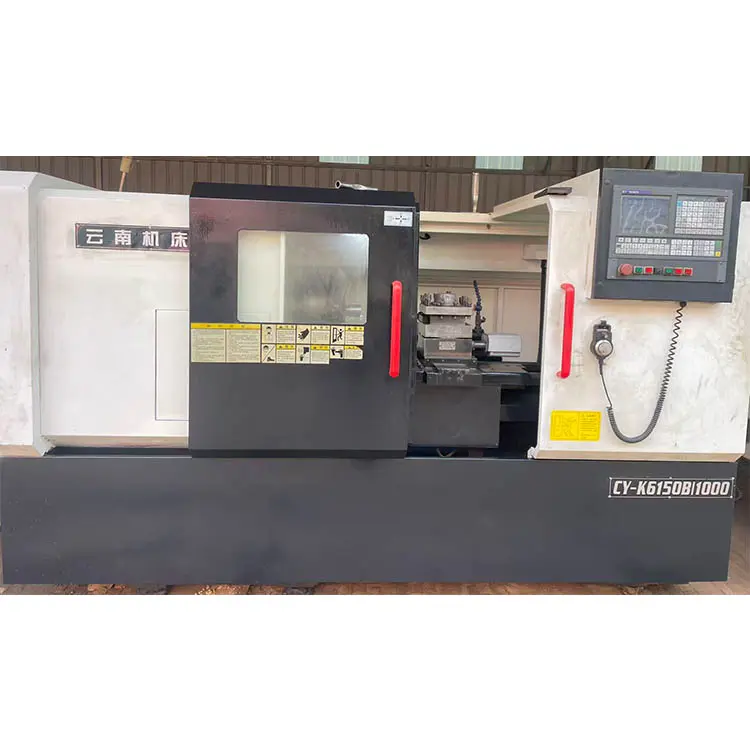
Our buyer flew in for two days [Zora will replace]. He brought his own dial indicator and a magnetic base, which I respect; borrowed gauges hide bias. Here is the sequence we ran together and the numbers we both agreed to accept:
| Check | Method | Accept | Investigate | Walk away |
|---|---|---|---|---|
| Spindle taper runout | Test bar, indicator at nose | 0.005 mm or less | 0.005–0.01 mm | Above 0.01 mm |
| Spindle axial play | Push-pull about 200 N | Under 0.005 mm | 0.005–0.01 mm | Above 0.01 mm |
| Bed twist | Digital level, both directions | Under 0.02 mm per metre | 0.02–0.04 mm | More |
| Carriage backlash | Jog and reverse with indicator | 0.01 mm or less | 0.01–0.02 mm | Above 0.02 mm |
| Tailstock alignment | Test bar between centres | Under 0.02 mm over 300 mm | More with shimming possible | Misaligned with damage |
| Test cut taper | Turn 1045 steel bar, measure 3 points | Under 0.02 mm over 200 mm | 0.02–0.04 mm | Above 0.04 mm |
The runout reading came in at 0.004 mm, measured directly on the spindle taper and not on the chuck jaws. That detail matters. Chuck jaw runout tells you about the chuck, which is a few hundred dollars to replace or grind. Spindle taper runout tells you about the spindle itself, and a spindle rebuild can cost thousands. Always ask which surface was actually measured.
Bed wear got the most attention, and rightly so. On a conventional lathe the carriage spends most of its life in the middle third of the bed, so the ways near the headstock often wear into a visible shoulder. You can feel it with a straightedge and feeler gauge: daylight under a straightedge laid across the ways near the headstock means the carriage will drop as it travels, and that drop becomes taper on every long part. His straightedge showed a light gap under 0.02 mm at three positions, which is consistent with light duty use. The ways still showed original flaking over most of their length, and flaking you can still see is a good sign, because it means the hardened surface has not been ground away.
The Test Cut Settles It
We ran the spindle through 25, 50 and 100% of maximum speed for five minutes each before touching steel, listening at each step. No growl at coast-down, and the front bearing housing stayed under 45 degrees Celsius after a thirty-minute run. Warm oil was clean amber, not milky and not dark.
Then the cut that mattered. We chucked a 100 mm bar of 1045 steel, took a roughing pass of 2 mm per side and a finishing pass at 0.15 mm per revolution. He measured the diameter at three points along the length. Taper came out at 0.015 mm over 200 mm, inside his limit, and the surface read in the Ra 1.6 to 3.2 µm range with no chatter marks. Roundness at zero, ninety and one-eighty degrees showed no lobing, which pointed to a healthy spindle rather than a lucky axis. He also cut a thread and checked it with a ring gauge, because pitch errors on a used lathe usually trace back to gearing or encoder synchronisation rather than the bed.
I tell every visitor the same thing: never accept a test cut on material the seller chose at random that morning. Bring your own known bar stock, or ask for a certificate of the material. A cold machine hides problems that a warm machine shows, so ask the seller to run the lathe for half an hour before you arrive.
Paperwork Counts as Much as Metal
Before he left, we handed over the service notes we had for the machine, the lubrication chart, and a list of any parts replaced during our refurbishment. No maintenance history is not an automatic rejection, but it changes how hard you should test, and it weakens your hand when you negotiate. A seller who refuses to power the machine, refuses a test cut, or cannot produce a serial number should be treated as a higher-risk counterparty, and your offer should reflect that risk.
What Did the Customer Say After the Machine Arrived?
Delivery is the moment the whole deal is judged. A machine that measured well in the workshop can still arrive damaged, and buyers judge suppliers by how the machine lands, not by how it left.
After arrival the customer reported the lathe turned within 0.02 mm taper over 200 mm with no re-leveling surprises, credited the wooden case and anti-rust packing for the clean transit, and confirmed he will order a second machine for his second workshop.
From Our Yard to His Floor, What Held Up
The machine shipped in a wooden case on a steel skid with anti-rust coating on the ways and desiccant inside, which is our standard export packing. Container humidity can go above 90% on a long sea crossing, and unpainted machined surfaces will rust inside a week without protection. His forwarder cleared it at [Zora will replace] and the machine reached his workshop outside Ho Chi Minh City in good order.
His first report after installation is the one I want to quote almost word for word, because it validates the process rather than our sales pitch. He re-leveled the machine on his own foundation, then repeated the same three checks we had run together: spindle runout, bed twist, and a test cut on the same steel grade. The taper reading after transit matched the pre-shipment reading within 0.005 mm. He wrote, and I am cleaning up his English a little: “The numbers you showed me before payment are the numbers I got after arrival. That is new for me with used machines.” That sentence is the reason we film every running test and invite third-party inspection before the balance payment instead of after.
Feedback, and the Two Things He Would Change
Honest feedback is worth more than praise, so I pushed him for the complaints. He gave me two, and both are useful to anyone planning a similar purchase.
First, the change gears and steady rest had been packed inside the electrical cabinet, and he found them only on day three when he opened it to check the wiring. Nothing was damaged, but he lost half a day looking. We now photograph every accessory location and send the photo set with the packing list, so the buyer knows where every loose item sits before the crate is opened.
Second, he wished he had ordered the 2,000 mm between-centres version from the start, because a customer of his sent a 1,750 mm shaft two weeks after installation [Zora will replace]. A swing of 630 mm and centres of 1,500 mm handled everything he had on paper, but one unexpected order exceeded the bed. His words: “Next machine, always one metre longer than I think.” I have started saying the same thing to customers who quote their current drawings only. Drawings change. Beds do not.
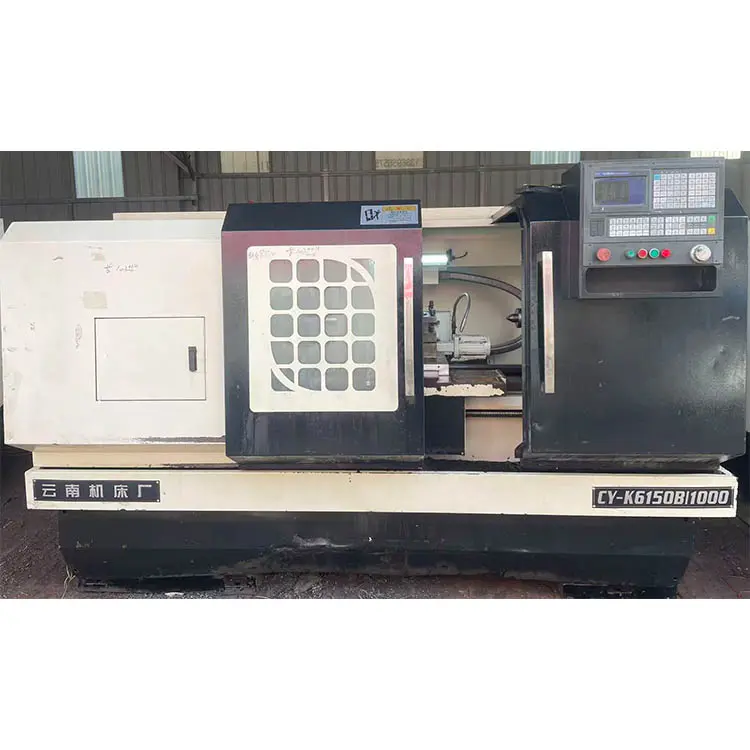
Here is how the full cycle looked against his original requirements, from first email to final feedback:
| Stage | What was promised | What the buyer verified | Result |
|---|---|---|---|
| Machine selection | Spec table matched to drawings | Checked swing, bore, speed range against parts | Matched |
| Pre-order testing | Running video plus test report | On-site visit, own gauges, test cut 0.015 mm taper | Matched |
| Inspection support | Third-party inspection allowed | He sent an inspector before balance payment | Accepted |
| Packing | Wooden case, anti-rust, desiccant | Surfaces rust-free on arrival | Matched |
| Post-arrival accuracy | Same numbers after transit | Re-test within 0.005 mm of pre-shipment | Matched |
| Accessories | Full inventory documented | Two items hard to find in crate | Packing photos added |
His final message said he is preparing an order for a second lathe and a used press brake for the new workshop. I mention that not as a boast but because it is the pattern I see most often: a buyer who verifies before paying comes back, and a buyer who pays on trust alone rarely does. If you take one thing from this case, take his checklist. Runout, bed twist, tailstock alignment, warm test cut, taper over 200 mm. Five checks, one morning, and no surprises on the shop floor. Our current used lathe inventory list includes machines in this class, and our inspection guide walks through the same numbers in more depth; see also how we prepare machines for export if shipping is your worry.
Conclusion
A used lathe meets turning requirements when the drawings, the measurements and the test cut all agree. Demand numbers from your supplier, verify them yourself, and the machine will earn its keep.