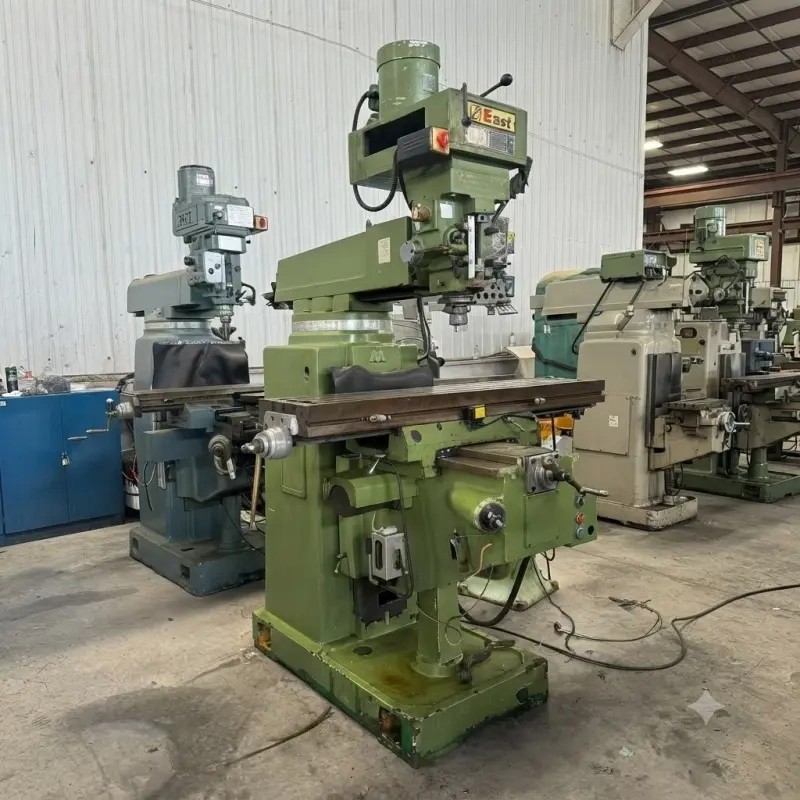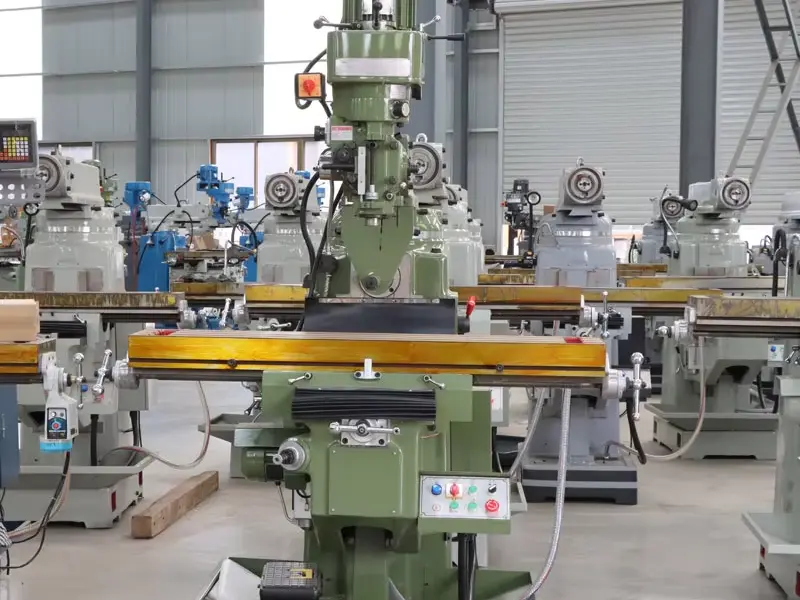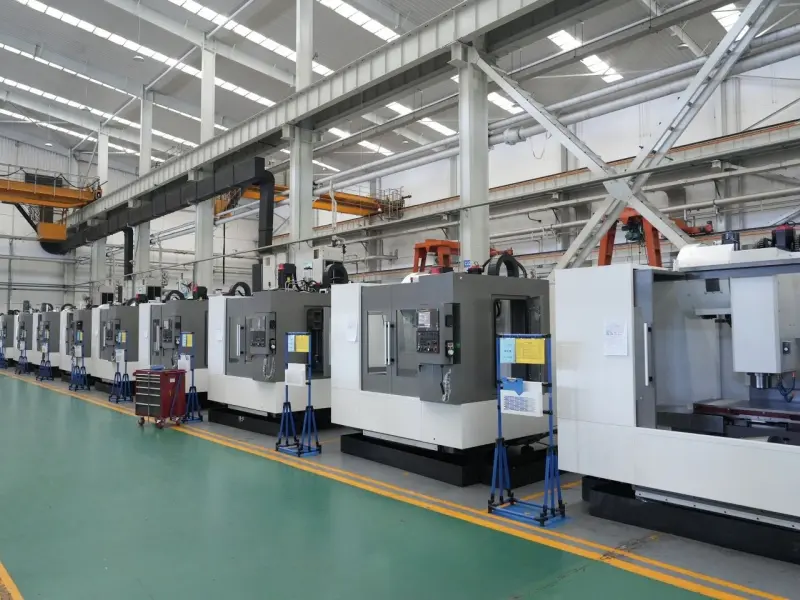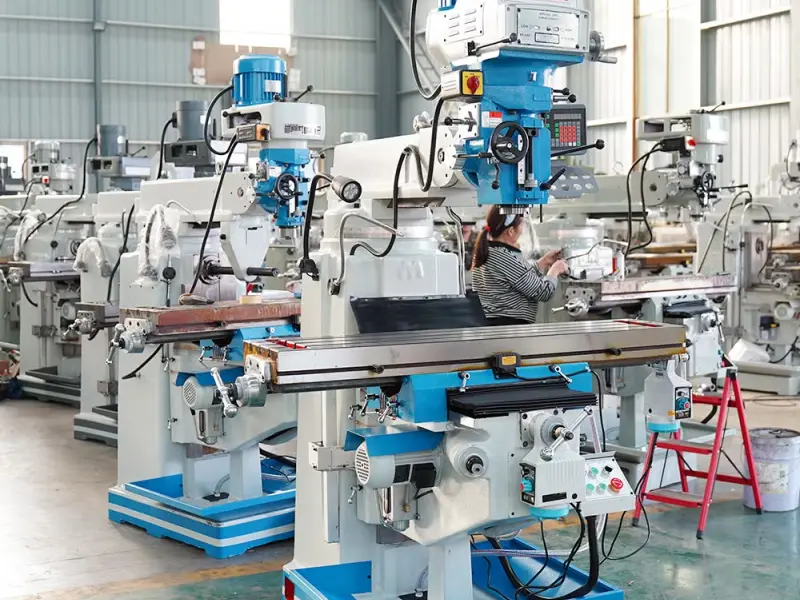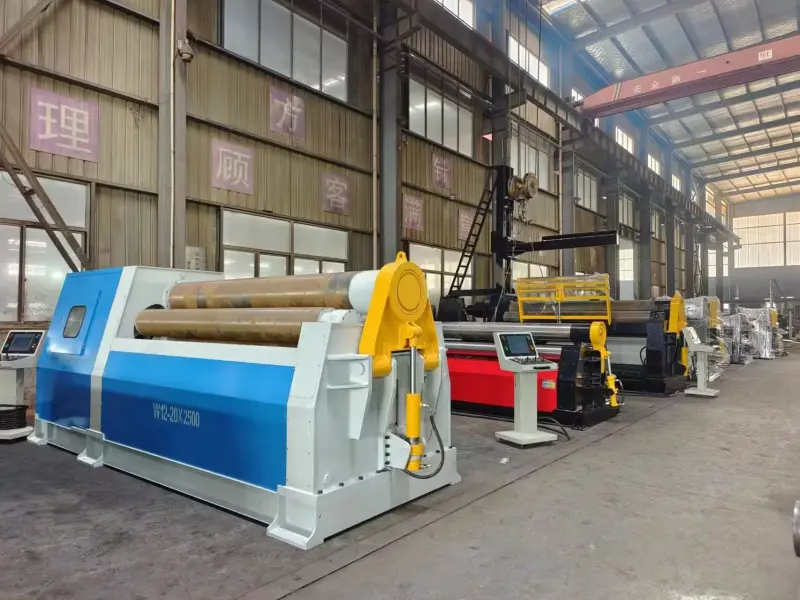


Rolling 10mm carbon steel plate on a used rolling machine sounds risky, and one wrong pass can crack a plate or ruin the rolls. I will walk you through how the process actually works and what the machine must be able to do.
A used plate rolling machine rolls 10mm carbon steel by clamping the plate between powered rollers and bending it through repeated passes. The operator pre-bends both ends, centers the plate, lowers the top roll in small steps, and rolls until the cylinder closes.
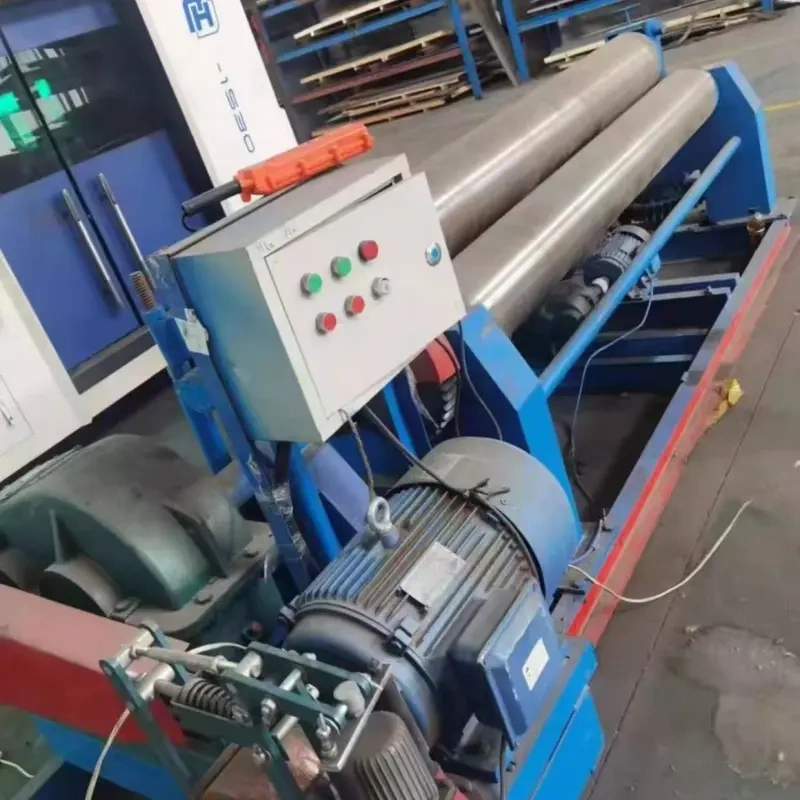
I have sold and tested used rolling machines from our stock in Liaocheng for years, and the 10mm question comes up almost every week. Buyers in Vietnam, Saudi Arabia, and the Philippines ask the same thing: can an older machine really handle plate that thick, pass after pass? The honest answer is yes, but only when you understand the mechanics behind the process and buy a machine that still has the muscle for it. This article breaks the job into three parts. First, what physically happens to a 10mm plate between the rollers. Second, what machine capacity and configuration the job actually demands. Third, how I inspect a used rolling machine before I let one leave our yard.
What Actually Happens Between the Rollers When 10mm Carbon Steel Bends?
Many buyers think rolling is one continuous bend, and they underestimate how much control each pass needs. Push a 10mm plate too hard in one go and it cracks, slips, or comes out oval, and then your cylinder is scrap.
Rolling 10mm carbon steel is a repeated three-point bending process. The two lower rolls drive the plate while the top roll presses it down in small steps, each step usually limited to about one millimeter, until the plate takes a permanent round shape.
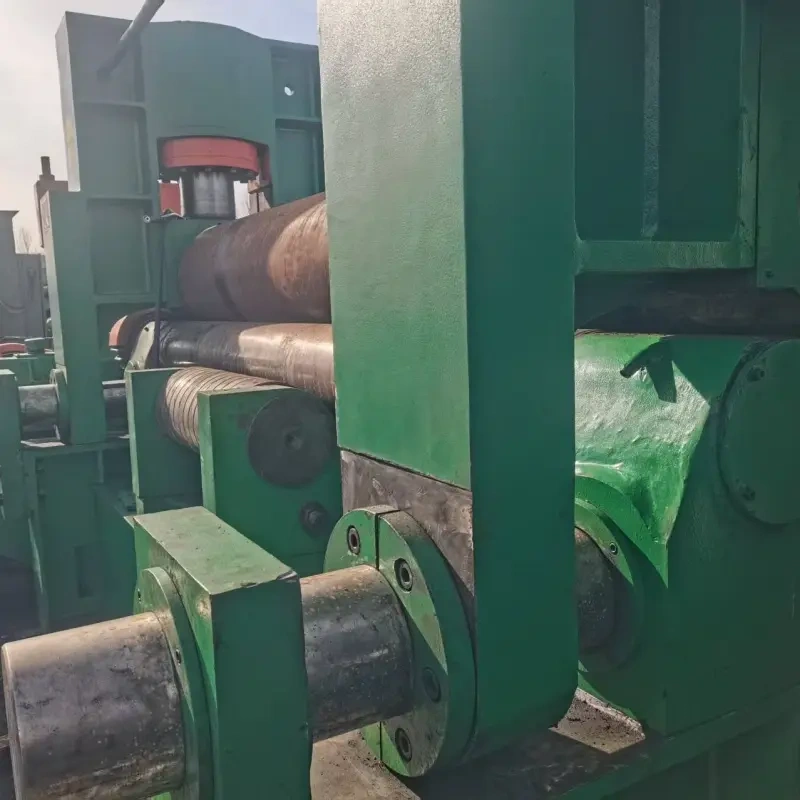
Let me describe the physics first, because everything else follows from it. A plate rolling machine is really a bending machine. The plate sits on two lower rolls, and the top roll presses down from the middle. That contact creates three load points. When the pressure pushes the plate past its yield point, the metal deforms permanently. Carbon steel plate like Q235 has a yield strength around 245 MPa, and that number matters more than thickness alone, because the machine rating assumes it. A machine rated for 10mm on Q235 will not roll 10mm of a high-strength alloy the same way, so always check the yield assumption behind the nameplate.
The Four Stages of Every Rolling Job
A proper rolling job runs through four stages, and I teach every customer the same sequence. Stage one is pre-bending. The two ends of the plate cannot reach the top roll, so they stay flat unless you bend them first. On a symmetric three-roll machine, you pre-bend one end, flip the plate, and pre-bend the other end. The remaining straight edge should end up within about 1.5 to 2 times the plate thickness, so for a 10mm plate you are aiming for a flat zone of roughly 15 to 20mm at each end. Stage two is centering. The plate edge must sit parallel to the roll axis, with an alignment error under 1 to 2mm. Skewed centering gives you a twisted, cone-shaped cylinder, and I have watched operators waste a whole afternoon correcting one bad feed. Stage three is the rolling itself, which I cover in the pass schedule below. Stage four is rounding. You roll the closed cylinder one or two extra turns under the working pressure, then release gradually, so the whole circle ends up even.
A Realistic Pass Schedule for 10mm Plate
Experienced operators lower the top roll in small increments. A common rule from Chinese machine manuals limits each downward step to about 10% of the plate thickness, which means roughly 1mm per pass for a 10mm plate. Cold rolling also needs a bit of overbending to compensate for springback, since the steel opens up slightly after the pressure releases. Here is the kind of schedule I would use to roll a 10mm Q235 plate into a cylinder of about 800mm diameter on a W11-class machine:
| Pass | Top roll drop | What the plate does |
|---|---|---|
| Pre-bend ×2 | Set for edge bend | Both ends curved, straight edge kept to 15–20mm |
| Pass 1 | ~2mm | Gentle full-length curve, plate still springs back |
| Pass 2 | ~2mm | Radius shrinks, springback fades |
| Pass 3 | ~1.5mm | Plate starts holding shape |
| Pass 4 | ~1.5mm | Close to target diameter |
| Pass 5 | ~1mm + overbend | Closes the seam, compensates springback |
| Rounding | 1–2 turns at pressure | Evens the whole circle |
Five to seven passes is normal for this thickness. The exact count depends on the target diameter and the operator’s feel, so treat the table as a starting point, not a recipe [Zora will replace with your standard pass sheet if you have one]. Rolling speed stays low, around 4 m/min on the W11-10×2500 class machines I stock, and thin-plate work should stay under about 5 m/min to avoid slipping.
Why Repeated Passes Protect Both the Plate and the Machine
There is a shop-floor truth I tell every visitor to our yard: the plate forgives a slow operator and punishes a greedy one. Press the top roll down 5mm at once on a 10mm plate and three things go wrong at the same time. The bend concentrates at one spot and the plate kinks. The drive rollers slip because the plate cannot grip. And the frame, bearings, and gears take a shock load that an older machine feels far more than a new one. Staged passes spread the plastic deformation along the full length, keep friction alive between plate and rolls, and let the operator watch both plate ends for skew after every turn. It also protects the operator, because a plate that pops free under heavy load is a genuine safety hazard, not just a quality problem. When I film running tests for customers, I always show the full pass sequence, not just the final turn, because that is where they can judge whether the machine takes each pass smoothly or shudders through it.
Which Machine Capacity Do You Need to Roll 10mm Plates Comfortably?
Capacity numbers on used rolling machines are often quoted at their absolute limit, not at the level where a machine works all day. Buy exactly at the nameplate limit and the machine will struggle on every 10mm job you feed it.
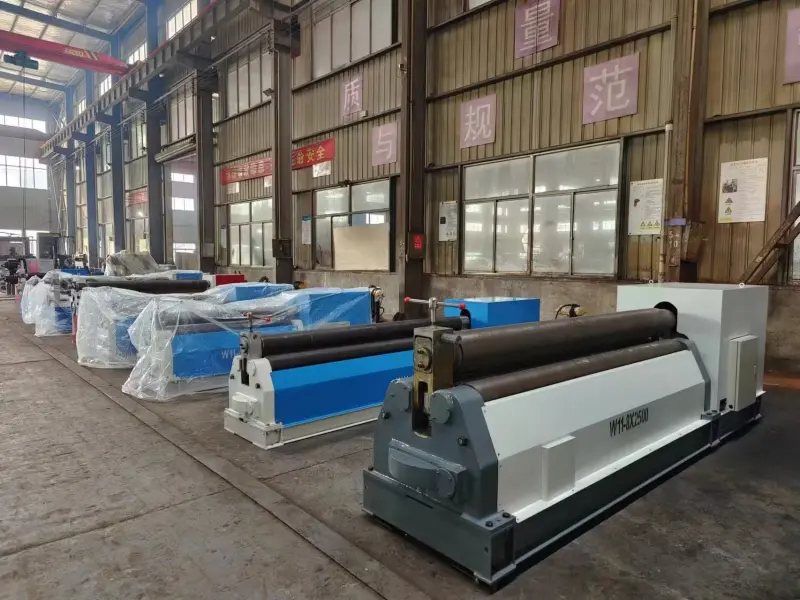
A comfortable 10mm carbon steel job needs a symmetric three-roll machine such as the W11-10×2500 with forged rolls, a 7.5 kW main motor, and a minimum rolling diameter around 400mm, and it should run at 80–90% of rated capacity in daily production.
Let me get concrete. The W11-10×2500, the workhorse of the Chinese rolling machine world, is rated for 10mm plate over a 2500mm working width. Its top roll is about 240mm in diameter, the lower rolls about 180mm, with a 280mm center distance between the lower rolls. The main motor is 7.5 kW with a 3 kW motor for top-roll lifting, the rolling speed is roughly 4 m/min, and the whole machine weighs around 3,150 kg. The minimum rolling diameter sits near 400mm, which means if your cylinder is smaller than that, the plate fights the geometry of the rolls, and you need a different machine or a different process. These are the numbers I check first when I evaluate any used W11 that comes into our stock.
Rated Capacity Versus Honest Working Capacity
Here is the point I wish more dealers would say out loud: the maximum rolling thickness on the nameplate is a short-burst rating, not a daily working rating. Good operating practice keeps long-term work at 80–90% of rated capacity, so a machine rated at 10mm should really spend its life rolling 8–9mm plate with occasional full-load jobs. That sounds like bad news, but it is actually the argument for buying used. A used W11-10×2500 in good condition can absorb an occasional full-thickness 10mm job that a new machine owner would hesitate to run continuously, because the used machine cost a fraction of the new price and you can reserve the heavy passes for it deliberately. On pricing, used data points I see in the market put a W11-6×3000 mechanical machine around $6,800 and a heavy W11-30×2700 hydraulic machine around $34,000, so a used 10mm-class machine typically sits between those anchors [Zora will replace with current stock pricing]. That is a 30–70% saving against new, which is the whole reason our customers in Southeast Asia and the Middle East buy from us.
Three-Roll, Four-Roll, Mechanical or Hydraulic?
Configuration decides how much straight edge you fight and how smooth the passes feel. A symmetric three-roll machine is simple, tough, and cheap, but it leaves the longest straight edges and needs the flip for pre-bending. A four-roll machine clamps the plate between rolls and pre-bends both ends without flipping, and it holds roundness noticeably better. Drive type changes the feel too: mechanical machines use gear drive with a fixed speed character, while hydraulic machines apply pressure through cylinders and handle thick plate with more control. The table below is how I summarize the choice for a buyer whose main job is 10mm carbon steel:
| Machine type | Straight edge | Pre-bending | Roundness control | Typical fit for 10mm work |
|---|---|---|---|---|
| Symmetric 3-roll, mechanical | Longest, ~1.5–2× thickness | Flip the plate | Needs skilled operator | Budget shops, mixed thin jobs |
| 3-roll with hydraulic assist | Shorter | Easier edge work | Good | Regular 6–12mm plate work |
| 4-roll machine | Very short | Both ends in position | Best of the group | Cylinders, tanks, batch production |
| CNC plate roll | Configurable | Automatic | Automated, ±0.1mm-class accuracy | High-mix precision work |
For most of our buyers, an honest answer is that a used three-roll machine handles 10mm Q235 plate perfectly well if the operator knows the pass schedule, and a four-roll is worth the premium when cylinders are the main product, not an occasional job. I lean practical here: I would rather sell a customer a solid used W11-10×2500 plus good operator training than push them into a four-roll they cannot justify.
The Diameter Question Nobody Asks About
Capacity tables talk about thickness and width, but the minimum rolling diameter decides whether the job is even possible. On the W11-10×2500 class, that floor is around 400mm. Below it, the plate wraps too tightly around the roll geometry, friction drops, and the plate slips instead of feeding. I had a customer in Malaysia who wanted 10mm plate rolled to a 300mm diameter shell [Zora will replace], and the correct answer was not a bigger machine but a press brake or a different forming route. So when you evaluate a used rolling machine, ask three capacity questions together: maximum thickness at the stated yield strength, maximum width, and minimum rolling diameter. A seller who only quotes the first two is not giving you the full picture, and I say that as someone who quotes all three on every machine we list.
How Do You Check That a Used Rolling Machine Can Still Handle 10mm Plate?
A used rolling machine looks complete even when its rolls are worn, its hydraulics are tired, and its frame is stressed. None of that shows in photos, and by the time it shows in production, you have already paid for it.
Verify a used plate rolling machine with a roll surface and geometry check, a bearing and gear play check, a hydraulic and electrical check, and above all a live test roll on plate close to 10mm, watching every pass for slip, skew, and uneven curvature.
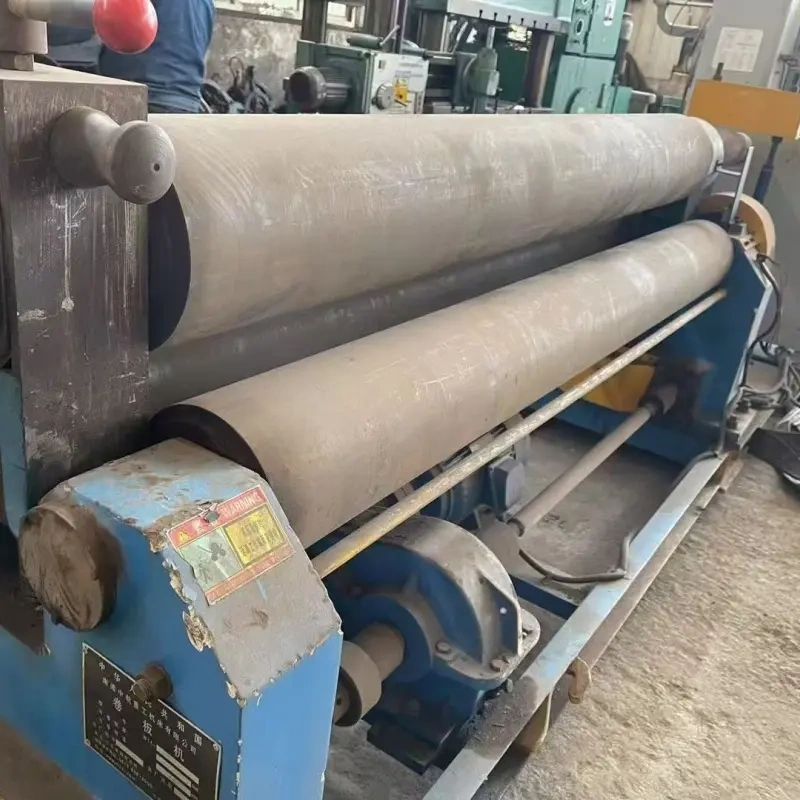
This is the section where I tell you what I actually do before a machine leaves our yard, because rolling machines hide their age differently from lathes or mills. The good news is that a rolling machine is mechanically simple. Three rolls, a frame, a drive, and a lifting mechanism. That simplicity means a focused inspection catches most problems in under an hour, and I insist on a test roll with real plate whenever the buyer cannot visit in person.
Rolls, Frame, and Geometry
Start at the roll surfaces. Run a hand across each roll and look for scoring, weld-spatter pits, and flat spots where the plate has worn the surface unevenly. Light polish marks are fine; deep scoring will print onto every cylinder the machine rolls forever. Then check roll geometry with a straightedge and feeler gauges: the top roll should be parallel to the lower rolls, and a worn or bent top roll shows up as a taper across the plate width. Check the drop-end bearing seat too. Open it, close it, and look for play in the bearing housing, because that play lets the roll float under load and the curvature wanders from one pass to the next. Frame cracks matter most around the welded base and the bearing-support areas, so clean those zones and inspect them properly. Machine weight is a cheap tell here: a real W11-10×2500 should weigh roughly 3,150 kg, and a machine that weighs dramatically less than its class suggests cut-down construction.
Drive, Hydraulics, and the Live Test Roll
Next comes the drive and the hydraulics. On a mechanical machine, run every speed through the gearbox and listen for gear knock, and check the worm-and-screw lifting mechanism for backlash as the top roll rises and falls. On a hydraulic machine, watch oil pressure at idle and under load, look at the sight glass for milky or dark oil, and check every cylinder and hose for weeping. Then do the part that no photo can fake: the test roll. I feed a plate near the machine’s rated thickness, ideally close to 10mm for a 10mm-class machine, and roll a full cylinder while watching three things: whether the plate slips under the top roll pressure, whether the feed stays square to the roll axis, and whether the finished circle measures even from end to end. A machine that takes the pass schedule smoothly and closes the seam cleanly is a machine you can buy. Here is my working checklist in one table:
| Check | How I do it | Red flag |
|---|---|---|
| Roll surfaces | Hand check, visual scoring | Deep scoring, spatter pits, flat spots |
| Roll parallelism | Straightedge + feeler gauges | Visible taper across width |
| Drop-end bearing | Open/close, check play | Float under light hand pressure |
| Frame | Clean + inspect welds | Cracks near base or bearing supports |
| Gearbox | Run all speeds | Gear knock, oil leaks |
| Top-roll lift | Raise/lower cycles | Backlash, creeping drop under load |
| Hydraulics | Pressure at load, sight glass | Milky oil, weeping cylinders |
| Test roll | Full cylinder near rated plate | Slip, skew, oval or tapered shell |
Paperwork, Videos, and Buying Without Regret
Inspection does not end at the machine. Ask for the machine’s model plate, motor ratings, and any refurbishment records, and match the serial number against the invoice. For overseas buyers, I always recommend a test video shot in one continuous take, showing the control panel, the plate going in, several full passes, and the finished cylinder coming out, because edited clips hide exactly the moments that matter. We also welcome third-party inspection, and buyers from Saudi Arabia and Qatar have used SGS-style pre-shipment checks on machines from us, which protects both sides. My personal rule after years in this trade: if a seller refuses a live test roll on plate close to your working thickness, he is not hiding a small problem, and you should walk away rather than negotiate the price down. The machine will still be there next week; your production schedule will not.
Conclusion
Rolling 10mm carbon steel on a used machine works when you respect staged passes, buy honest capacity, and demand a live test roll before payment. Do those three and the machine earns its keep for years.