

A used surface grinder looks solid in photos. Hidden spindle wear and a cupped chuck turn your bargain into scrap parts and lost weeks. Here is the checklist I use before money moves.
Check six things before buying a used surface grinding machine: spindle runout and heat after a 30-minute run, table way wear, hydraulic oil condition and table reversal, magnetic chuck flatness, downfeed indexing, and a measured test grind. A seller who refuses the test grind is telling you the answer already.
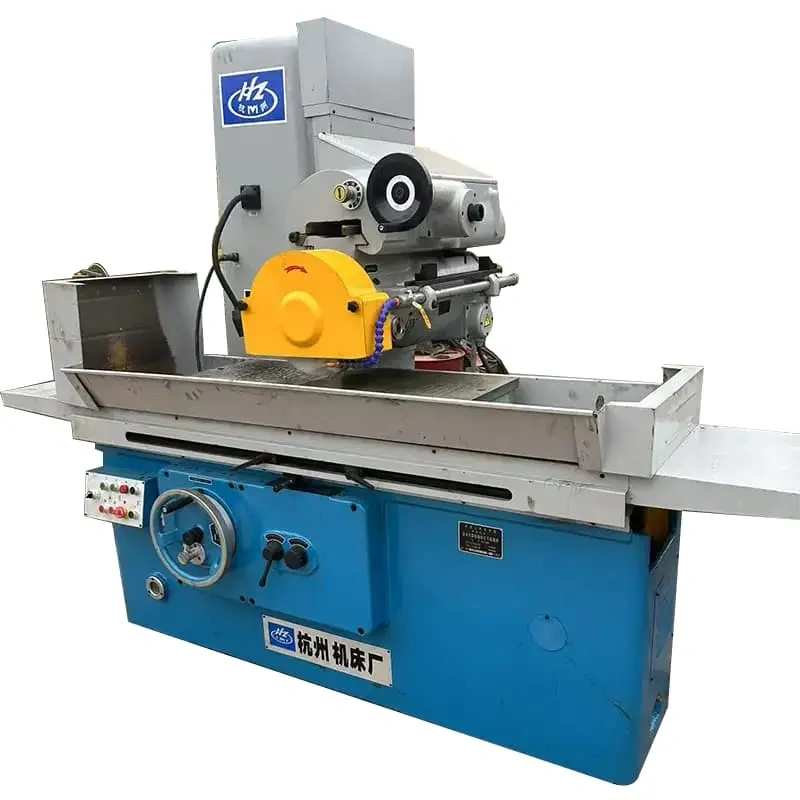
A surface grinder is usually the last machine a part touches before it ships, so the accuracy stakes are higher here than on almost any other machine in your shop. The good news is that grinders are mechanically simple and built heavy, and a well-maintained older machine often outperforms a new budget one. The bad news is that the parts which decide accuracy — spindle bearings, table ways, hydraulic seals, the chuck face — are exactly the parts a careless seller can hide behind fresh paint. I have walked buyers through dozens of used surface grinding machines in our warehouse in Liaocheng, and the same handful of checks keeps separating the good buys from the expensive regrets. Work through them in order, and take your own measurements instead of trusting anyone’s summary. You can also browse our used grinding machines in stock before your visit, so you know what a properly presented machine looks like.
How Do You Test the Spindle and Table on a Used Surface Grinder?
The spindle and the table ways carry the machine’s accuracy. Both are expensive to restore, and both hide their worst damage under guards, oil film, and a fresh coat of paint.
Run the spindle unloaded for 30 minutes. Feel the bearing housing and listen for rumble. Then check runout with a dial indicator: under 0.005 mm TIR is precision class, and anything above 0.013 mm means a rebuild costing thousands of dollars.
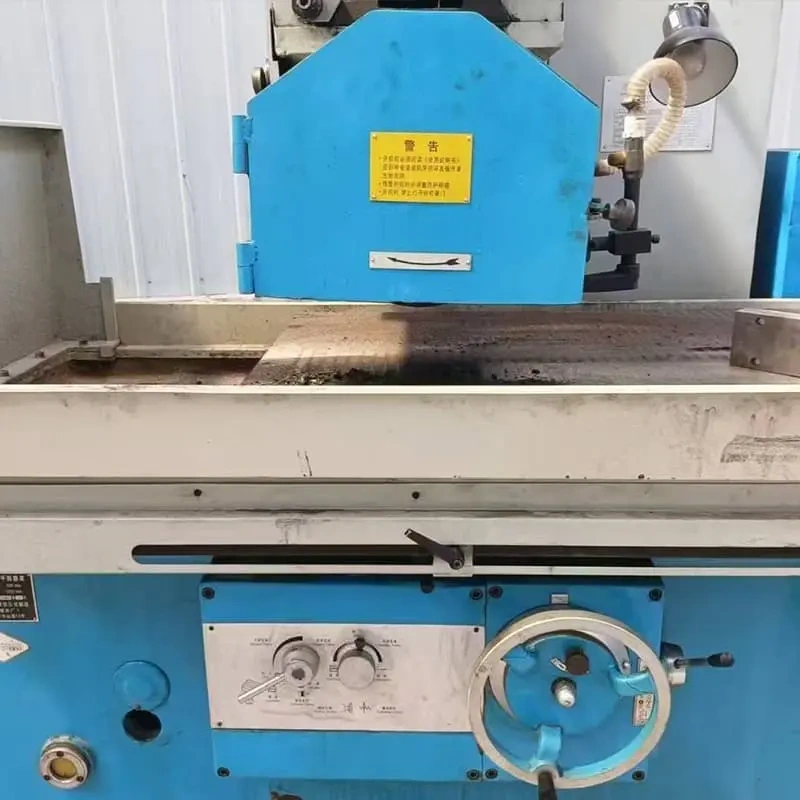
Start With a 30-Minute Unloaded Run
Ask the seller to start the machine cold, because cold matters. A warm spindle hides noise that a cold one reveals. Run the wheelhead at full speed for 30 minutes with nothing on the table. During the run, rest the back of your hand near the bearing housing every five minutes. Warm is normal. Hot to the touch is not. I use a simple rule: if the housing sits more than about 30 °C above the shop floor temperature after half an hour, the bearings are working too hard. Listen as well. A healthy spindle runs quietly, almost a hiss. A rumble, a whine, or a rhythmic knock points at bearing wear. Watch the finish the wheel leaves on a scrap pass too, because a cloudy or chattering surface usually means the vibration starts at the spindle and not at the wheel balance. One more trick: rotate the arbor by hand with the power off. It should turn smoothly with even resistance through the whole revolution. Grit or a tight spot under your fingers tells you what another hour of running would only confirm. The back of your hand is still the cheapest gauge in the shop, and I trust it before I trust any polished sales brochure.
Read the Runout Numbers, Not the Seller’s Smile
Next, mount a dial indicator and measure. Check the spindle taper and the wheel flange face, both radial and axial. Numbers matter more than adjectives here, and a serious seller will hand you the indicator before you ask for it. A precision-class machine should hold runout under about 0.005 mm total indicator reading. General shop work tolerates up to about 0.013 mm. Above that line you are buying a spindle rebuild, and rebuild quotes on grinders commonly run from $5,000 to $20,000. On a mid-size used machine that can exceed the resale value of the whole grinder, so the arithmetic decides the purchase for you. I once inspected a spotless M7130-class machine [Zora will replace — swap in a real unit from our inspection records] that had been repainted so well the ways gleamed under the lights. The runout reading told the real story within two minutes of arriving. That visit cost me a taxi fare and saved me the price of a rebuild.
| Spindle reading (TIR) | Verdict | Budget for |
|---|---|---|
| Under 0.005 mm | Precision class | Nothing extra — buy with confidence |
| 0.005–0.013 mm | Acceptable for general shop work | Negotiate the price down |
| Over 0.013 mm | Failing | $5,000–20,000 spindle rebuild |
| Housing over ambient + 30 °C after 30 min | Bearing wear | Full rebuild before trusting accuracy |
Way Wear Shows Up on Long Parts
Table ways come next. Slide the guards back and look near the middle of the stroke, not at the ends. Machines spend most of their working life grinding in the middle, so that is where wear concentrates. Scoring, galling, or a visible shoulder near the headstock end means the carriage has been riding low for years. Worn ways cannot be dressed out or painted over; only rescraping or regrinding restores them, and few workshops still do that work. Check flatness yourself. Lay a precision straightedge on the cleaned table and feel for daylight at the middle. Daylight at mid-span with contact at both ends means the table is dished, and a dished table grinds dished parts. Then traverse the full travel with your hand resting on the table and feel for tight spots or roughness. Finally, indicate a ground block clamped to the table and traverse it under the spindle nose. Variation over the travel should stay near 0.0003 in per 12 in, which is about 0.008 mm over 300 mm. Flatness inside 0.005–0.013 mm over 300 mm is acceptable for most work. Beyond about 0.025 mm, plan on scraping work or lower your price expectations to match.
What Do Hydraulics, Chuck, and the Test Grind Reveal?
The hydraulic table, the magnetic chuck, and the test grind expose what static checks miss. This is where a clean-looking machine most often fails.
Watch the table reverse smoothly at both stroke ends, look for milky or dark oil, pull-test the chuck across its whole face, and grind a hardened test block. Flatness within 0.005 mm and a 16 Ra finish or better is the pass mark.
Hydraulic Oil Tells the Truth
Drain a small sample of hydraulic oil into a clear jar before the machine has run for long. Milky oil means water has entered the system. Dark, burnt-smelling oil means the pump has been running hot. Both tests are cheap, and both failures are expensive to ignore. Then watch the table itself. It should reverse softly at both ends of the stroke, with no jerk and no hesitation. Jerky reversal, or speed that drifts under the wheel, points to worn seals or sticking valves. A wet cylinder rod means the rod seals are past saving. Run the table through full slow and fast traverse and listen to the pump. A crackling noise means air is being drawn in somewhere, and aerated oil shortens the life of every component it touches. On a healthy machine, park the table and hold the system at working pressure for about ten minutes. A visible pressure drop over that time means an internal leak at the cylinder seals or the directional valve. Hydraulic overhauls are the most common surprise on used grinders, and they typically add $2,000 to $8,000 to the real cost of the machine. If the seller has a service log with oil changes recorded, that page tells you more about the previous owner than any spec sheet will.
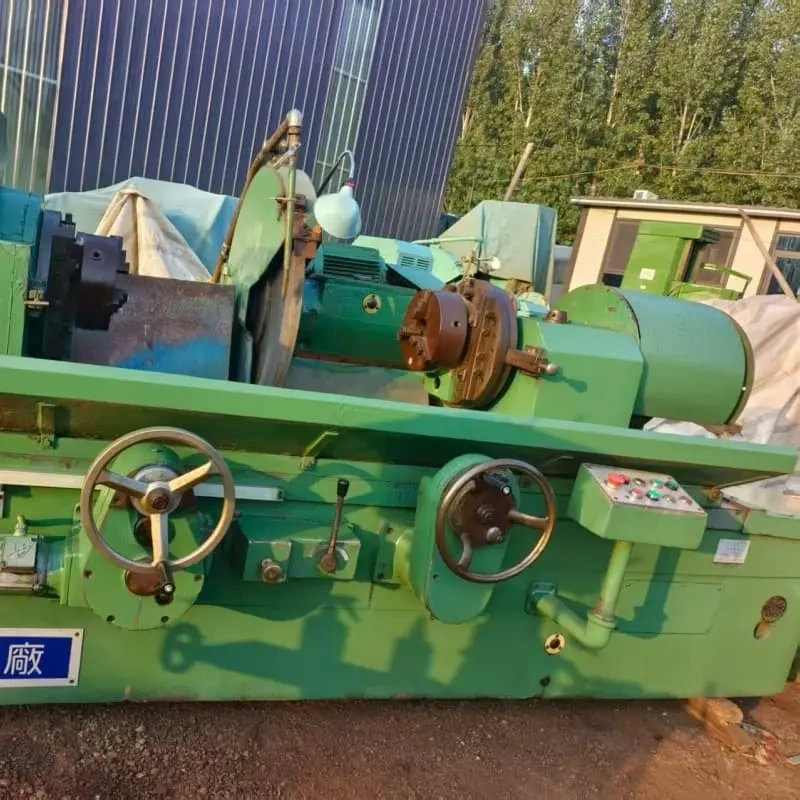
The Chuck Pull Test
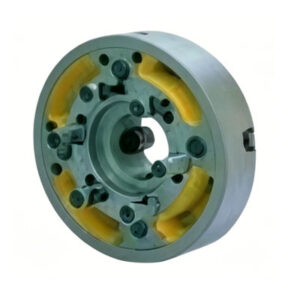
The magnetic chuck is the part buyers trust too easily. Switch it on, then pull a clean steel block sideways across the full face of the chuck, section by section. Dead zones, where the hold goes soft, mean damaged coils or internal faults, and a replacement chuck costs $2,000 to $10,000 or more. Check the chuck face with a dial indicator on a height stand. A precision chuck should sit flat within about 0.005 mm, and a cupped chuck produces cupped parts with perfect consistency. Deep scoring on the face is normal wear. What worries me more is a chuck that has been skimmed re-ground many times, because each pass removes magnet depth as well as steel, so ask how many regrinds it has had. Look for burn marks near the wiring as well. Those usually mean coolant got into the coils at some point, and water is what kills electromagnetic chucks. Confirm the chuck body is earthed to the machine chassis, then test the de-mag cycle. Parts that stay magnetised after switching off slow down every load and unload on your bench for years. We run this pull test on every grinder before it leaves our yard, and it takes less than five minutes with a block and a confident grip.
| Symptom during checks | Likely cause | Repair cost band (USD) |
|---|---|---|
| Milky hydraulic oil | Water in the system | Flush plus seal work |
| Dark, burnt-smelling oil | Overheated pump | Pump or valve rebuild |
| Jerky table reversal | Worn seals or valves | $2,000–8,000 overhaul |
| Wet cylinder rod | Failed rod seal | Seal kit |
| Dead chuck zones | Damaged coils | $2,000–10,000 replacement |
| Uneven crossfeed steps | Worn feed mechanism | Adjust or rebuild |
Downfeed and Crossfeed Indexing
Turn the vertical feed handwheel through its graduations. It should move the wheelhead smoothly, with no stiction and no slack. Automatic downfeed steps must index precisely, the same step every time, because inconsistent steps produce inconsistent stock removal. Crossfeed matters just as much. Engage the automatic cross-feed and watch it step along the table. Skipped or uneven steps show up later as unground stripes on your parts, and stripes are exactly the defect your customer will photograph and send back to you. On a machine fitted with a DRO, check that every axis responds to fine movement and that the encoders track in small increments. A dead axis or a DRO that jumps in coarse steps adds recalibration to your purchase cost. I also open the electrical cabinet at this point, because aged wiring, scorched contactors, and messy modifications predict downtime that no cosmetic checklist catches. Emergency stop, foot switch, and interlocks all get pressed and tested while the machine is live. These checks take ten minutes together, and they catch the failures that only appear on the worst possible day.
The Test Grind Nobody Should Skip
Everything before this point is preparation. The test grind is the exam. Bring your own block, hardened steel close to your real work if you can, and ask to grind it flat. Then measure it yourself. Flatness across a 150 mm part should land near 0.005 mm on a good machine, and the finish should read 16 Ra or better, which is roughly Ra 0.4 µm. Grind both faces and check parallelism as well, because a machine that holds flatness but not parallelism has a problem in its crossfeed or its ways. A seller who lets you grind and measure is confident in the machine. A seller who offers excuses — no wheel, no coolant, no time — is showing you the machine’s condition in a different way. I put this bluntly to buyers: if I will not run a test grind in front of you, you should not hand me money either. Ask for the results in writing, with the wheel specification, the coolant type, and the room temperature recorded next to the numbers. A tolerance claimed on one demo part, under unknown conditions, is worth very little. A tolerance measured on your own material, in front of your own eyes, is the only figure that should appear in your purchase decision.
When Does the Price of a Used Surface Grinder Still Make Sense?
Even a healthy machine can be the wrong buy. The maths works only when the repair list is short, the accessories are on the machine, and the seller’s answers survive your questions.
A used surface grinder makes sense when the total cost, including likely repairs and missing accessories, stays near 30–50% of a comparable new machine. Above that line, a new machine with a warranty and factory support usually wins.
Price Bands by Size and Condition
On the open market, a well-maintained used surface grinder generally trades at 30–50% of the cost of an equivalent new machine. Bands vary by region and condition, but these ranges are realistic for machines in working order with standard equipment:
| Machine type and size | Typical used price band (USD) |
|---|---|
| Manual reciprocating, 6″×18″ table | 3,000–8,000 |
| Hydraulic reciprocating, 8″×24″ table | 8,000–20,000 |
| Hydraulic reciprocating, 12″×24″ to 12″×36″ | 15,000–35,000 |
| CNC reciprocating | 25,000–75,000+ |
Chinese hydraulic models such as the M7130 and M7140 series sit near the lower end of the hydraulic bands, which is part of why we ship so many of them to Southeast Asia and the Middle East. Condition moves the number more than age does. A lightly used older toolroom machine often beats a younger machine that ran three shifts in production, so ask what the machine actually did, not when it was built. For export buyers, add inspection, packing, and freight to the comparison, because a bargain price with weak packing becomes a repair project at the port. We describe how we inspect and prepare machines before export on our site, and any serious supplier should be able to walk you through the same steps.
Repairs Change the Maths
Before you sign anything, turn every fault you found into a number and add it to the price. This is where buyers talk themselves out of money they are about to lose:
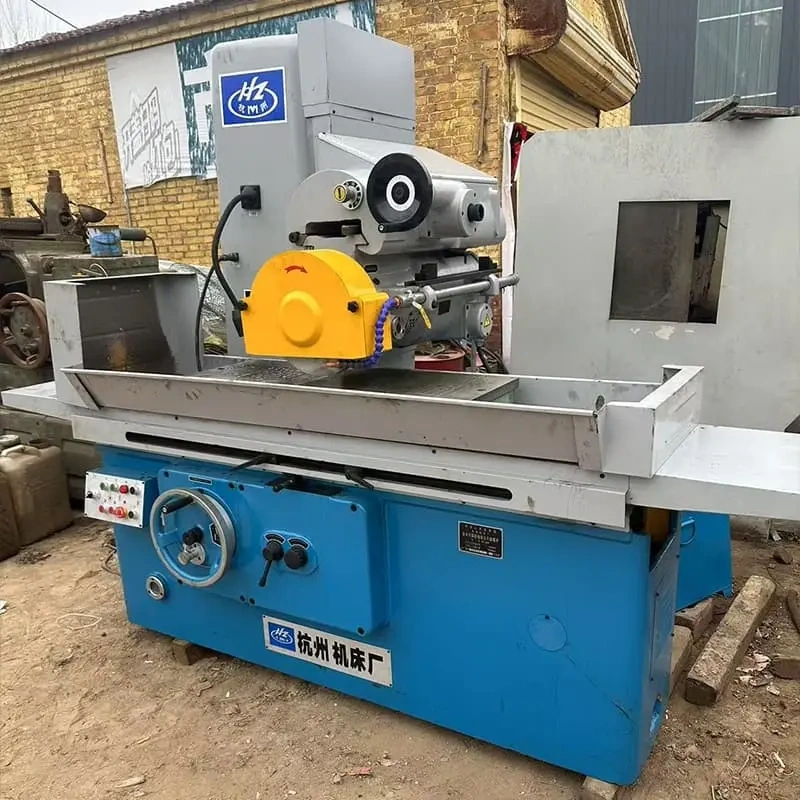
| Factor | Used surface grinder | New entry-level grinder |
|---|---|---|
| Upfront price | 30–50% of new | Full price |
| Accuracy | Depends on wear — verify by test grind | Tested to specification |
| Spares and service | Uncertain, brand-dependent | Factory support and warranty |
| Accessories | Often included if you check | Sometimes priced as options |
| Delivery | Usually in stock | Factory lead time |
| Hidden cost risk | Repairs, rigging, re-scraping | Little expected in year one |
A spindle rebuild alone can erase the savings. So can a hydraulic overhaul on top of a chuck replacement. When the repair list stacks up, walk away without guilt, because the used market always has another machine next month. In my experience the deals that work out are the boring ones: light wear, complete accessories, a seller with documents, and a test grind that passes on the first try.
The Accessories and Paperwork Nobody Checks
Ask for a written list of what comes with the machine. Wheel flanges, the balancing arbor, the diamond dresser, spare wheels, and the chuck are all real money if you buy them separately. Inspect the installed wheel with a ring test before you accept it. A cracked wheel is a safety hazard, not a bargaining chip, and it should leave the premises with the previous owner. Confirm the wheel diameter, width, and bore match the flange you are getting. Ask for manuals, accuracy charts, and maintenance records, and read them in the office, not at the machine, so you can think clearly. One more question I always ask: why did the last owner sell it? A clear answer about a workshop upgrade or a move to CNC is fine. A vague answer deserves a longer look at the hours and the wear patterns. Also confirm parts availability before you commit, because spindle bearings and hydraulic seals for less common brands can take weeks to source, and that is downtime you pay for twice. If the seller answers every one of these questions directly, you have learned something about the machine. If he dodges, you have learned something even more useful.
Conclusion
Check the spindle, the ways, the oil, the chuck, and the test grind. Buy the seller’s honesty first and the machine second. That order saves more money than any negotiation.