

Buying a used surface grinder from another country feels risky. One worn spindle can turn a bargain into a five-figure rebuild, and you only find out after the money has left your account. This is how one Indonesian buyer avoided that.
An Indonesian customer selected a used surface grinder by matching the table size to his largest die, checking spindle runout and way wear against written limits, demanding a filmed test grind on hardened steel, and confirming the machine was under ten years old to clear Indonesia’s 2026 import rules.
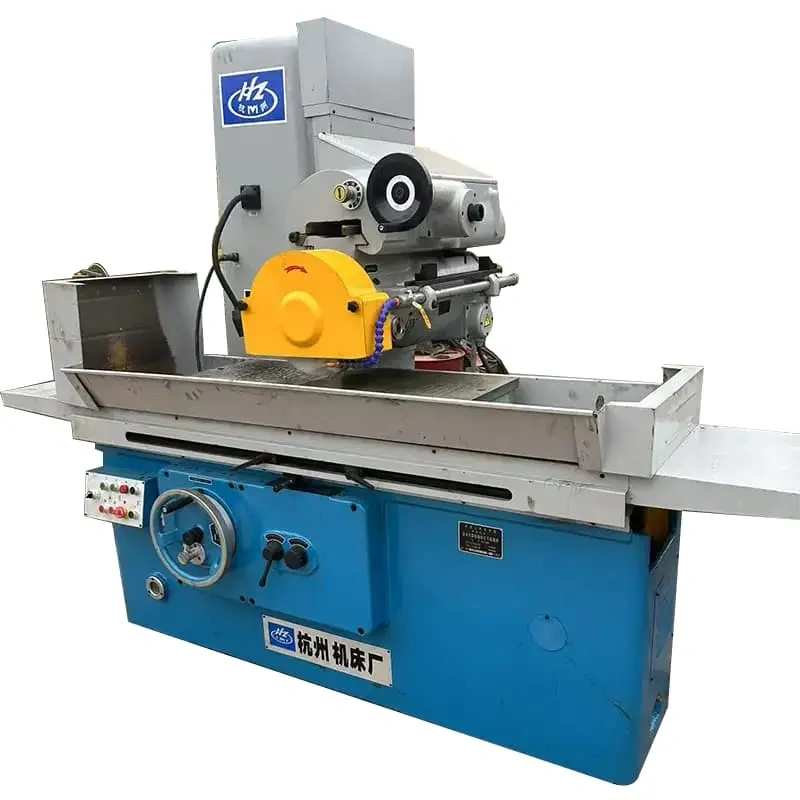
He found us the way most grinding buyers do now. He watched our stock videos first, then flew in for two days of measurements. [Zora will replace: customer company name and city]. What follows is the same sequence we walk every overseas customer through, and it works whether you buy from us, from a local dealer, or from anyone else selling used grinding machines in stock.
Why Did a Fabrication Shop in Indonesia Buy a Used Surface Grinder?
New precision grinders cost more than many small Indonesian shops can fund. Used machines deliver the same accuracy at a fraction of the price, but only when the wear is honestly measured first.
A used surface grinder makes sense when the price sits between 30% and 60% of a new equivalent, the ways and spindle still hold tolerance, and the seller proves accuracy with a documented test grind. That combination put our customer’s machine near half the cost of a new equivalent.
A surface grinder is usually the last machine that touches a part before it ships, so accuracy matters more here than on almost any other machine in the shop. The good news for buyers is that grinders are mechanically simple and built heavy. A well-maintained older machine from a serious builder often outperforms a new budget one, which is exactly why the used market rewards careful buyers.
What the Market Looks Like From Indonesia
Indonesia imports most of its precision grinding equipment. Industry estimates put foreign machines — mainly from China, Japan and Germany — at roughly 70–80% of domestic supply, and replacement cycles for precision grinders run eight to fifteen years depending on usage intensity. So a shop replacing a tired machine has three options: wait months for a new import, pay a local dealer’s margin, or buy used directly from a supplier abroad. Our customer manufactures die and fixture plates in West Java [Zora will replace], and his old machine had reached the point where flatness drifted beyond what his customers would accept.
Two numbers shaped his decision. First, the rupiah weakened to around 18,000 per US dollar in October 2026, which inflated the landed cost of any new machine and pushed new-machine quotes further out of reach. Second, Indonesia’s imports of CNC flat-surface grinders still grew about 14% year on year in the twelve months to June 2026, even with that currency pressure. Demand for grinding capability is real. The question is how you pay for it.
Lead time is the factor nobody budgets for. A new precision grinder built to order can take months before it reaches a Java workshop, and that wait sits on top of the currency problem. Our customer had quotes outstanding for more than one quarter when he called us, with customers of his own waiting on die plates. A used machine with real stock status ships in days, not months, and the accuracy it needs to deliver is achievable today if the wear is measured honestly. That arithmetic, more than the sticker price, is what pushed him onto a plane.
The Price Bands He Started From
Before he flew over, we agreed on honest budget bands so nobody wasted a trip. These are planning ranges for used machines in good working order, drawn from public dealer listings and our own export records:
| Machine type | Typical table size | Used price range (USD) | Typical buyer |
|---|---|---|---|
| Manual reciprocating surface grinder | 6″ × 18″ (150 × 450 mm) | 3,000 – 8,000 | Toolroom, one-off precision work |
| Hydraulic reciprocating grinder | 8″ × 24″ (200 × 600 mm) | 8,000 – 20,000 | Small production shops |
| Hydraulic reciprocating grinder | 12″ × 24″ to 12″ × 36″ | 15,000 – 35,000 | Die, mould and fixture work |
| CNC reciprocating grinder | Various | 25,000 – 75,000+ | Repeat batch production |
As a reference point, a new 6″ × 18″ manual surface grinder was listed around 17,000 USD by US distributors in 2026, and hydraulic automatic versions sat near 25,000–27,000 USD. Used machines generally trade at 30–60% of new pricing. My own view, formed after years of walking through our stockyard: buy the automation your real workload justifies, not the one that flatters you. A hydraulic 200 × 600 mm machine covers most die-plate work in Southeast Asia, and the extra money a CNC badge costs is better spent on a fresher, better-documented hydraulic machine.
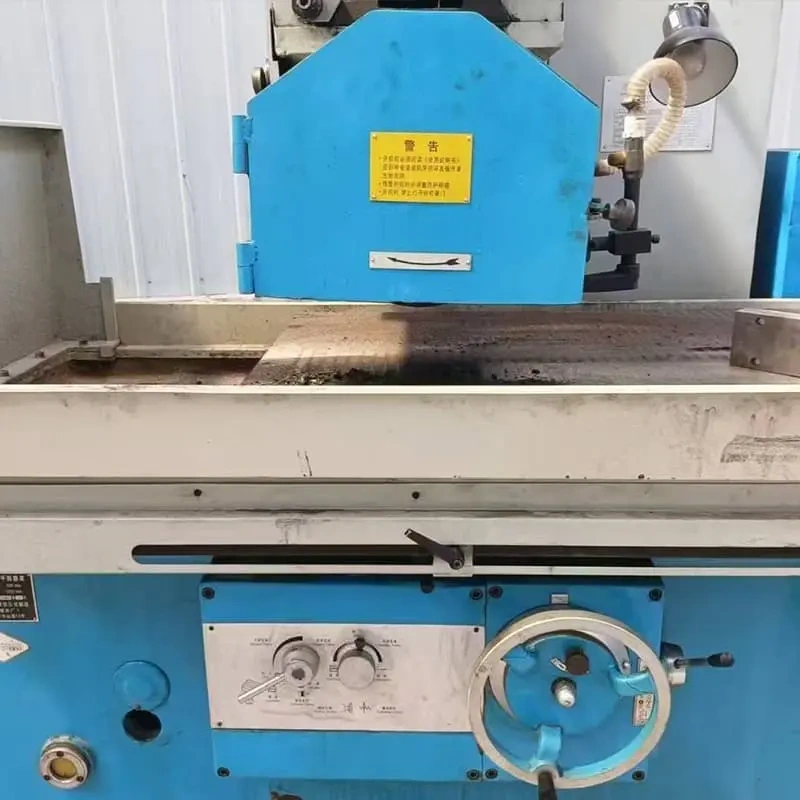
Which Checks Mattered Most Before He Committed?
Static inspection hides more than it reveals on a grinder. Wear only shows under load, so we built the customer’s visit around a small set of measured checks instead of a walk-around.
Check five things in this order: spindle runout and noise, table and way wear, chuck holding force, hydraulic oil and table reversal, then a filmed test grind on hardened steel. Refuse any machine where the seller will not run that grind.
Spindle: The Part That Decides the Price
The spindle is the heart of a surface grinder, and it is also the most expensive thing to get wrong. Before power-on, rotate the wheel arbor by hand. It should turn smoothly with even resistance, no grit, no tight spots. Then run the machine warm for thirty minutes unloaded and listen. A rumble or whine that grows with speed points at worn bearings, and a finish that looks cloudy or chatters confirms it. Check runout on the flange or taper with a dial indicator: under 0.0002″ (about 0.005 mm) is precision grade, under 0.0005″ (0.013 mm) is acceptable for general work, and anything above that is a negotiation item, because a spindle rebuild costs 5,000 to 20,000 USD depending on the machine. Our customer measured 0.004 mm on the machine he finally chose. That single reading told him more than the year plate did.
Ways, Table and the Straightedge Test
Way wear is where dishonest sellers hope you will not look. Wear concentrates mid-stroke on any grinder that has done real work, so run the table through full travel and feel for roughness or tight spots, then lay a precision straightedge across the table at three positions: headstock end, middle, tailstock end. Daylight in the middle with contact at both ends means a dished or worn bed, and the parts it produces will be convex, not flat. Look for scoring, galling and rust pits too. Grinding dust that invades the ways makes them seize over time, and poorly filtered coolant circulates abrasive slurry straight onto them. Geometric acceptance for horizontal-spindle machines follows ISO 1986-1:2014; ask the seller to show any accuracy chart that exists against it.
Chuck and Hydraulics
The magnetic chuck transfers the table’s condition to the workpiece, so test it with a real part. Lay a flat steel block on the chuck face, energise it, and try to lift the block at several positions across the full face. Dead zones mean failed coils, and replacement magnets run 2,000 to 10,000 USD. Ask how many times the chuck has been reground — a chuck skimmed too often is near the end of its life, and surface scoring, warping or corrosion all transfer 1:1 into the part. Then watch the hydraulics. Milky oil means water contamination, dark oil means overheating, and the table should reverse crisply at each end without hesitation or jerk. On the machine we sold, we held the hydraulic system at pressure for ten minutes with the pump idling; a visible pressure drop in that window points at internal seal or valve leaks, and a hydraulic rebuild adds 2,000 to 8,000 USD.
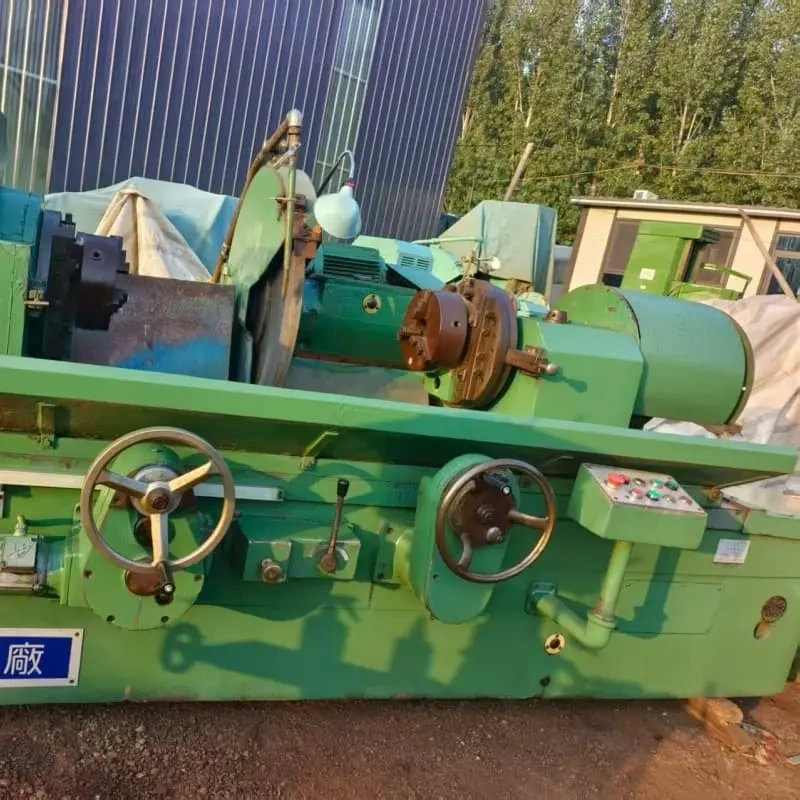
The Test Grind Thresholds He Wrote Into the Order
The customer’s final gate was a wet test grind on his own hardened steel block, filmed in one take with the indicator readings shown on camera. These are the thresholds we agreed on and that a healthy mid-size hydraulic grinder should meet:
| Check point | Acceptance limit | What failure suggests |
|---|---|---|
| Flatness across 6″ (150 mm) test block | ≤ 0.0002″ (0.005 mm) | Way wear or dished table |
| Surface finish | 16 Ra or better (≈ Ra 0.4 µm) | Spindle bearings or wheel condition |
| Spindle runout at flange | < 0.005 mm | Bearing wear, price the rebuild |
| Hydraulic pressure hold (10 min idle) | No visible pressure drop | Internal seal or valve leak |
| Chuck holding across full face | No lift-off at any position | Failed coils, magnet replacement |
| Parallelism, two faces of block | ≤ 0.005 mm | Table-to-spindle alignment |
A seller who refuses a test cut, or offers results without letting you measure them, is telling you something about the machine. I say that plainly in every negotiation: the test grind is not a courtesy, it is the purchase.
Two smaller checks closed out his visit. He opened the electrical cabinet and looked at the wiring quality, contactors and safety interlocks, because a burnt or jury-rigged cabinet predicts future downtime and complicates Indonesian compliance checks. Then he walked through the accessory list: wheel flanges, balancing arbor, dresser, spare wheels and the manuals. Accessories look minor on a quotation and get expensive one by one afterwards, so we photograph and list every item before packing. A machine missing its balancing hardware grinds badly and loads its own spindle bearings, so treat a missing dresser or flange set as a price adjustment, not a gift.
How Does Indonesia’s 2026 Import Rule Shape the Final Choice?
Indonesia tightened its rules on second-hand machinery in 2026. A perfect machine over ten years old cannot clear customs, so age now filters the shortlist before price does.
Under Indonesia’s 2026 rules, used machinery needs SNI certification before the SPPT import permit, machines over ten years old are banned from import, and every used shipment needs pre-shipment inspection. Buyers now ask the age question before the price question.
Manual, Hydraulic or CNC: What He Actually Needed
With the inspection method settled, the customer had to pick the automation level. This is the comparison we laid out for him, and it is the same trade-off most Indonesian fabrication shops face:
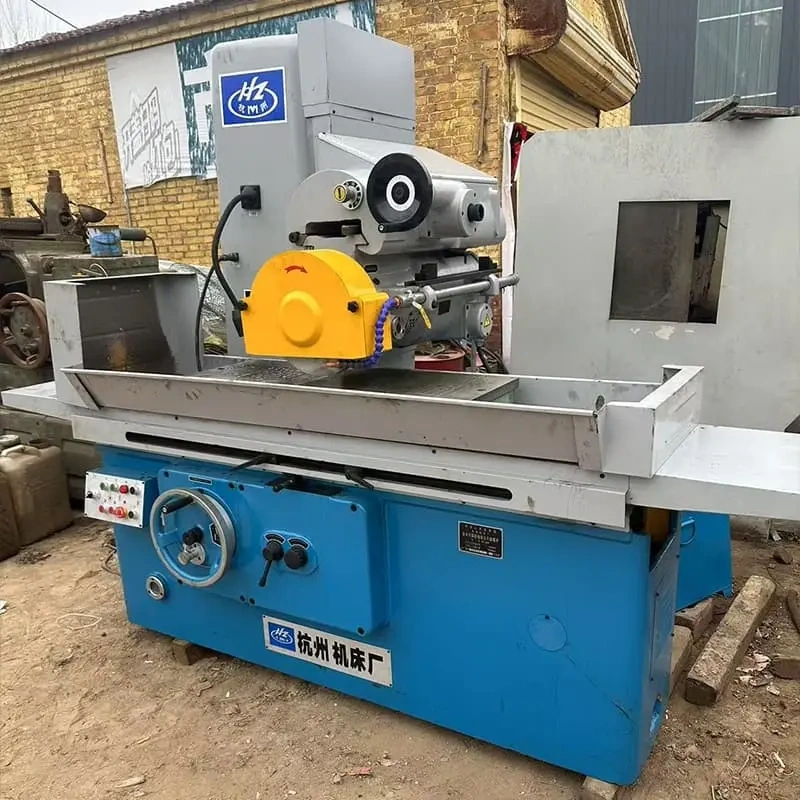
| Factor | Manual grinder | Hydraulic grinder | CNC grinder |
|---|---|---|---|
| Table control | Hand wheel, operator skill decides | Powered smooth table reverse | Programmed cycles, automatic downfeed |
| Repeatability for batches | Operator-dependent | Good for semi-auto cycles | Excellent, minimal operator variation |
| Operator skill needed | High — grinding is a craft | Moderate | Programming and setup skills |
| Used price band (USD) | 3,000 – 8,000 | 8,000 – 35,000 by size | 25,000 – 75,000+ |
| Best fit | Toolroom, one-offs, repairs | Die/fixture plates, small batches | High-volume repeat work |
| Spare-parts exposure | Low, simple electrics | Hydraulic seals and pump | Controller boards, servo axes |
He chose hydraulic, sized at 400 mm wide by 1 metre table travel [Zora will replace: final model and size]. The reasons were practical. His batch sizes are moderate, his team has no CNC programmer, and hydraulic machines are simple enough that a good local fitter can maintain them. The controller-language point matters too: since mid-2026, Indonesia’s industry ministry expects Indonesian-language operating documents and interface support for many imported machines, so we supplied bilingual manuals with the shipment. On controller boards, a used CNC grinder’s long-term risk sits in its electronics; a hydraulic machine’s wear items are seals, oil and ways, and all three are visible in an inspection.
Paperwork: SNI, SPPT and Pre-Shipment Inspection
Here is what the 2026 rules changed in practice. Since May 2026, Indonesia requires SNI certification as a precondition before a used-machine import permit (the SPPT), machines older than ten years are banned outright, and importers need their own house in order: a registered company with NIB, tax number and an API import licence. Every used shipment passes mandatory pre-shipment inspection by an accepted body such as SGS or CCIC, which verifies condition, age and specifications against documents, and packing supervision photos support the customs file. Our machines keep clear, readable nameplates with brand, model, year, voltage and power, because mismatched nameplate data is one of the fastest ways to get a shipment stuck. On the duty side, an ASEAN Form E certificate of origin reduces import duty for eligible goods, which materially improves the landed cost compared with buying from outside ASEAN. The customer’s own broker handled the import side; our job was age proof, clean documentation and inspection support, which is the same support we provide for third-party inspection before shipment on every export order.
Power, Port and Aftercare
One quiet advantage for Indonesian buyers: Indonesia runs 230 V single-phase and 400 V three-phase at 50 Hz, which matches how we build and re-check these machines, so there is no 60 Hz speed-and-pump problem like the ones buyers face in the Philippines or Saudi Arabia. Shipping from north China to Tanjung Priok or Surabaya runs roughly one to two weeks on direct services. For shops in the Karawang–Bekasi–Cikarang industrial corridor or around Surabaya, inland delivery from port is routine; buyers on outer islands should budget more for the last leg, because Indonesia’s island geography makes heavy freight slower and costlier once it leaves Java. Before the machine left our yard, we re-torqued the packing bolts, coated the ways and table with anti-rust film, blocked the table against transit shock and packed it into a steel-skid case with desiccant, because container humidity on a tropical route easily exceeds 90%. The customer re-checked runout on arrival and it matched the pre-shipment reading within 0.002 mm [Zora will replace: confirm measured value].
Aftercare is part of the selection too, so we talked spares before the order was signed. Grinding wheels, coolant and hydraulic oil are consumables any industrial city can source, but the machine-specific items — seals, way wipers, spindle bearings — should be listed by part number before you buy. We included a spare seal kit and oil filters with the shipment, and we told him plainly which parts we could air-freight later and which he should hold locally. Ask any seller the same question: if a bearing fails in year three, who answers the phone, and how long does the part take to reach your workshop? A supplier without an answer to that is selling you a machine, not a relationship.
Conclusion
The customer got a machine that grinds flat, filmed evidence that proves it, and paperwork that clears Jakarta customs. Run the same five checks on your next grinder and your odds stay just as good.