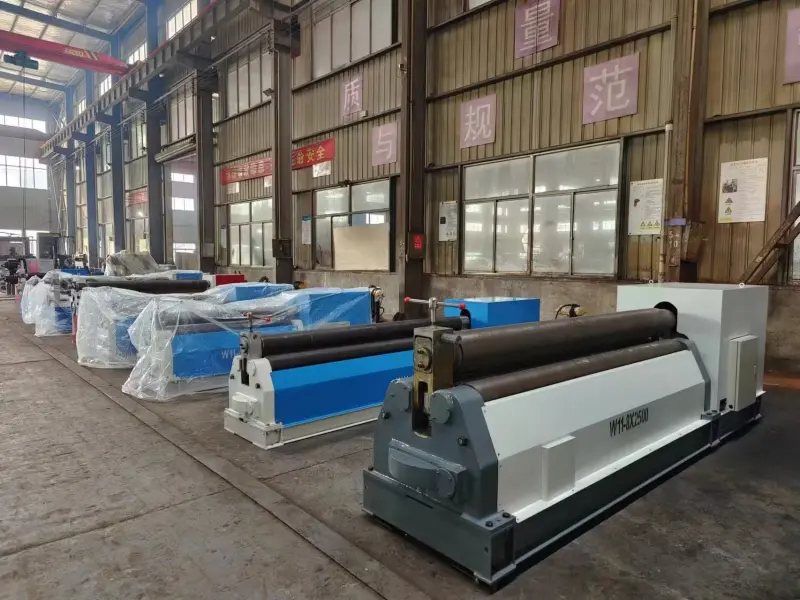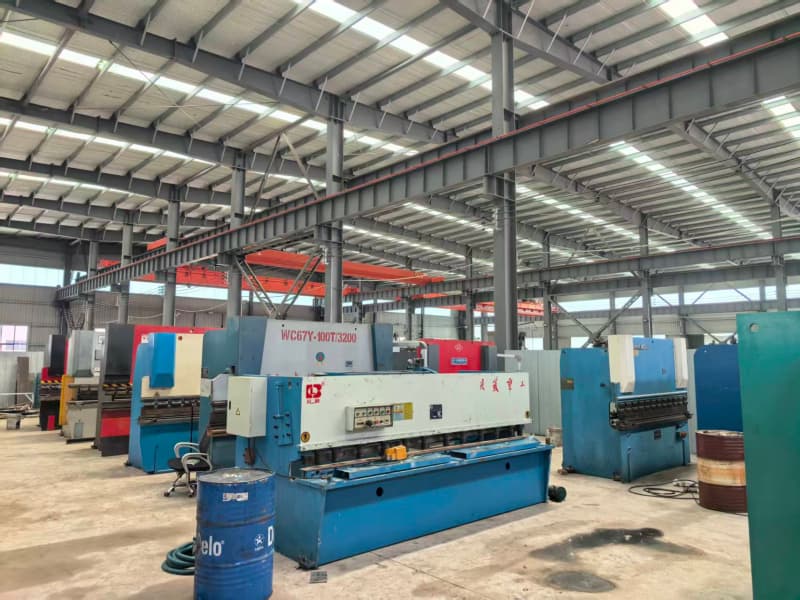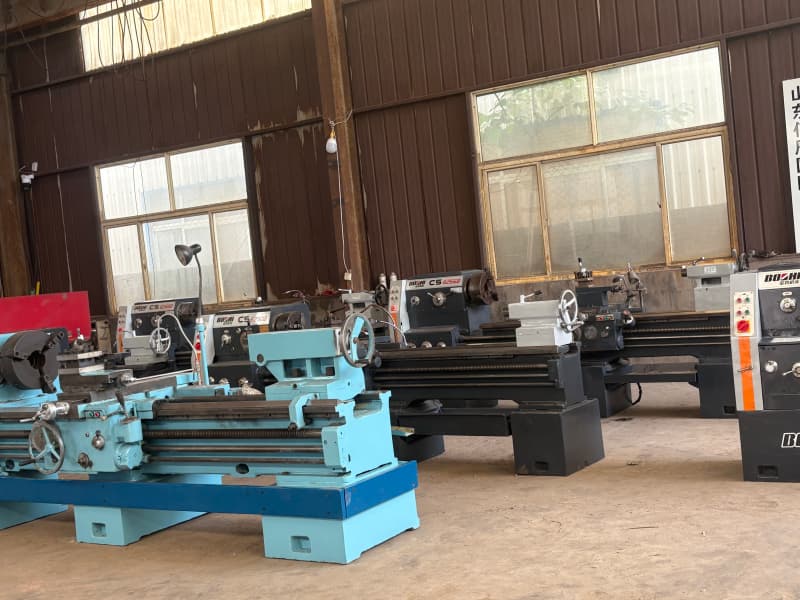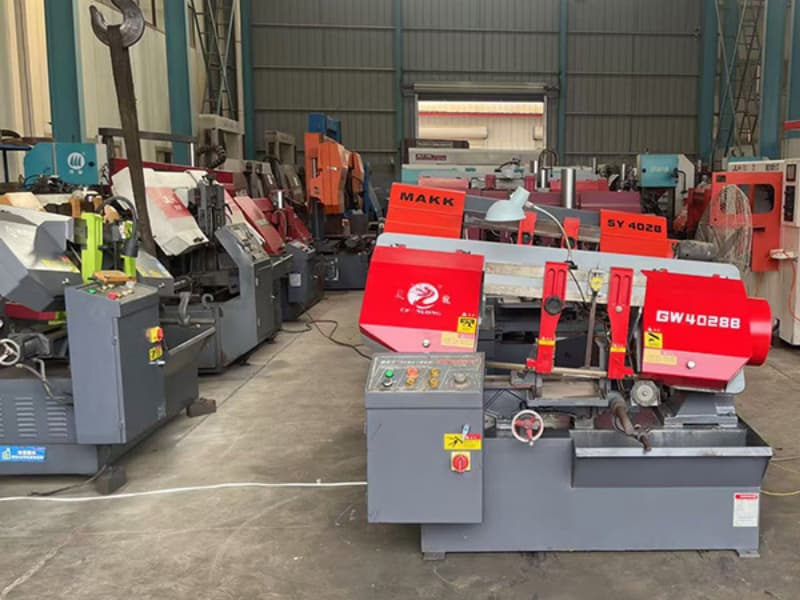


A used CNC lathe can pass a demo in China and still fail on your floor by month two. Buyers who skipped the measurements paid for that lesson in scrapped components.
Buyers of used CNC lathes for metal component machining report the same pattern again and again: machines that measure well on spindle runout, axis backlash, turret repeatability and a warm test cut keep holding tolerance. Machines bought on paint, price and a short video usually do not.
Most of the feedback I collect from buyers is not about brands. It is about what happened in the first three weeks after the machine landed. The complaints repeat with almost boring regularity, and so do the good reports. That is useful, because it means the difference between a machine that earns money and one that eats it is measurable before you pay.
What Feedback Do Buyers Give After Machining Metal Components on a Used CNC Lathe?
Most complaints arrive in week two, not month six. The lathe runs, then a turned diameter starts drifting or a way wiper fails and grit reaches the rails.
Buyers praise used CNC lathes that hold a diameter across a full shift and came with real test video, tooling and a parameter backup. They complain about missing way wipers, oil leaks described as minor, and motors that failed inside the first month.
The Positive Pattern: Repeatability Shows Up First
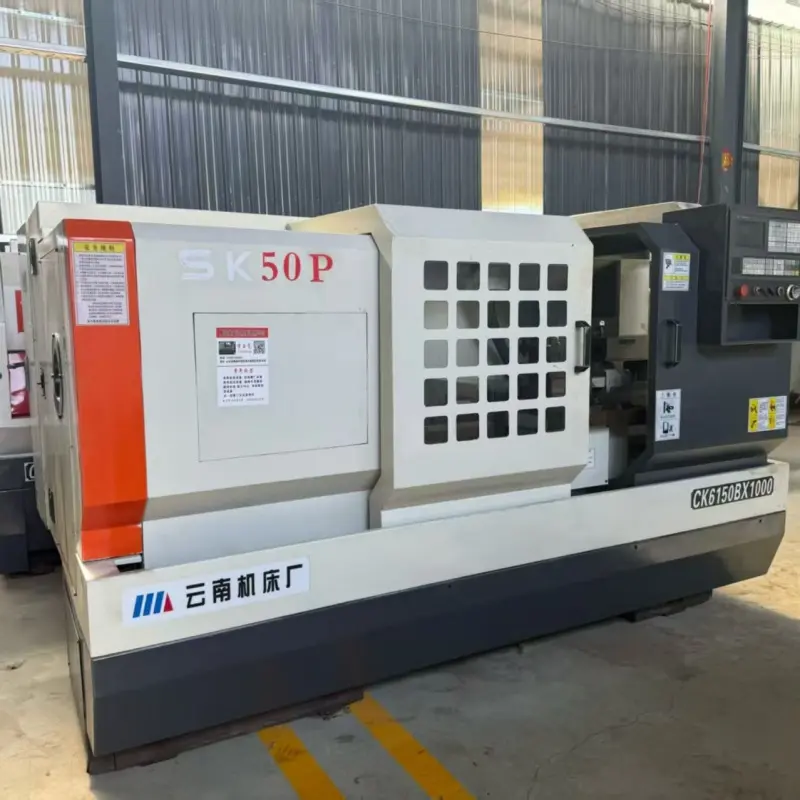
When a buyer tells me a used lathe was a good purchase, the story almost always starts with the same detail. The machine held size. Not one good part, but twenty parts in a row at the same diameter, with the operator checking with a micrometer and finding nothing to adjust.
One buyer put it in a way I still quote to customers: the cast iron bed showed no deflection after six months of daily use. That sentence matters more than any brochure number. Metal component machining is mostly a fight against small drifts. A shaft that runs 0.03 mm oversize on the first part and 0.03 mm undersize on the twentieth will fail inspection even though every individual cut looked fine.
The second thing good feedback mentions is documentation. Buyers who received running videos, an alarm history and a parameter file before payment describe the purchase as calm. They knew what they were buying. One buyer told me he saved more than $20,000 against a new machine and the performance was close enough that his customer never noticed the difference.
The third theme is support after arrival. A machine that arrives with a full set of chuck jaws, a steady rest, the manuals and a spare set of filters starts producing in days. A bare machine starts producing in weeks. If you want to see what is normally in stock before that conversation, our used CNC lathe inventory is a fair starting point.
The Negative Pattern: Small Missing Parts, Big Consequences
The bad reports are equally consistent. The most common one is a motor or drive that failed within the first two weeks, with no return option because the sale was as-is. That is not bad luck. It is usually a machine that was never run under load before shipment.
The second most common complaint is missing way wipers. Buyers describe debris building up on the rails and scoring appearing within months. Way wipers cost very little. Replacing scored guideways or re-scraping a bed does not.
The third is the listing that overstated condition. One buyer described a machine sold as like new that arrived with visible belt wear and active oil leaks. Another complained about cleanliness rather than function, which sounds petty until you realise that a machine full of old chips hides leaks, worn hoses and a silted coolant tank.
I have also seen a cracked spindle load shield found at installation and settled with a refund for the local repair. That is the good outcome. The bad outcome is when the same fault appears after the container has cleared customs and the seller has stopped answering.
Here is the observation I keep coming back to. In our yard in Liaocheng, the machines that get the fewest complaints on arrival are not the newest ones. They are the ones where somebody spent an hour with an indicator and a USB stick before the machine was washed and photographed. I have watched a 2012 lathe with a documented parameter backup leave cleaner than a 2018 machine with no file at all. Buyers feel that difference in week one.
What Our Own Buyers Said After the First Production Week
The case I use most often is Gulf Industrial Equipment LLC in Saudi Arabia. They bought used CNC lathes and other machines for a fabrication and component programme. What they cared about was not the price alone. They had been burnt before by suppliers who sent photos that did not match the machine, gave no test video and packed badly enough that parts arrived damaged.
So we changed the sequence. A dedicated export sales manager handled the file in English. We sent real photos and a running test video before order confirmation. We supported third-party inspection through SGS. We packed in wooden cases with anti-rust protection and shipped to Dammam Port with full export documents.
Their feedback was simple: this was the first used machinery supplier who provided real machine videos and inspection support before payment, and the machines arrived in working condition with strong packing. [Zora will replace] with the current version of the quote if the wording needs updating.
| Feedback theme | How often it appears | Usual root cause | What it costs the buyer |
|---|---|---|---|
| Held size across a shift | Very common in good reports | Sound spindle, adjusted backlash, warm test cut before shipment | Nothing; this is the value |
| Motor or drive failed in weeks | Common in bad reports | Machine never run under load; no load test in the video | $1,500 to $6,000 plus downtime |
| Missing or worn way wipers | Common | Cosmetic-only preparation before sale | Scoring, then re-scraping or rail replacement |
| “Like new” claim, worn belts and leaks | Common | Listing written from photos, not inspection | $500 to $2,000 in consumables and seals |
| Machine arrived dirty | Occasional | No wash-down before packing | Hidden leaks, silted coolant tank, blocked lines |
| No parameter backup | Occasional but severe | Seller never exported the file | Days of re-homing and re-entering data |
Which Measurements Confirm or Contradict That Feedback?
Feedback is opinion. Runout, backlash and turret repeatability are numbers. The numbers are what you negotiate with.
A used CNC lathe for metal components is sound when spindle taper runout is 0.005 mm TIR or less, axis backlash is 0.01 mm or less at three positions, turret repeatability is within 0.005 mm, and a warm test cut holds taper inside 0.02 mm over 200 mm.
Spindle Taper Runout and Axial Play
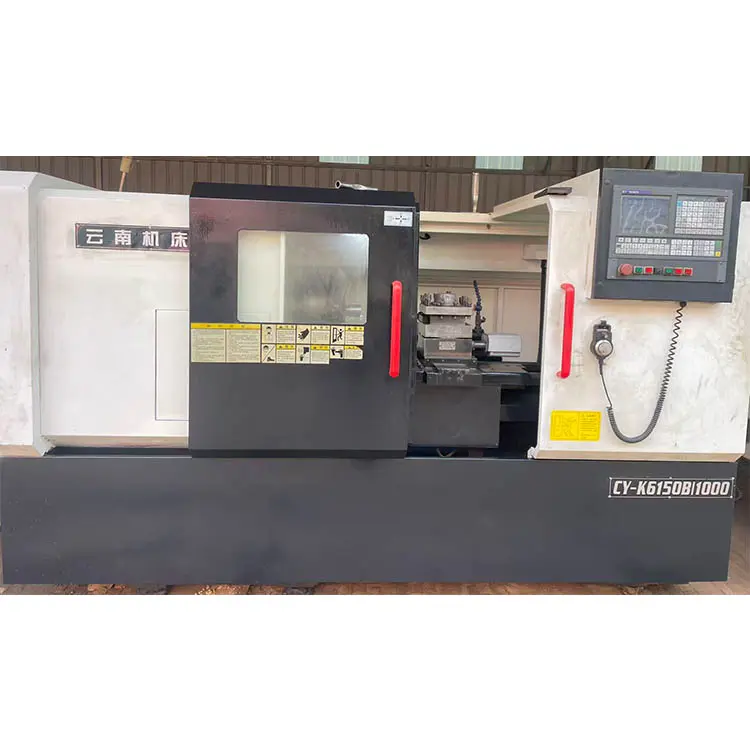
Indicate the spindle taper directly, not the chuck jaws. Chuck jaw runout tells you about the chuck. On a machine that has been crashed or has a spun chuck, the taper tells the truth.
A good used spindle shows 0.005 mm TIR or less. Between 0.005 and 0.010 mm, I want the price to reflect a bearing service. Above 0.010 mm, I assume the bearing set is worn and walk away unless the buyer has already priced the rebuild. A spindle bearing job on a mid-size turning center commonly starts around $5,000 and goes up from there.
Then check axial play. Push and pull the spindle with a bar at roughly 200 N and read the indicator. Under 0.005 mm is healthy. Over 0.01 mm means preload loss or a worn bearing set. On a sealed cartridge spindle, that is a rebuild, not an adjustment.
Also look at the spindle nose for fretting or blue marks around the camlock studs. That is evidence of a chuck running loose under load, and it is a spindle repair. I keep a short used CNC lathe inspection checklist on file for buyers who want the same sequence we use in the yard.
Backlash and Repeatability on X and Z
Mount an indicator against the turret or cross slide. Jog the axis 0.01 mm in one direction, then reverse, and read the lost motion. Do this at three positions on each axis: near the chuck, mid travel, and near the end of travel. Wear is never uniform, and the worst number is the one that matters.
Under 0.01 mm per axis is acceptable for general component work. Between 0.01 and 0.02 mm, expect to adjust or compensate. Above 0.02 mm, you are into ball screw or thrust bearing work.
Then run a repeatability test. Programme twenty rapid moves to the same position and back, then indicate the final position. A spread above 0.005 mm points to a loose encoder coupling, a dirty scale or a thrust bearing moving under load. Listen during rapids as well. A growl or knock at reversal usually means a dry guide or a loose locknut.
Turret Repeatability and What One Bad Station Means
Index the turret through every station ten times and indicate a test bar in a known holder. Repeatability should stay within 0.005 mm.
Read the pattern, not just the number. If one station is out and the rest are good, you are probably looking at a worn station or a bent holder, and that is cheap. If every station drifts, the turret coupling or index motor is the problem, and that is not cheap. Look at the coupling teeth for bruising and the housing for weld repairs. A welded turret housing is a reason to stop, because alignment after welding rarely survives cutting load.
The Warm Test Cut Is the Only Real Proof
Ask the seller to run the machine for at least thirty minutes before you arrive. A cold lathe hides thermal drift. A spindle that turns smoothly by hand can howl at 4,000 rpm once the bearings warm up.
Bring a bar of 1045 or 6061 of known diameter and a simple programme that turns, faces, drills and threads. Keep the depth moderate, around 1.5 mm per side in steel at 0.2 mm per revolution. That is enough to expose a weak machine without risking a crash.
Measure the turned diameter at three points along the length. Taper over 200 mm should stay inside 0.02 mm. Check roundness at 0, 90 and 180 degrees. Cut a thread and gauge it. Record the finish, which should land around Ra 1.6 to 3.2 micrometres on steel in reasonable condition. If the finish is torn, check the holder, then the turret clamp, then the bearings, in that order.
| Measurement | Accept | Investigate | Walk away |
|---|---|---|---|
| Spindle taper runout | 0.005 mm TIR or less | 0.005 to 0.010 mm | Above 0.010 mm |
| Axial spindle play | Under 0.005 mm | 0.005 to 0.010 mm | Above 0.010 mm |
| Axis backlash per axis | 0.01 mm or less | 0.01 to 0.02 mm | Above 0.02 mm |
| Turret repeatability | 0.005 mm or less | 0.005 to 0.010 mm | One station above 0.020 mm |
| Bed twist | Under 0.02 mm per metre | 0.02 to 0.04 mm per metre | Cracked or welded casting |
| Tailstock alignment | Within 0.02 mm over 300 mm | 0.02 to 0.04 mm | Beyond adjustment range |
| Test cut taper over 200 mm | Under 0.02 mm | 0.02 to 0.04 mm | Above 0.04 mm |
| Control parts support | Boards and drives available | Exchange units only | No parts channel at all |
What Should You Ask For Before You Accept Delivery?
The machine that measures well can still disappoint if the paperwork, packing and spare parts are thin. This is where most avoidable disputes start.
Before you accept a used CNC lathe, ask for a parameter backup on USB, an alarm history, the maintenance log, a warm test-cut video with a visible date, the spare-parts list and the packing specification. Written answers separate a professional seller from a hopeful one.
Verify the Control Before You Verify the Paint
Write down the serial number, the control model and the year. Then call the builder or an independent service house and ask one question: are boards, drives and parameters still available for this model year? That call filters more risk than an hour of inspection.
This matters more than machine age. A 2008 lathe with a clean spindle can still hold plus or minus 0.01 mm for years. A 2015 control with no parts channel can stop the whole cell the day a drive board fails. Mechanics age slowly. Electronics age on a schedule set by the manufacturer.
Then confirm the parameter file exists outside the control memory. Ask for it on a USB stick, not a promise. If a seller can hand you a parameter file before you hand them money, you have both a safety net and proof that they understand their own machine.
Battery, Backup and the Trip Home
The absolute encoder battery is the cheapest thing that ruins a shipment. If it dies in transit, the zero point goes with it, and re-homing a lathe without a reference mark is a slow, profane job. Ask the seller to replace it before rigging and to write it into the packing list.
Rigging is the next line item buyers forget. Moving 4,000 to 7,000 kg of iron with a professional rigger, a flatbed and a forklift at both ends commonly runs $2,500 to $6,000 depending on distance. Tooling is the other silent cost: holders, collets, boring bars and a chuck can add $3,000 to $5,000 if the machine arrives bare.
A useful rule from the trade is that the sticker price is only about 60 to 70 percent of your first-year cost, and hidden extras add 15 to 25 percent. If the total lands close to a new machine, compare lead time and warranty before you decide.
Packing, Arrival and the First Shift
Ask how the machine is packed before you ask for a discount. Wooden case, anti-rust film, desiccant, blocked ram or turret, secured tailstock, protected control pendant, and a container loaded so the weight sits over the axles. Buyers who skip this conversation are the same buyers who report damaged panels and a control screen that arrived cracked.
On arrival, do not run production parts on day one. Re-level the machine, re-check backlash on both axes, re-align the tailstock and run a warm-up cycle. Those three checks catch almost every transport-related problem while the carrier and the insurer are still in the conversation.
| What the seller says | What actually proves it | What to do if it is missing |
|---|---|---|
| “It runs perfectly” | Dated running video under load, cutting a real part | Request a live video call with the machine running |
| “Accuracy is still good” | Test-cut report with diameter, taper and finish values | Send your own test bar programme and ask for the numbers |
| “Full maintenance history” | Written log with dates, parts and service provider | Price the risk into your offer |
| “Control is fine” | Parameter backup file plus alarm history | Ask for the file before payment, walk if refused |
| “Everything included” | Itemised packing list with photos of the tooling | Buy the missing holders and collets yourself, then negotiate |
| “Packed for export” | Packing spec: case type, anti-rust, blocking, container plan | Ask for loading photos at the port |
| “We support after sales” | Named contact, spare-parts list, response time in writing | Order a starter spares kit with the machine |
Conclusion
Customer feedback on used CNC lathes is really feedback on measurement discipline. Ask for the numbers, the backup and the test cut, and your machine will match what you approved.