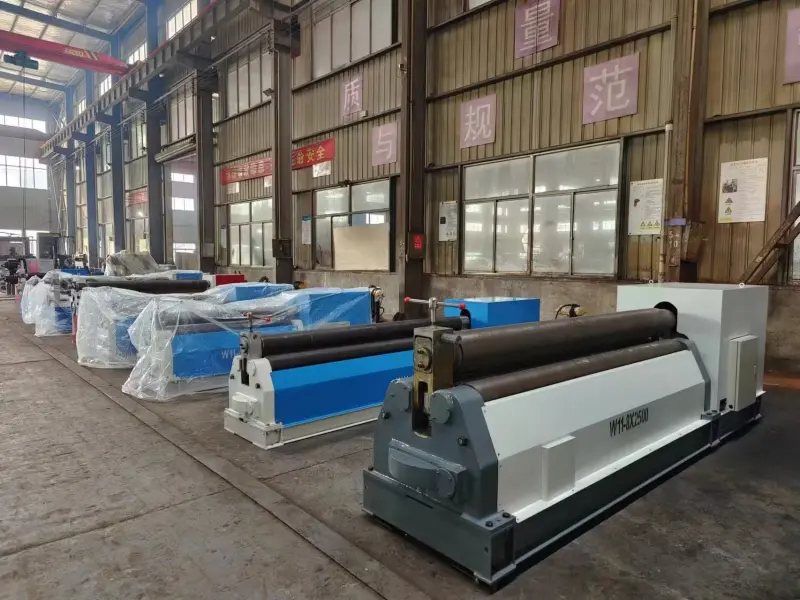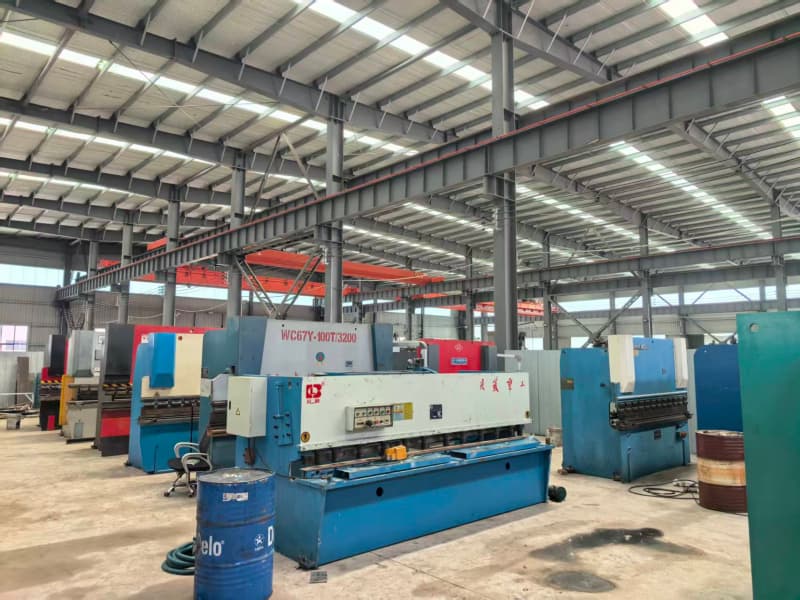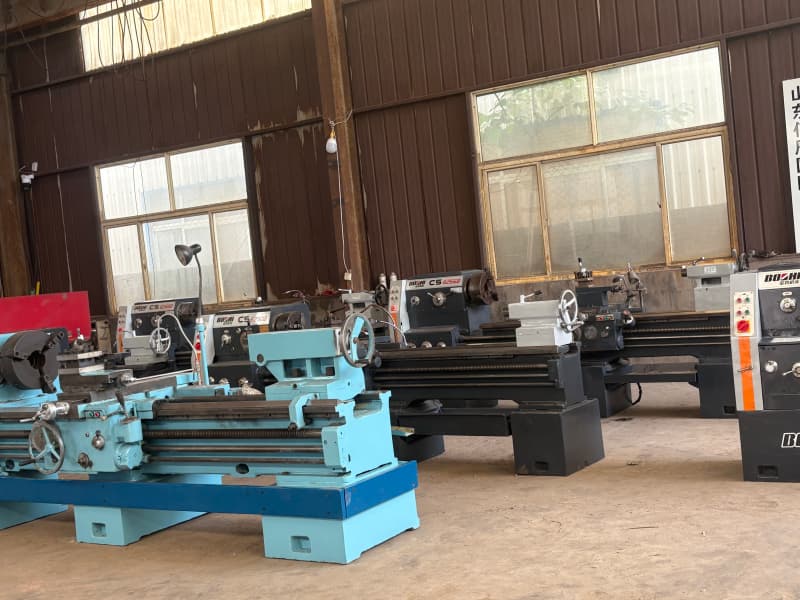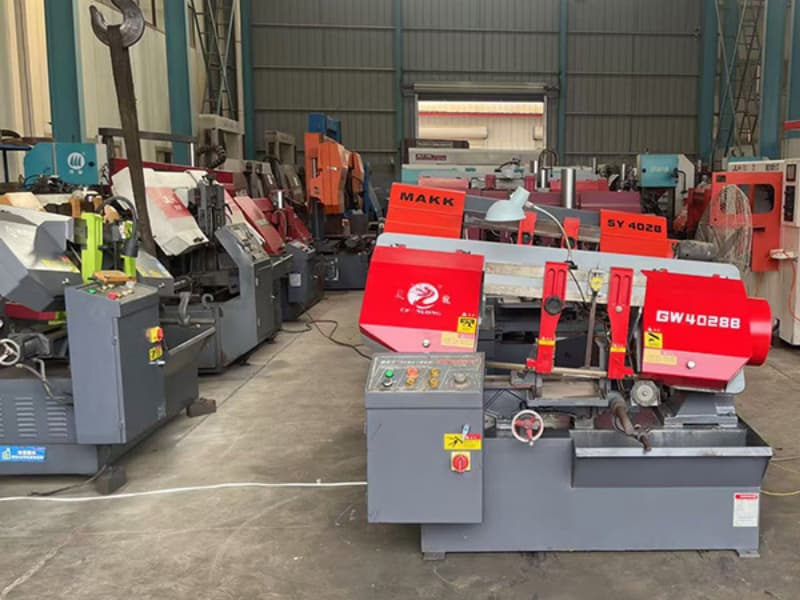


Buying a used plate rolling machine from a photo listing is a gamble. If the rolls are worn or the hydraulics drift, your cylinders come out oval and every seam fight costs you hours. Here is how we test, match, pack, and ship one so the machine earns money from week one.
A used plate rolling machine is safe to buy remotely when the seller runs a documented test protocol: frame and roll inspection, a hydraulic pressure-hold check, roll parallelism measurement, a live rolling test on real plate, then export-grade packing with anti-rust protection and full pre-shipment photos and videos.
Last month a fabrication-shop owner from Southeast Asia asked me a blunt question over WhatsApp: how do you prove a used plate rolling machine is good when I cannot stand next to it? He had been burned before. His previous supplier sent a machine that looked fine in photos but left a 120 mm flat spot on every plate end. So instead of arguing, we walked him through our whole process, from the first power-on test to the container doors closing. I will walk you through the same steps, because this is the same process every one of our export buyers gets.
How Do We Test a Used Plate Rolling Machine Before It Goes to a Customer?
Testing is where most used-machinery deals are won or lost. A machine that spins freely under no load can still leak pressure, wear an oval into every shell, and quietly cost you a rework crew. We test under load, with numbers, and we send you the evidence.
We test every used plate rolling machine in four stages: structure and roll surface inspection, hydraulic pressure-hold verification, roll parallelism measurement, and a live rolling test on standard mild steel plate with roundness measurement of the finished shell.
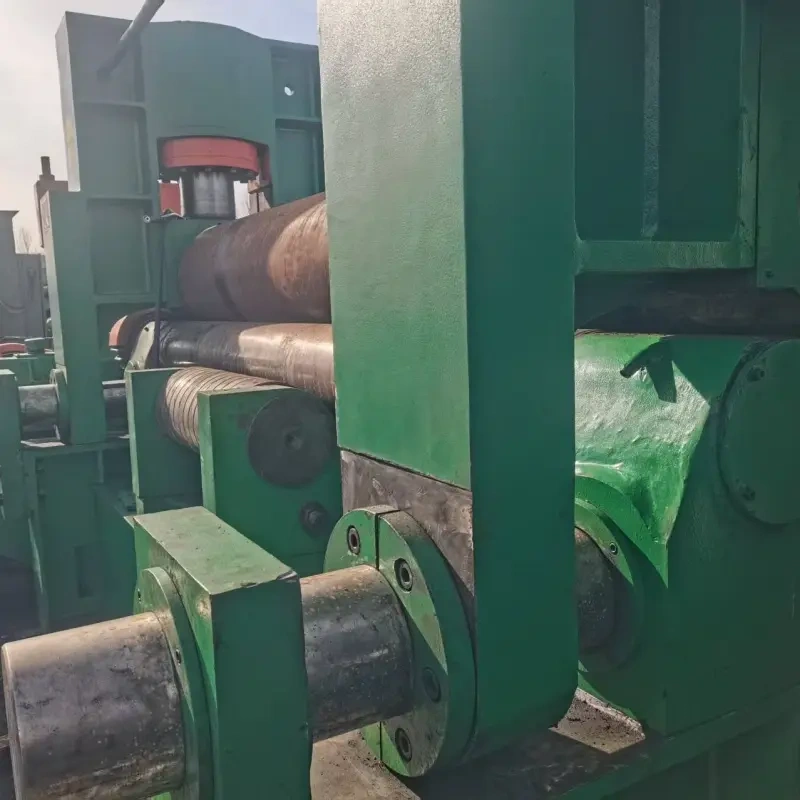
Frame and Roll Surfaces Come First
Before any power goes to the machine, I walk around it the old-fashioned way. Cracks in the side frames, ugly welded repairs, or a frame that does not sit level all point to overload history, and overload history shortens a machine’s life fast. On the rolls themselves we look for scoring, pitting, gouges, and flat spots. Light scratching can be polished out in an afternoon. Deep pits are different, because every pit prints itself onto your plate surface and shows up on finished tank shells.
I also check the bearings and drive train while the rolls turn slowly. Any growl, play, or heat buildup in a bearing housing gets written down. We once rejected a machine for export purely on bearing noise; the seller wanted us to “just listen past it,” but a bearing that growls on day one at our shop is a seizure on day one at yours.
The Hydraulic Pressure-Hold Test
This is the check most private sellers never do, and it is the one that saves the most money. We bring the hydraulic system up to working pressure, then hold it and watch the gauge. On a healthy machine the needle sits nearly still. If pressure drops more than about 0.5 MPa within ten minutes, something inside is bleeding off, usually the main cylinder seals or a directional valve. That is a rebuild quote waiting to happen, and it becomes negotiating leverage or a walk-away.
While the pump runs, we also look at the oil itself. Milky oil means water in the system. Dark, burnt-smelling oil means someone ran it hot for years. And we confirm the power unit has proper overheating protection, because a rolling machine that cooks its seals on long shifts is a machine you will keep paying for.
Parallelism, and Why It Decides Your Roundness
Top roll to bottom roll parallelism is the single biggest hidden variable on a used machine. We measure the gap at both ends of the rolls with feeler gauges and a straightedge, and we want the difference inside roughly 0.05 mm. When a bottom-roll bearing wears unevenly, the rolls go out of parallel and the plate picks up a “bamboo joint” pattern of lobes, or the finished shell drifts oval. No amount of operator skill fixes a mechanical offset like that.
Our test sheet for the machine in this customer case looked like this:
| Check | Method | Acceptance line we use |
|---|---|---|
| Side frames | Visual + level | No cracks, no stress welds, sits square |
| Roll surfaces | Visual + fingernail test | No deep pits or flat spots; light marks polished |
| Roll parallelism | Feeler gauge both ends | End-to-end difference within ~0.05 mm |
| Hydraulic pressure hold | Gauge watch at working pressure | Less than ~0.5 MPa drop in 10 minutes |
| Hydraulic oil | Sight glass + smell | Clean oil, no milkiness, no metal glitter |
| Bearings and gears | Slow roll listen + touch | No growl, no abnormal heat |
| Controls and e-stops | Function test | Every motion, limit switch and e-stop works |
| Live rolling test | Roll a standard mild steel plate | Roundness deviation within agreed tolerance |
The live test is the part customers care about most, and honestly it is my favorite part too. We roll a real plate, measure the finished diameter and roundness, film the whole pass, and send the video. You can watch the plate close into a smooth shell instead of trusting anybody’s adjective. That single video has closed more deals for us than any brochure, because it answers the question every buyer is really asking: does this exact machine, on this day, form plate the way I need it to?
Questions I Tell Every Buyer to Ask Before Paying
Even with a clean test sheet, the story around the machine matters. These are the questions I put to sellers when I buy machines for our own stock, and the ones I answer for our customers. What material and thickness range did this machine run most of its life? A roll that spent ten years on thin ducting is a different animal from one that worked at the edge of its rating on heavy plate. Why is it for sale, and can the owner show it running under power? Has it ever been rebuilt, and were the rolls reground at some point? A regrind is not automatically bad, but it changes the roll diameter, which changes the minimum shell diameter you can hit.
Then the practical ones: do manuals and electrical drawings come with it, are spare parts still available for this model, and does it need special power or a foundation at your shop? I also ask what accessories are included, because side supports and plate feed tables quietly cost real money to add later. A machine that answers all of these cleanly is worth a higher price than a cheaper one with gaps in its story. In my experience the cheap machine with missing paperwork is rarely cheap by the time it makes its first good shell.
How Did We Match Rolling Capacity to the Customer’s Actual Parts?
Capacity is the second place buyers get hurt, and they get hurt politely, by a spec sheet that says one thing and a workshop that needs another. The rated thickness on a nameplate is a conditional number, not a promise.
A rolling machine’s rated capacity assumes mild steel at full width; we match capacity by derating for stronger materials, checking pre-bending capacity separately, and confirming the minimum rollable diameter against the customer’s smallest shell, with a 20-30% margin kept below the rating.
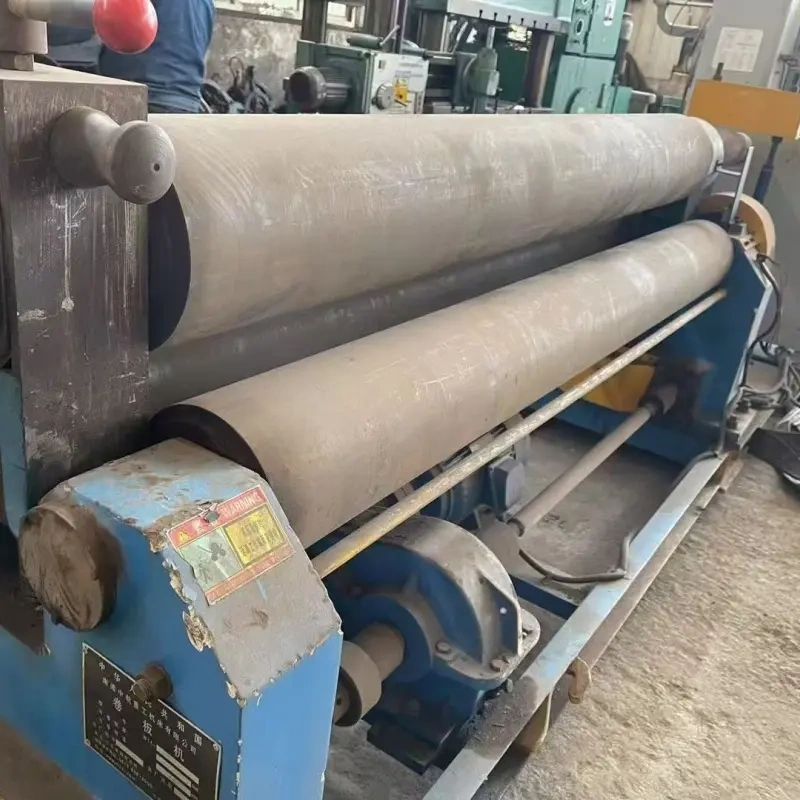
What the Nameplate Does Not Tell You
Our customer in this case makes ventilation ducting, small tank shells, and rolled brackets for a palm-oil mill project. His heaviest regular job is 12 mm mild steel at 2,000 mm width. The machine we matched is rated above that, which sounds like overkill until you do the math the way we do.
Bending force rises roughly with the square of thickness, and it rises again with material strength. The same machine that rolls mild steel all day will strain on the tougher stuff. As a working rule we derate capacity like this:
| Material | Typical usable capacity vs. mild steel rating |
|---|---|
| Mild carbon steel | 100% of nameplate rating |
| Q345 / higher-yield structural steel | around 80-85% |
| 304 / 316 stainless steel | around 60-70% |
| Wear plate (Hardox type) | around 50% or less |
On top of that, pre-bending capacity is always lower than rolling capacity, commonly 70-85% of the rating, because the plate end is unsupported when the edge is formed. And the smallest shell you can roll is tied to the top roll diameter, usually about 1.1 to 1.5 times it. We laid all of this out for the customer in one page, with his three part families in the rows. He could see his 12 mm ducting sat comfortably inside the envelope, and his occasional 14 mm bracket job still fit with margin.
One more subtlety worth spelling out: capacity numbers always carry conditions. A rating quoted at full width is not the same as the capacity you get rolling a narrow strip in the middle of the rolls, and cone rolling has its own limits. Ask any seller to state the conditions behind the number. If he cannot, that tells you something too.
Rolling technique matters as much as capacity once the machine is in your shop. We advised him to keep every job to multiple gentle passes instead of forcing the shape in one aggressive pass, because single-pass overforming is the fastest way to fatigued seals and lobster-backed shells. Springback is the other quiet variable: stronger plate springs back more after the rolls release it, so the final diameter needs a deliberate bit of over-roll and a check before the seam goes to welding. We told him to log the roll positions that work for each shell size, so his crew builds a small database of settings instead of rediscovering them by trial and error every month. That habit alone cuts rework more than any feature on the spec sheet.
Three-Roll or Four-Roll: What We Recommended
His production mix decided the geometry question for us. He runs the same shell sizes repeatedly, in modest batches, and his crew is small. Here is the comparison table we sent him before he confirmed the order:
| Factor | 3-roll (asymmetric) | 4-roll |
|---|---|---|
| Flat end on plate ends | Small residual flat; plate is flipped to pre-bend both ends | Both ends pre-bent in one loading |
| Handling per shell | Plate lifted and turned once | No flipping needed |
| Speed on repeat work | Baseline | Roughly 40-60% faster on repeat cylinders |
| Residual straight edge | Longer than 4-roll | Roughly 1.5-2 times plate thickness |
| Machine complexity and cost | Lower, simpler to maintain | Higher, more hydraulics to service |
| Best fit | Mixed one-off jobs, tight budget | Batch production of similar shells |
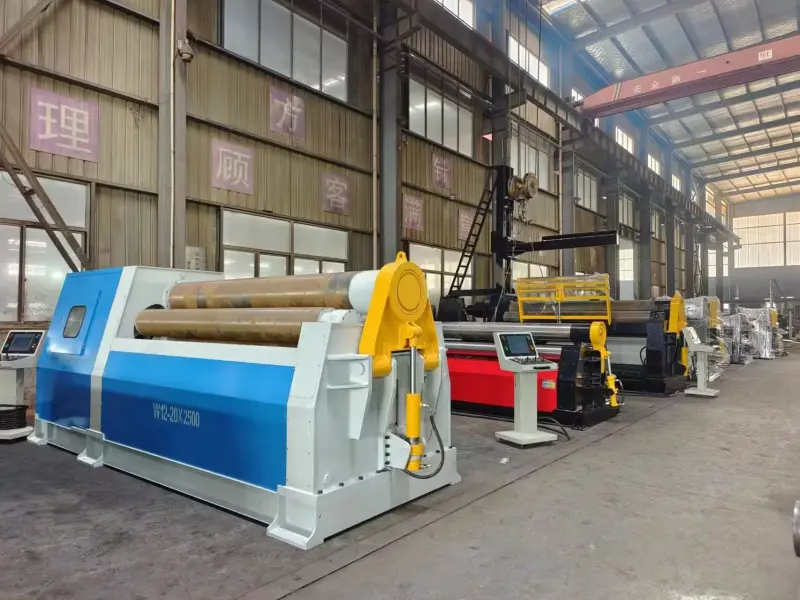
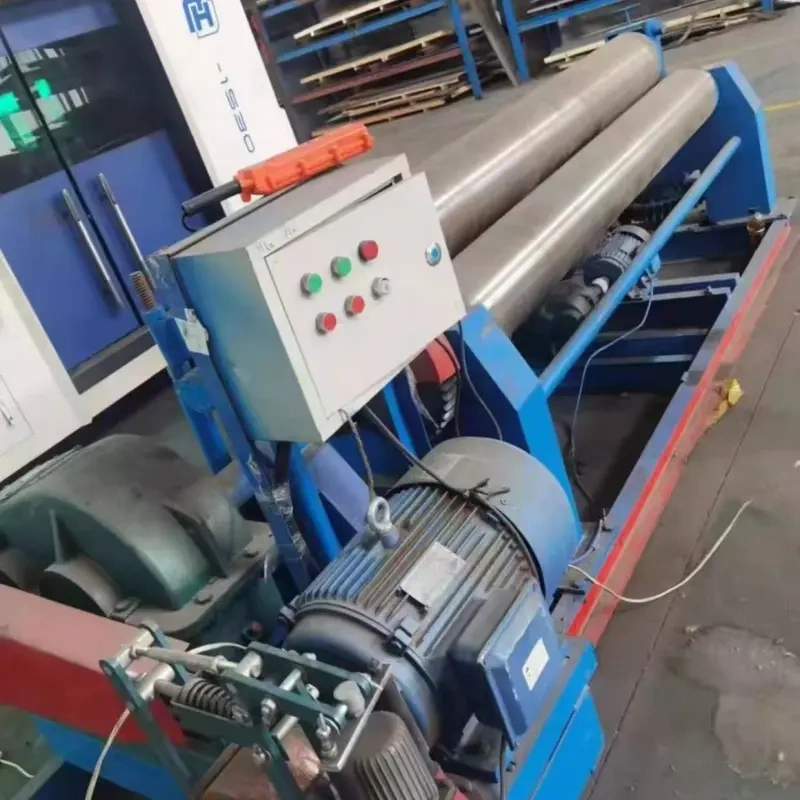
For his batch work the 4-roll logic was tempting, but the budget and the maintenance reality in his region pointed to a good used 3-roll asymmetric machine, and I told him so plainly. In my experience, a well-tested 3-roll in the hands of a careful crew beats an over-stretched 4-roll with no local service every single time. He agreed, and that is the machine in the test video he received.
How Is the Machine Prepared, Packed, and Shipped After Testing?
Testing proves the machine works. Preparation protects that proof through four weeks of ocean freight. Skipping this stage is how a perfect machine arrives with a rusted roll surface or a bent side frame, and we treat packing as part of quality control, not a shipping afterthought.
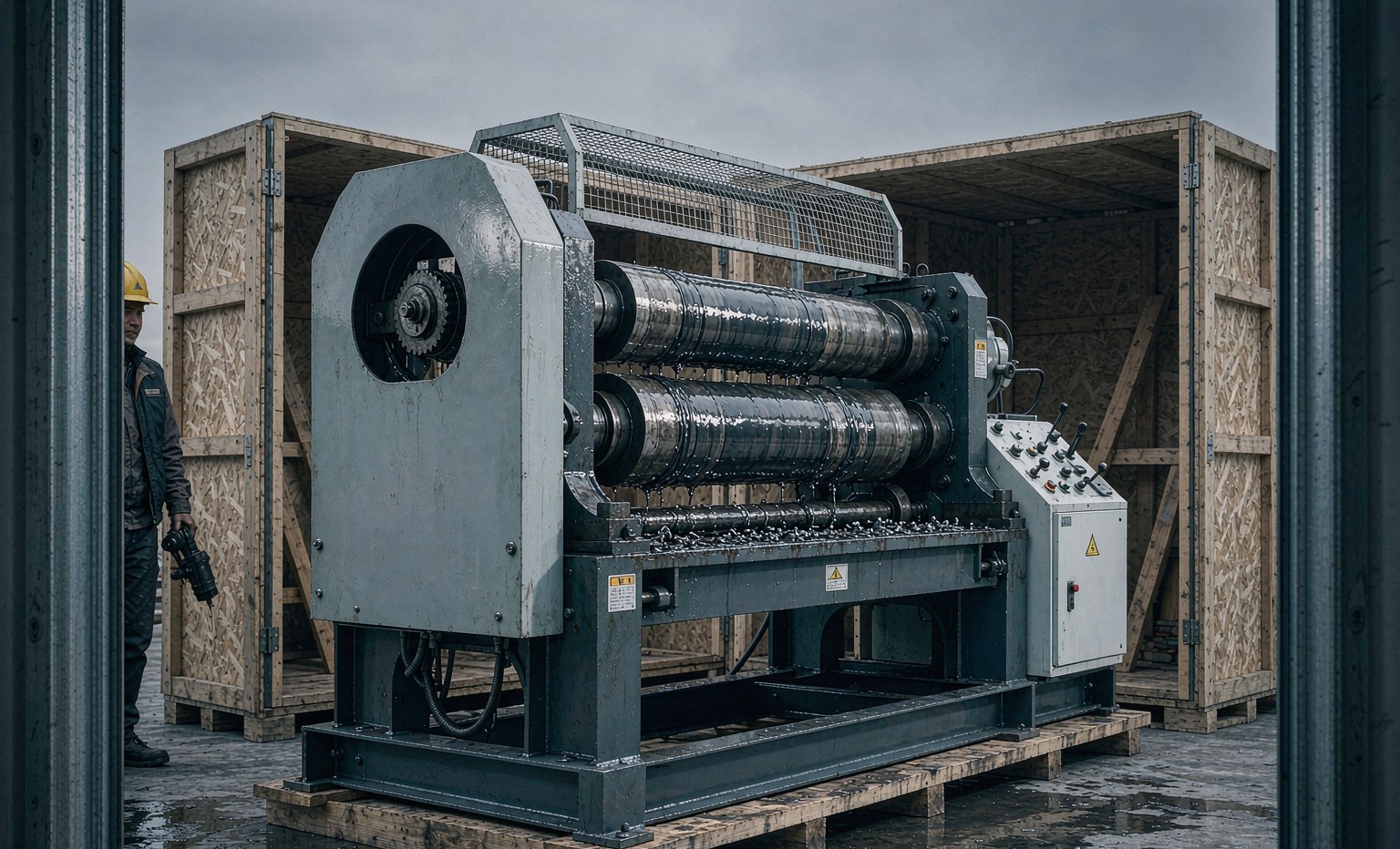
After testing we re-torque bolts, replace fluids, coat rolls in anti-rust oil, secure the machine to a steel skid inside a wooden export case with desiccant, then document every stage in photos before container loading so the customer receives exactly what the video showed.
From Workshop Floor to Export Case
The sequence on this machine ran like this. First, we re-torqued all foundation and frame bolts, because ocean vibration finds every loose one. Second, the hydraulic oil was drained and replaced fresh, and the tank cleaned, so the customer starts with clean oil on the clock, not somebody else’s ten-thousand-hour soup. Third, the roll surfaces got a generous coat of anti-rust oil, wrapped against contact damage, and the electrical cabinet was dried, sealed, and padded.
Then the machine was fixed to a steel skid and closed into a wooden export case with desiccant bags to fight container humidity, which can sit above 90% on long sea passages. Container choice matters too: we check machine height against the internal height of the box before anything is booked, because a machine that misses the door by 5 centimeters is a very expensive lesson.
Documentation and Handover
For buyers who want a second pair of eyes, we also welcome third-party inspection. An inspector from an agency such as SGS can visit our yard, watch the rolling test live, check the pressure-hold readings himself, and issue his own report before the balance payment. We arranged exactly that option for this customer, and I always tell buyers the same thing: a seller who welcomes an independent inspector is a seller who already knows what the report will say. If a supplier resists that visit, treat the resistance as data.
Every step was photographed: nameplate, roll surfaces after coating, skid fixings, case closure, container loading, and the sealed doors. The customer received the test video, the pressure-hold readings, the rolling test measurements, and the packing photos in one folder before the balance payment stage.
I also sent him a short arrival checklist, and it is worth sharing, because the first hour at your dock decides how cleanly the machine enters service. Check the case for impact marks before opening, photograph any damage for the freight claim, then confirm the anti-rust oil is still intact on the rolls. Level the machine on its foundation before first power-on, because a plate roll that runs out of level rolls out-of-round shells no matter how good it was in our yard. Let the hydraulic system idle warm before loading plate, verify the e-stops, and only then run the first test shell. He later told us this was the first used machine purchase where nothing surprised him on arrival, and that the machine went into production the same week it cleared his port. That is the entire point of the process: by the time the container arrives, the machine has already been proven, protected, and documented, so the only thing left to do is roll plate.
For related reading, see our guides on selecting rolling capacity for steel fabrication and how to inspect used machines before export, or contact Zora Liu at info@azmachines.com for current stock and test videos.
Conclusion
A used plate rolling machine becomes a safe purchase when testing is documented, capacity is matched with margins, and packing protects the proof. Follow those three stages and the machine earns money from the first week.