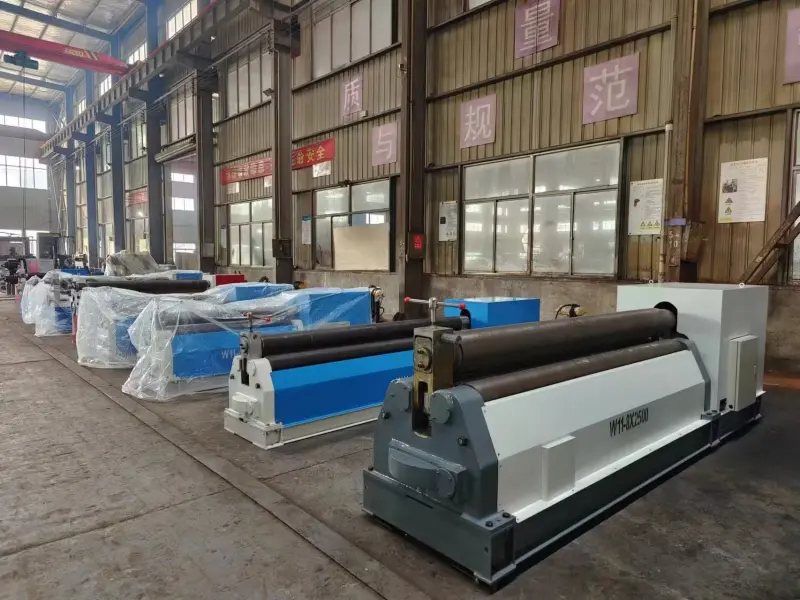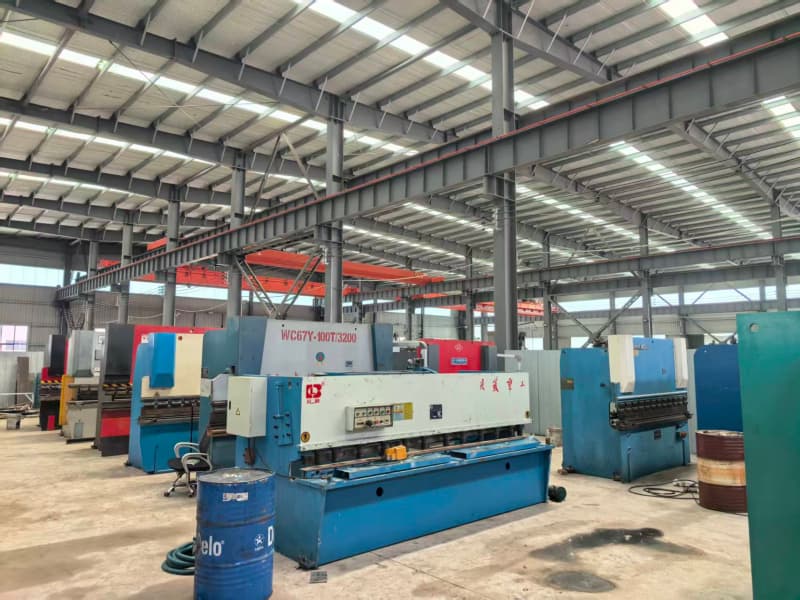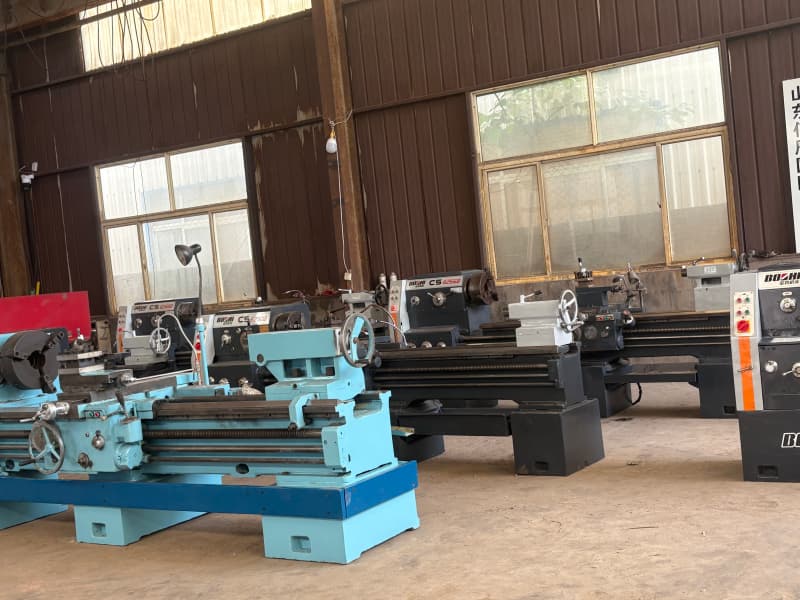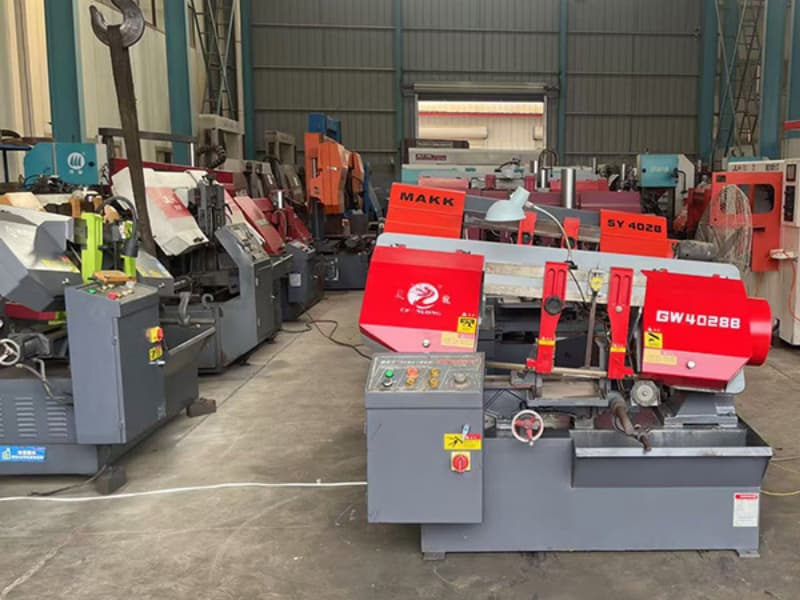


Keyway and slot work punishes a weak mill fast — chatter, tapered slots, and scrap shafts eat your margin. I have watched buyers pay twice for the wrong machine, and the checks below are how you pay once.
A used milling machine for slotting and keyway machining is the right choice when its spindle runout stays under 0.02 mm, the table and knee gibs are tight, the power and speed range match your cutter diameters, and the seller proves it with a test cut. Structure choice — turret, universal, or horizontal — decides everything else.
Keyways look like a simple job on paper: a slot, a width, a depth, done. But anyone who has run keyways on a worn mill knows the truth. The slot wanders as the cutter deflects, the width opens up halfway through the batch, and the surface finish turns grey. The machine, not the cutter, is usually the reason. In this guide I will walk you through how we match a used mill to slotting and keyway work in our yard in Liaocheng — structure first, then spindle and power specs, then the hands-on tests we run before any machine ships out.
Which Machine Structure Handles Slotting and Keyway Machining Best?
Buying the wrong structure is the most expensive mistake in keyway work. A light turret mill will chatter on deep slots, and a heavy bed mill will waste money on small shafts.
For keyway and slot machining, a turret mill suits small shafts and repair work up to about 12 mm slot depth, a universal mill with a horizontal arbor suits production keyways and T-slots, and a horizontal milling and boring machine suits long, deep slots on large workpieces. Match the structure to your part size first.
Turret Mills: Flexible but Limited Depth
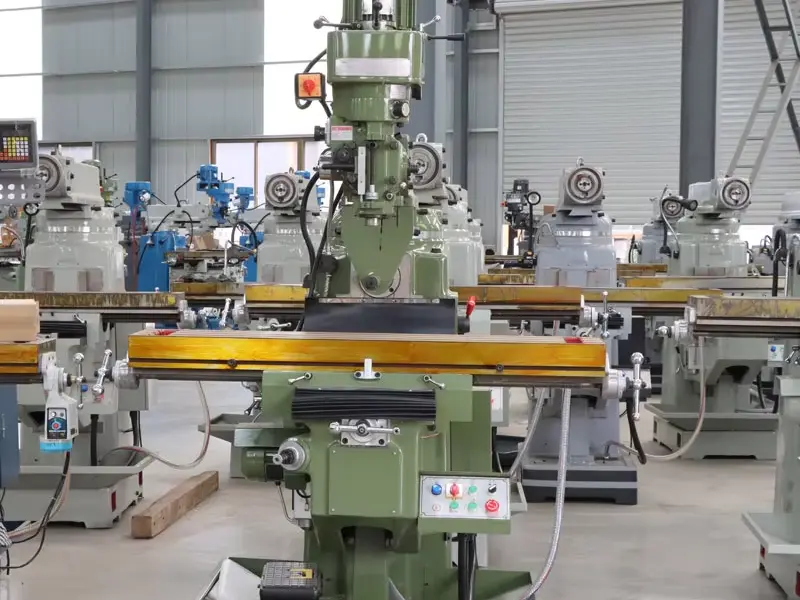
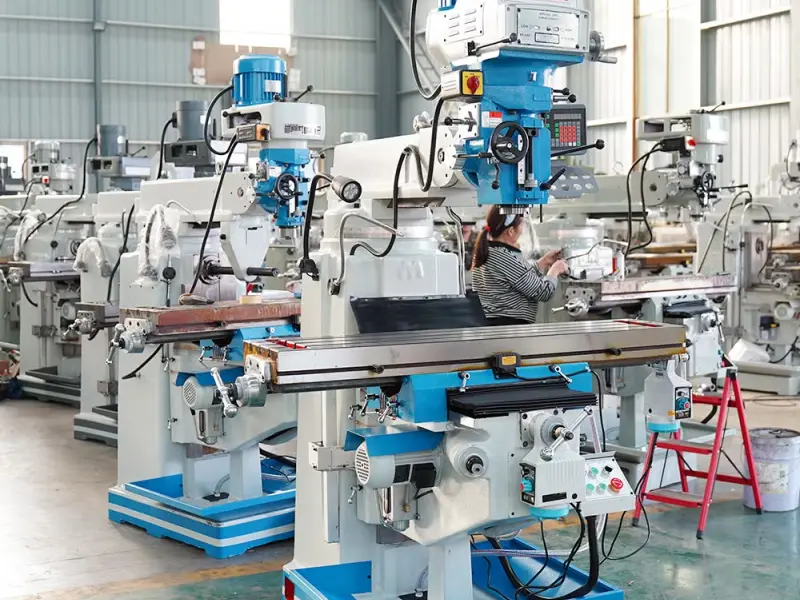
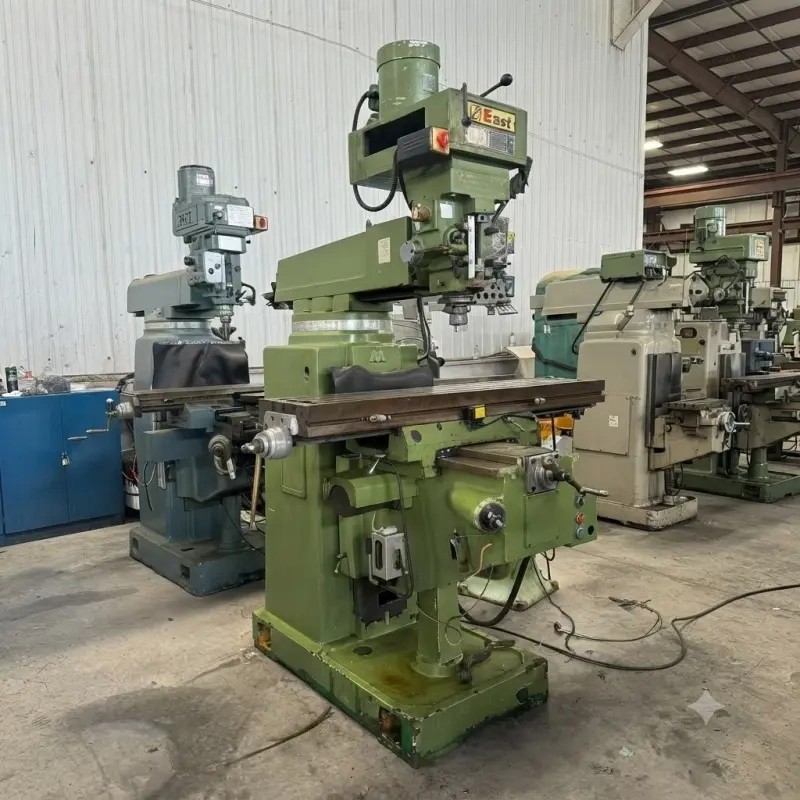
The vertical turret mill is the most common machine in small job shops, and for good reason. It sets up fast, the quill gives you easy plunge cuts, and keyseat cutters for shaft end keyways run well on it. I would put a keyway up to 8 x 4 mm on a turret mill without much worry. The problem appears when the slot gets deeper or wider. The knee and column design carries less rigidity than a bed mill, so the cutter pushes the spindle head away from the cut. The result is a slot that tapers along its length and a width that drifts over the cutter’s engagement time.
If your keyway work means shafts under 300 mm with slots under 5 mm deep, a used turret mill is honest value. A DRO on X and Y is worth having for positioning the slot against the shaft centerline, and many used turret mills arrive with one already fitted. Ask us what is in stock and we will tell you which of our used milling machines carry DRO and power feed.
Universal Mills: The Horizontal Advantage
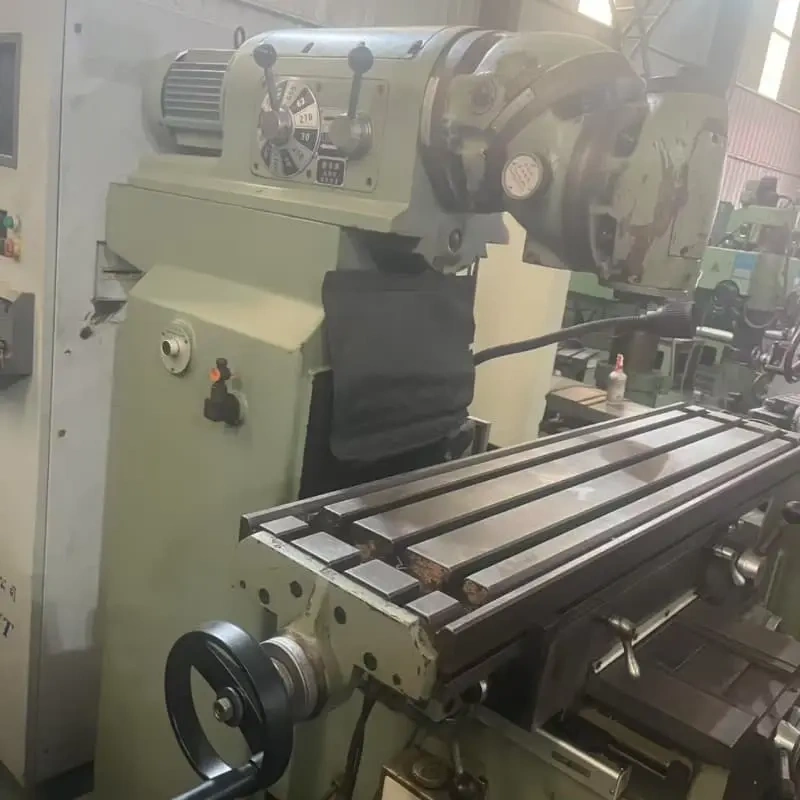
The universal milling machine with a horizontal arbor is the classic keyway production tool. Side and face cutters slab the slot in one pass with the workpiece clamped solid on the table. The cutter does not cantilever the way a vertical end mill does, so deep slots stay straight and parallel. This is the structure I recommend when a customer tells me they cut keyways all day, every day, on shafts up to a meter long.
The universal head also swings, which matters more than buyers expect. Some keyways and slots sit at an angle on the part, and a universal mill handles the angle without a fixture. The trade is changeover time: swapping arbors and staging the cutter takes longer than a tool change on a vertical mill.
Horizontal Milling and Boring Machines for Heavy Slots
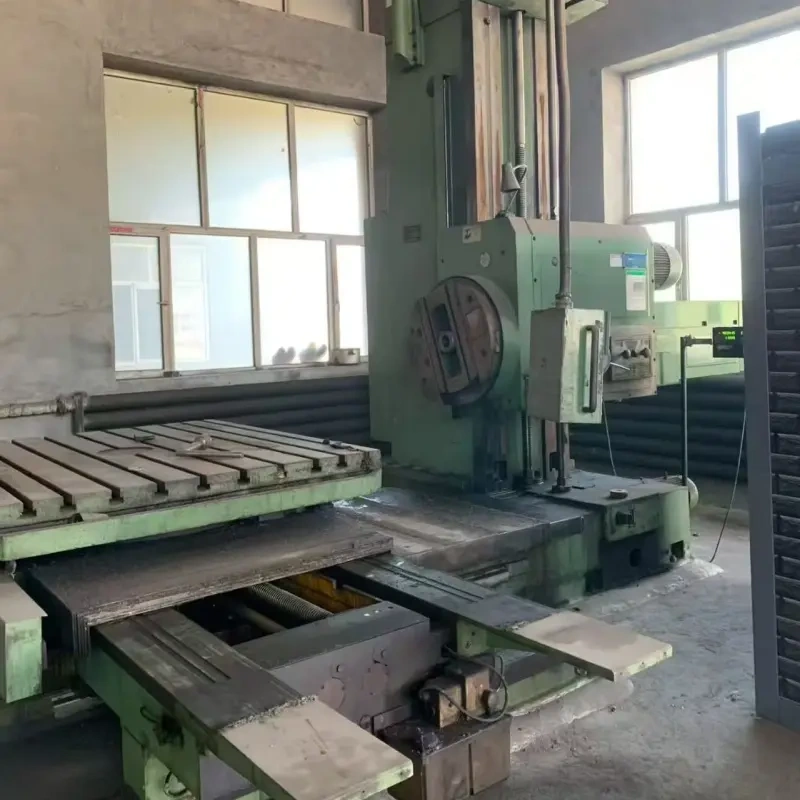
For long, deep slots — guide ways, large keyways on hydraulic cylinders, T-slots on press tables — a horizontal milling and boring machine is the honest answer. The spindle is short and stiff, the table is huge, and the cutter runs supported on both ends of the arbor. We sent one of these to a customer making tank shells, and their deep slots came out parallel within 0.02 mm over 1,000 mm [Zora will replace]. No turret mill on earth will do that.
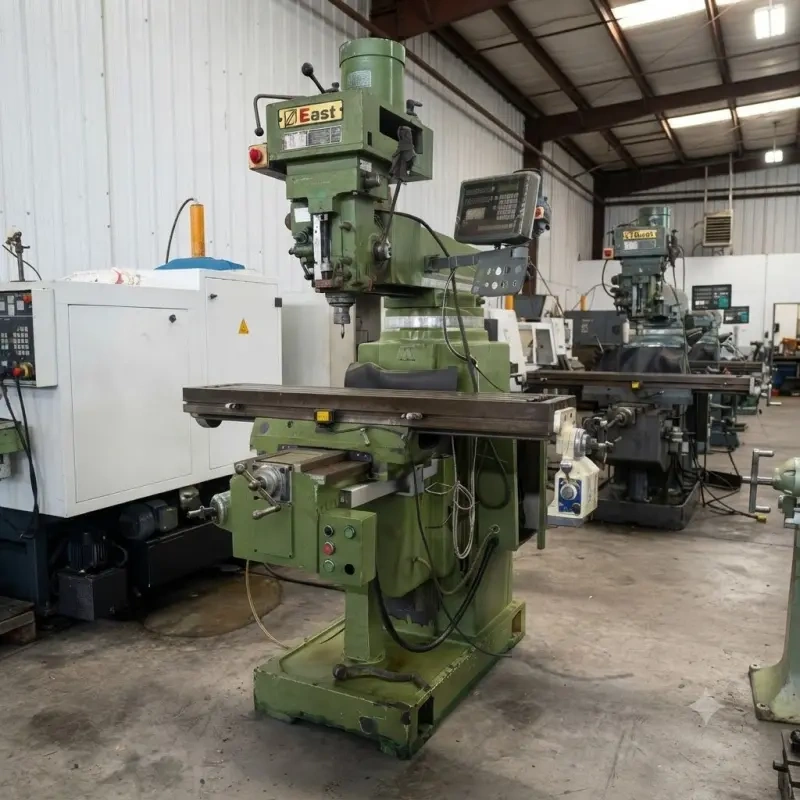
| Machine type | Best fit | Keyway depth comfort | Watch out for |
|---|---|---|---|
| Vertical turret mill | Small shafts, repair and toolroom work | 4–6 mm | Knee wear, quill play, chatter past 6 mm |
| Universal mill (horizontal arbor) | Production keyways, T-slots, batch shafts | 6–15 mm | Arbor bearing wear, changeover time |
| Bed-type vertical mill | Medium plates, pockets, wide slots | 6–12 mm | Table flatness over full travel |
| Horizontal milling and boring machine | Long deep slots, large weldments | 15 mm and beyond | Weight, floor space, power supply |
Do You Need CNC at All?
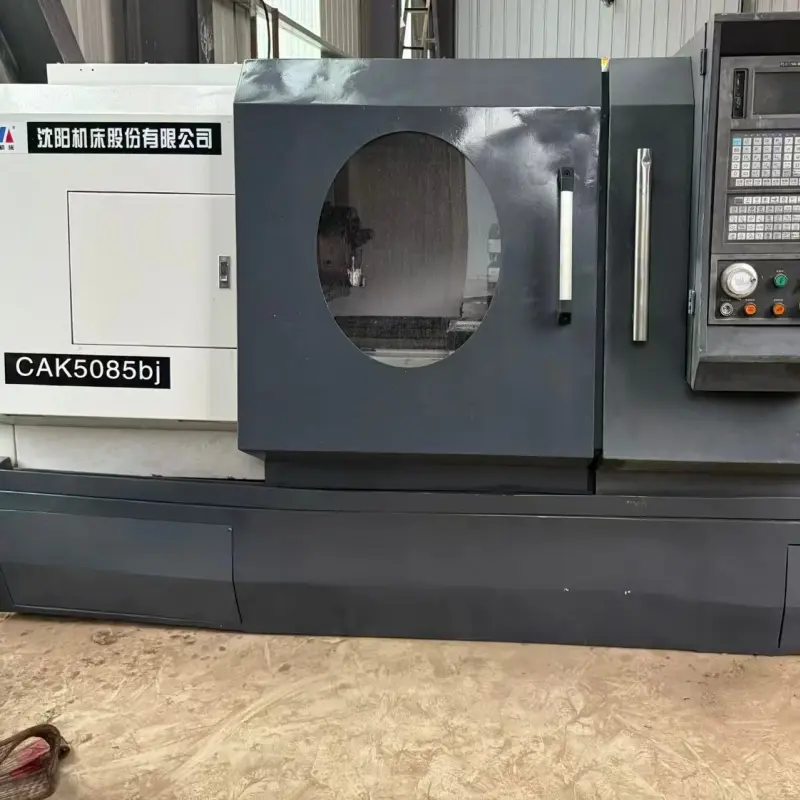
This question comes up every week. For slotting and keyway machining, my answer is usually no. Keyways are a two-axis linear job. A conventional mill with a DRO and a careful operator will hold the same width tolerance a CNC mill will, because the tolerance lives in the machine’s rigidity and the cutter, not in servo positioning. CNC earns its cost when your slots follow contours, when batch counts run into thousands, or when the same machine must also do pockets and profiles. If your work is plain keys on plain shafts, spend the money you save on good cutters and a fresh regrind cycle instead.
Which Spindle and Cutter Specs Decide Keyway Quality on a Used Mill?
A mill can look perfect and still cut crooked keyways. Spindle runout, taper condition, and cutter deflection decide slot width, and all three degrade quietly with age.
Judge a used mill for keyway work by spindle runout at the taper (under 0.02 mm is acceptable, under 0.01 mm is good), by the condition of the spindle taper and drawbar, and by whether its power and speed range support the cutter diameters your slots need. A clean taper with full contact beats a low power-on hour count.
Spindle Runout and Taper Condition Come First
Runout is the number that decides slot width. When the cutter spins with radial runout, every tooth takes a different bite, the slot widens beyond the cutter’s nominal width, and the walls ripple. For keyway work I want measured runout at the taper nose under 0.02 mm, and I get nervous above 0.03 mm. On the test bench we mount a dial indicator against a test bar or a precision mandrel, load it into the spindle, and read the total indicated runout while turning the spindle by hand. Two minutes of work, and it tells you more than any paint job.
The taper itself deserves a look under the lights. Worn or scored taper walls drop the tool’s gripping force and shift the cutter’s effective center. A quick shop check: insert a clean tool or mandrel, seat it with moderate pressure, then try to rock it by hand. Any felt movement means taper wear or contamination. Old oil film or dried coolant crystals on the taper can cost you a serious part of your clamping force, so a taper that looks dull may just need a proper cleaning and retest. Deep scoring, though, means a regrind of the spindle taper, and that is a workshop job with real cost attached.
Power, Speed Range, and Cutter Diameter Matching
Keyway cutters want torque, not top speed. A 16 mm keyseat cutter in medium carbon steel runs comfortably in the 300 to 500 rpm range with flood coolant, and the load lands hard on the machine at full slot depth. A 3 kW turret spindle manages that on shallow slots. A deep 12 mm keyway in 45 steel wants 5 kW or better and a heavier structure, or the spindle head will bog and the cutter will rub. Check the machine plate, then check the speed range: the low gears must actually go low enough. Many worn mills have fine top speeds and useless bottom ends because the belt and gear train were run hard in high range.
Cutter geometry closes the loop. Use the shortest overhang that reaches your slot depth, because deflection grows with the cube of overhang length on an end mill. Match the cutter width to the slot width where you can — widening a slot with multiple passes is possible, but a single full-width cutter with light radial passes gives a cleaner wall. For horizontal arbors, side and face cutters with staggered teeth clear chips better in deep slots. Keep the cutter overhang, neck diameter, and flute length on a written checklist, because the numbers only make sense together.
| Spec | Acceptable for keyway work | Red flag |
|---|---|---|
| Spindle runout at taper nose | ≤ 0.02 mm | > 0.03 mm or visible taper scoring |
| Taper seating test | No hand-feel rocking | Rocking, or force drop after cleaning |
| Spindle power | ≥ 3 kW turret / ≥ 5 kW deep slots | Motor stalls on test cut |
| Low speed range | Reaches ~300–500 rpm class | Lowest gear above ~800 rpm |
| Quill / knee gibs | Adjusted tight, no play | Play visible at the dial indicator |
| Table travel | Part plus fixture plus cutter clearance | Part longer than practical X travel |
Chip Evacuation and Coolant Decide the Finish
A slot is a trap for chips. In a deep keyway the cutter recuts its own chips unless coolant and chip shape work together, and recut chips scratch the walls and load the edge with heat. On the test run I watch where the chips leave the cut and whether the coolant jet actually reaches the slot bottom. Flood from the right direction usually beats pressure from the wrong one. If the machine’s coolant system is dry or the pump is dead, that is not a deal breaker — pumps are cheap — but the nozzle arrangement and tank size tell you how the machine was used. A neglected coolant tank with sludge means the machine ran hot jobs dry, and that history shows up in the spindle bearings later.
How Do You Test a Used Milling Machine Before Committing to the Purchase?
Specs on paper never shipped a good keyway. The last gate is a live test under power, and it takes less than an hour if you come prepared.
Test a used milling machine for slotting work with a four-step routine: geometric checks with a dial indicator on the table and spindle, backlash readings on each axis handwheel, a warm-up run listening for bearing noise, and finally a real keyway test cut measured with a micrometer. Machines that pass all four will cut straight slots for years.
Step One: Geometry with a Dial Indicator
Start with the machine cold. Clamp a dial indicator to the spindle and sweep the table surface to check flatness and alignment. Then sweep the inside of the T-slot grooves to see how the table has worn along its travel — a table worn in the middle shows up as a changing reading as you move the saddle. Check the knee and saddle gibs by feel: grab the table edge and push and pull with real force. A little movement at the dial indicator is normal, but anything the eye can see as motion means the gibs need adjustment or the ways are worn. Way wear on a used mill is not fatal, but it sets your straightness budget for long slots, so measure it before you argue about price.
Step Two: Backlash and Axis Feel
Turn each axis handwheel and find the reversal point where the dial indicator needle follows. On a healthy conventional mill I want backlash under about 0.03 mm per axis [Zora will replace], and I write the actual numbers down for each machine we list. Backlash matters differently for slotting than for profiling. A keyway cut in one continuous pass does not reverse the axis, so generous backlash is survivable. But if you plan to widen slots with stepped passes, backlash becomes the difference between repeatable widths and a batch of rework. Ask how the seller adjusts gibs and whether the lead screws have been changed. A machine with fresh gibs and honest backlash numbers is a better buy than a newer machine with none of that work done.
Step Three: Warm-Up Run and Cutting Trial
Run the spindle through its speed range for twenty minutes. Listen at the head for a rumble that grows with speed — that is bearing roughness. Watch the oil sight glasses and the temperature of the spindle housing; a head that runs noticeably hot past half an hour has drag somewhere. Then cut. Give the seller your actual part: a shaft, a steel grade, a slot spec. Cut the keyway full depth in one setup, cool the part, and measure slot width at three points along the slot with a micrometer or a keyway gauge. Width variation over 0.02 to 0.03 mm across the slot tells you the machine, the cutter, or the setup is deflecting, and you want to know which before the machine is on a ship.
Step Four: Price the Whole Package, Not the Machine
The comparison below is where deals are won or lost. Compare like with like: structure class, condition tier, and what the seller includes. From the prices we see across listings and our own yard, used mills land in these bands [Zora will replace]:
| Machine class | Typical used price band | New equivalent | What the gap buys you |
|---|---|---|---|
| Used turret mill, DRO fitted | $2,000–4,500 | $9,000–15,000 | Tooling budget and spare cutter sets |
| Used universal mill with arbor set | $4,500–9,000 | $18,000–28,000 | Fixtures, inspection support, shipping |
| Used horizontal milling and boring machine | $8,000–20,000 | $40,000–80,000 | A structure class no new-light mill reaches |
Those gaps are exactly why keyway production shops keep buying used. A customer in the Gulf once told me he equipped an entire shaft-repair line for the price of one new machining center, and the keyways from his used universal mill passed the same inspection the new machine’s did. The machine that pays off is the one that was tested honestly, not the one that photographed best. If you cannot inspect in person, ask for a video of the test cut with the dial indicator in frame, and ask us about third-party inspection support before payment — that single step has saved more deals for our customers than any discount ever did.
One last shop-floor note from me: the best keyway mill I ever sold was not the newest one. It was a fifteen-year-old universal machine whose owner had logged every cutter change and gib adjustment in a notebook. The paper told the story the paint could not. Buy the history, test the spindle, cut a slot. Everything else is conversation.
Conclusion
Match structure to your slot depth, verify spindle runout under 0.02 mm, and insist on a measured test cut before payment. A honestly tested used mill cuts keyways for a fraction of new cost.