

Most buyers compare table sizes and still end up with a used grinding machine that cannot hold tolerance on their parts. That mistake costs real money in downtime and scrap. This guide walks you through the specs that actually decide the outcome.
A used grinding machine is the right buy when its longitudinal travel exceeds your longest part by about 25 mm at each end, its cross travel covers the part width plus the full wheel width, and it proves 0.005–0.01 mm accuracy with a clean, measured test grind.
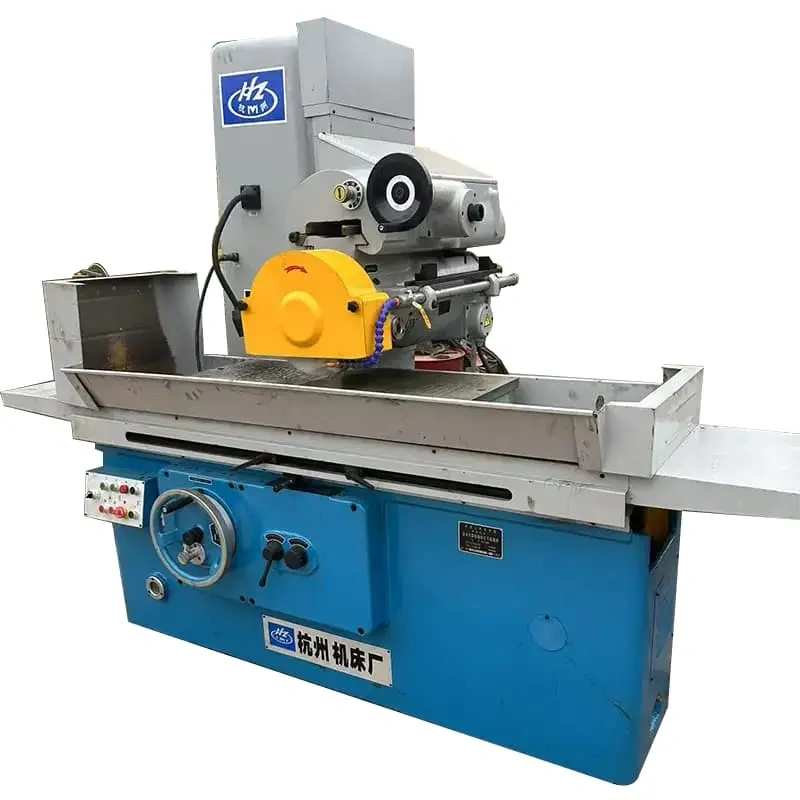
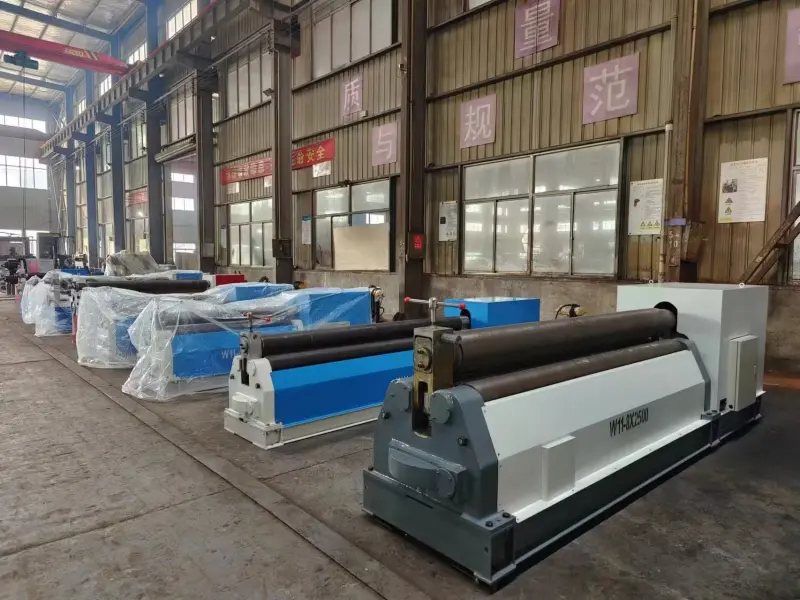
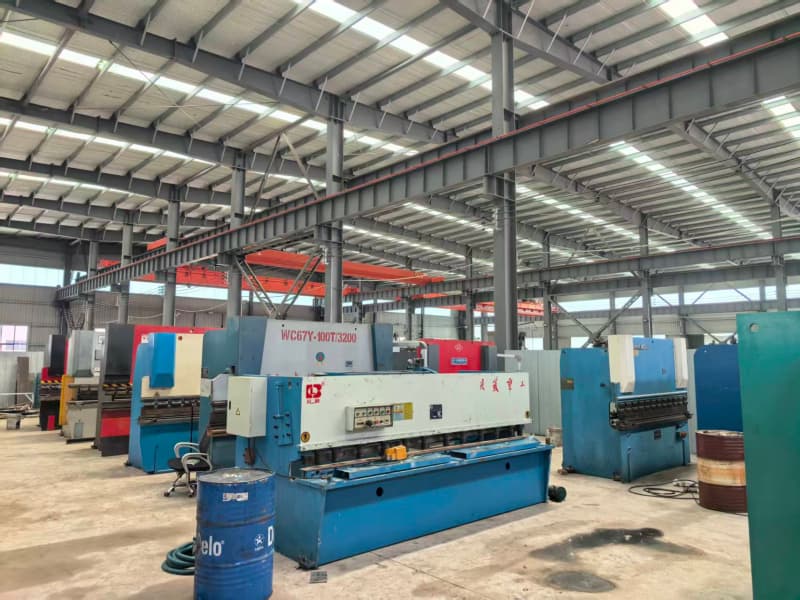
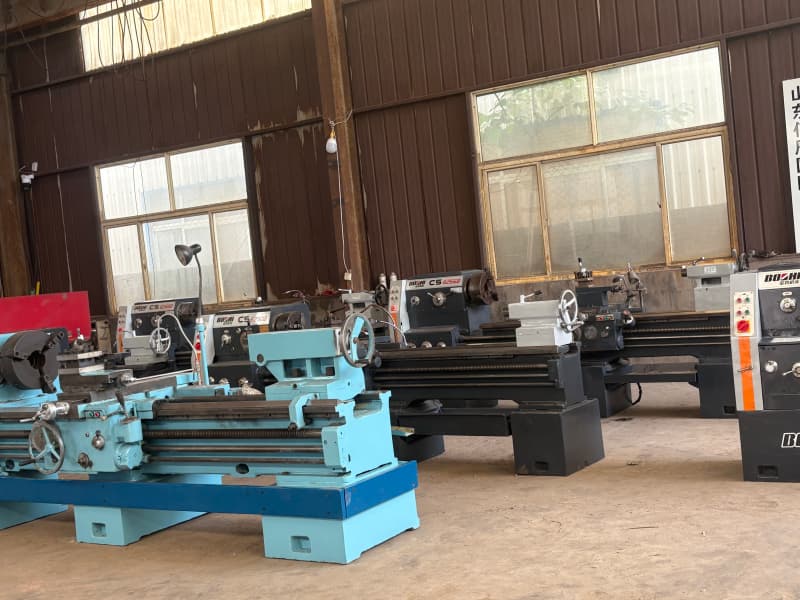
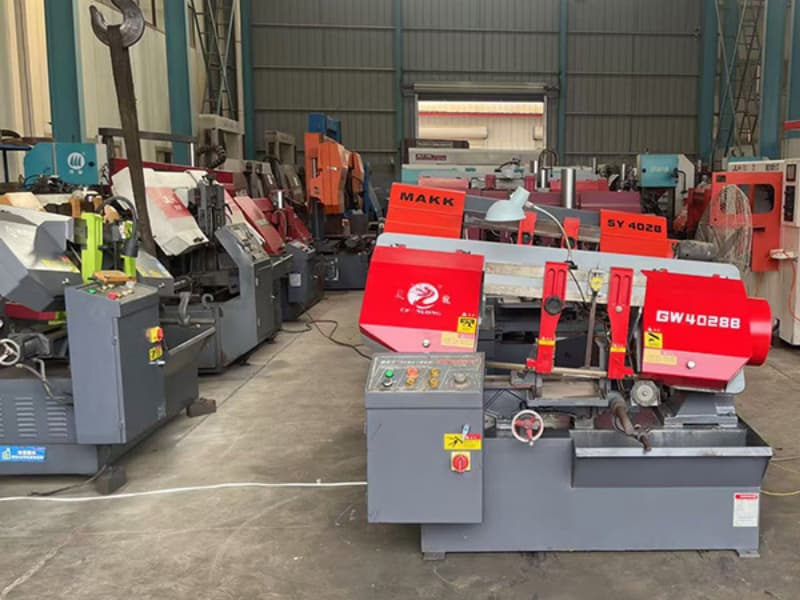
I walk our warehouse in Liaocheng every week, and I see the same pattern with overseas buyers. They arrive with a target table size written on paper. They leave with a very different machine once we put a steel rule and a dial indicator next to the datasheet. The gap between what a spec sheet says and what a grinder can actually grind is the whole story of this buying guide, so let me walk you through it the way I walk customers through it in person.
Which Table Size and Travel Numbers Actually Matter on a Used Grinding Machine?
Buying on table size alone is the most common error I see in grinding machine enquiries. A machine can look big on paper and still be too small for your parts. You need to read travel, chuck size and load rating together before you shortlist anything.
Table size only tells you the physical plate. Longitudinal travel must be your longest workpiece plus roughly 25 mm of overtravel at each end, and cross travel must cover the part width plus the full wheel width. Those two travel numbers, not the table, set your real grinding envelope.
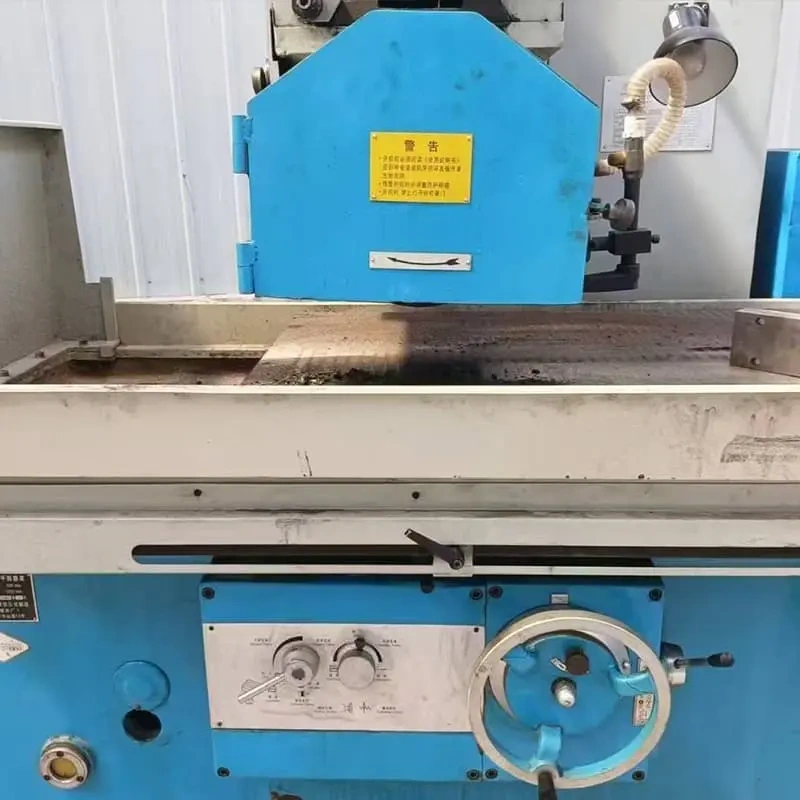
The Six Numbers on Every Grinding Datasheet
Every surface grinder datasheet, whether the machine comes from China, Taiwan, Europe or Japan, carries the same family of numbers. Learn them once and you can compare any two machines in ten minutes.
- Table working surface (W × L) — the physical cast-iron plate. This includes the area around the chuck where clamps and stops sit. It is the least meaningful number for capacity.
- Magnetic chuck size — the holding surface. On many machines the chuck is slightly smaller than the table. A 450 × 150 mm table often carries a 400 × 150 mm chuck, and that difference eats into your grinding width.
- Longitudinal travel (X) — how far the table actually reciprocates. This sets the maximum grindable length.
- Cross travel (Y) — how far the wheelhead saddle indexes in and out. This sets the maximum grindable width.
- Spindle center to table distance — the vertical envelope. It sets the maximum workpiece height, and buyers of tall fixtures run out of this number before any other.
- Maximum table load — the weight the ways can carry, chuck included. Heavy die blocks and stacked fixtures quietly exceed this on undersized machines.
One Asian builder’s datasheets make the pattern obvious. Their 450I model pairs a 450 × 150 mm table with 465 × 160 mm of travel. Their 3060AHD pairs a 600 × 300 mm table with 660 × 370 mm of travel and a 540 mm spindle-to-table distance. Their largest 4080AHD carries a 1000 × 500 mm table on 1140 × 540 mm of travel. In every case the travel is longer than the plate, and the extra stroke exists for one specific reason, which I will explain next.
Overtravel: Why Travel Beats Table Length
The wheel must run completely clear of both ends of the workpiece before it reverses. If the wheel reverses while still over the part, its edge keeps cutting at the reversal point. The result is uneven stock removal at both ends, edge taper, and corners that dish slightly. Shop-floor training on precision grinders is explicit about this: set the stroke dogs so there is roughly 1 inch, or 25 mm, of overtravel at each end of the stroke.
So the real formula is simple. Longitudinal travel equals workpiece length plus 2 × 25 mm. If your longest part is 900 mm, you need about 950 mm of travel, which means a 1000 mm-class machine like an M7130, not a 600 mm-table machine. Cross travel works the same way: it must cover the part width plus the full wheel width, because the wheelhead indexes sideways after each stroke and the wheel has to sweep past the edge.
I learned this the expensive way early in my career. We quoted a customer a machine with a table that matched his plate length exactly. On his floor, the wheel never cleared the ends, and every plate came off with a witness step at both edges. He was not wrong to be angry. We ended up trading the machine up a size at our own cost. Since then I never quote a grinder on table size alone, and I tell every buyer to bring their part drawing, not their budget, to the first conversation.
Real Spec Sheets Side by Side
Here are three common Chinese surface grinder models that pass through our warehouse often, with the numbers that matter for a mid-size fabrication or toolroom shop.
| Model | Table size (W × L) | Max grinding length | Max grinding width | Wheel size (dia × W) | Approx. weight |
|---|---|---|---|---|---|
| M7130 | 300 × 1000 mm | 1000 mm | 300 mm | 350 × 40 mm | ~2200 kg |
| M7140 | 400 × 1000 mm | 1000 mm | 400 mm | 350–400 × 40–50 mm | ~3600–4500 kg |
| M7150 | 500 × 1000–1250 mm | 1000–1250 mm | 500 mm | 400 × 50 mm | ~5000–6500 kg |
Notice how grinding length tracks the table length closely on these machines, but the usable length still assumes the wheel clears the part. When a seller lists “max grinding length” equal to the table length with no overtravel allowance, ask them to demonstrate a full-length pass. A confident seller will run it. A hesitant one is telling you something.
How Do You Match Grinding Length and Accuracy to Your Own Parts?
Specs on paper mean nothing until you map them onto the parts you actually cut. I ask every enquiry the same three questions: what is your largest part, what is your tightest tolerance, and what surface finish does your customer sign off on. Those three answers pick the machine.
Match grinding length by adding 50 mm of total overtravel to your longest part, match accuracy by machine class (0.005–0.01 mm for surface work, 0.01 mm for cylindrical), and always confirm both with a measured test grind on your own type of part before payment.
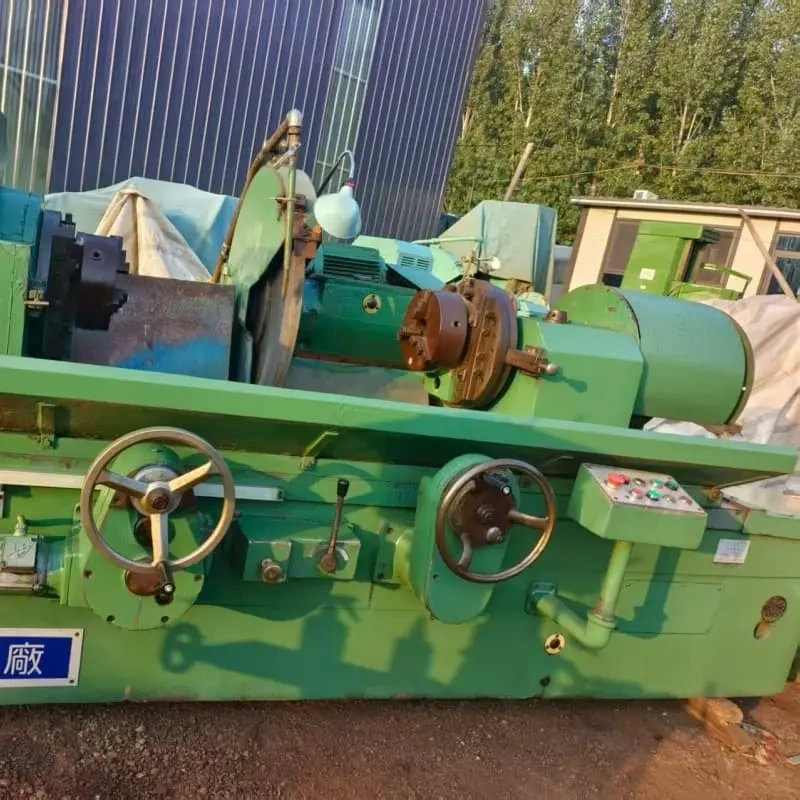
Grinding Length, Width and Height in Practice
Start with the length rule from the last section, then check the other two axes. Grinding width needs part width plus wheel width in cross travel. Grinding height is the daylight between the chuck face and the spindle center line. Mold shops feel this constraint first: a die block on a 100 mm riser plus a 100 mm chuck can consume 200 mm of a 400 mm envelope before grinding even starts. For mold and die work, builders commonly offer grinding heights from 300 mm up to 800 mm, and I recommend staying at least 20% under the maximum with your tallest fixture in place.
Wheel size also connects to length. Common wheel diameters run from 200 mm to 500 mm with widths from 20 mm to 100 mm. A bigger wheel covers more area per pass and holds its profile longer, but it demands spindle power to match. Small toolroom grinders run 1.1–1.5 kW spindles. Production machines like the M7130 carry 4–7.5 kW, and heavy M7150-class machines reach 7.5–11 kW with total installed power around 12 kVA. If a seller has swapped a smaller wheel or a weaker motor onto an old machine, the accuracy figures on the plate may no longer be reachable.
What the Accuracy Figures Really Promise
Datasheet accuracy is a laboratory claim measured on a new machine with a short test. Different machine classes live in genuinely different tolerance bands, and that is where your part drawing should drive the choice.
| Machine type | Typical accuracy | Typical capacity | Best suited for |
|---|---|---|---|
| Surface grinder | 0.005–0.01 mm | 300 × 600 mm up to 600 × 2000 mm tables | Flat surfaces, moulds, dies |
| Universal cylindrical grinder | ~0.01 mm | 500–2000+ mm between centers | Shafts, spindles, hydraulic cylinders |
| Centerless grinder | 0.01–0.02 mm | High volume, small/medium diameters | Bars, pins, high-volume shaft work |
| Internal grinder | 0.005–0.015 mm | Bores from a few mm upward | Bushings, hollow cylinders, bearing seats |
On Chinese hydraulic surface grinders, the parallelism figure is usually quoted as 300:0.005 to 300:0.008 mm, meaning 5–8 µm over a 300 mm reference length, with surface roughness around Ra 0.63 µm. High-precision mold machines push parallelism under 0.005 mm and Ra below 0.4 µm. A used machine will not automatically hold these numbers. Ways wear, spindle bearing wear and a chuck that has been skimmed too many times all erode them. So treat the datasheet as the starting point, then demand the proof.
The proof is a test grind. Ask for a full-length plate grind, then measure flatness across the whole surface with an indicator, not just a spot check in the middle. Listen to the spindle at running speed for noise and vibration, because chatter or a cloudy finish usually points to bearing wear, which is one of the most expensive repairs on a grinder. A used surface grinder is often the last machine a part touches before it ships, so finish and flatness are exactly the things the test must confirm. I personally never buy a grinder I have not seen cut. A dry start-up tells you the motor works, and nothing more.
Is a Used Grinding Machine Really Worth the Money?
Price is where used grinding machines earn their place, but only when the mechanical condition supports the discount. Let me give you the actual market numbers I see as a supplier, then let you judge.
A well-inspected used grinding machine typically costs 40–70% less than its new equivalent, and quality grinders run 25–30 years, so a verified used machine from a known builder is often the cheapest accurate capacity a shop can add.
What the Used Market Charges in 2026
Current listings give a fair picture. A mid-size used surface grinder with a 300 × 600 mm magnetic chuck in good condition sells for roughly €4,000–8,000 in Europe. Machines with tables over 1000 mm, or with CNC controls, exceed €20,000. On the Chinese export market, an M7130 with a 300 × 1000 mm table is listed around $7,000–9,000 in inspected 70–75% condition, and an M7150×1000 with a 500 × 1000 mm table lists near $7,200 with 8–10 years of expected service life. For comparison, a new M7130 hydraulic surface grinder sells in China for roughly ¥54,000–97,000 (about $7,500–13,500), and a new M7150 around ¥96,000, before export margins.
Cylindrical grinders sit at similar or higher price levels, especially with CNC controls or internal grinding heads, which add real versatility and real cost. The used discount of 40–70% applies across all these classes, and it is largest exactly where quality builders dominate, because brands like Okamoto, Blohm and Studer built machines whose accuracy survives decades when maintained. That is the core logic of this category: grinding machines age slowly, and the secondary market reflects it.
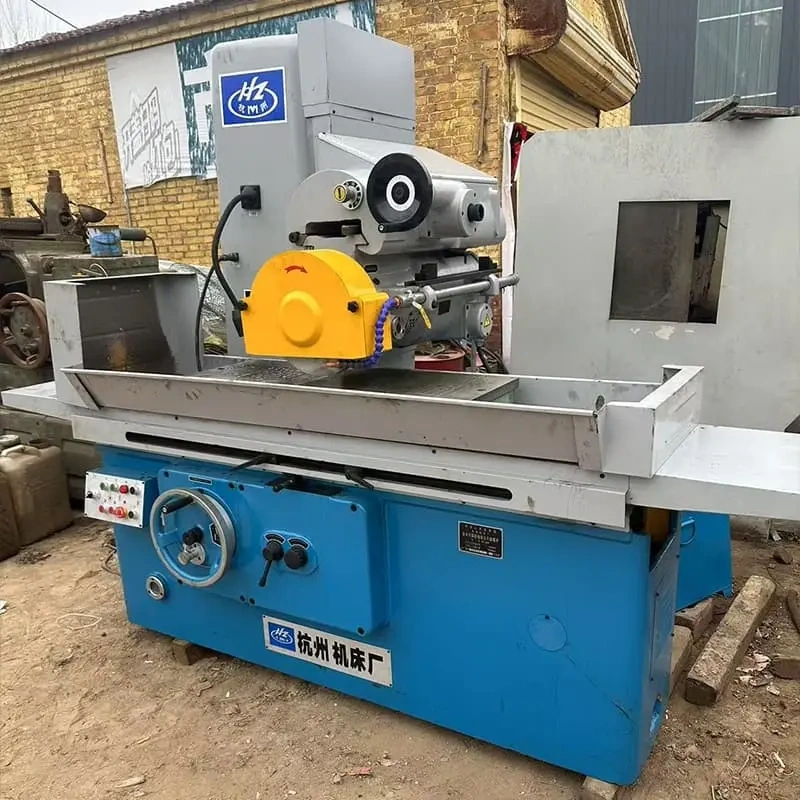
| Option | Typical cost | Accuracy risk | Lead time | Best for |
|---|---|---|---|---|
| Certified used grinder | 30–70% of new | Managed by inspection + test grind | Days to weeks | Fast capacity, tight budgets |
| New economy grinder | 100% reference | Factory warranty, unproven in your shop | Weeks to months | Long-run production, new processes |
| Outsourced grinding | $11–17 per piece, recurring | Depends on vendor queue | Days per batch | Very low volumes only |
Where the Savings Come From, and Where They Leak Away
The purchase price is only the headline. Transport and installation are the usual leaks. These machines weigh several tonnes, and they need precise levelling on the shop floor or they lose accuracy after relocation. A 5000 kg M7150 does not move on a pickup truck, and buyers who forget rigging costs discover them at the worst moment. Cross-border buyers should also budget for wheel flanges, a balancing arbor, a dresser and coolant filtration if the seller does not include them.
There is one more savings angle buyers underrate: owning your own grinder removes the outsourcing queue. A job shop that finishes parts in-house controls its lead time and its quality sign-off, and that control often pays back the machine faster than the hourly rate comparison suggests. One of our repeat customers in Southeast Asia started with one used M7140 and has since bought two more, and his reason is blunt: the grinding vendor’s queue was longer than his customer’s patience. That, to me, is the real return on a used grinder. For export packing and pre-shipment inspection, we follow the same routine we use on every machine, including wooden cases with anti-rust protection and third-party inspection support, because a grinder’s geometry will not survive rough handling.
What Should You Inspect Before Money Changes Hands?
The discount on a used grinder is payment for the inspection work you do or fail to do. Paint can hide a worn spindle. A shiny chuck can be near the end of its regrinding life. Here is the checklist I use on our own incoming stock.
Inspect the spindle runout with a dial indicator, check the ways for play and scoring, test magnetic chuck holding across the full face, verify workhead-to-tailstock alignment, and demand a real test grind with measurement. Skip any one of these and the discount becomes a repair bill.
Spindle, Ways and Chuck Come First
Start at the spindle. Check runout in both axial and radial directions with a dial indicator; anything above about 0.005 mm on a precision grinder is a red flag worth negotiating on or walking away from. Run the spindle at speed and listen. Bearing wear announces itself as noise and vibration, and it shows in the finish as chatter. On cylindrical machines, check the alignment between the workhead and the tailstock, because even minimal misalignment produces taper on every shaft you grind, and correcting it is skilled work.
Then the ways and the table. Move each axis by hand and under power. Stiff or jerky movement points to worn bearings or damaged guides. Look for play, uneven wear and deep scoring on the slideways, and check for oil leaks around the spindle and hydraulic system, which signal neglected maintenance. Table wear shows up as inconsistent flatness across the table length, which is why the full-length test grind matters. On the chuck, test holding power across the entire face with a test part, checking for dead zones or lost magnetism, and look at the chuck surface itself; one skimmed too many times is close to the end of its life, and a replacement chuck is a real cost.
Coolant, Filtration and Paperwork
The coolant system tells you how the machine was treated. Check the pump, tank and filtration. Poor filtration circulates abrasive slurry over the ways, and the damage it leaves is visible once you know to look. Coolant condition also predicts part burning and wheel life, so a filthy system is both a maintenance warning and a process problem.
Then ask for paper. Maintenance history, repair records, refurbishment details and any original accuracy charts all separate a cared-for machine from a survivor. Spare parts availability matters too, especially on older or defunct brands; a cheap machine with an unobtainable spindle bearing is not cheap. This is also where our own sales routine maps directly onto the checklist: we supply real machine photos and running test videos before order confirmation, we support SGS or third-party inspection before shipment, and we pack in wooden cases with anti-rust protection. A seller who answers inspection requests directly is telling you about the machine, and one who stalls is telling you something too.
| Common buyer mistake | What it costs | How to avoid it |
|---|---|---|
| Judging by cosmetics | Hidden spindle play, worn ways | Inspect with indicators, demand a test grind |
| Skipping the test cut | Accuracy below datasheet claims | Full-length grind, measured with indicator |
| Ignoring spare parts supply | Long downtime after a minor failure | Verify parts availability before purchase |
| Forgetting transport and levelling | Lost accuracy after relocation | Budget rigging, foundation and precision levelling |
Conclusion
Match travel to your longest part, verify accuracy with a measured test grind, and buy from a seller who opens the machine for inspection. Do those three things and a used grinding machine is the cheapest precision you will ever add.