

Most buyers compare prices before they compare geometry. The result is a used lathe machine that arrives on site and cannot swing the flange, hold the shaft, or feed the bar you quoted jobs around. Three numbers on the spec sheet decide all of it.
Swing over bed is the largest diameter a workpiece can rotate over the bed, turning length is the longest part you can hold between centers, and spindle bore is the biggest bar stock that passes through the headstock. Match all three to your largest, longest and bar-fed parts before you even look at the price.
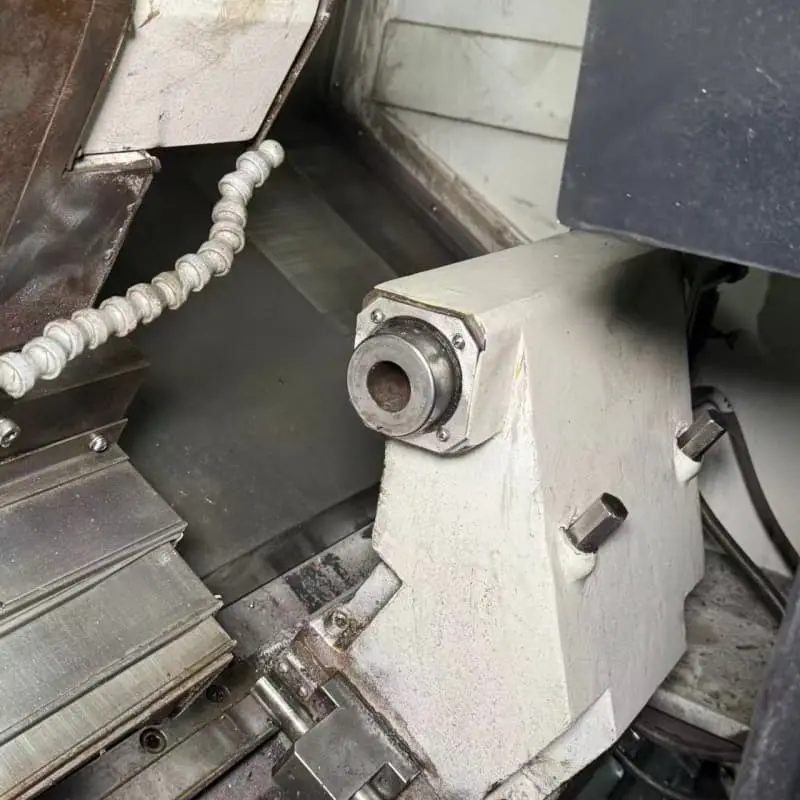
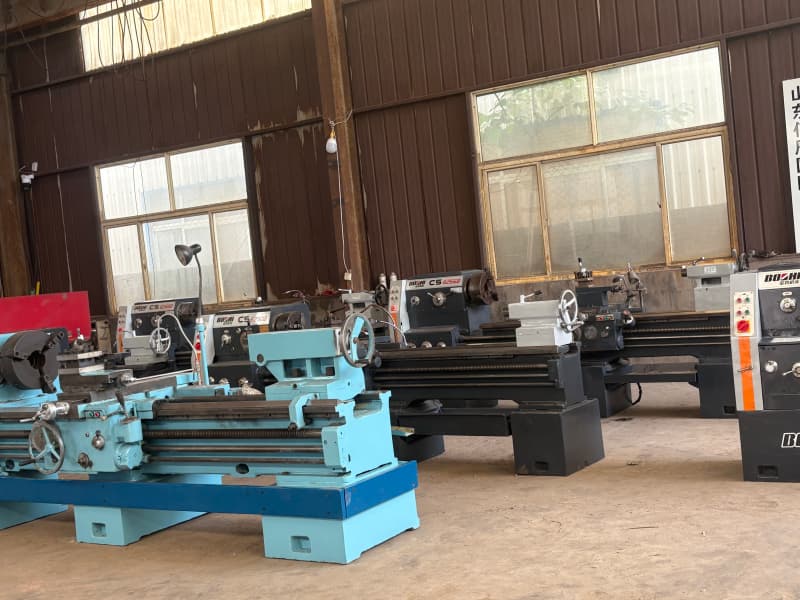
I ship used lathe machines to buyers in Vietnam, Saudi Arabia, Mexico and Pakistan, and I read a lot of spec sheets on their behalf. The sheets look similar at a glance, but the numbers underneath hide traps that only show up after the container lands. This guide walks through the three dimensions that decide whether a used lathe fits your work, and how I check each one before a machine goes into an export crate.
What Does Swing Over Bed Actually Tell You About a Used Lathe?
A listing shouts a big swing number and the buyer assumes that is what he can turn. When the cross slide gets in the way on the first pass, the machine is already bolted down and paid for. Check both swing figures before you commit.
Swing over bed is the maximum diameter that clears the bed ways. Swing over cross slide is what you can actually turn, because the carriage sits under the work during a normal pass. The second number is always smaller, so always size the machine by swing over cross slide.
The Two Swing Numbers, Defined Properly
Swing over bed is measured as twice the distance from the spindle centerline to the nearest point on the bed surface. It tells you the biggest disc or flange that can physically rotate on the machine without striking the ways. Swing over cross slide is measured the same way, but to the top of the cross slide, which carries the tool post. On a typical engine lathe this second number lands between 60 and 80 percent of the first.
Here is a worked example from the classes I move most often. A 500 mm swing engine lathe commonly offers about 280 to 300 mm swing over the cross slide. If you plan to turn a 400 mm flange, the first number looks fine on paper. The second number says it will not happen in a normal turning pass. You could face it near the chuck, but you cannot turn its full diameter with the carriage in position.
| Specification | What it measures | What it limits | Typical range on a 500 mm class lathe |
|---|---|---|---|
| Swing over bed | Diameter clearing the bed ways | Largest raw part that physically fits | 500 mm |
| Swing over cross slide | Diameter clearing the carriage under cut | Largest diameter you can actually turn | 280–300 mm |
| Swing in gap (if fitted) | Diameter with the gap bridge removed | Large facing work close to the chuck | 710 mm or more |
The 70–80 Percent Comfort Rule
Even the cross slide number is a ceiling, not a target. Chuck jaws stick out, tooling overhangs, and nobody should run a cut with 2 mm of daylight. In my experience the comfortable working diameter sits at roughly 70 to 80 percent of the stated swing over bed. On that same 500 mm machine, plan on production work up to about 350 to 400 mm over the bed and smaller once the cross slide travels under the part.
One more point buyers miss: larger swing costs you speed. A 250 mm diameter steel part needs very low RPM to keep the right cutting speed, and big swing lathes trade top-end RPM for torque. If your work is small-diameter bar parts, a monster swing lathe is a slower, heavier, more expensive answer to a question you are not asking.
Bigger swing also costs you handling. Chucks on 17 inch and larger machines can weigh more than 30 kilograms, so changing jaws becomes a two-person job, and the tooling around big diameters costs more as well. I tell buyers the same thing every week: buy for the parts you cut every month, not the biggest part you have ever quoted. The extra swing you pay for sits idle, and the money sits with it. When two machines pass your geometry check, the smaller, faster, lighter one usually wins on total output, not just on price.
Gap Beds Change the Picture
Gap-bed lathes remove a bridge section of the bed next to the chuck. Swing in gap can be 30 to 40 percent larger than swing over bed, which is handy for large facing work and short large-diameter parts. The trade-off is rigidity across the gap segment, and a gap that must be re-fitted correctly or the machine loses alignment. I treat gap capacity as a bonus, never as the number I size the purchase around. A 14 by 40 inch class machine with a gap covers most general shop work I see from overseas buyers, which is exactly why that class dominates used listings.
How Much Turning Length Do You Really Need Between Centers?
A buyer once sent me a drawing for a 1,800 mm long shaft and asked for our best price on a lathe he assumed handled it. His target machine offered 1,500 mm between centers. The flange fit, the swing fit, and the shaft did not. Length kills more purchases than diameter does.
Distance between centers sets the longest part you can support between the headstock and tailstock. Measure your longest regular part, add 10 to 15 percent for the chuck face, tailstock quill and setup tools, and buy a machine rated at or above that number.
Distance Between Centers Is Not Turning Length
The spec sheet quote is the distance from headstock center to tailstock center. Real turning length is shorter. The chuck face, the toolholder, and the tailstock quill each eat into the space, so practical turning length usually works out to 85 or 90 percent of the stated figure. If your shaft is 45 inches long, you need roughly 50 to 55 inches between centers, not 45. When I quote a long shaft job, I ask the buyer for the part length, then check the machine myself and state the practical number back to him. Never assume the published center distance equals the turning length.
| Lathe size class | Distance between centers | Practical turning length | Typical parts |
|---|---|---|---|
| Compact | 300–500 mm | 260–450 mm | Pins, fittings, small bushes |
| Mid-size | 500–1,000 mm | 430–900 mm | Pump shafts, hydraulic components |
| Full-size | 1,000–2,000 mm | 900–1,800 mm | Long shafts, rollers |
| Heavy-duty | 2,000 mm and up | 1,800 mm and up | Marine shafts, large rolls |
A common guideline for choosing a bed length is to measure the longest part you turn regularly and leave margin above it. Many workshop guides suggest planning for roughly double your routine part length, because sooner or later a longer job walks in the door, and the lathe either takes it or it does not.
Bed Wear Changes the Math on Used Machines
On a used lathe machine, the length question has a second layer, and this is the part most listings never mention. Bed ways wear where the carriage runs most, which is the section just past the headstock. A bed that is worn in the middle produces taper: the tailstock end sits lower than the headstock end, so a long shaft comes off the machine measuring differently along its length. The longer the part, the more the accumulated wear shows up in the workpiece.
This is why I check the bed before I check anything else. I wipe the ways clean, lay a precision straightedge along the V-way near the headstock, and look for gaps with a feeler gauge. Then I run a fingernail across the surface. A slight smooth taper is normal on a working machine. Deep grooves, visible concavity, or a twist you can measure with a level are not. I also check the tailstock quill for play, because a sloppy tailstock center produces chatter and taper on exactly the long parts you bought the bed length for.
The order matters too. I work from the headstock end first, then the bed, then the tailstock, because that is the sequence of replacement cost. A tailstock can be re-fitted or replaced for a few hundred dollars. Spindle bearings cost far more, and re-scraping a worn bed is a job few shops want to quote at all. When I find wear, I do not argue about it, I price it: deduct the repair estimate from the offer, or walk. Sellers respect numbers more than opinions, and so do the buyers I work with. If a seller refuses to let me run the carriage the full length of the bed or shine a light on the ways, I treat that as the answer and move on to the next machine.
Match Length to Your Part Mix, Not Your Dream Job
Do not buy bed length for the one oversized job you might get in two years. Steady rests, long-bed configurations, or outsourcing that single job all cost less than hauling and flooring a lathe that is longer than your shop needs. Count your last six months of work. If most parts sit under 500 mm, a 1,000 mm center distance machine covers them with room to spare. If shaft work over a meter is your bread and butter, pay for the longer bed, but also confirm your floor can take the extra weight and that the longer casting survived transport without twist. Long beds twist more easily in shipping than short ones, and I have seen it happen.
Why Does Spindle Bore Decide Your Bar Work Before Price Ever Matters?
Buyers fixate on swing and forget the hole in the middle. Then the shop buys bar stock, finds it will not pass through the spindle, and saws every length by hand for the next ten years. Spindle bore is a small number that quietly sets your daily workflow.
Spindle bore is the diameter of the hole through the spindle, and it sets the largest bar stock you can feed through the headstock. Common used lathe machines carry 26 mm to 52 mm bores, and bar capacity is always a few millimeters smaller than the bore.
Bore Size Classes and What They Feed
Bores sort into a few practical classes. Small European and hobby-class machines often carry around 26 mm. Mid-size lathes sit at 32 to 36 mm. The 38 mm, or one and a half inch, bore is the common industrial specification and accepts a wide range of standard bar. Larger Colchester, LeBlond and similar industrial machines carry 51 to 52 mm or more, which suits real production bar work. I keep machines in several bore classes in our yard in Liaocheng precisely because no single bore fits every buyer.
| Spindle bore | Typical machine class | What it feeds comfortably |
|---|---|---|
| ~26 mm | Small hobby and training lathes | Light bar up to about 25 mm |
| 32–36 mm | Mid-size shop lathes | Most small fittings and bushes |
| 38 mm (1.5 in) | Standard industrial engine lathes | Common industrial bar sizes |
| 51–52 mm and up | Large industrial lathes | Production bar work and tube |
Bar Capacity Is Always Smaller Than the Bore
Here is the detail that catches people. The bore is the raw hole. The usable bar capacity is smaller, because a chuck actuator, drawbar or collet mechanism occupies part of the passage. A machine with a 65 mm bore might handle only about 52 mm of bar. So when a buyer tells me he runs 50 mm bar, I do not quote him a 52 mm bore machine. I look for a bore clearly larger than his stock, then verify the actual bar capacity for the chuck type he plans to use. If the bar will not pass through, the alternative is feeding it from the end, supporting it with a steady rest, and turning every piece one at a time. That is slower, and on repeat jobs the setup time quietly destroys the margin.
What to Verify on the Spindle During Inspection
The bore is also where a used machine tells on itself. I inspect it the same way every time. I look inside the bore with a flashlight for scoring and spun tool marks, which point to past abuse. I mount a dial indicator and rotate the spindle slowly: runout under 0.01 mm at the nose is healthy for general work, and precision jobs want better. I pull the spindle nose forward and back to feel for axial play, and I run the spindle through every speed step listening for bearing noise. I check the nose threads and the taper for burrs, because a damaged nose turns every chuck you mount into a runout problem. Backlash on the cross slide gets the same treatment: I lock a dial on it and turn the handle until movement starts. About a twelfth of a turn is acceptable. A sixth of a turn means a worn nut that needs re-cutting or replacing, and I deduct for that.
Now that the three dimensions are clear, the table below pulls the whole decision together. Use it as a first-pass filter before you ask any seller for a price.
| Dimension to check | What it controls | How to size it | Red flag on a used machine |
|---|---|---|---|
| Swing over bed | Largest diameter that fits | Add margin below the largest part OD; check cross slide swing for real turning | Claimed swing with under 1 inch clearance to your part |
| Swing over cross slide | Diameter you can actually turn | Compare to your part OD directly; expect 60–80% of bed swing | No cross slide figure on the spec sheet at all |
| Distance between centers | Longest supported part | Part length plus 10–15% margin; practical length is 85–90% of stated DBC | Bed twist or visible mid-span way wear |
| Spindle bore / bar capacity | Bar stock through the spindle | Bore clearly above your bar size; verify bar capacity for your chuck | Scoring inside the bore, runout above 0.01 mm |
| Bed condition | Holds all of the above over time | Straightedge, feeler gauge, fingernail test near the headstock | Deep grooves or measurable concavity |
One personal note before the close. I have watched buyers lose a day of haggling over a few hundred dollars and then skip the straightedge test that would have told them the machine needed 2,000 dollars of rescraping. Learn the three numbers, run the simple checks, and you will out-negotiate most people standing in that yard, including the ones with more experience than you.
If you are comparing specific used lathe machines right now, send me your largest part diameter, your longest shaft, and your bar size. Those three numbers let us shortlist the right machine from real stock in one reply, with photos and running videos before you commit.
Conclusion
Match swing over cross slide, real turning length and true bar capacity to your actual parts, verify the bed and spindle in person, and the used lathe you buy will earn its keep for years.