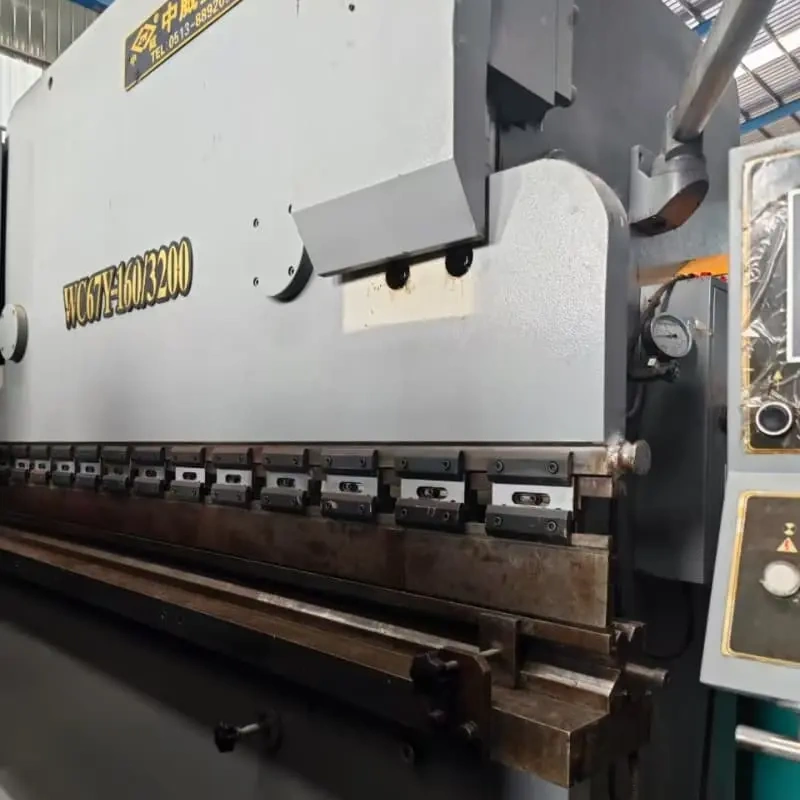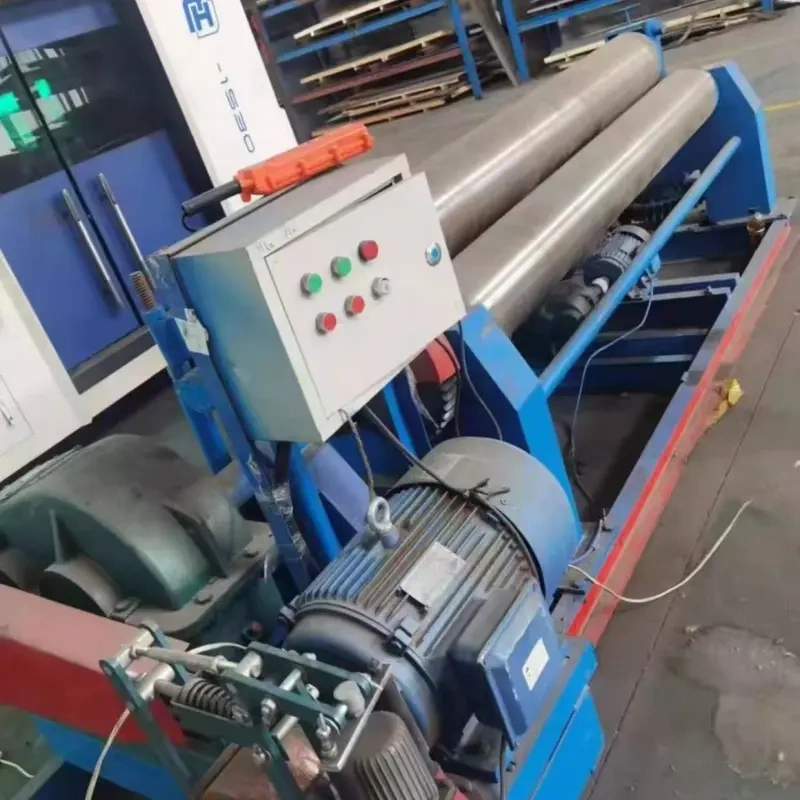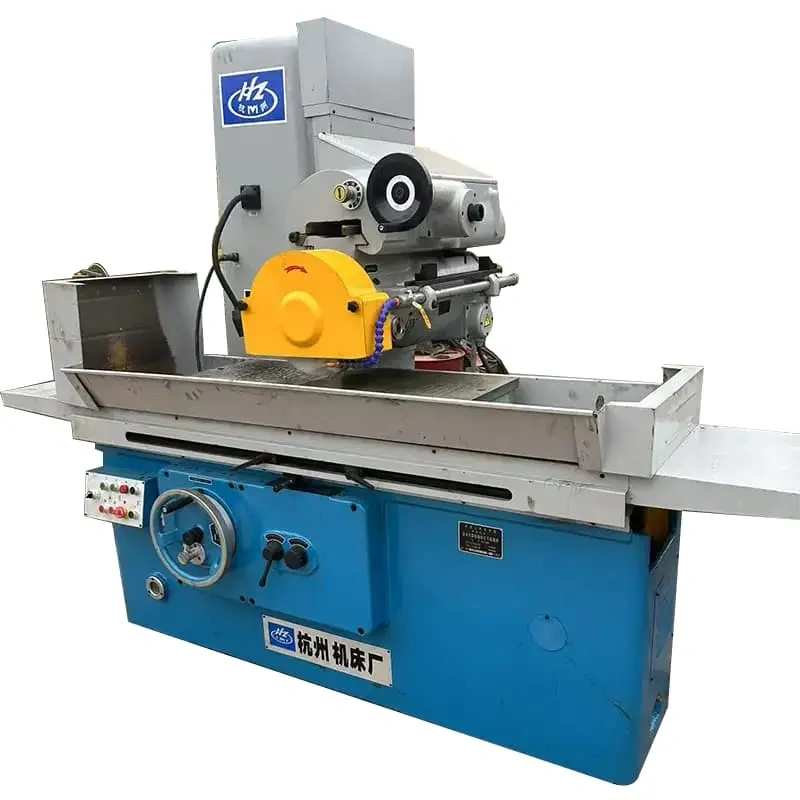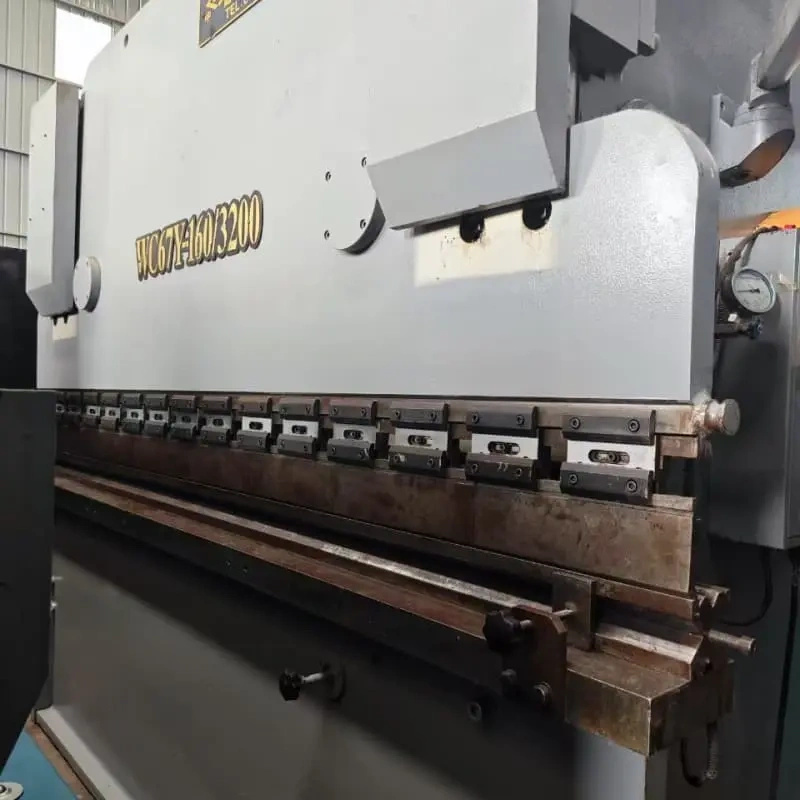


A shear that cuts 20 mm short ruins every blank it touches, and the scrap bill outruns the saving within weeks. We never ship one untested.
A used shearing machine export case for a sheet metal factory comes down to four things: matching the shear to the material mix, proving the cut with a measured test piece, packing it for a sea crossing, and handing over documents the buyer’s customs broker can actually use.
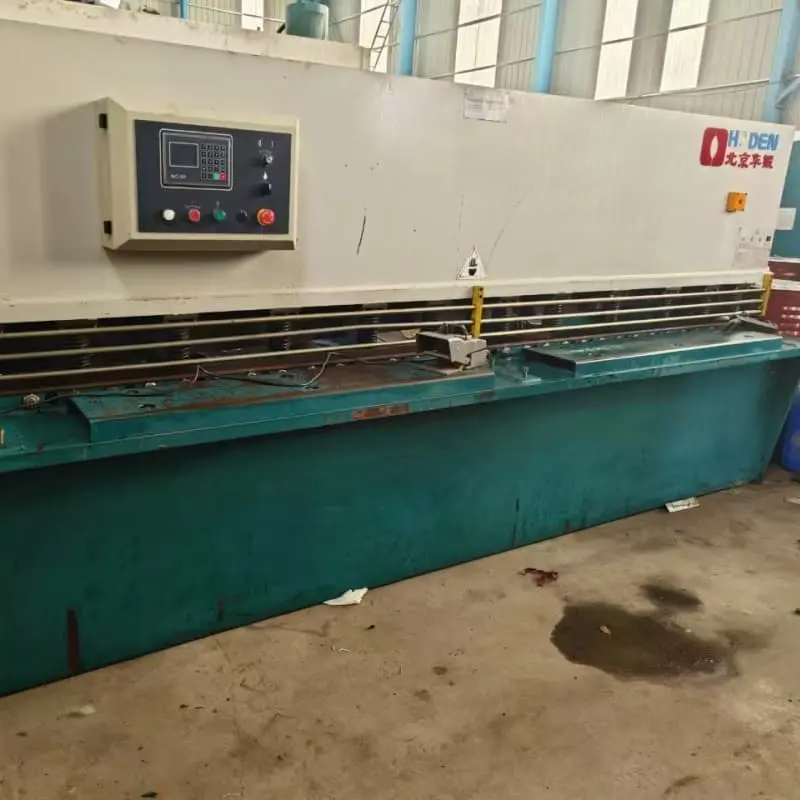
Most enquiries I answer start with a photo and a price. A buyer sends a picture of a shear from a listing page and asks what we can do on the number. That is the wrong end of the conversation, and I usually say so. A shearing machine is one of the simplest machines in a fabrication shop, and that simplicity is exactly why the details matter. There is no controller to compensate for a twisted frame. There is no software to hide a worn backgauge. If the machine is off, the blanks are off, and the operator finds out at the brake press or at the welding table.
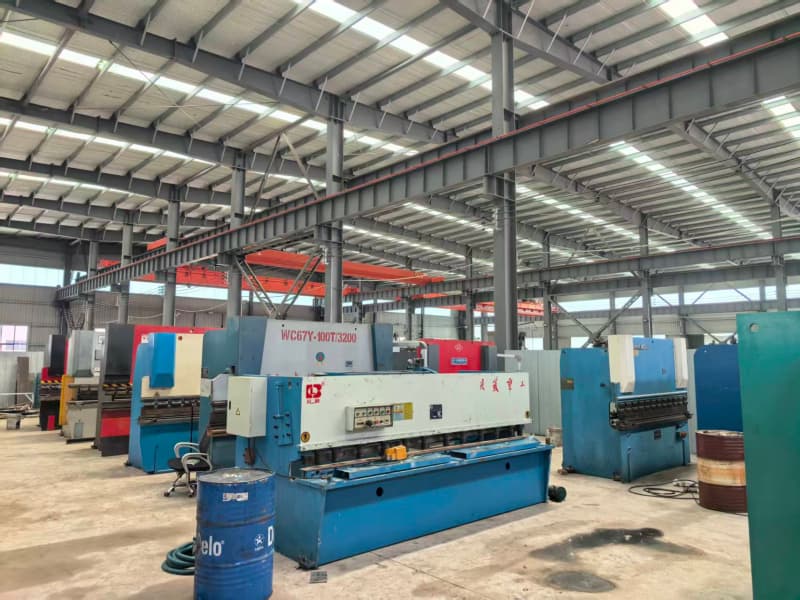
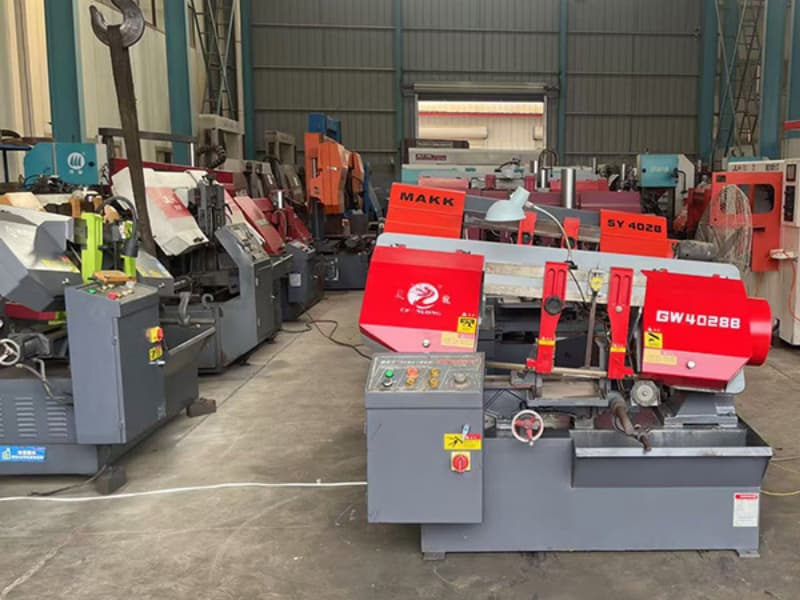
So I want to walk through one export case the way it actually runs in our yard in Liaocheng, from the first technical question to the moment the container doors close. The machine in this case was a hydraulic guillotine shear going to a sheet metal processing factory that cuts blanks for electrical enclosures and light structural parts. The same sequence applies whether you buy from us or from anyone else. It is just a set of checks that keep a cheap machine from becoming an expensive one.
What Does a Sheet Metal Factory Actually Need From a Used Shearing Machine?
Most first-time buyers shop by tonnage and cutting length. That is backwards. Start with the material mix and the blank sizes you cut every day.
A sheet metal processing factory needs a shear whose rated thickness, cutting length, rake range and backgauge travel match the work it actually runs, not the biggest job it might quote.
Dive deeper starts here. The first thing I ask a factory is not “what thickness do you cut” but “what thickness do you cut on a normal Tuesday”. The answer is almost always two or three gauges below the maximum on the spec plate, and that gap matters. A shear run constantly at its rated capacity wears blades faster, loads the hydraulic system harder, and shows every weakness in the frame. The machine that suits a factory is usually one size larger than the work, not one size smaller.
Match the Shear to the Material Mix, Not the Brochure
Mild steel is the easy part. The trouble starts when a factory also runs 304 stainless or galvanised sheet on the same machine. Stainless work-hardens, needs more force, and wants a different blade gap. A shear rated 6 mm in Q235 mild steel is not a 6 mm stainless machine, and no honest supplier will tell you otherwise. If stainless is more than a small share of the work, derate the machine or buy a heavier one.
I also ask about blank width, because it decides the cutting length. A 2500 mm shear is enough for most enclosure panels. A 3200 mm shear is what you want if you nest two parts across the sheet or cut 3 m trim. Going longer than you need costs floor space and money, and it makes the machine harder to load and harder to ship.
Guillotine or Swing Beam: The Choice Follows the Work
The two frame types are not marketing categories. They behave differently under load.
| Feature | Swing beam (QC12Y class) | Guillotine (QC11Y class) | CNC guillotine (QC11K class) |
|---|---|---|---|
| Blade motion | Arc, pivoting on rear shaft | Straight vertical slide | Straight vertical slide |
| Rake angle | Usually fixed | Adjustable, roughly 0.5° to 1.5° | Adjustable, motorised |
| Best thickness band | Light to medium, up to about 12 mm | Medium to heavy, 6 mm to 30 mm+ | Medium to heavy, repeat work |
| Blade gap setting | Manual, often per-material | Manual or quick-set | Programmed per job |
| Backgauge | Manual or motorised | Motorised or NC | CNC, servo |
| Typical used price band | Lower | Mid | Highest |
| Where it fits | Mixed light sheet, job shop | Plate work, thicker blanks | High-mix, short-run production |
For an enclosure factory cutting 1.5 mm to 3 mm sheet all day, a swing beam shear is often the sensible buy. It is cheaper, simpler, and the fixed rake is not a handicap at that thickness. For a factory cutting 6 mm to 12 mm plate with a mix of stainless, the guillotine frame earns its price. The straight slide holds blade alignment across the full length, and adjustable rake lets the operator trade cut quality against force.
The Details That Decide Whether Operators Like the Machine
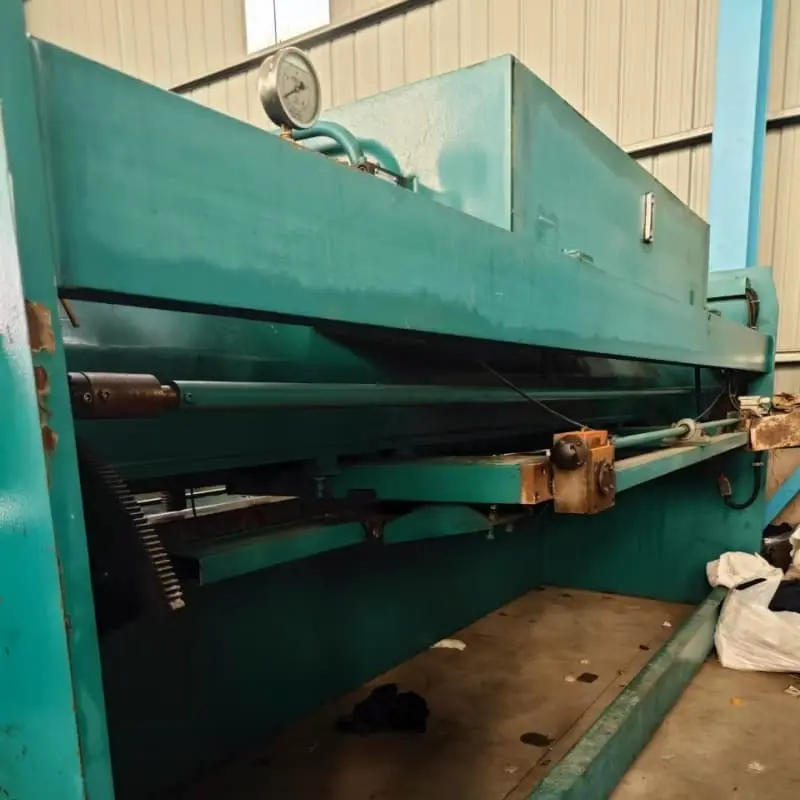
A shear can pass every measurement and still annoy the people who run it. Two details come up again and again in feedback after installation. The first is backgauge travel. A 20 mm to 600 mm range covers most blank work. A 0 mm to 800 mm range lets the operator cut longer parts without re-setting the stop by hand, and that saves real minutes over a shift. The second is the throat depth and the front support arms. Deep throats and long arms make wide sheets easier to square against the gauge, and squaring errors are the number one cause of trapezoidal blanks.
Price Realism, Because It Sets the Whole Conversation
Buyers sometimes arrive with a number in mind that came from a listing for a different class of machine. Public listings this month put a new QC12Y 6×3200 swing beam shear around US$8,200 to US$9,600, a new hydraulic guillotine QC11Y around US$9,900 to US$11,000, and a CNC guillotine QC11K nearer US$18,600 to US$19,900. Used prices for the same classes usually land between 40% and 70% of new, depending on age, blade life left, and how much of the original documentation survived. A used QC11Y 6×3200 in good order is commonly quoted in the US$5,000 to US$7,000 band, and a heavier 12×2500 machine with a digital backgauge sits in a similar range when it is older.
That spread explains why two machines that look alike in photos can be 50% apart in price, and it is why I list blade condition and backgauge type next to the price on every machine in our used shearing machine stock. The cheap one usually needs blades, a seal kit, or a backgauge repair, and those three items together can eat the discount. When a factory tells me the budget first, I can usually say within a day whether the number is realistic for the capacity they want. If it is not, I would rather say so at the start than sell a machine that will disappoint them in month three.
How Do We Test a Used Shear Before It Leaves the Yard?
Paint hides cracks, and a two-minute demo hides a worn backgauge. So we cut real blanks at three positions and measure every one of them.
We test a used shear in two stages: a cold inspection of frame, blades, hold-downs and hydraulics, then a measured test cut on the buyer’s own material at the left, centre and right of the bed.
Cold Inspection: Frame, Blades and Hold-Downs
The cold pass starts with the frame, not the electrics. I look at every load-bearing weld seam for cracks, and at the paint around repaired areas, because fresh paint over a weld is the oldest trick in the used machinery trade. If a machine has been overloaded, the evidence shows up as bowed side housings, elongated anchor-bolt holes, or a lower blade seat that is no longer flat. A dial indicator run along the lower blade mounting surface tells you more than any photo.
Blades come next. Four-edge rectangular blades are standard on most Chinese shears, so a used machine often has two or three fresh edges left. I check for chipping along the edge, straightness over the full length, and whether the blades sit properly in their seats. A mismatched set, where one blade has been replaced and the other has not, will never give a clean cut no matter how carefully you set the gap. That is a negotiating point, not a deal breaker, but it has to be priced in.
Hold-downs are the part buyers forget. They must clamp evenly across the whole cutting length. I slide a strip of paper under each hold-down pad and pull. If one pad lets go while the others hold, the sheet will lift during the stroke and the cut will bow. On older machines the springs and the hydraulic hold-down circuit are both suspect, and the fix is cheap enough that there is no reason to accept a machine with weak clamping.
The Measurements That Actually Matter
Hydraulics get a pressure-stability check, not just a leak check. I watch the gauge through several full strokes. A slow drop means a worn pump or a leaking valve, and both get worse under load. Pump noise is a useful tell as well. A healthy axial piston pump has a steady note. A whine that changes pitch through the stroke usually means air in the oil or a tired pump. Oil condition matters too. Milky oil means water, and water in a hydraulic system is a rebuild waiting to happen.
Then the blade gap. This is where most of the cut quality lives, and it is also where published charts quietly disagree. One supplier’s chart gives 5% to 7% of thickness for mild steel and 6% to 8% for 304 stainless. Another gives 8% to 10% for 4 mm to 10 mm mild steel, and 10% to 12% for stainless in the same band. A third says stainless wants 3% to 5%. All three are talking about the same physics, and the difference comes from different blade geometry, rake angle and machine rigidity.
My rule is simple. Use the machine’s own chart first, then confirm with a test cut. And never go below 3% of thickness. Under that, the upper and lower fracture cracks miss each other inside the plate, the blade has to shear the remaining bridge a second time, and the tonnage roughly doubles. That is how edges chip.
| Check | Tool or method | Acceptable result | Walk away if |
|---|---|---|---|
| Frame welds | Dye penetrant or magnetic particle | No indication at load-bearing seams | Cracks at main seams, fresh paint over a repair |
| Lower blade seat flatness | Dial indicator on a magnetic base | Steady reading across the bed | More than about 0.05 mm variation over 1 m |
| Backgauge repeatability | Three cycles to the same setting | Same reading each time, parallel to the blade | Drift over 0.1 mm, or taper across the length |
| Blade condition | Visual along the full edge | Sharp, straight, no chips | Chipped edge or mismatched blade set |
| Hold-down clamping | Paper pull test at each pad | Even grip along the length | Any pad releasing early |
| Hydraulic pressure | Gauge through several strokes | Stable, no fall-off | Slow drop or fluctuating needle |
| Oil condition | Sight glass and drain sample | Clear amber | Milky, burnt smell, metal particles |
| Stroke and cycle | Full stroke at working pressure | Smooth, no judder | Banging, judder, or slow return |
The Three-Position Test Cut
The test cut is the part I refuse to skip. We cut the buyer’s own material, or the closest match in our yard, at the left, centre and right of the bed. Each blank gets measured for length, squareness, straightness across the width, and burr height. Then we cut the same size five times in a row and stack them. If the stack fans out, the backgauge is not holding or the frame is flexing, and no adjustment will fully fix that.
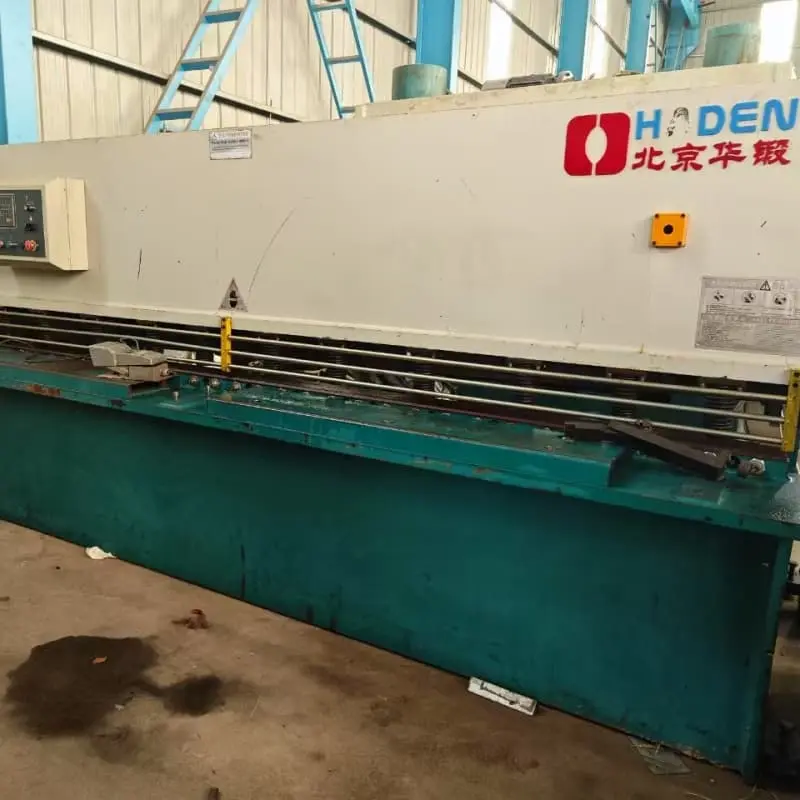
A good shear will hold length within a few tenths of a millimetre on the same setting and keep squareness inside the tolerance the factory needs for the next operation. Numbers matter less than consistency. I have shipped machines that measured slightly off nominal but repeated perfectly, because the operator just offsets the gauge once and the whole shift runs true. I have rejected machines that hit nominal on the first cut and drifted on the fifth. Repeatability is what a factory actually buys.
We film the whole sequence. That video goes to the buyer before payment, and it is the single thing that shortens the approval loop the most. When Gulf Industrial Equipment LLC in Saudi Arabia bought shears and press brakes from us, their feedback was blunt: we were the first used machinery supplier who sent real machine videos and third-party inspection support before they paid. That is not a marketing line. It is the reason that account kept ordering.
For buyers who want independent confirmation, we arrange SGS or another third-party inspector on request, and the scope of that pre-shipment inspection service is agreed before the machine is cleaned and packed. The inspector checks weld integrity, measures bed parallelism, and films the live cut under load. On the Saudi order the report came back with no frame deflection and a verified working condition, and the machines went to Dammam Port with that paperwork attached. If your bank or your customs broker wants a pre-shipment inspection certificate, build that into the timeline. It usually adds three to five working days.
What Happens Between the Test Cut and the Container Door?
A good machine can still arrive as scrap. Salt air, one loose tie-down and a missing document are enough to turn a clean deal into a claim.
Export preparation covers four things: anti-rust protection and crating, container loading with the weight balanced, a complete document set including the certificate of origin, and a commissioning plan for the day the machine lands.
Packing a 5.5-Tonne Shear for a 30-Day Crossing
A 6×3200 hydraulic guillotine weighs roughly 5,500 kg and measures about 3,730 × 2,075 × 1,970 mm. A 12×2500 machine is shorter but heavier, around 7,200 kg. Neither is difficult to ship, but both punish lazy packing.
The sequence we use is boring and it works. Clean the machine, then coat every bare steel surface with anti-rust oil, including the blade edges, the blade seats, the guideways and the exposed piston rods. Wrap the machine in stretch film or vacuum film, then build a plywood or wooden enclosure over the frame. The blades get a wooden or rubber guard so nothing can strike the edge in transit. Loose parts, foot pedal, backgauge stops, spanners and the manual go into a labelled crate that is strapped to the machine frame, not thrown loose into the container.
Then the tie-downs. Four-point lashing to the container floor rings, with timber chocks against the base, is the minimum. I have seen a shear arrive with a bent backgauge screw because someone relied on friction and a single strap. The repair was cheap. The three weeks of downtime were not.
Loading, Documents and the Duty Question
A 3.2 m shear loads into a 20-foot container with room to spare for a second small machine or a crate of tooling. That is worth planning, because a half-empty container is money on the water. If the order includes a press brake or a small lathe, we work out the loading plan before quoting freight.
The document set is short but every item has to be right. Commercial invoice, packing list with weights and dimensions per package, bill of lading, certificate of origin, and insurance if the buyer wants it. The machine itself should leave with its own manual, wiring diagram and any test report. Used machinery without paperwork is harder to clear and much harder to service five years later.
On classification, a non-CNC sheet metal shear normally falls under HS 8462.39.00, which carries a 13% export rebate in China and an MFN import duty of 9% in most markets. That headline number is rarely what a buyer pays. Under the ASEAN-China free trade arrangement the rate can drop to zero with a Form E certificate of origin, and under RCEP many ASEAN destinations sit around 5%. Mexico and the Gulf are different stories and need their own check. This is the point where I tell buyers to talk to their own broker early, because duty and VAT change the landed cost more than the machine price does.
Voltage, and the Mistake That Costs a Week
Chinese machines are built for 380 V three-phase at 50 Hz. Malaysia runs 415 V. Mexico runs 440 V at 60 Hz. Parts of the Middle East differ again. A motor can often be reconnected for a different voltage, but a 50 Hz machine on 60 Hz power runs about 20% faster, which changes pump flow and cycle timing. We confirm the destination supply before the machine leaves, and we quote a transformer or a motor change when it is needed. Buyers who skip this step usually discover the problem on installation day, with the machine sitting on the floor and the electrician shrugging.
What the Buyer Gets at the Other End
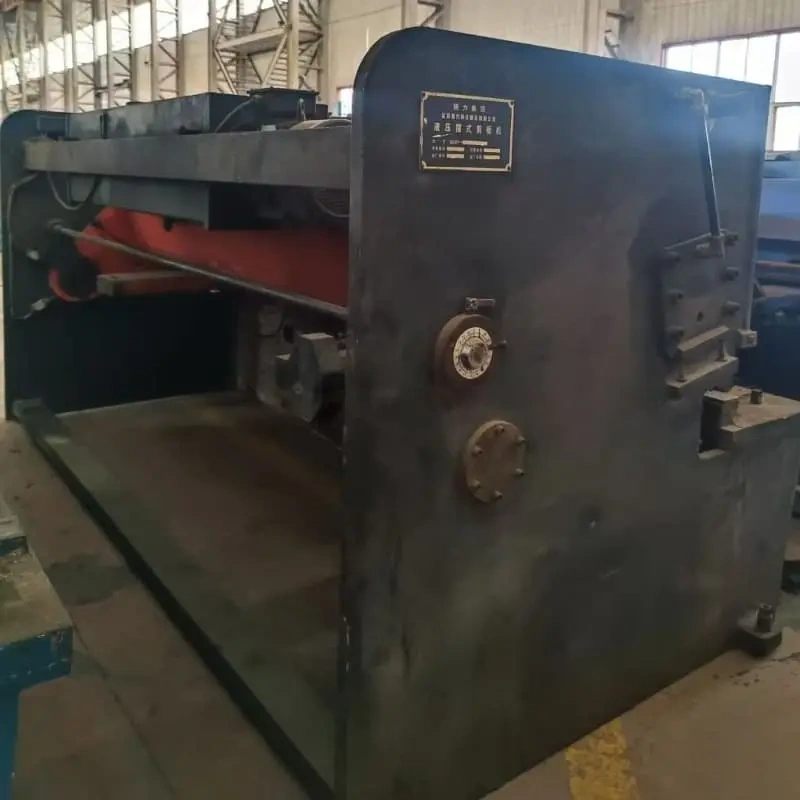
The last part of the case is the one that decides whether there is a second order. We send a commissioning checklist with the machine: anchor bolt torque, oil grade, blade gap starting setting for the buyer’s main material, backgauge calibration procedure, and the first-cut check. A shear is not complicated to install, but a factory that has never owned one will still get the gap wrong on the first job. A short video call on installation day costs us an hour and saves the buyer a week of head scratching.
| Export term | Who arranges freight | Who carries risk in transit | What it suits |
|---|---|---|---|
| EXW | Buyer | Buyer from our door | Buyers with their own forwarder in China |
| FOB | Buyer nominates, we load | Buyer once loaded | Most first orders, clean split of responsibility |
| CIF | We arrange and insure | Buyer after discharge | Buyers who want one number and no freight work |
| DDP | We arrange, clear and deliver | Us until delivery | Turnkey projects, buyers new to importing |
I usually recommend FOB for a first order. The buyer keeps control of the freight forwarder and sees the real shipping cost instead of a bundled number. On repeat orders, CIF is often simpler because both sides already know the route and the rate.
Conclusion
A used shear is only a bargain when it is matched, measured, packed and documented. Skip one of those four and the discount disappears at the loading dock.