

A used X6230 looks like a safe, simple buy. Then you find the same badge on a 1,700 kg machine and on a 2,600 kg one, and the price difference stops being the interesting part.
A used X6230 purchase case is decided by four things: real table size and travel, spindle runout at the taper, way wear across the full stroke, and what the quotation includes. Check those and a four-thousand-dollar knee mill can still hold 0.02 mm over 300 mm.
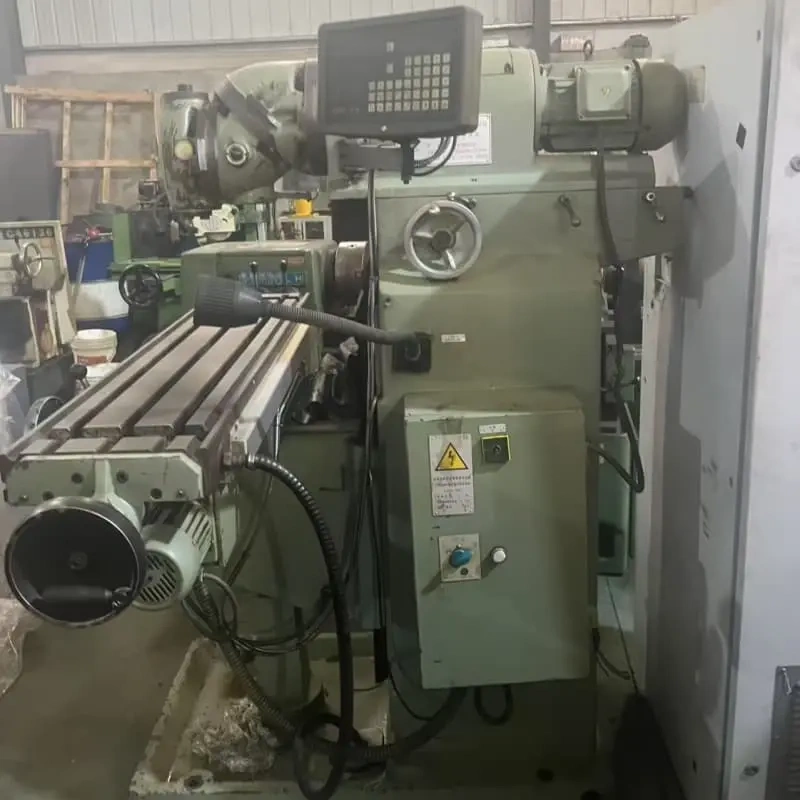
Most buyers who contact us have already read the spec sheet. They know the spindle taper is ISO 40 and the head swivels 360 degrees. What they have not seen is the commercial side of the deal: which casting they are actually being offered, how the inspection is run when they cannot fly to Shandong, what a repair should cost if something is worn, and what the machine needs in the first week after it lands. This article walks through a real purchase case in that order, from first quotation to first good part. If you want to see what is standing on our floor this month, the used milling machine inventory is updated as machines arrive.
What Do You Actually Get When You Buy a Used X6230?
The model number tells you less than you think. Chinese builders have used the X6230 badge on at least three different castings, and the one you are quoted may not be the one you imagined.
A used X6230 is a family, not a fixed specification. The badge covers tables from 1,100 to 1,370 mm, X travel from 680 to 1,000 mm, motors from 3 to 5.5 kW and weights from 1,700 to 2,600 kg. Measure the machine you are offered.
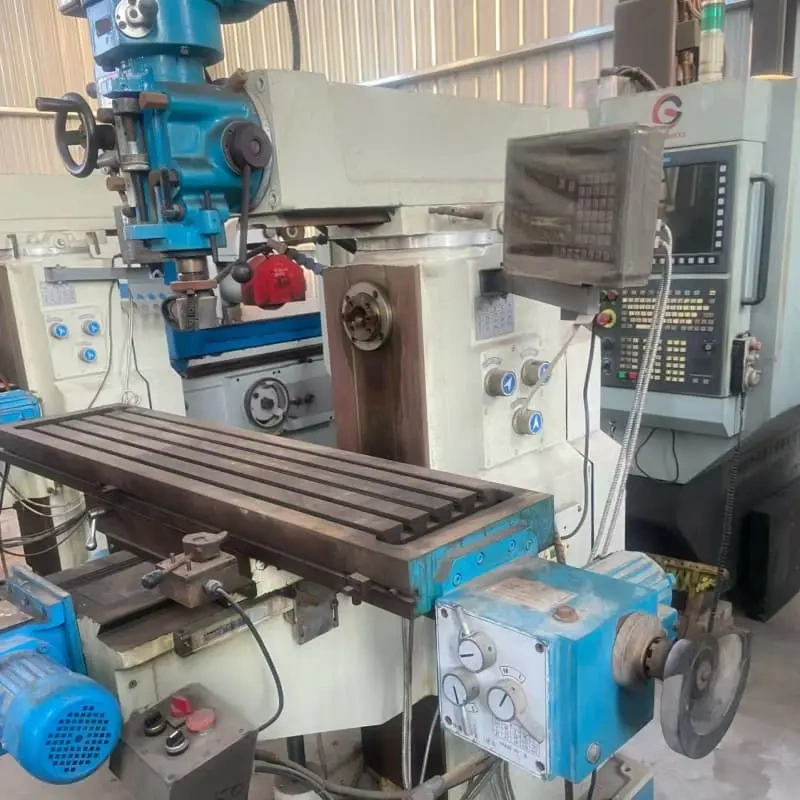
The Badge Covers Three Different Machines
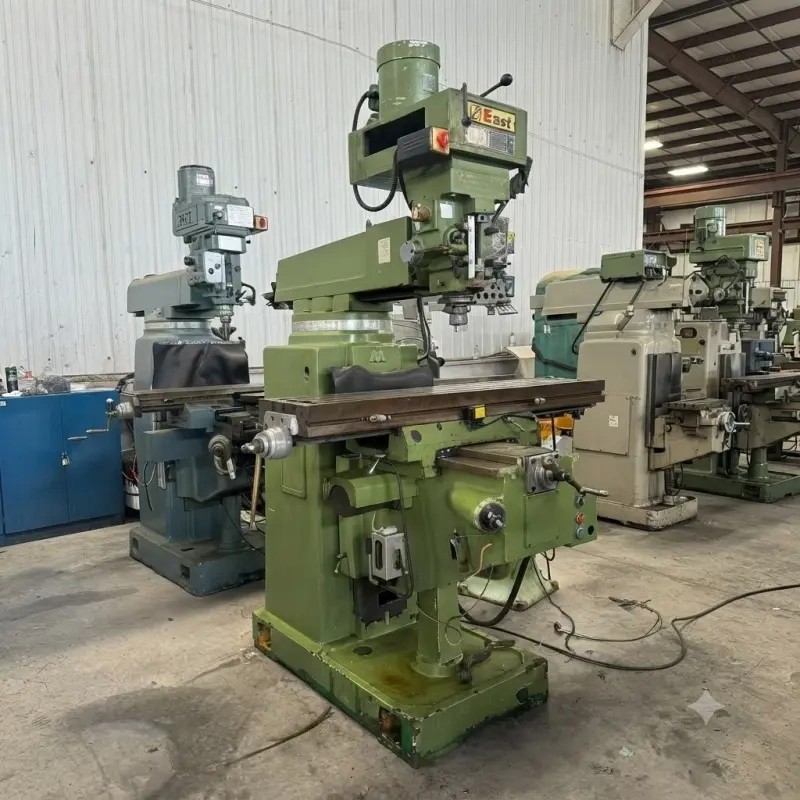
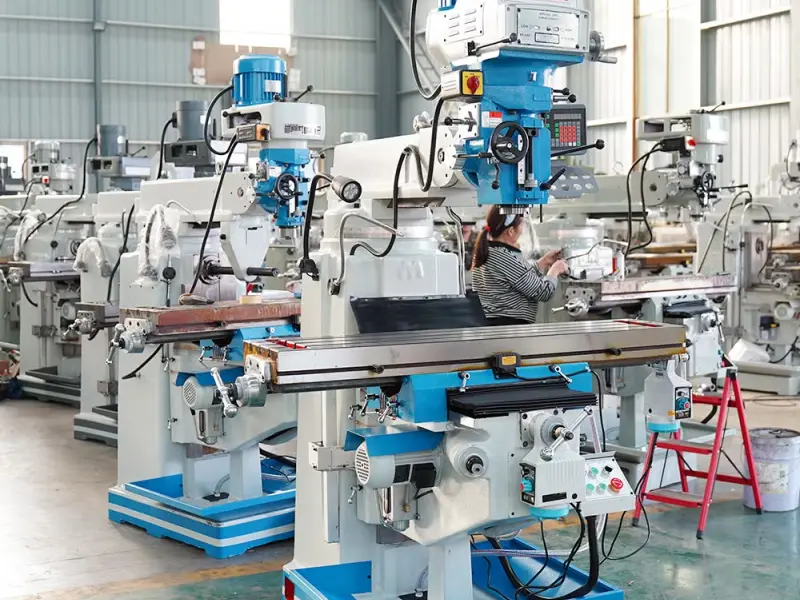
I learned this the hard way in our own yard. Two machines sat side by side, both stencilled X6230. One weighed about 1,700 kg with a 3 kW motor and a 1,270 x 300 mm table. The other was closer to 2,600 kg with a 5.5 kW motor, a 1,100 mm table and much heavier knees. A buyer who had compared prices from three suppliers would have concluded the second was overpriced. It was not. It was a different class of iron.
This matters because the model number is what most quotation sheets lead with. If the seller only writes “used X6230, good condition”, you have no way to tell whether you are being offered a light maintenance-shop mill or a heavier universal that can take a 6 mm depth of cut in mild steel without screaming.
What the Quotation Should List, Line by Line
A serious quotation for a used universal mill separates the machine from everything around it. Ask for the following, in writing, before you compare prices:
| Item | Why it changes the price | Typical presence |
|---|---|---|
| Table size and X/Y/Z travel, measured | Defines the largest part you can machine without re-setting | Must be stated |
| Main motor power and spindle speed steps | 3 kW and 5.5 kW machines are not the same purchase | Must be stated |
| Spindle taper and drawbar thread | ISO 40 tooling is common; ISO 50 machines need a new tool set | Must be stated |
| Machine weight and footprint | Drives freight, crane capacity and floor loading | Often missing |
| Vice, clamping kit, ISO 40 arbors | A basic tooling package is a real cost if absent | Sometimes included |
| Dividing head, rotary table | Adds real value on a universal machine | Rarely included |
| Digital readout, brand and axis count | A 3-axis DRO is worth having and worth pricing | Sometimes fitted |
| Coolant pump, splash guard, manual | Small items that become annoying invoices later | Usually included |
| Test-cut record or video | The only evidence of geometry before shipment | Ask explicitly |
When a quotation lists only the machine and a price, I assume the accessories are gone. On a universal mill that usually means no arbor support, no dividing head and no clamp set, which can add more to your startup budget than the difference between two competing offers.
“Seventy-Five Percent New” Is Not a Specification
Most used-machine listings in China carry a condition figure such as 70 to 75 percent new. It is not a measurement of anything. It has no definition, no inspection behind it and no consistent meaning between sellers. Two machines described as 75 percent new can differ by ten years of production work.
What you can measure is the wear, and what you can read is the maintenance history. Ask for the year of manufacture on the plate, the number of owners, what the machine was cutting and whether the spindle has ever been rebuilt. A toolroom machine that cut aluminium for one shift a day is a better buy than a production machine that ran three shifts in a foundry, even if the foundry machine looks cleaner because it was repainted. Repainting is cheap. Scraping is not.
Weight Is a Buying Signal, Not a Shipping Detail
The weight on the plate tells you how much cast iron is in the column and knee. A heavier X6230 of the same nominal size will chatter less, hold geometry better after twenty years, and survive a mistake with a face mill. It also costs more to move, needs a bigger forklift and may not fit through a narrow shop door.
So when two used X6230 machines are offered at similar prices and one is 900 kg heavier, the heavier one is usually the better machine and the worse logistics problem. Decide which of those two facts matters more to your workshop before you negotiate.
How Do You Verify a Used X6230 Before You Pay for It?
Photos show paint. They do not show a worn knee way, a tired spindle bearing or a leadscrew nut with 0.15 mm of lost motion. Verification is a sequence of measurements, and it takes about three hours.
Verification means running the spindle through every speed step, sweeping the table with a dial indicator across the full stroke, measuring backlash on all three axes, checking insulation resistance and cutting a test block. Photos and a video of the machine idling prove almost nothing.
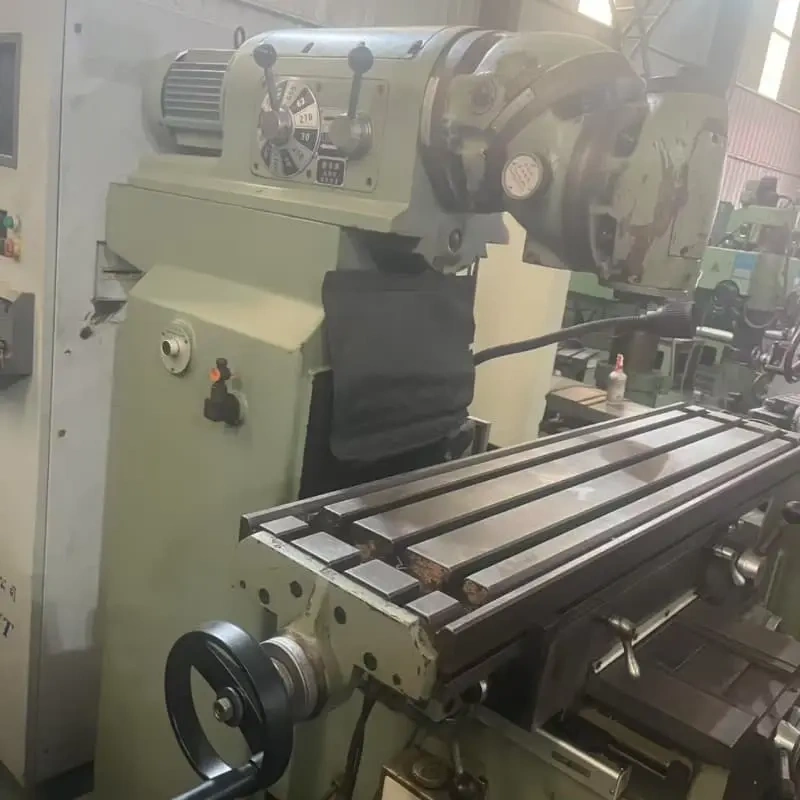
Start Cold, Then Run It Hard
The first measurements must be taken cold, before the machine has warmed up. Put a dial indicator on the spindle taper and turn it by hand. A healthy ISO 40 taper reads within about 0.005 mm. Then check at 150 mm from the nose on a test bar: 0.01 to 0.02 mm is normal for a used knee mill, and anything past 0.03 mm means bearings or a bent bar.
Next, run the spindle through every speed step, from the lowest around 40 or 45 rpm to the top of the range at 1,600 or 1,660 rpm. Listen at each step for gear whine that rises with speed, and feel the head casting for vibration. A rumble that appears only in the top two steps is usually a bearing, and a knock that appears only in the low range is usually a gear tooth. Both are fixable, but neither is free.
Sweep the Table and Read the Ways
Clamp a magnetic base to the column, not to the table, and sweep the table surface along the full X travel in both directions. Write down the reading every 150 mm. You are looking for three things: overall flatness, a step where the table passes the saddle, and a difference between the two directions of travel.
A total spread under 0.02 mm across a 1,000 mm table is good for a used machine. A single step of 0.01 mm or more at one point usually means a worn way joint or a scored section, and that is where the table will rock under a climb-milling cut. Then check squareness between the spindle axis and the table at about 0.02 mm over 300 mm, and confirm the gibs still have adjustment left. If the gib screws are bottomed out, the wear is already past what adjustment can hide.
Measure Backlash and Insulation, Then Cut Metal
Backlash is quick to measure and hard to fake. Wind each axis in one direction, zero the indicator, then reverse. Under 0.02 mm is tight, 0.02 to 0.05 mm is normal for a used manual mill, and past 0.08 mm you are looking at a new nut or a new screw. Check the same value in the middle and at both ends of travel, because a screw wears most where the machine worked.
Electrics are the part buyers skip. A 500 V insulation test should read well above 1 megohm on the main motor. Look inside the cabinet for rewiring done with tape and twisted joints, and confirm the coolant pump actually moves fluid. Then cut metal: a stepped block in mild steel, a keyway with an arbor-mounted cutter, and if the head swivels, an angled face at 30 degrees to prove the swivel returns to zero.
| Check | Good | Investigate | Walk away |
|---|---|---|---|
| Spindle taper runout | ≤ 0.005 mm | 0.005–0.02 mm | > 0.03 mm |
| Runout at 150 mm on test bar | ≤ 0.015 mm | 0.015–0.03 mm | > 0.03 mm |
| Table flatness spread, full travel | ≤ 0.02 mm | 0.02–0.05 mm | > 0.05 mm or a visible step |
| Spindle-to-table squareness | ≤ 0.02 mm / 300 mm | 0.02–0.04 mm / 300 mm | > 0.04 mm / 300 mm |
| Backlash per axis | ≤ 0.02 mm | 0.02–0.08 mm | > 0.08 mm with no gib adjustment left |
| Motor insulation at 500 V | > 5 MΩ | 1–5 MΩ | < 1 MΩ |
| Gearbox noise at top speed | Even, no knock | Slight whine | Knock or growl |
| Test-cut parallelism over 200 mm | ≤ 0.01 mm | 0.01–0.03 mm | > 0.03 mm |
These are shop targets we use, not a quoted standard. The point is that every line is a number you can write down, photograph and send back to the seller. A seller who resists any of these checks is telling you something useful. If you cannot travel, ask for the same sequence to be run under a third-party pre-shipment inspection and insist on the raw indicator readings, not a summary sentence.
How Should You Price the Risk Into the Offer?
Every used machine carries a repair budget. The mistake is treating that budget as a reason to demand a lower price instead of a reason to buy a specific, known quantity of risk.
Price the risk, do not argue about it. Get a written repair allowance or a reconditioning commitment instead of a discount, because a discount disappears into your cash flow while a worn way stays on the machine for years.
Know What the Repairs Actually Cost
Published workshop rates give you a useful ceiling. Spindle rebuilds on a 40-taper milling spindle commonly run between roughly 3,500 and 8,000 US dollars, with heavy rework such as chrome plating and grinding a taper pushing higher, and a typical turnaround of about three weeks. Way reconditioning and scraping on production machines is quoted from about 5,000 dollars upward, and can pass 20,000 on large machines. Leadscrews, nuts, DRO kits and coolant pumps are smaller items individually but add up quickly.
On a knee mill the numbers sit at the low end, and local re-scraping in China or in your own country is far cheaper than the American shop rates above. In our workshop a full rescrape of a knee mill is roughly three to five days of hand work [Zora will replace], not a five-figure project. That is exactly why the allowance conversation works: the seller knows the real local cost, and you should not be paying western repair rates inside a Chinese used-machine price.
Turn the Discount Into a Commitment
Here is the structure I recommend to buyers, and the one that has caused the fewest arguments in our own deals. Instead of asking for 500 dollars off, ask the seller to fix the two worst measured items before shipment and to send the before-and-after readings. If the spindle runout is 0.025 mm, ask for a bearing replacement. If the X backlash is 0.09 mm, ask for a new nut. If the table has a step, ask for a rescrape of that section.
Then hold a small balance until the machine is running in your shop. A ten percent retention released after the first test cut is normal in machinery trading and focuses everyone’s attention. For larger orders we have used a simple three-part structure: deposit, balance against the bill of lading, and a final payment after commissioning. It is the same logic that made the difference on the multi-machine order our Saudi customer placed through Dammam, where the machines arrived matching the videos we had sent.
The Comparison That Actually Matters
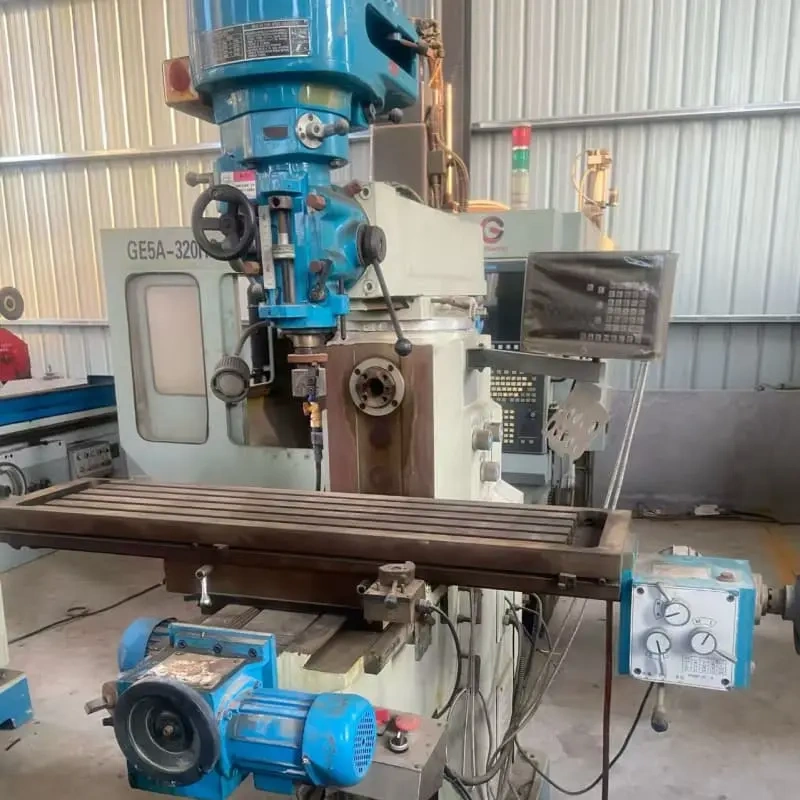
The decision is rarely “used or new”. It is “used as it stands, used reconditioned, or new”, and each has a different shape of risk.
| Option | Typical price band | Lead time | Accuracy you can expect | Warranty | Main risk |
|---|---|---|---|---|---|
| Used X6230, as inspected | USD 2,900–4,100 FOB China | 1–3 weeks | 0.02–0.05 mm over 300 mm | Sold as inspected | Hidden wear found after arrival |
| Used X6230, reconditioned | USD 5,000–8,000 | 4–8 weeks | 0.01–0.02 mm over 300 mm | 3–12 months on major parts | Work quality depends on the rebuilder |
| European used universal, 1990s | EUR 6,000–18,000 | 6–12 weeks | 0.01–0.03 mm over 300 mm | Dealer-dependent | Spares and electrical standard |
| New Chinese X6230 class | USD 5,000–8,900 | 3–6 weeks | 0.01–0.02 mm over 300 mm | 12 months typical | Tooling and commissioning extras |
| New European universal | Above EUR 40,000 | 4–8 months | 0.005–0.01 mm over 300 mm | 12–24 months | Capital cost and payback period |
The reconditioned row is where most buyers should look hardest. A properly reconditioned X6230 costs roughly what a new Chinese machine costs, but it has already absorbed the scraping and fitting that a new machine sometimes skips. The catch is that “reconditioned” is an unregulated word. Ask which surfaces were scraped, which bearings were replaced and whether the geometry was measured afterwards.
What Happens Between the Deposit and the First Good Part?
The machine arriving is not the end of the purchase. It is the start of a two-week period where most of the avoidable damage happens, and almost all of it is logistics and installation.
A used X6230 ships in one 20-foot container, needs a level foundation at 0.02–0.04 mm per metre, and should run through every speed step before cutting. Skipping levelling is the fastest way to lose the accuracy you paid for.
Packing, Container Maths and the Bits That Bend
Measure the machine with everything attached, then add the pallet. A typical X6230 sits around 2,100 x 1,600 x 1,800 mm and weighs 2,200 to 2,600 kg. A 20-foot container gives you about 5,898 x 2,352 x 2,393 mm internally with a door opening near 2,340 x 2,280 mm, so one machine fits with room for a tooling crate, and two only fit if you know exactly how the heads and tables are positioned.
The details that break in transit are predictable: the DRO arm, the coolant nozzle, handwheels, the electrical cabinet door and any pipework that sticks out past the casting. Those come off or get boxed. The machine gets bolted to skids, strapped, wrapped in VCI film with desiccant, and crated in fumigation-free plywood. Oil is drained, because a container that arrives with an oil stain becomes a customs conversation. Our own export packing and container loading routine follows that order on every unit.
Foundation, Levelling and the First Week
A knee mill does not need a five-tonne foundation, but it does need something flat and rigid. One common manual allows a 200 mm concrete floor for normal work and a 600 mm foundation where accuracy and vibration matter. Concrete around C25/30 is the usual minimum. Put a precision level on the table with the table centred, adjust the levelling wedges, then tighten the anchor bolts in a criss-cross pattern so you do not twist the base.
Factory guidance for ordinary machine tools is typically 0.04 mm per metre, and 0.02 mm per metre or better for precision work. Recheck the level a week later, because concrete and castings settle. Then run the machine: two hours at low speed, an hour at mid range, and short spells at top speed, checking bearing housing temperature by hand. Change the oil after the first 200 hours, adjust the gibs once everything has bedded in, and cut the same test block you approved before shipment.
| Stage | Timing | What to check |
|---|---|---|
| Unloading and placement | Day 0 | Skids intact, no bent handwheels, cabinet dry |
| Levelling and anchoring | Day 1 | 0.02–0.04 mm/m on the table, bolts tight in sequence |
| No-load run-in | Day 1–2 | Every speed step, housing temperature, gearbox noise |
| First test cut | Day 2–3 | Parallelism over 200 mm, surface finish, swivel-head zero |
| Gib and backlash adjustment | Day 7–10 | Backlash after bedding in, table free play |
| Oil change and re-level | About 200 hours | Oil condition, level drift, coolant concentration |
If the machine is going to a 60 Hz country, deal with the electrical question before it arrives. A 380 V 50 Hz motor on a 440 V 60 Hz supply will run about 20 percent fast, which raises spindle speed by a fifth and changes every cutting speed in your handbook. A variable frequency drive or a step-down transformer solves it, but the decision and the budget should exist before the container is booked, not after the electrician arrives.
Order the Spare Parts With the Machine
There is a short list of parts that fail on a knee mill and that are annoying to source after the container has left. Put them in the same shipment: a spare leadscrew nut for the X axis, a set of way wiper felt, the coolant pump seal, a drawbar spring, the fuse set for the cabinet, and one spare handwheel. None of these costs much in China. All of them cost weeks when you order them individually from a buyer’s address in another country.
Ask for the manual and the wiring diagram as well. A used machine without a diagram turns every small electrical fault into an afternoon of tracing wires with a meter. If the original manual is gone, photograph the cabinet before shipment and ask the seller to label every contactor. It takes ten minutes in Shandong and saves a day in your shop.
Conclusion
A used X6230 purchase is decided by measurements, not by the model badge or the paint. Verify the casting, price the wear, and level it properly on arrival.