

Buyers mix up hydraulic and CNC press brakes every day, and that confusion costs money. Pick the wrong system for your parts and you either overpay for features you never use or fight angle drift on every batch. I will break the two systems down the way I check them in our own yard.
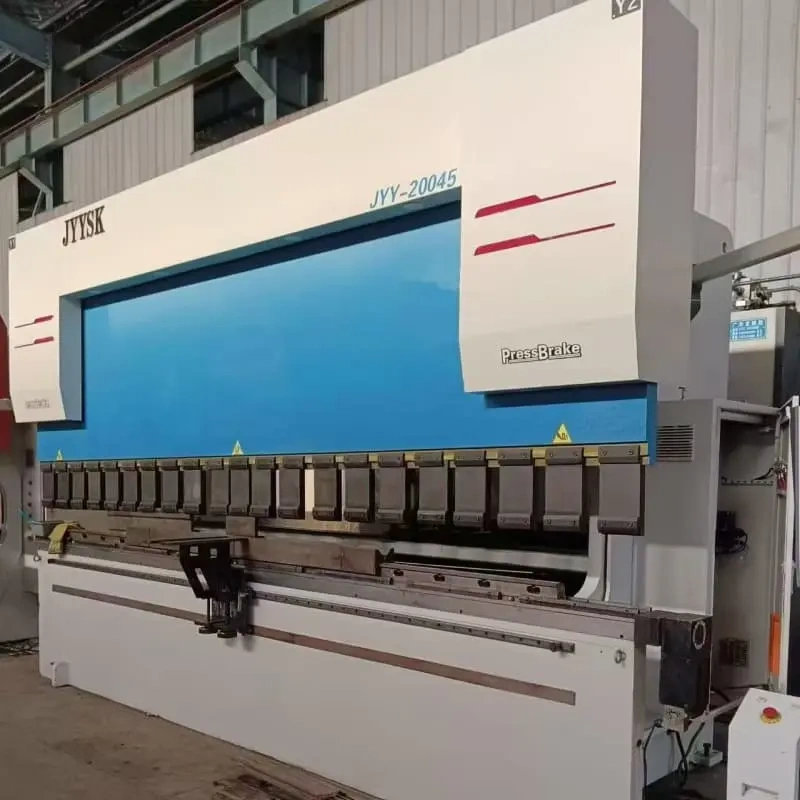
A hydraulic press brake is a drive system: cylinders and oil create the bending force. A CNC press brake is a control system: a controller programs angles, backgauge positions, and stroke depth. Most modern CNC press brakes are hydraulic underneath — the real choice is between a basic NC hydraulic machine and a servo-hydraulic CNC machine.
I sell used press brakes to fabrication shops across Southeast Asia and the Middle East, and this single question comes up in almost every enquiry. The terms get used as if they compete with each other, but they describe different layers of the same machine. Once you separate the drive from the control, the buying decision becomes much easier — and much cheaper. Let me walk you through it the way I explain it to buyers standing next to a machine in our yard.
What Actually Separates a Hydraulic Press Brake from a CNC Press Brake?
Many buyers compare the two as rivals and budget for the wrong machine. That mistake can add thousands of dollars to the invoice or lock a workshop into manual setups for years. The honest answer is simpler than most sales pages admit.
Hydraulic and CNC describe two different things. Hydraulic refers to how bending force is generated — cylinders, pump, and oil. CNC refers to how the machine is controlled — programmable axes, stored programs, and closed-loop feedback. A CNC press brake is usually hydraulic too, just controlled by a Delem, ESA, or Cybelec system.
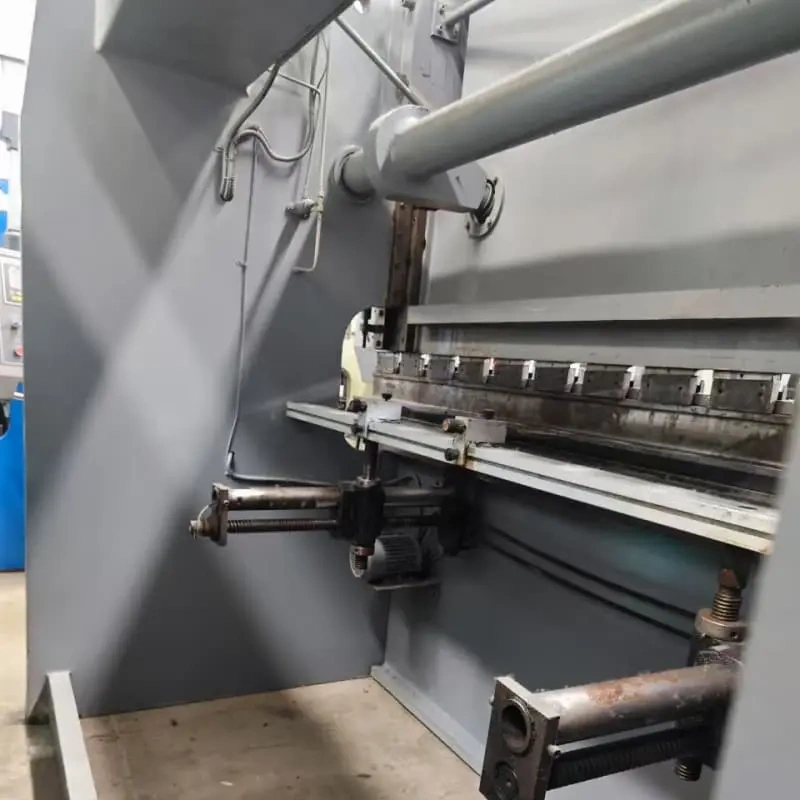
The Drive Layer: Where the Force Comes From
Every press brake needs force to push sheet metal into a die. A hydraulic press brake creates that force with a pump, valves, and one or two hydraulic cylinders driving the ram. This technology replaced mechanical flywheel machines in most workshops from the 1960s onward, and it still dominates heavy bending today. Conventional hydraulic machines run a fixed-displacement pump at constant speed, and proportional valves direct the oil flow.
Modern machines refine this with a servo-hydraulic drive: a variable-speed pump motor that only runs when the ram actually moves. That one change cuts energy consumption by roughly 30 to 50 percent compared with a conventional hydraulic system, and it also lowers noise and heat on the shop floor. The third option is the all-electric servo press brake, where motors and ball screws move the ram with no oil at all. Electric machines are precise and clean, but tonnage usually tops out in the 150 to 300 ton range, so heavy plate work still belongs to hydraulics.
The Control Layer: Where the Accuracy Comes From
The control is a separate decision. A basic hydraulic press brake may run on manual depth stops or a simple NC controller with one or two backgauge axes. A CNC press brake adds a programmable controller — Delem DA-66T or DA-69T, ESA S660, or Cybelec ModEva are the names you will see most often on used machines — plus multi-axis backgauges, stored programs, and often automatic crowning.
Here is the point I make to every buyer: when you shop for a used machine, ask about both layers separately. I have inspected 200-ton hydraulic frames with bulletproof cylinders but a dead NC panel, and I have seen entry-level CNC machines with tired seals hiding behind a shiny new screen. One good controller cannot rescue a worn hydraulic system, and a strong hydraulic frame wastes its potential under a primitive control. Price them as two separate purchases that happen to bolt together.
Which Drive Makes Sense on the Used Market
The used market is still mostly a hydraulic market, and that is good news for buyers. Conventional hydraulic machines are simple, and any competent local technician can service them. Servo-hydraulic machines from the last ten years offer the best middle ground: full hydraulic force for thick plate, plus the variable-speed pump that saves energy and holds tighter repeatability. All-electric machines appear in the used market too, usually ex-rental or ex-showroom units, and they suit thin-gauge, high-mix work. But before you chase an electric bargain, check two practical limits. First, tonnage: most used electric machines sit under 150 tons, so half-inch plate is out of reach. Second, stroke: electric rams often travel shorter distances, and deep box sections or tall dies may not fit. Tooling itself transfers freely between drive types, so your existing punches and dies are safe either way. Match the drive to your thickest, longest job, not to your average one.
| Layer | Basic hydraulic press brake | CNC press brake |
|---|---|---|
| Drive | Fixed-speed pump, proportional valves | Servo variable-speed pump (most common) |
| Control | Manual stops or simple NC | Delem / ESA / Cybelec CNC |
| Backgauge axes | 1–2 (X, R) | 3–6+ (X, R, Z1, Z2, X1, X2) |
| Programming | Manual, step by step | CAD import, auto bend sequence |
| Typical role | Thick plate, simple bends | Complex parts, fast changeovers |
Which System Holds Better Accuracy — and Does Your Work Even Need It?
Buyers assume CNC automatically means accurate and hydraulic means sloppy. Vendors encourage that belief because CNC machines carry a higher price. But the accuracy figures come from different sources, and for a lot of fabrication work the gap matters far less than the sales brochure claims.
A well-maintained hydraulic press brake holds about ±0.05 to ±0.1 mm positioning and roughly ±1 degree bend angles with a skilled operator. A CNC press brake with servo valves and real-time angle measurement holds around ±0.01 mm positioning and ±0.3 degree angles, batch after batch, with far less dependence on the person at the pedal.
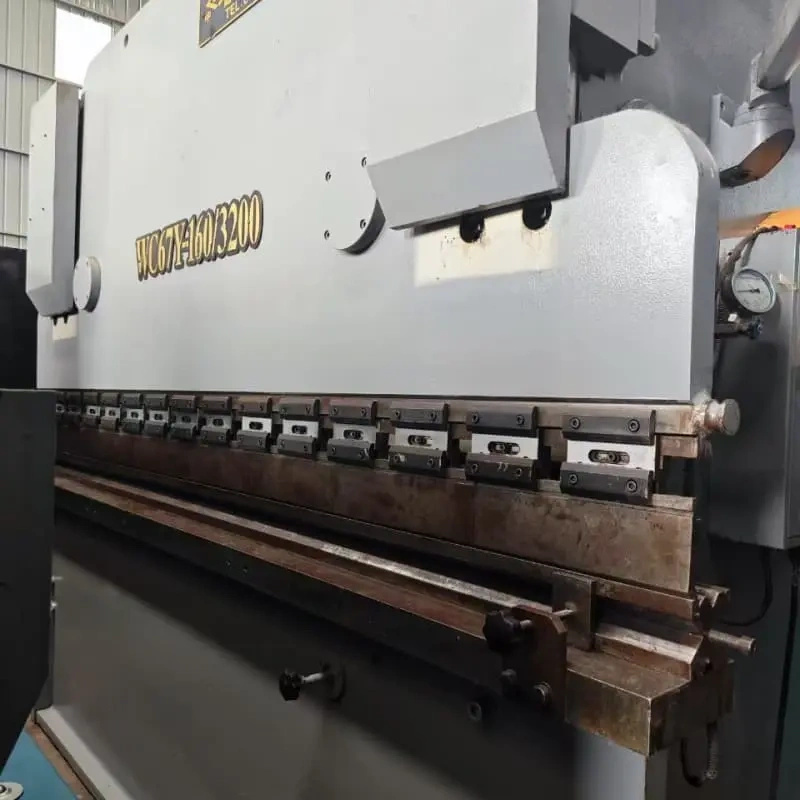
Where the Numbers Come From
On a basic hydraulic machine, the operator sets the stroke depth and the backgauge by hand, then judges the bend angle by eye and by test pieces. Accuracy therefore depends on skill, and it drifts during a long run. Hydraulic oil viscosity changes by about 1 to 2 percent per degree Celsius, so as the oil warms through a shift, the ram response shifts with it. I have watched a simple bracket job start the morning at 90 degrees and finish the afternoon at 89.2 — same program, same operator, warmer oil.
A CNC press brake attacks that drift with closed-loop feedback. Encoders on the Y1 and Y2 cylinders report ram position thousands of times per second, servo valves correct in real time, and higher-end machines add angle measurement or automatic crowning for long bends. That is how a CNC machine holds ±0.3 degrees across thousands of parts, and why angle corrections after the first test bend are usually small.
When the Extra Precision Pays for Itself
The honest question is whether your parts need that precision. If you bend 1 to 2 simple bends on 6 mm plate and your tolerance is ±1 degree or wider, a good basic hydraulic machine will do the job for years. If you make electrical enclosures, automotive brackets, or multi-bend parts where flange lengths must line up, the CNC accuracy and fast setups pay back quickly — see our used press brake buying guide for how tonnage and backgauge options shape that choice. A CNC job changeover takes 5 to 15 minutes from a stored program; the same change on a manual machine can eat 30 to 60 minutes of skilled labor.
| Accuracy metric | Basic hydraulic (NC or manual) | CNC press brake |
|---|---|---|
| Ram positioning | ±0.05 – ±0.1 mm | ±0.01 mm |
| Bend angle | ±1° (operator dependent) | ±0.3° with real-time measurement |
| Setup per new job | 30–60 minutes | 5–15 minutes or instant from memory |
| Angle drift on long runs | Yes — oil warms up | Compensated by closed-loop control |
| Operator skill needed | High | Moderate |
One more thing worth saying from our yard: a lot of used CNC machines in the market started life as NC hydraulic machines and were retrofitted with a new controller and servo valves. A retrofit costs roughly 30 to 50 percent of a new CNC machine and can add ten or more years of life to a sound frame. For a buyer on a tight budget, a well-documented retrofit can be the best value on the yard — but only if the hydraulic side was healthy to begin with.
There is also a middle path many buyers overlook: a used conventional hydraulic press brake with a solid frame, paired with a plan to upgrade the control later. Because the controller and the drive are separable, you can buy the iron now at hydraulic prices and budget the CNC retrofit as a second phase when order volumes justify it. I would only recommend this route when the frame passes the structural checks below with no compromises, because retrofit money spent on tired cylinders is money wasted. Ask any seller directly whether the machine has been retrofitted, when, and by whom, and get the answer in writing with the controller model and software version.
What Should You Check Before Buying a Used Press Brake of Either Type?
New machine brochures answer questions about features. Used machine buyers face a different question: how much life is left in this specific machine? The system type changes what you inspect, and skipping the right checks turns a bargain into a rebuild project.
Inspect the frame for cracks and repairs, test bed-to-ram parallelism with a straightedge, watch the cylinder rod seals for weeping over 30 minutes, check the oil color, boot the controller cold, and send the backgauge through test positions — a healthy one holds ±0.05 mm while a worn one can be off by 0.5 mm or more.
Hydraulic-Side Checks That Decide Everything
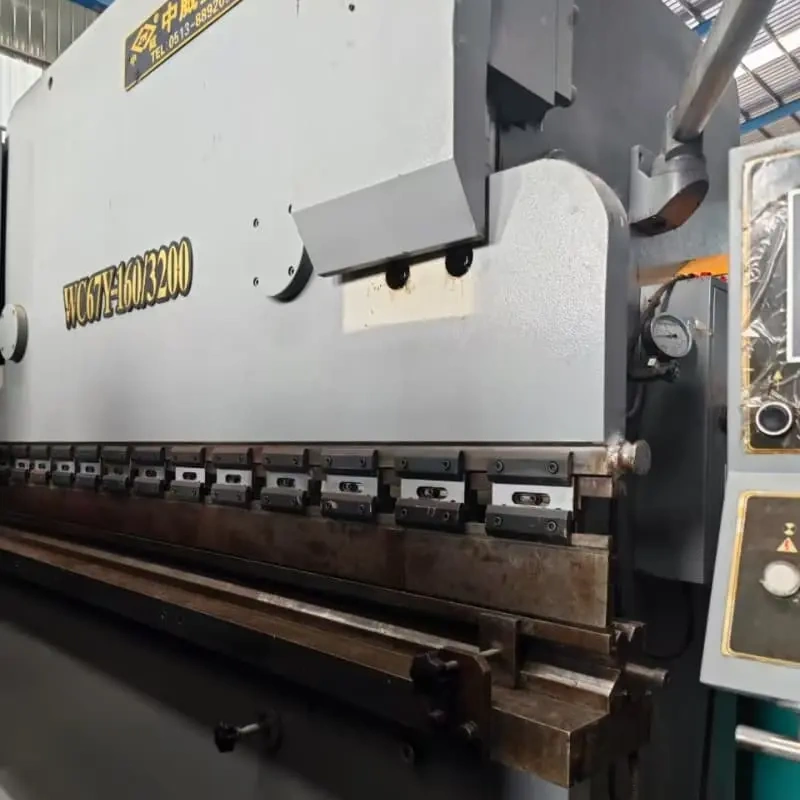
Start with the structure. Inspect both side plates of the C-frame around the cylinder mounts and the throat, looking for stress cracks, fresh welds, or new paint hiding a repair. Then lay a precision straightedge across the bed and the ram and sweep the gap with feeler gauges at several points. Uneven gaps point to worn cylinder seals, frame stress, or a machine that was never leveled properly.
Next, run the hydraulics. Power the machine with the ram at top and watch the cylinder rod seals for thirty minutes — even a thin film of weeping oil is a bargaining point. Cycle the machine at working tonnage on a known thickness of mild steel; the ram should reach bottom dead center smoothly, without stutter or pump strain. Ask to see the hydraulic oil. Milky oil means water contamination, and very dark oil means overheating or missed service intervals. Oil changes are due roughly every 2,000 to 4,000 hours, so a seller who cannot show any oil history is telling you something. Price contaminated oil as if the machine needs a full hydraulic service, because it does.
Controller and Backgauge Checks on the CNC Side
On a CNC machine, power-cycle the controller cold and watch the boot sequence. Note any error codes, stuck pixels, or slow response. Delem, ESA, and Cybelec controllers each have known failure modes by model number, so research your specific unit before the inspection. Ask for parameter backups and program libraries — a machine without its backup files can cost days of commissioning. Then send the backgauge through a series of test positions and measure with a vernier; healthy machines hold ±0.05 mm, and anything near 0.5 mm means worn ballscrews or slides. Run a test bend on the CNC machine as well, and compare the programmed angle against the actual measurement on the finished part. If the controller reports 90 degrees and your protractor reads 88, either the tooling is worn or the machine has lost its calibration, and both are negotiation points. Confirm the controller software version too, because obsolete firmware on an unsupported platform can strand you without spare boards when something fails.
Finish with safety and tooling. Test the foot pedal, the emergency stops, and the light curtain — guarding systems such as AKAS or Lazer Safe are a good sign the previous owner maintained the machine properly. Confirm the clamping style, usually European Promecam or American, and inspect the punches and dies; chipped tips and heavy radius wear tell you how hard the machine actually worked. Keep asking for service records and the original purchase invoice too, especially if the machine has changed hands.
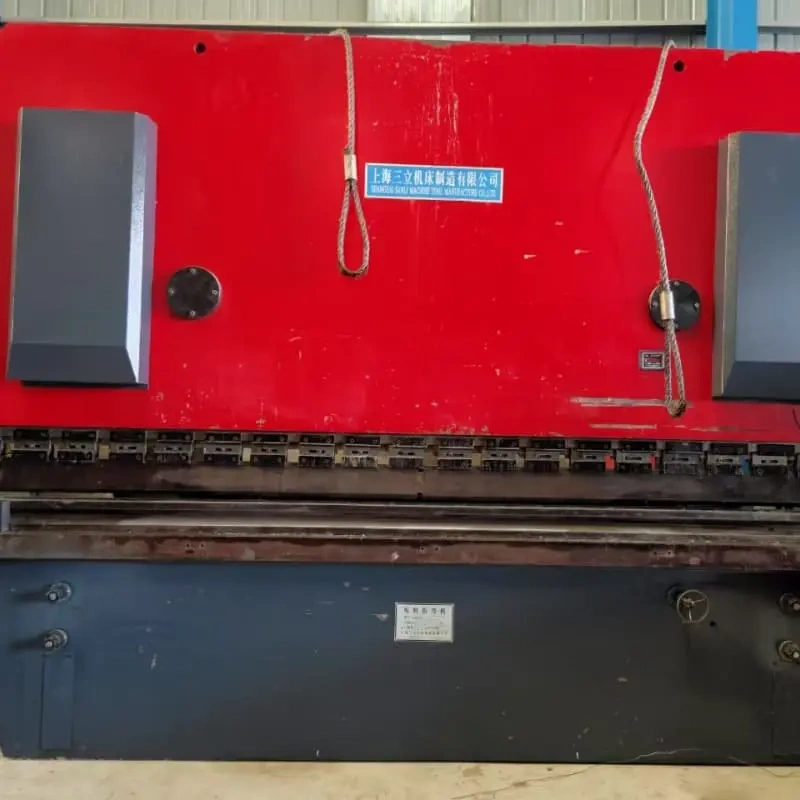
| Check | What healthy looks like | Walk-away signal |
|---|---|---|
| C-frame | No cracks, no fresh welds | Repairs around cylinder mounts |
| Bed vs ram parallelism | Even feeler gauge gaps | Uneven gap along the length |
| Rod seals | Dry after 30 minutes at top | Any weeping oil film |
| Hydraulic oil | Clear amber, service history | Milky or very dark oil |
| Backgauge | ±0.05 mm repeatability | Off by 0.5 mm or more |
| Controller | Clean cold boot, backups available | Error codes, no parameter files |
This is also where a supplier earns their fee. One of our regular buyers in Saudi Arabia told us the reason he keeps ordering is that we send real running videos and support third-party inspection before payment, so his team never has to judge a machine from a single photograph. On one 160-ton hydraulic press brake we sold last year, the inspection report and the test-bend video settled the deal in two days — the buyer never left Dammam. That is the standard I would ask of any seller, including us: if they cannot show the machine running and bending, keep looking.
Price and Total Cost of Ownership
Sticker prices differ sharply. A basic 100-ton by 3200 mm hydraulic press brake in good used condition typically trades in the 15,000 to 30,000 dollar range, while a comparable servo-hydraulic CNC machine runs 30,000 dollars and up, depending on controller and axes. New CNC machines easily reach 80,000 dollars or more, and you can browse our current used press brake stock to see where real asking prices land. But the total cost of ownership flips the picture over ten years: in one published comparison, a basic hydraulic machine cost about 116,000 dollars over a decade once energy, scrap, setup labor, and operator premiums were counted, against roughly 91,000 dollars for the CNC machine. Energy alone favors the CNC: a conventional hydraulic pump draws power constantly, even at idle, while a servo pump only works when the ram moves. For a two-shift shop, that difference is real money every month.
My own rule after years of loading containers from Liaocheng: buy the control your parts need and no more, but never save money on the hydraulic side. Seals, oil, and cylinders are cheap to maintain and brutal to neglect.
Conclusion
Hydraulic is the drive, CNC is the brain, and most modern machines combine both. Match the control to your parts, verify the hydraulics in person, and the used market will reward you.