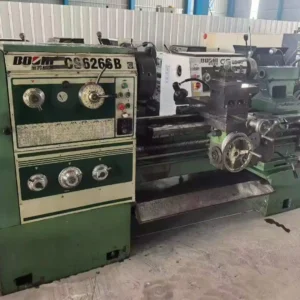
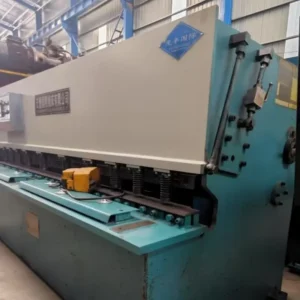
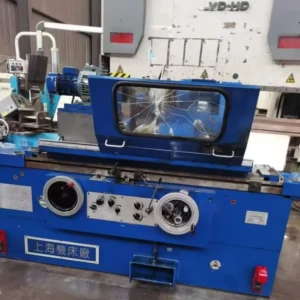
You need a machine. Your budget is tight. A new machine costs too much. You look at used machines online. You worry about hidden problems, bad sellers, and wasted money.
Choosing used metalworking machinery means checking four things: the machine type that fits your work, the real condition of the machine, the compliance documents for import, and the support the seller provides. Always see the machine run. Always ask for a test video and inspection report. Always check the serial number matches the listing.
I am Zora Liu from AZ Machines. My team has been buying and selling used machine tools for years. We ship used lathes, milling machines, grinders, shearing machines, bending machines, and CNC lathes to factories in Vietnam, Mexico, Saudi Arabia, Pakistan, Indonesia, and many other countries. I have spoken to hundreds of workshop owners. Every one of them had the same fear: paying for a machine that does not work. This guide walks you through how to avoid that. Let me show you the step-by-step process I use myself.
What Types of Used Metalworking Machines Should Your Workshop Consider?
You run a small fabrication shop. You turn shafts, cut plates, and bend brackets. You need more capacity. But you cannot buy everything at once. You need to know which machine gives you the most value for your money.
A typical workshop needs five core machine types: a used lathe for round parts, a used milling machine for flat surfaces and slots, a used surface grinder for finishing, a used shearing machine for cutting sheet metal, and a used bending machine for forming sheet metal. The right mix depends on your specific work, your material, and your production volume.
Used Lathe Machines: The Starting Point for Most Shops
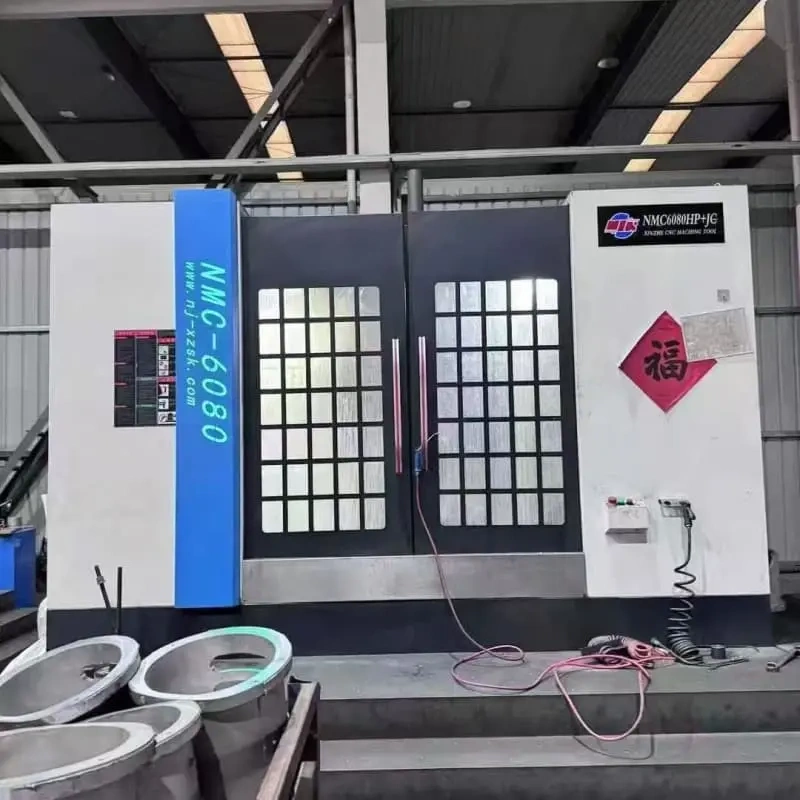
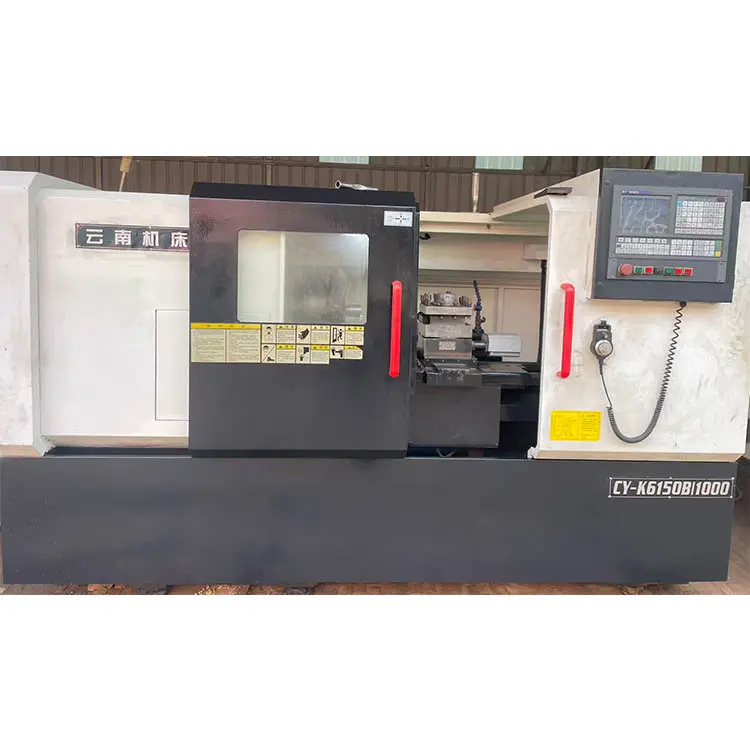
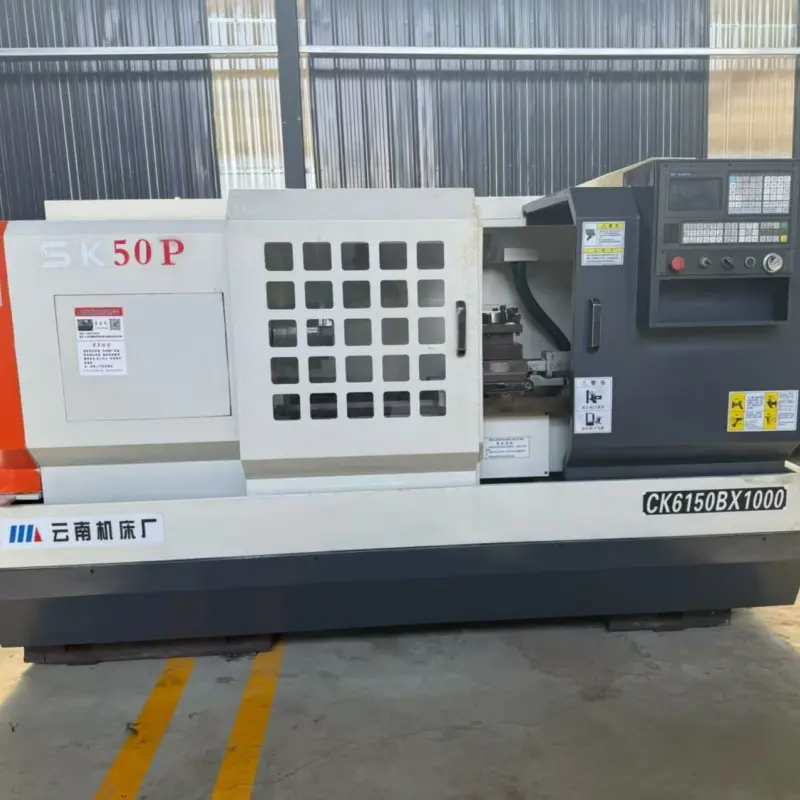
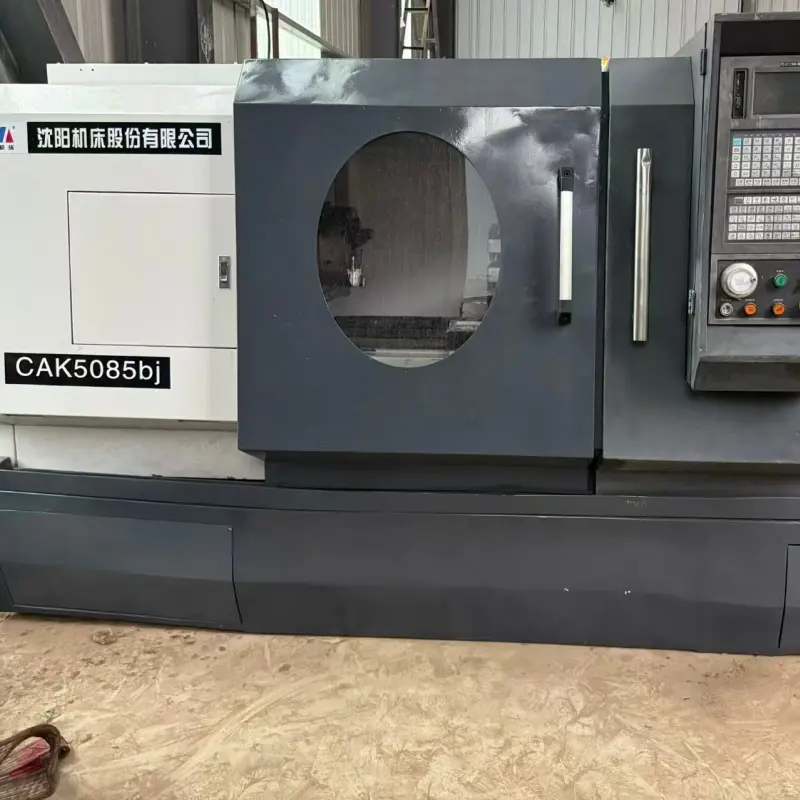
The lathe is the most common machine in any metalworking shop. It turns round parts. Shafts, pins, bushings, bolts, and fittings all start on a lathe. A used lathe can be a manual engine lathe or a CNC lathe. A manual lathe is cheaper and simpler. A CNC lathe is faster and more accurate.
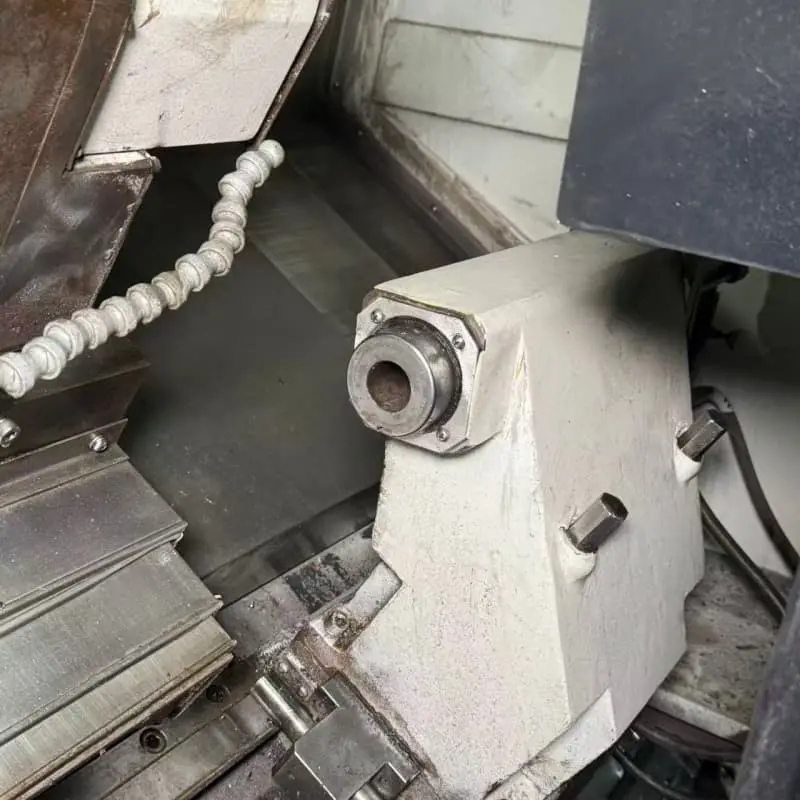
When you evaluate a used lathe, the spindle is the most important part. A healthy spindle shows radial runout under 0.01 mm. If the runout is more than 0.03 mm, the spindle bearings are worn. A spindle rebuild costs $2,000 to $8,000. I always check spindle runout first. I also check the bed for wear. A worn bed causes taper in the workpiece.
Used Milling Machines: Flat Surfaces and Precision Slots
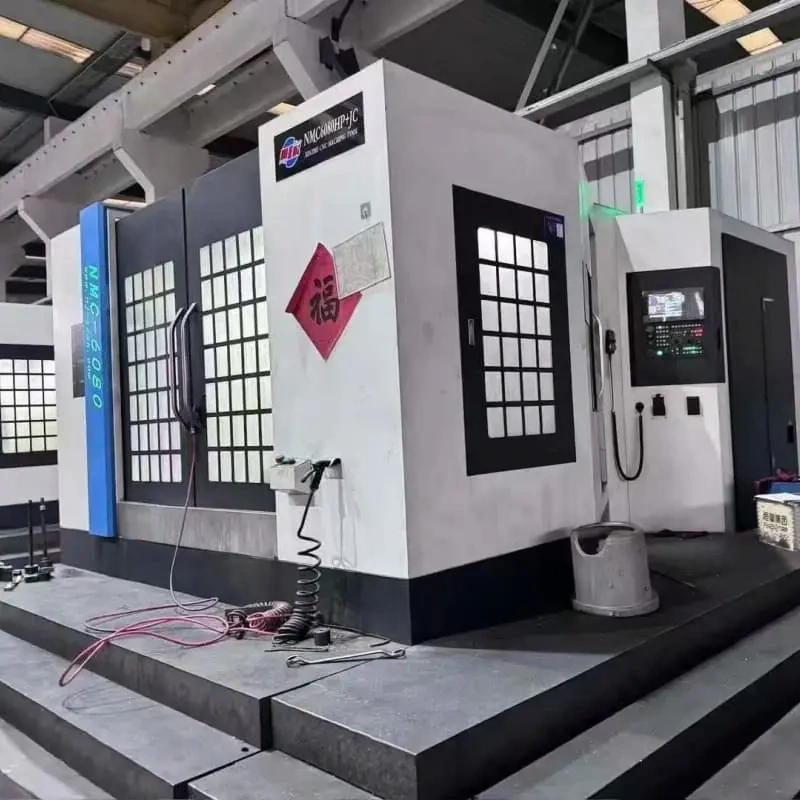
A milling machine cuts flat surfaces, slots, and keyways. It uses a rotating cutter that moves along multiple axes. A used manual mill is good for one-off jobs and repairs. A used CNC mill is better for production runs and complex shapes.
For used milling machines, check the spindle condition, the table flatness, and the axis backlash. Backlash is the lost motion when you reverse direction. Too much backlash means the machine cannot hold tolerance. Use a dial indicator to measure backlash on the X and Y axes. A good machine shows less than 0.02 mm of backlash.
Used Surface Grinders: Finishing and Flatness
A surface grinder makes flat surfaces with a very fine finish. It is used for dies, molds, and precision plates. A used surface grinder holds flatness within 0.001 mm if the spindle and ways are in good condition.
Check the magnetic chuck for wear. Check the table for scoring. Check the wheelhead spindle for runout. If the spindle runout is more than 0.005 mm, the machine needs work. I have seen old grinders from the 1980s that still hold tight tolerances. The age does not matter. The condition does.
Used Shearing and Bending Machines: Sheet Metal Work
A shearing machine cuts sheet metal into strips. A bending machine forms those strips into angles, boxes, and channels. Together, they are the backbone of any sheet metal shop.
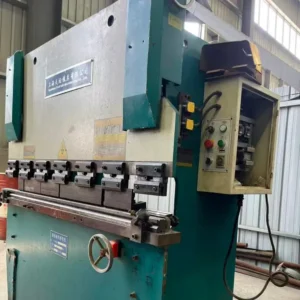
For used shearing machines, check the blade condition, the hydraulic system, and the backgauge accuracy. For used bending machines, check the ram alignment, the hydraulic cylinders, and the control system. Oil leaks are a warning sign. A leaking hydraulic cylinder can cost $500 to $3,000 to repair.
Here is a comparison of the core machine types:
| Machine Type | Primary Use | Key Check | Typical Price (Used) |
|---|---|---|---|
| Used Lathe | Round parts, shafts, pins | Spindle runout, bed wear | $8,000 – $60,000 |
| Used Milling Machine | Flat surfaces, slots, keyways | Axis backlash, table flatness | $8,000 – $50,000 |
| Used Surface Grinder | Finishing, flatness | Wheelhead runout, chuck wear | $5,000 – $20,000 |
| Used Shearing Machine | Sheet metal cutting | Blade condition, backgauge | $10,000 – $40,000 |
| Used Bending Machine | Sheet metal forming | Ram alignment, hydraulics | $12,000 – $45,000 |
Where Should You Buy Used Metalworking Machinery?
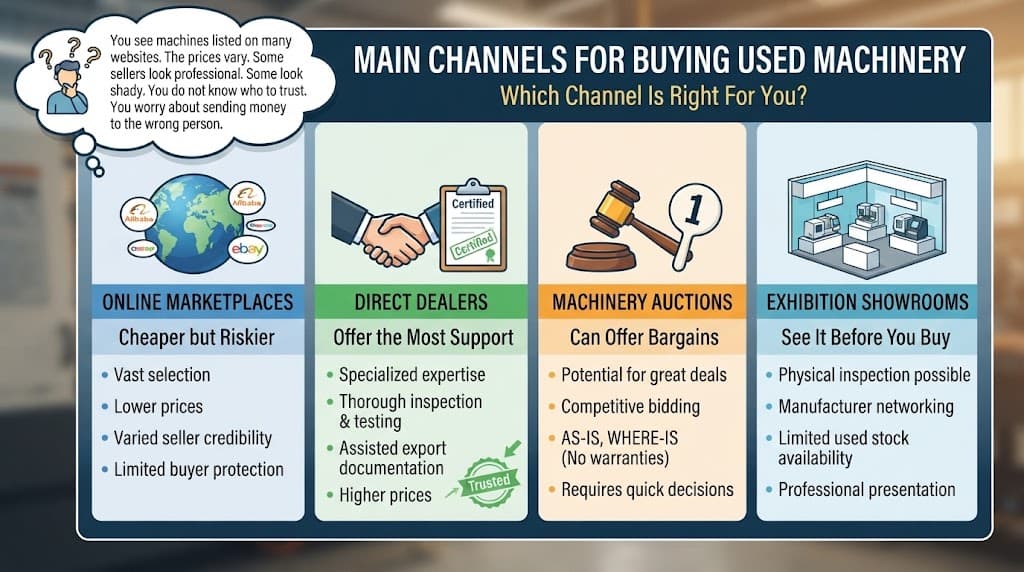
You see machines listed on many websites. The prices vary. Some sellers look professional. Some look shady. You do not know who to trust. You worry about sending money to the wrong person.
The main channels for buying used machinery are online marketplaces like Alibaba and eBay, direct dealers who specialize in used equipment, machinery auctions, and exhibition showrooms. Direct dealers offer the most support for inspection, testing, and export documentation. Online marketplaces are cheaper but riskier. Auctions can offer bargains but come with no warranties.
Online Marketplaces: Alibaba, eBay, and Facebook
Online marketplaces are where most buyers start. Alibaba has thousands of used machine listings. eBay has smaller machines and parts. Facebook Marketplace has local listings. The advantage is selection. You can find almost any machine. The disadvantage is risk. Many sellers on these platforms are not the actual machine owners. They are middlemen who repost photos from other sellers.
If you buy from an online marketplace, ask for a live video call. Ask the seller to walk around the machine and show the serial number. Ask for a test video with the machine running. If the seller refuses, move on. A real seller will be happy to show the machine.
Direct Dealers: The Safest Option
A direct used machinery dealer buys machines from factories, refurbishes them if needed, and sells them with inspection support. The dealer has the machine in their warehouse. They can show you the machine running. They can arrange third-party inspection. They can handle export packing and shipping.
This is the safest channel. You pay more, but you get protection. The dealer has a reputation to protect. They will not risk it by selling you a broken machine. Many dealers also offer testing videos and SGS inspection reports. This is the standard for international trade.
Machinery Auctions: Bargains and Risks
Auctions sell machines from closed factories, bank liquidations, and company downsizing. The prices can be very low. But you buy as-is. There is no warranty. You cannot test the machine before bidding in most cases. You have to rely on photos and auction descriptions.
Auctions are good for experienced buyers who can repair machines. If you are new to used machinery, auctions are risky. A machine that looks good in photos can have a cracked bed or a burned-out motor.
Exhibitions and Trade Shows
Trade shows like the CMES Indonesia International Machine Tool Exhibition bring together dealers, manufacturers, and buyers. You can see machines in person. You can talk to multiple sellers in one place. You can compare prices and quality.
The downside is travel cost. You have to fly to the show. You have to pay for hotels. But the face-to-face contact builds trust faster than email. I have closed many deals at exhibitions. A handshake and a test video on a tablet are worth more than a hundred emails.
How Do You Inspect a Used Machine Before You Buy?
You find a machine that looks good. The price fits your budget. But you cannot see it in person. You are buying from another country. You need to know if the machine is really in the condition the seller claims.
A proper inspection has three parts: a live test video, a third-party inspection report, and a test cut in real material. The test video shows the machine running through all functions. The inspection report verifies the condition with an independent check. The test cut proves the machine can produce a part that meets your tolerance.
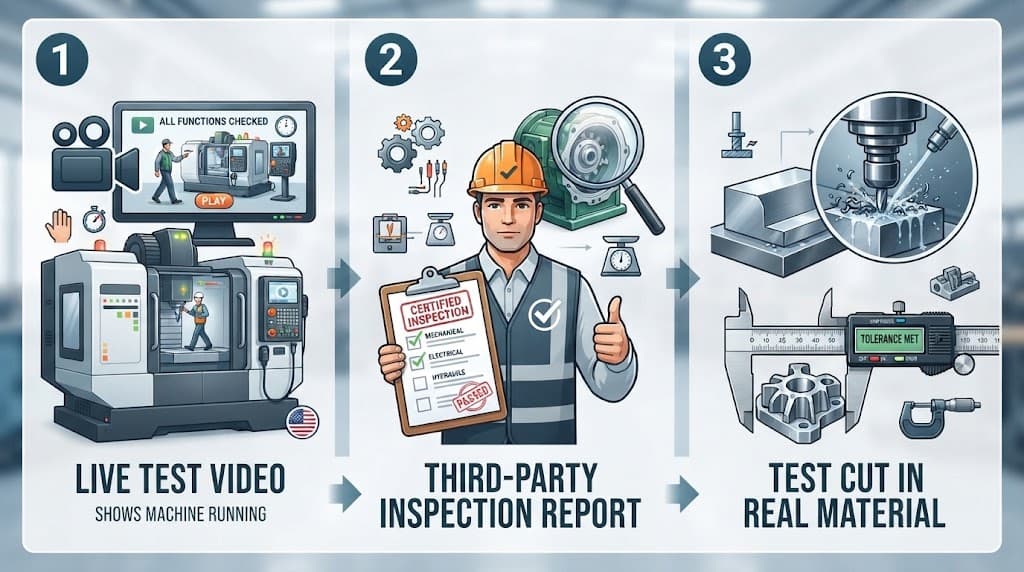
The Test Video: Your First Filter
A test video is the fastest way to screen a used machine. Ask the seller for a continuous video. Do not accept edited clips. The video should show the machine powering on from cold. It should show the spindle ramping up to maximum speed. It should show every axis moving through its full travel. It should show the tool changer cycling multiple times.
Listen to the machine in the video. A good spindle makes a smooth hum. A worn spindle makes a grinding or rumbling noise. A good gearbox shifts smoothly. A worn gearbox clunks or hesitates.
Ask the seller to show the serial number plate and the hour meter in the same video. This proves the machine is real and the hours are accurate. If the seller sends a video without these details, ask again. A serious seller will comply.
Third-Party Inspection: Your Independent Proof
A third-party inspection is an independent check by a company that has no connection to the seller. SGS is the most common inspector for used machinery. Other inspectors include Bureau Veritas, Intertek, and TUV Rheinland.
The inspector visits the seller’s warehouse. They examine the machine against a checklist. They check the spindle, the guideways, the electrical system, the hydraulic system, and the coolant system. They write a report with photos. This report is a neutral record of the machine’s condition.
SGS works with governments around the world to ensure goods meet import requirements. For used machinery, SGS can verify the machine’s type, serial number, year of manufacture, and remaining service life.[reference:0] This report is often required by customs in countries like Vietnam and Indonesia.
The Test Cut: The Only Real Proof
The best way to check a used machine is to cut a test piece. Give the seller a block of the material you plan to machine. Ask them to cut it on the machine. Then measure the result. A good machine produces a part that meets your tolerance. A worn machine produces taper, chatter marks, or a poor surface finish.
I always send test cut videos to my customers. I show the machine cutting the material they need. I show the measurement after the cut. This builds trust. My customer in Saudi Arabia said no other supplier offered a real test video before payment. That one video closed the deal.
What Compliance and Documentation Do You Need for Import?
You have chosen a machine. You have seen the test video. You have the inspection report. Now the machine has to travel to your country. If the documents are wrong, the machine stops at customs. You pay storage fees. You lose weeks of production.
Used machinery import requires four key documents: a pre-shipment inspection certificate, a certificate of origin, a commercial invoice, and a packing list. Some countries also require an import permit, an age certificate, and a life span certificate. Vietnam requires a pre-shipment inspection for all used machinery. Indonesia limits used machinery to under 20 years old and requires SNI certification. Always check your country’s rules before you buy.
Country-Specific Import Rules
Every country has different rules for used machinery. Here are the key requirements for the main markets my customers buy from:
| Country | Age Limit | Pre-Shipment Inspection | Special Requirements |
|---|---|---|---|
| Vietnam | 10-20 years | Required (SGS or approved) | Inspection certificate issued within 6 months |
| Indonesia | Under 20 years | Required | SNI certification, import approval from Ministry of Trade |
| Saudi Arabia | Varies by type | Recommended | SASO certificate, Arabic labeling |
| Mexico | No strict limit | Recommended | NOM certification for electrical equipment |
| Pakistan | Varies | Required | PSI certificate, import permit |
| Philippines | Varies | Required | Bureau of Customs inspection |
Vietnam is one of the strictest markets. Vietnam customs requires a pre-shipment inspection for all used machinery. The inspection covers the machine’s type, manufacturing year, serial number, and remaining service life.[reference:1] The inspection certificate must be issued not more than six months before the machinery arrives at the border.
Indonesia also has strict rules. Most used machines in HS Code chapters 84, 85, and 90 must be under 20 years old. Importers must obtain an import approval from the Ministry of Trade before the goods arrive. SNI certification is required for many machine types.
How to Prepare Your Documents
Prepare your documents before you pay for the machine. Ask the seller for the original invoice, the packing list, and the bill of lading. Ask for the machine manual and the electrical drawings. These documents prove the machine’s identity and help with customs clearance.
If your country requires a pre-shipment inspection, ask the seller to arrange it. SGS, Bureau Veritas, and Intertek all offer pre-shipment inspection services. The cost is usually $500 to $1,500 depending on the machine type and location. The inspection takes 3 to 5 working days. The report is valid for 3 to 6 months depending on the country.
I always include a sample document package with every machine I sell. The package includes the inspection report, the invoice, the packing list, and photos of the packing process. This helps my customers clear customs without delays. My customer in Saudi Arabia said the documentation was complete and the machines arrived at Dammam Port without problems.
How Do You Negotiate Price and Terms with a Used Machinery Seller?
You find a machine. You like it. The price is a little high. You want to negotiate. But you do not know what is fair. You do not know what the seller will accept. You worry about pushing too hard and losing the deal.
Negotiation starts with knowledge. Know the market price for that machine type and year. Know the cost of any repairs the machine needs. Know the seller’s motivation. A dealer with a machine that has been sitting for six months is more flexible than a dealer who just got the machine. Use the inspection report to support your offer. If the report shows a worn spindle, ask for a price reduction that covers the repair.
How to Find the Fair Market Price
The fair market price for a used machine depends on four things: the brand, the year, the condition, and the location. A used Mori Seiki lathe from 2015 is worth more than a generic lathe from 2005. A machine with 5,000 spindle hours is worth more than one with 20,000 hours.
Check multiple sources to find the price range. Look at similar machines on Alibaba, eBay, and dealer websites. Look at auction results. Look at sold listings, not just asking prices. Asking prices are often 20% to 30% higher than the final sale price.
Once you know the range, you can make a realistic offer. If the machine is priced at $50,000 and similar machines sell for $40,000 to $45,000, your offer should be in the $38,000 to $42,000 range. Start low. Give yourself room to negotiate.
What to Negotiate Besides Price
Price is not the only thing you can negotiate. You can also negotiate:
Included accessories: Ask for tool holders, chucks, collets, and manuals. These items cost money if you buy them separately. A set of tool holders can cost $500 to $2,000.
Spare parts: Ask for spare filters, belts, and fuses. These are small items but they save you time when the machine needs maintenance.
Packing: Ask for professional export packing with wooden crates and anti-rust protection. Good packing prevents transit damage. This is worth negotiating because it protects your investment.
Payment terms: Ask for a payment schedule. A common term is 30% deposit, 70% after inspection. Do not pay 100% upfront. Hold back part of the payment until you see the inspection report or the test video.
Shipping terms: Ask for CIF (Cost, Insurance, Freight) pricing. This includes shipping to your port. FOB (Free On Board) pricing means you arrange shipping yourself. CIF is simpler for most buyers.
How to Use the Inspection Report in Negotiation
The inspection report is your strongest negotiation tool. If the report shows a problem, you have proof. The seller cannot argue with an independent report. You can ask for a price reduction that covers the repair cost.
For example, if the report shows spindle runout of 0.04 mm, the spindle needs rebuilding. A rebuild costs $3,000 to $5,000. You can ask for a $3,000 price reduction. The seller might counter with $1,500. You meet in the middle. Both sides win.
If the report shows the machine is in excellent condition, you have less room to negotiate. But you have confidence that you are buying a good machine. That confidence is worth something.
What Are the Hidden Costs of Buying Used Machinery?
You pay for the machine. You pay for shipping. You think that is the end of it. Then the machine arrives. You discover it needs a new chuck. The coolant pump is broken. The electrical panel does not match your power supply. The costs add up fast.
The hidden costs of used machinery include repair costs, installation costs, power supply conversion, tooling, freight insurance, customs duties, and import taxes. Repair costs for a worn spindle can reach $8,000. Installation and commissioning can cost $2,000 to $5,000. Customs duties vary by country but can be 5% to 20% of the machine value. Always budget 15% to 25% of the machine price for these extra costs.
Repair and Maintenance Costs
Every used machine needs some repair. Even a machine in good condition may need new seals, new filters, or new belts. A machine in poor condition may need a spindle rebuild, a new hydraulic pump, or a new control board.
Here are typical repair costs for used machines:
| Repair Item | Typical Cost | When It Is Needed |
|---|---|---|
| Spindle Rebuild | $3,000 – $8,000 | Runout over 0.03 mm |
| Ball Screw Replacement | $1,500 – $4,000 | Backlash over 0.05 mm |
| Hydraulic Pump Repair | $800 – $2,500 | Low pressure or leaks |
| Control Board Replacement | $2,000 – $10,000 | No display or error codes |
| Coolant Pump Replacement | $200 – $600 | Weak flow or noise |
| Way Scraping | $1,500 – $5,000 | Uneven wear or scoring |
Budget 10% of the machine price for repairs. If you buy a $30,000 machine, set aside $3,000 for repairs. If the machine needs nothing, you have saved money. If it needs work, you are prepared.
Installation and Commissioning Costs
A machine does not run by itself. You need to move it into your shop. You need to level it. You need to connect the power. You need to connect the coolant and hydraulic lines. You need to test the machine and adjust the parameters.
Installation and commissioning costs depend on the machine size and your location. A small lathe might cost $500 to install. A large CNC machining center might cost $3,000 to $8,000. If you need a technician to come from the seller’s country, the cost is higher. You pay for flights, hotels, and daily wages.
Customs Duties and Import Taxes
Customs duties and import taxes vary by country. They also vary by machine type. In general, expect to pay 5% to 20% of the machine value in duties and taxes. Some countries also charge a value-added tax (VAT) of 10% to 20%.
Check your country’s tariff schedule before you buy. For example, in Mexico, used machine tools may have a 5% to 10% import duty. In Saudi Arabia, most industrial machinery is duty-free or has a low duty. In Vietnam, used machinery may have a 10% import duty plus 10% VAT.
Do not forget freight insurance. Ocean shipping is risky. A machine can be damaged during transit. Freight insurance costs about 0.5% to 1% of the machine value. It is worth the cost. If the machine is damaged, insurance pays for the repair or replacement.
Conclusion
Choosing used metalworking machinery is not about finding the cheapest machine. It is about finding the right machine in the right condition with the right support. Check the spindle, the ways, and the controls. See the machine run. Get an inspection report. Understand your country’s import rules. Budget for hidden costs. A good used machine will serve your shop for years. A bad one will cost you more than a new machine.