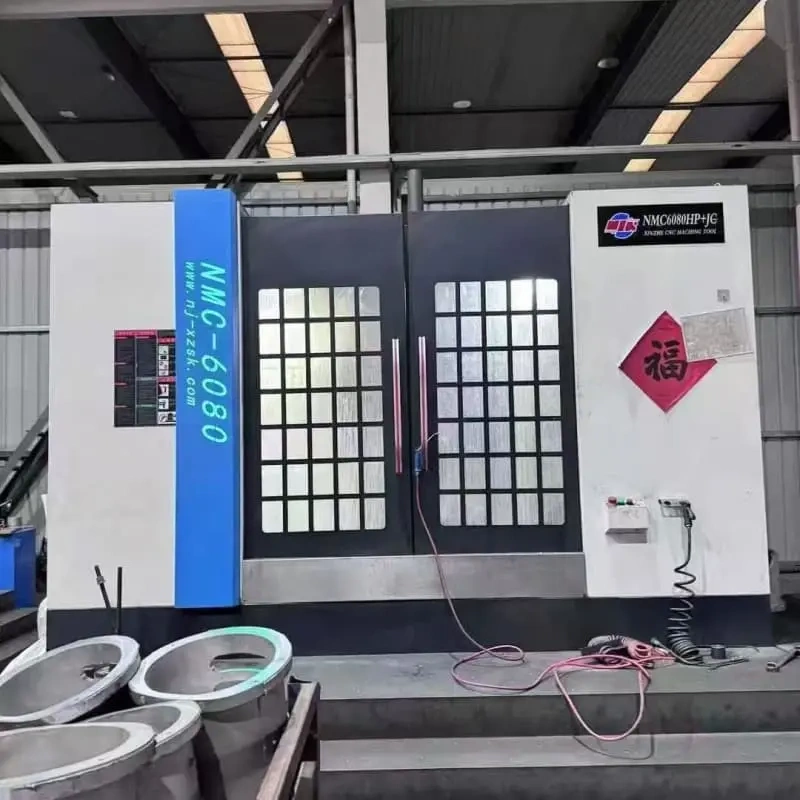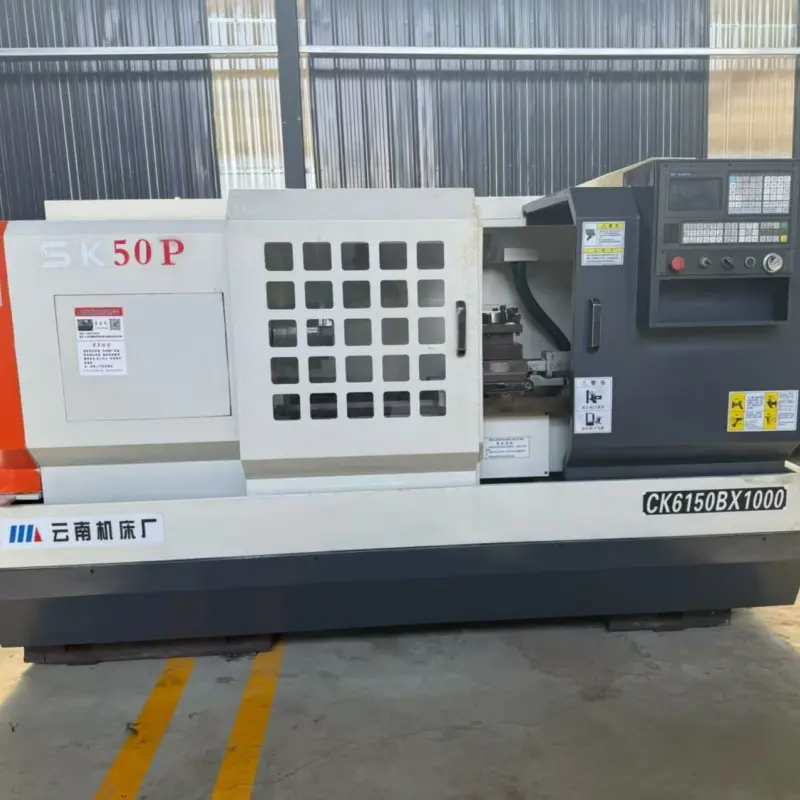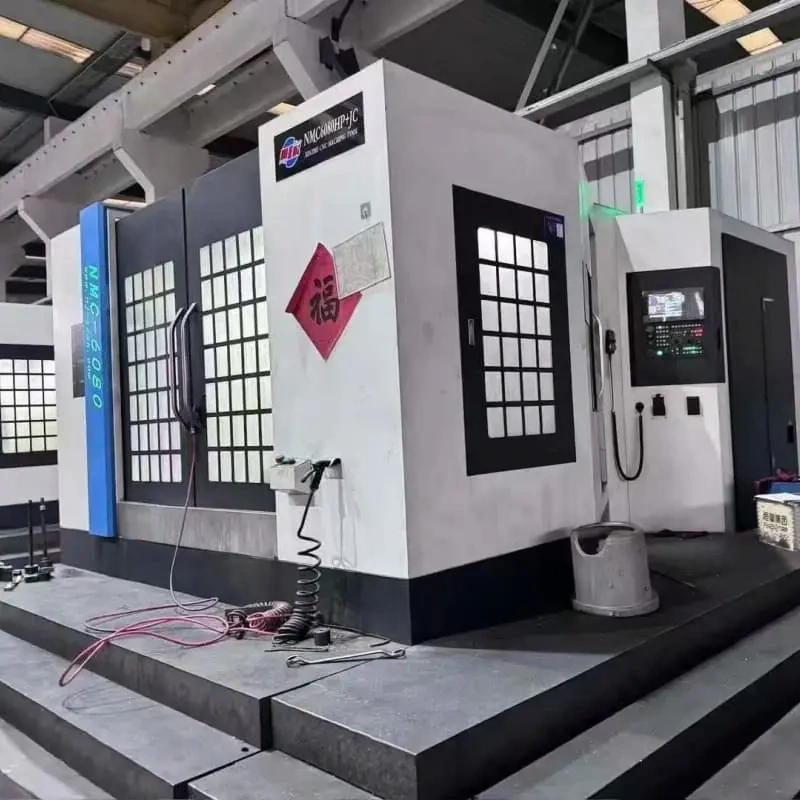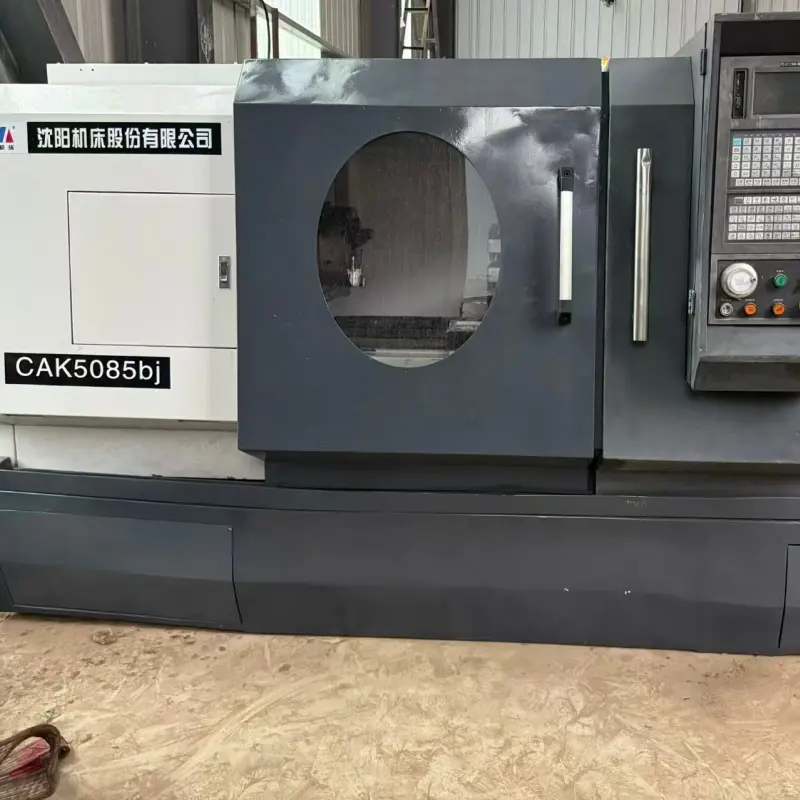
New machine prices keep climbing and lead times stretch past a year. A wrong used-machine choice costs more than waiting. Here is how to choose used metalworking machinery correctly.
To choose used metalworking machinery in 2026, start from the job the machine must do, verify spindle hours and guideway wear, inspect under power, calculate total landed cost against new prices, and buy only from a supplier who provides inspection reports and running videos before payment.
I have spent years walking rows of second-hand lathes, milling machines, and press brakes in our yard in Liaocheng, and I can tell you that 2026 feels different from 2024. Manufacturing investment is recovering on both sides of the Pacific. The Japan Machine Tool Builders’ Association forecasts global machine tool orders to grow 6% in 2026, reaching about 1.7 trillion yen, with China and the United States driving most of the demand. Chinese CNC machine tool sales rose double digits in early 2026, and Southeast Asian buyers are importing forming machines at a pace nobody expected two years ago. Rising demand pushes new-machine prices and delivery times up, and that is exactly why used metalworking machinery has moved from a budget fallback to a strategic purchase. But a rising market also attracts sloppy sellers. So the question is not whether to buy used — it is how to choose so the machine produces parts on schedule instead of sitting in your workshop as a very expensive paperweight. The four sections below walk through the checks I would run before any money leaves your account.
What Should You Check First When Buying Used Metalworking Machinery in 2026?
Most buyers start with price and photos. That order gets shops into trouble. Price only means something after the machine’s real capability and condition are clear.
Check the job first, then the machine. Define the material, part size, tolerance, and production volume you need, and only then compare listings. A machine that cannot hold your tolerance is not a bargain at any price.
Start From the Part, Not the Listing
I always ask buyers one question before I show them a single machine: what part are you making? Not what machine do you want. The part decides everything. A shop turning shafts up to 1,000 mm needs a different lathe than a shop doing small brass fittings. A fabrication shop bending 3-meter plates needs a different press brake than one working with 6-meter sheets.
Write down five things before you search: the largest workpiece, the tightest tolerance, the material you cut most, the batches per month, and the power supply available in your building. Then match the machine to that list. This also stops you from overbuying. A bigger, fancier machine sounds good until you see its power bill and its training requirements.
Match the Machine Type to the Work
Different machine families fail in different places, so the first check should target the component that carries the load:
| Machine type | Best suited for | Critical first check | Warning sign |
|---|---|---|---|
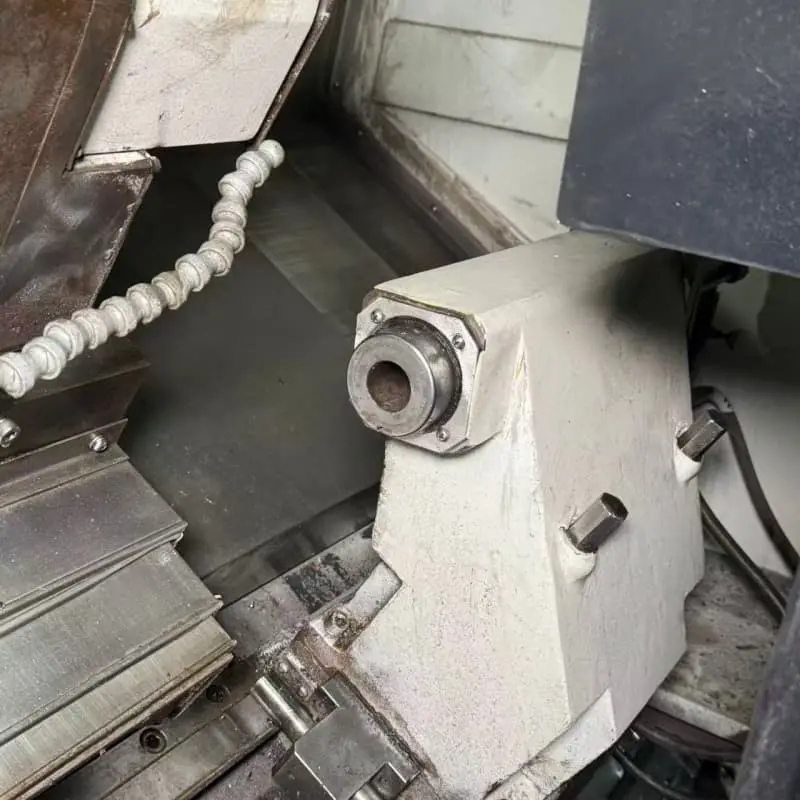
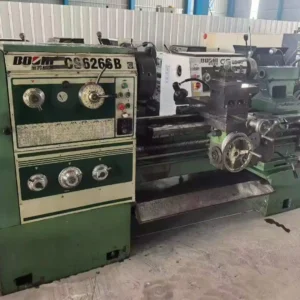
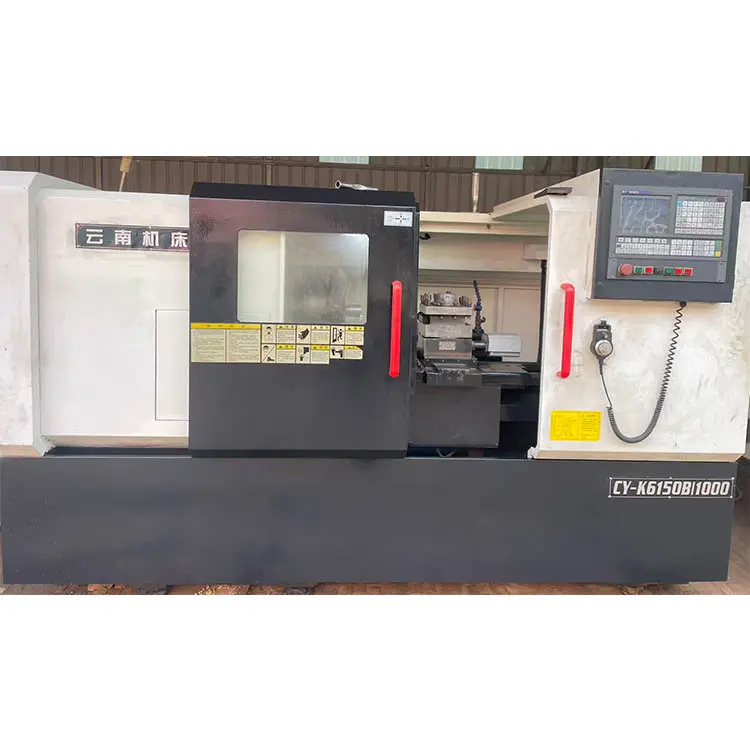
| Used lathe / CNC lathe | Turning, threading, facing | Spindle bore, chuck runout, bed wear | Growling spindle, visible bed ridges |
| Used milling machine | Slotting, drilling, shaping | Quill smoothness, table flatness, backlash | Stick-slip on table travel |
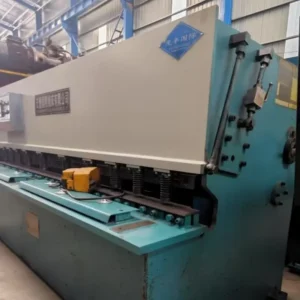
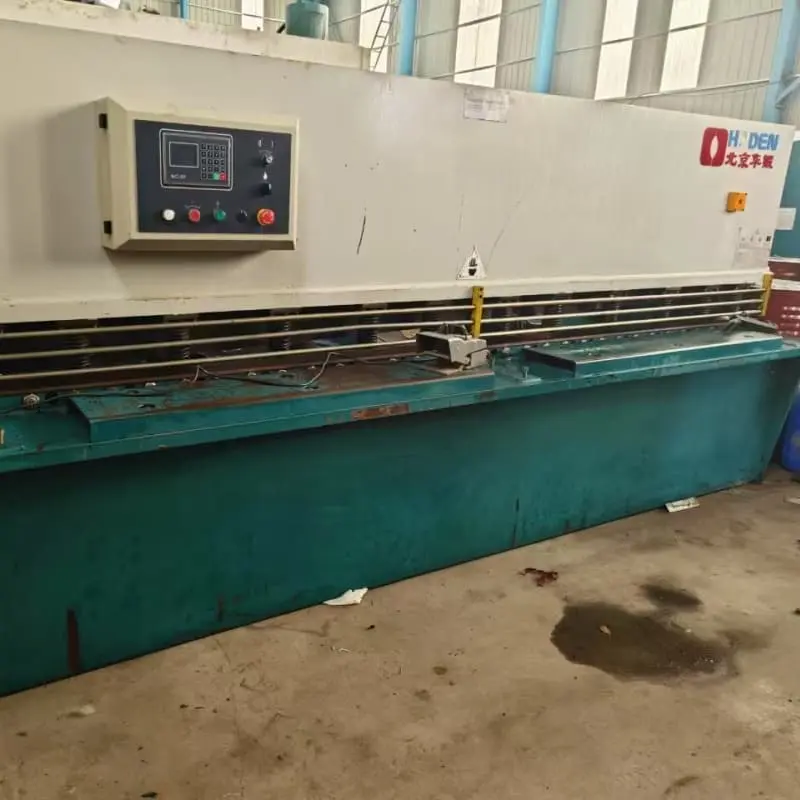
| Used shearing machine | Sheet cutting | Blade edge, hold-downs, ram alignment | Ragged cut edge, blade gap unevenness |
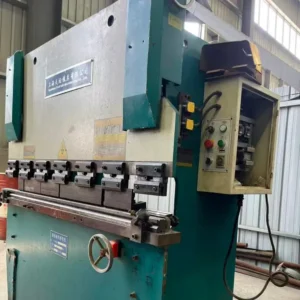
| Used press brake | Bending and forming | Ram, bed, cylinders, backgauge fingers | Oil weeping from cylinder seals |
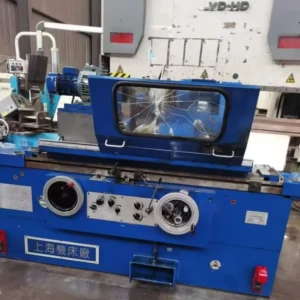
| Used grinding machine | Precision finishing | Wheel head alignment, magnetic chuck strength | Coolant leaks, burned work surfaces |
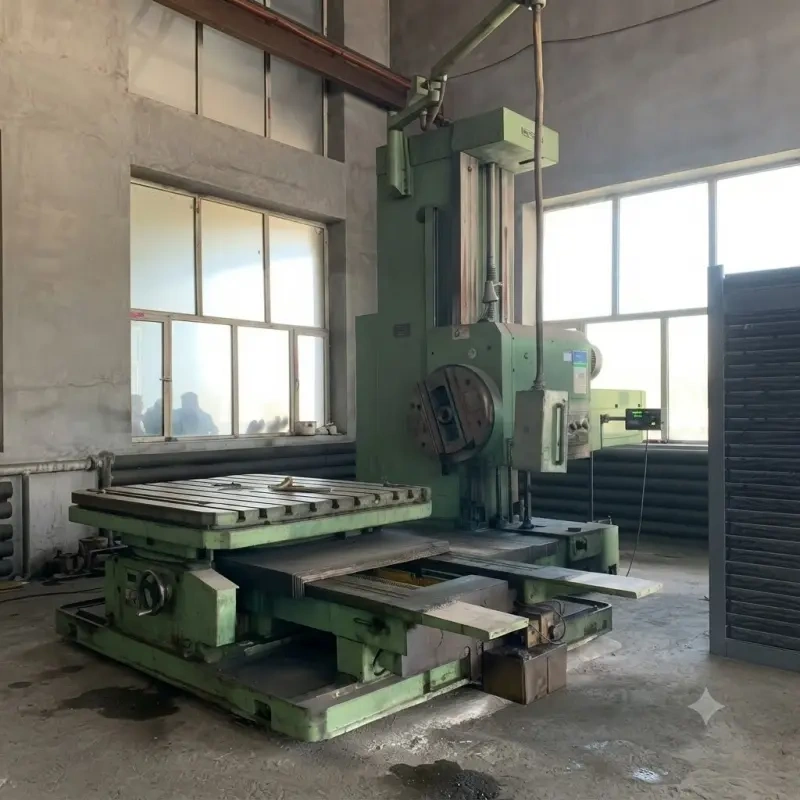
| Used boring machine | Large-hole accuracy | Spindle runout, table rotation | Heat after short runs |
Read the Hours, Then Read Them Again
An hour counter is one of the most honest documents on a machine. Lathes and machining centers with fewer than 20,000 operating hours are generally in excellent condition. Machines between 20,000 and 40,000 hours need a deeper maintenance analysis before you commit. But hours alone do not tell the whole story. A low-hour machine that sat idle for three years in a damp building can have corroded ways, degraded seals, and a dead control battery that wiped its parameters. High hours on a machine with a documented preventive maintenance schedule are often safer. Ask what the machine did: high-volume production, prototype work, or a vocational school? Each history creates a different wear profile.
Why Does Rising Manufacturing Investment Make Used Machinery the Smarter Buy?
When capital spending accelerates, new-machine quotes rise and lead times stretch. Buyers who lock in quality used equipment now capture capacity without the waiting queue.
A certified used machine typically costs 40% to 70% less than a comparable new one while delivering similar performance, and it reaches your floor months earlier — the difference funds tooling, training, and working capital.
Demand is not imaginary this year. Japan’s machine tool builders recorded a fifth consecutive quarter of order growth at the end of 2025, and January 2026 orders alone surged 25% year on year. Chinese machine tool revenue rose 11.5% year on year in early 2026, and Taiwan’s machine tool exports to Vietnam jumped nearly 50% in the first half of the year. Southeast Asian buyers are importing forming machines at record speed, and Middle Eastern fabricators are expanding capacity in the same window. Every one of those orders competes for new-machine production slots. Meanwhile used machines do not have a factory backlog. A machine sitting in a verified stock can be inspected, packed, and shipped within weeks, which matters when a project contract has already promised output to your own customer.
Compare New, Refurbished, and As-Is Honestly
The comparison below is the one I sketch on paper for almost every customer. The right column is where bad decisions hide:
| Condition tier | Typical price vs. new | What you still pay for | Main risk |
|---|---|---|---|
| New machine | 100% (baseline) | Tooling, installation, training, long lead time | Factory queue, delivery delays |
| Refurbished used | About 40–70% of new | Freight, commissioning, optional warranty | Thin refurbishment dressed as full rebuild |
| As-is used | Lowest upfront | Repair budget, downtime, missing accessories | Undisclosed wear, obsolete parts |
Notice what the used tiers still require: money for rigging, freight, installation, tooling, and commissioning. A common rule of thumb among buyers is to budget roughly 30 cents in accessories and setup for every dollar spent on the machine itself. If a supplier will not discuss those costs openly, that tells you something about how they handle the rest of the transaction. See our current used machine inventory for real stock with real photos.
Do the Payback Math in Reverse
Here is a shop-floor observation I share with hesitant buyers: I have never seen a customer regret buying a slightly more expensive, well-maintained machine from a brand with available spare parts. I have seen several regret chasing the cheapest listing on the internet. When new-equipment prices rise, the used price gap widens, and a machine that delivers 90% of new performance at half the cost pays for itself faster than a new machine sitting on an order board for ten months. Calculate your hourly operating cost, your monthly machine-hours, and the revenue that machine must produce to justify its landed price. If those three numbers work, the purchase is sound regardless of what the new catalog says.
How Do You Inspect Mechanical Health Before Money Changes Hands?
Photos hide more than they show. Paint can cover a cracked base, and a polished table can sit on a worn gearbox. The machine has to prove itself under power.
Inspect under power whenever possible: warm the machine up, cycle every axis, run a test cut, measure spindle runout with a dial indicator, and check backlash readings. Record everything, and price any flaw you find into your offer.
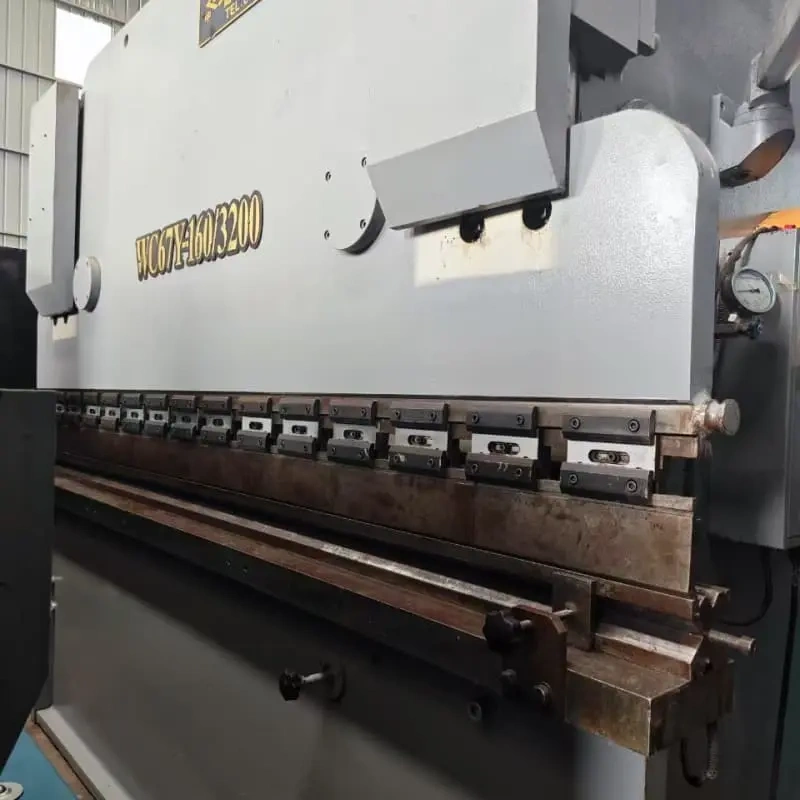
The Under-Power Test
A live demonstration gives you information no specification sheet can. Watch the machine home, warm up, and cycle through its full travel. Listen for spindle noise, gear clunking, hydraulic chatter, or inconsistent motion. On CNC equipment, test the control, monitor, keypad, handwheel, and communication ports. An aging control is not automatically a deal-breaker, but unsupported electronics turn a small failure into a long, expensive repair. If the seller cannot power the machine, price it accordingly or walk away. I once inspected a “pristine” mill whose cracked base was hidden under a rubber mat — a flashlight and two minutes of looking would have caught it before I paid for the trip. Bring a flashlight and a dial indicator to every inspection. They are the two cheapest insurance policies in this trade.
The Checklist I Use on Every Machine
| Inspection point | What to verify | Warning sign |
|---|---|---|
| Spindle | Runout, taper condition, temperature after 15 min | Heat, rumble, unstable surface finish |
| Ways and guideways | Wear pattern, lubrication delivery | Pitting, dry slideways, scoring |
| Ballscrews and backlash | Positioning repeatability, lost motion | Excess backlash beyond about 0.020″ |
| Hydraulics | Pressure stability, seal condition | Leaks, weak clamping |
| Electrical cabinet | Alarm history, drives, fans, wiring | Makeshift repairs, obsolete boards |
| Accuracy after warm-up | Test bar or sample part within your tolerance | Cold-machine results that drift hot |
| Crashes | Witness marks on chuck, table, tool post | Deep gouges under fresh paint |
Two habits matter more than the table itself. First, measure accuracy after the machine warms up, because cold readings mislead. Second, ask for a test cut on a workpiece close to your own parts — a machine can cycle beautifully in the air and still ruin a real part.
Paper Trail and Price Negotiation
Documentation converts inspection findings into negotiating leverage. Ask for maintenance logs, records of rebuilt spindles or replaced ballscrews, the alarm history on the control, and the serial number. Owners who kept the original manual usually kept up the maintenance too — that correlation is real and I rely on it. If records are missing, do not walk away automatically, but cut your offer by the cost of a full commissioning inspection after delivery. Every flaw you document is a discount you have earned.
Who Should You Trust to Deliver the Machine to Your Floor?
Cross-border purchases add freight, customs, and trust problems on top of mechanical ones. The supplier you pick decides whether those risks stay managed or multiply.
Choose a supplier who provides real machine photos, running test videos, third-party inspection support, and export-grade packing before payment — and who answers technical questions in hours, not weeks.
The Documents to Demand Before Payment
| Document | Why it matters | Red flag if missing |
|---|---|---|
| Real machine photos and running video | Confirms the machine exists and runs | Stock photos, no video offered |
| Inspection report (SGS or third party) | Independent verification of condition | Supplier refuses third-party access |
| Serial number and spec sheet | Prevents bait-and-switch | Serial unavailable or changing story |
| Packing plan (wooden case, anti-rust) | Prevents transport damage | Loose or vague packing answers |
| Export documentation support | Clears customs without surprises | Buyer left to handle everything alone |
A customer of ours in Saudi Arabia — an efficiency-focused buyer running multiple projects — told us his previous suppliers delayed responses and shipped machines that did not match the photos. Before order confirmation, we sent him real machine photos and running test videos, supported an SGS inspection before shipment, and packed the machines in wooden cases with anti-rust protection for delivery to Dammam Port. His feedback was simple: this was the first used machinery supplier that provided real videos and inspection support before payment. That is the standard you should hold every supplier to, including us. Our used shearing machine range and used press brake range pages list stock that ships under exactly this process.
Plan the Last Mile Before You Sign
Even a perfect machine becomes a problem if it cannot enter your building. Ask early for dimensions, weight, power requirements, and lifting details. Confirm the freight route, the discharge port, and who rigs the machine off the truck. A technically sound purchase can still go wrong if delivery becomes a costly surprise, and in a year of rising industrial investment, freight capacity tightens too. Lock the logistics plan into the contract, not into a hopeful conversation.
Conclusion
Choose the job before the machine, inspect under power, compare total landed cost honestly, and buy only from suppliers who prove condition before payment. That is how smart buyers win in 2026.