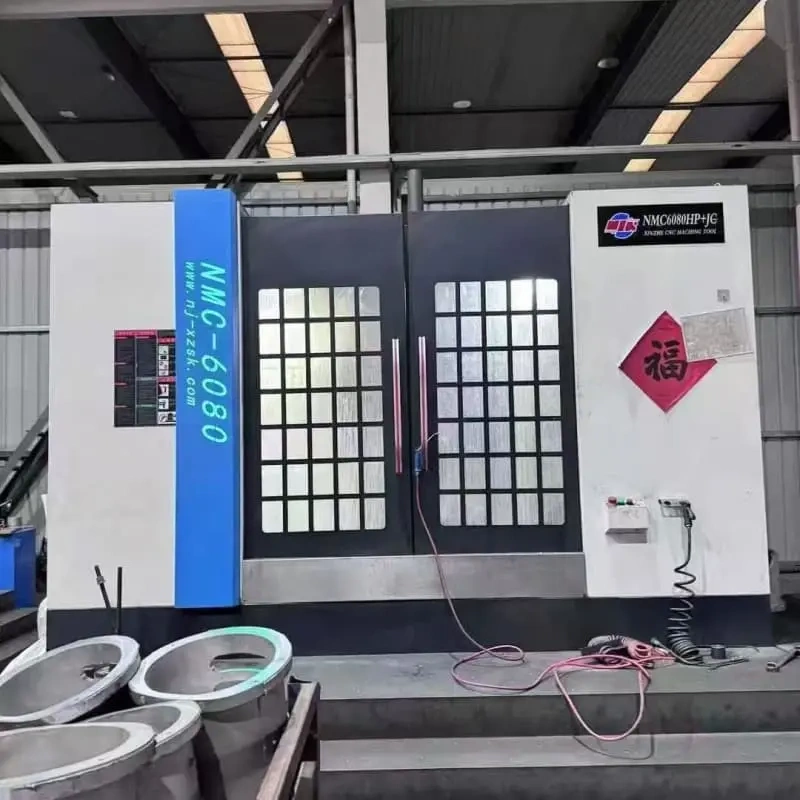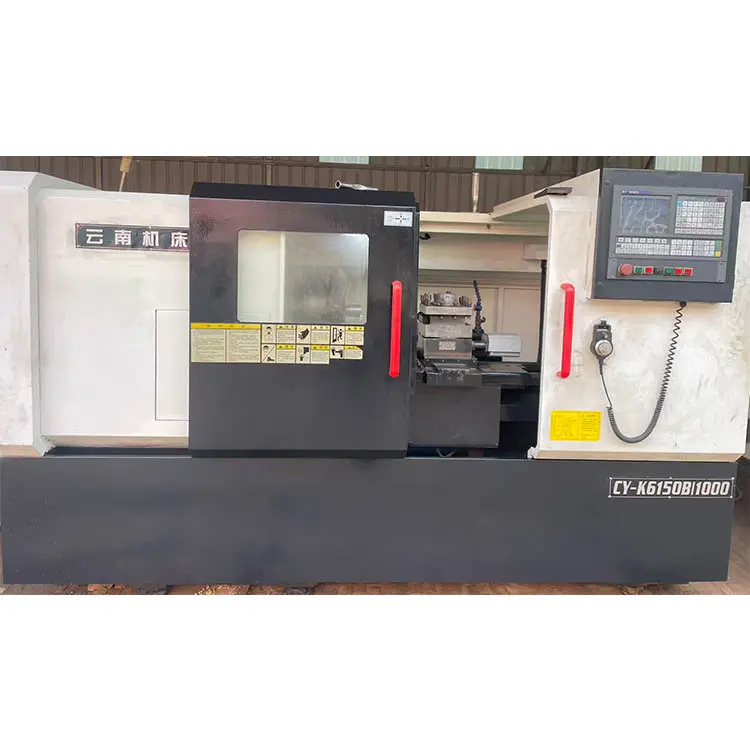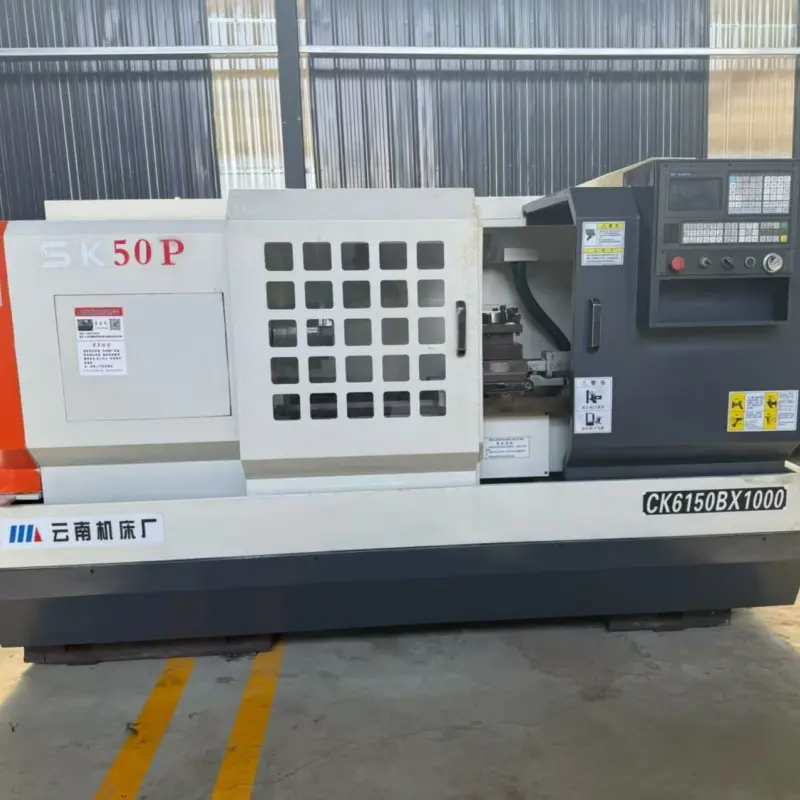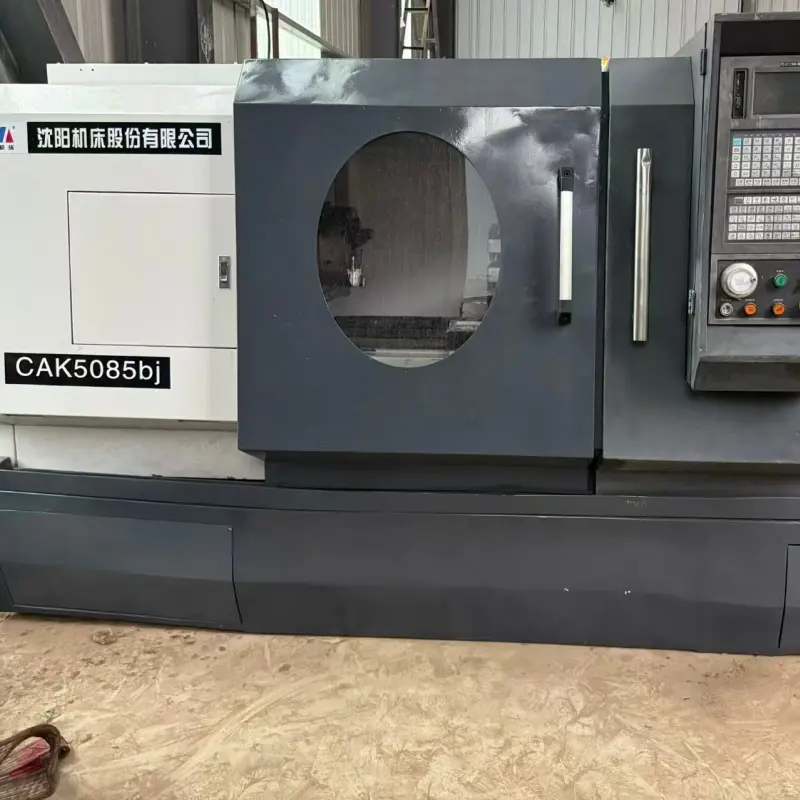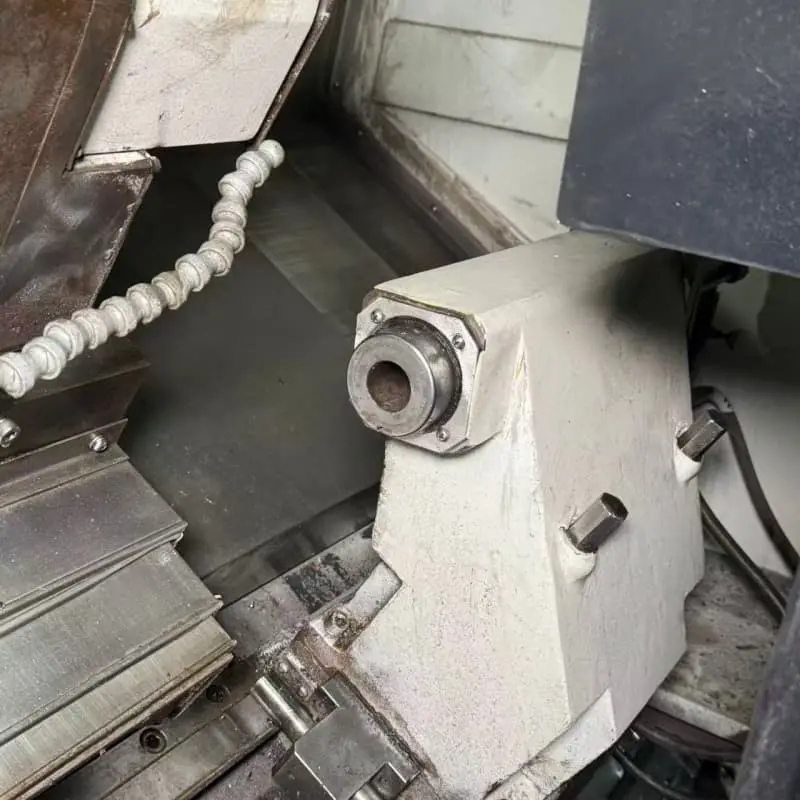
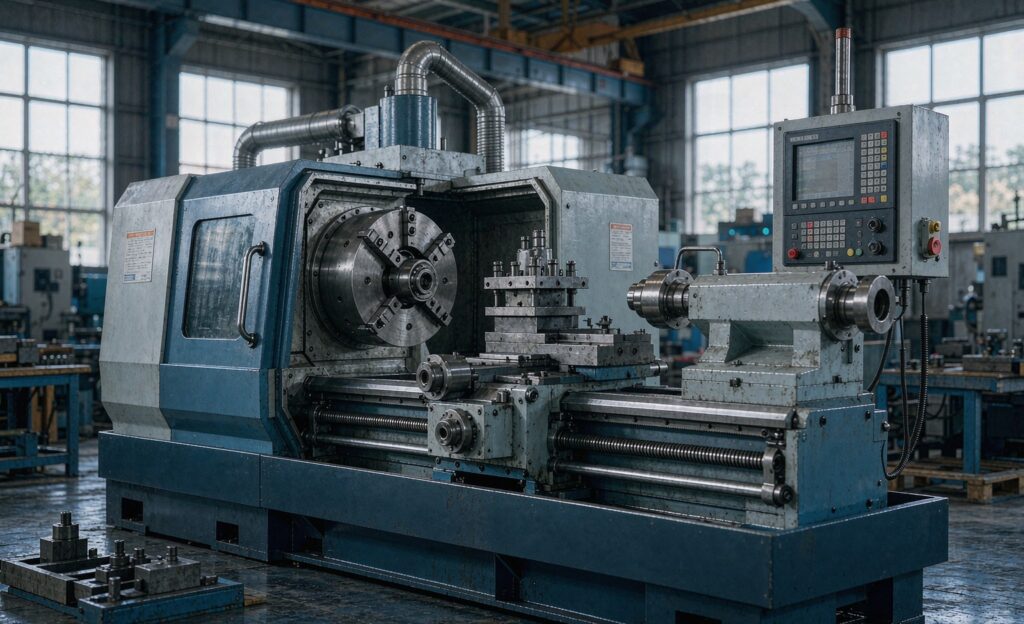
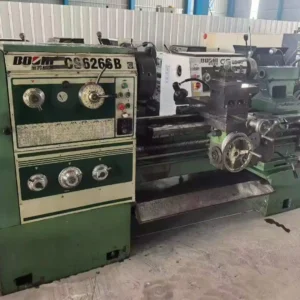
Walk into any contract machine shop that runs ten to fifty lot sizes and ask the owner which capital purchase changed their year, and the answer is almost always the same: a used CNC lathe. Done right, a pre-owned turning center that costs $40,000 to $90,000 delivers the same productive output as a new machine three times the price, and it does it without the 16 to 32 week lead time. Done wrong, the same machine becomes the most expensive parking space in the building, with a spindle rebuild, a control retrofit, and a dozen weekends of debugging all stacked behind the asking price.
This guide is written for the buyer who already knows that small batch production is a different game from high volume turning. You are not chasing maximum spindle hours. You are chasing flexibility, quick changeover, predictable accuracy on lot sizes that change every week, and a control your operator can actually program without two months of retraining. You need a machine that shows up cutting chips in week two, not a machine that becomes a project in year one. The rest of this article walks through how to find that machine, how to inspect it, how to walk away from the wrong deal before the wire transfer clears, and how to keep the right machine productive for the next decade.
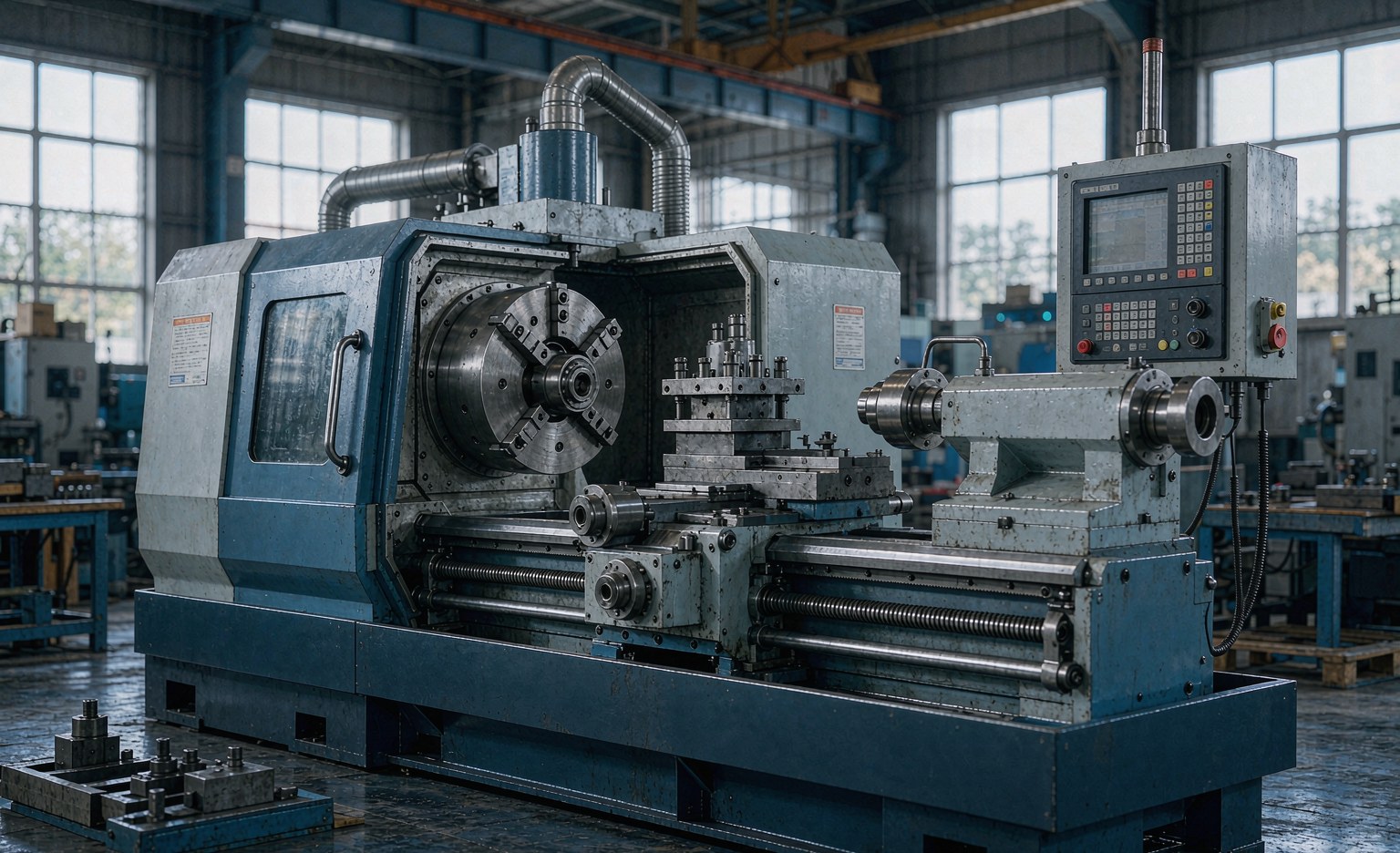
Why Small Batch Production Is a Different Buying Decision
Small batch work, defined here as lot sizes from a single piece to a few hundred, rewards a different set of machine attributes than high volume production. A shop running 50,000 automotive hubs per year needs a machine optimized for cycle time and tool change speed. A shop running fifty different jobs per month, each with its own setup, needs a machine optimized for setup flexibility, control familiarity, and predictable first piece accuracy on parts nobody has cut before.
The used CNC lathe market in 2026 is unusually well suited to small batch buyers for three structural reasons. First, the supply of three to ten year old turning centers coming off lease returns and contract shop upgrades has tightened pricing in the $40,000 to $90,000 band, making capable machines accessible to buyers who could not afford the segment five years ago. Second, Fanuc and Haas controls, which dominate the small batch segment because shops already have operators trained on them, are still in active production and supported globally, which means a 2018 control on a used machine is not an obsolete control. Third, the reshoring of contract work back toward North American and European shops from overseas has driven demand for fast delivery turning capacity, which makes a used machine that can be commissioned in week three a competitive asset rather than a capital burden.
What small batch production does not reward is buying a machine optimized for features you will not use. A live tooled, sub spindle, Y axis multi tasking lathe is impressive on the spec sheet and ruinous on the shop floor if ninety percent of your work is plain 2 axis turning. The most common mistake we see is small batch buyers paying $50,000 more for capability they will never exercise, then losing the same $50,000 in depreciation when they sell the machine five years later. Buy the simplest machine that does the work you actually have, not the most impressive machine the dealer wants to clear from inventory.
Dive Deeper: Matching Machine Specifications to Small Batch Work
The specifications that matter for small batch production are different from the ones that matter for high volume production. Swing, bed length, and chuck size are the obvious first cuts, but the specifications that actually drive setup time and first piece yield are spindle speed range, tool turret capacity, rapid traverse rates, and the conversational programming features of the control.
Spindle speed matters because small batch work involves material changes more than any other production mode. A job shop that turns aluminum prototypes one week and 17-4PH stainless fittings the next needs a spindle that can swing from 6,000 RPM for aluminum to under 1,500 RPM for tough alloys without losing rigidity at the low end. Most quality used CNC lathes from Haas, Mazak, Doosan, and Okuma offer a 4,000 to 6,000 RPM top speed with two step or continuous range gearing that handles both regimes comfortably.
Tool turret capacity matters because small batch work lives and dies by tooling flexibility. A twelve station turret with live tooling capability costs $8,000 to $15,000 more than an eight station static turret on the same machine. For a shop running thirty different parts per month, that premium pays back in the first six months by eliminating the second setup operations that burn hours every week. For a shop running five parts per month, the same turret is dead weight that you will not recover.
Rapid traverse rates matter less for cutting time and more for setup productivity. A 1,200 IPM rapid on a Mazak QT-200 versus an 800 IPM rapid on a 1990s vintage machine does not change your cycle time by more than a few percent, but it changes how long it takes an operator to find an edge, touch off a tool, and load the next part. Across an eight hour shift of small batch setups, the difference adds up to a meaningful fraction of an operator’s productive time, and operator time is the most expensive line item in any contract shop’s budget.
Control conversational programming is the single most underrated feature for small batch work. Haas’s intuitive programming system, Mazak’s Mazatrol conversational interface, and Fanuc’s Manual Guide NC style templates let an experienced operator write a part program at the machine without leaving the shop floor to consult a CAM post processor. For a three piece prototype run, that capability saves hours per part. For a 300 piece production run, the same hours disappear into the cycle time and you may as well use G code.
Dive Deeper: Control System Selection and the Operator Skills Question
Choosing a control on a used CNC lathe is not really a technology decision. It is a human resources decision. The control you choose dictates who can run the machine, how fast new operators get productive, and what your post processor library looks like. Get this wrong and you have bought a machine your shop cannot run, even if the machine itself is mechanically perfect.
Fanuc controls dominate the global used CNC lathe market because Fanuc has been the default control on machine tools since the 1980s. A used Haas ST-20 with a Fanuc 0i-TF, a Mazak Quick Turn 200 with the older Mazatrol T-32, a Doosan Lynx 220 with a Fanuc 0i, and a used Okuma LB3000 with the OSP-P300 all share a common pool of trained operators. If your shop already runs Fanuc controls on other machines, stick with Fanuc. The retraining cost of switching a team of four or five operators to Siemens or Heidenhain is real, and it shows up as lost production for the first two to three months after the machine is installed.
The exception to this rule is Mazatrol. Mazak’s proprietary conversational control is so well designed for short batch and prototype work that many shops specifically hunt for used Mazaks with Mazatrol even when their other machines run Fanuc. Operators trained on Mazatrol tend to stay trained on Mazatrol, so the labor mobility is limited, but the productivity on small lot work is genuinely higher than what most operators can extract from a Fanuc conversational interface.
Control age matters more than control brand when you are buying used. A Fanuc 0i-TF or 31i control from the last ten years is current and supported. A Fanuc 0T or 6T from the 1990s is still functional in many shops but is increasingly hard to support with spare parts, especially if the CRT monitor fails. A control retrofit to bring an old machine up to a current Fanuc or Heidenhain control is a $75,000 to $100,000 project on top of the machine price. Factor it into your evaluation before you buy, not after.
Dive Deeper: Spindle Hours vs. Real Machine Condition
Spindle hours are the most commonly cited metric for a used CNC lathe, and they are the most commonly misunderstood. A 15,000-hour machine that ran aluminum production in a clean shop is not the same as a 5,000-hour machine that sat idle for three years with seals drying out. Hours tell you how much the spindle was used. They do not tell you how it was used or what happened to the rest of the machine while the spindle was doing its work.
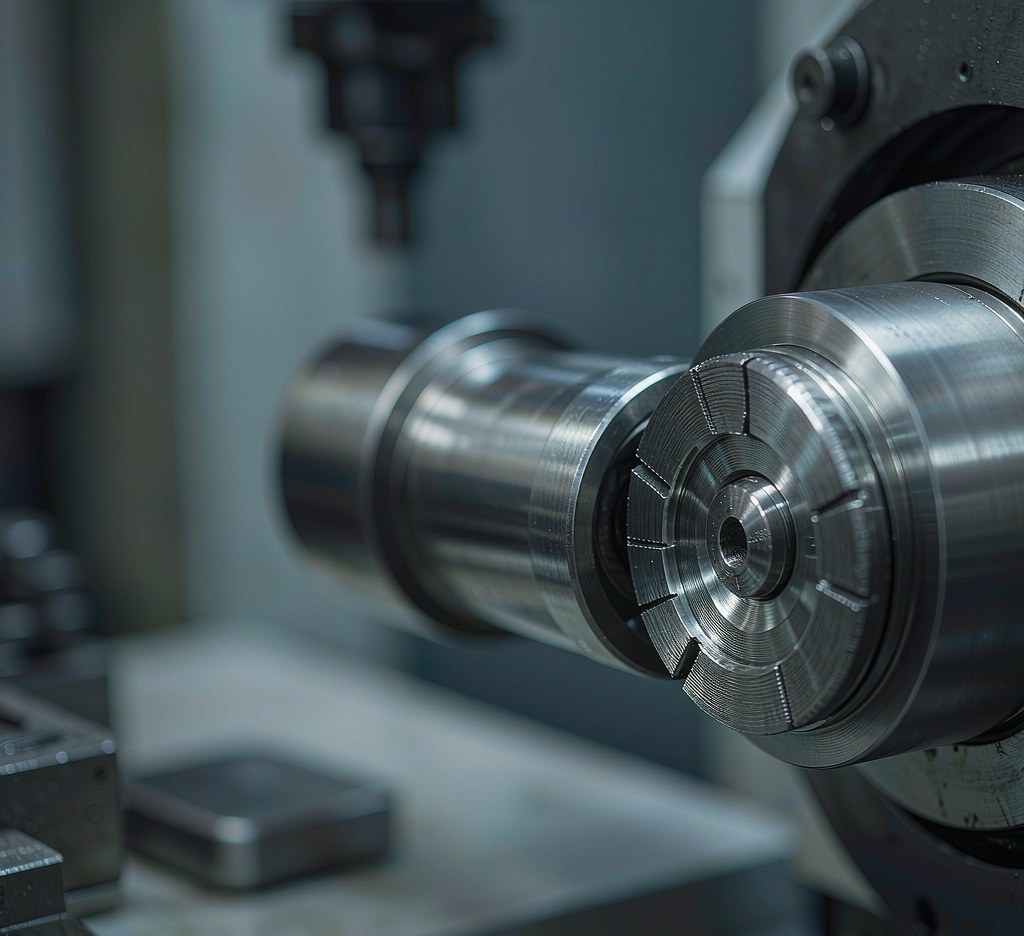
Industrial CNC lathe spindles are typically rated for 10,000 to 20,000 hours of cutting life before a rebuild or replacement is expected. A spindle that has done 5,000 hours of light finishing work on aluminum has most of its useful life ahead of it. A spindle that has done 5,000 hours of heavy interrupted cutting, particularly on tough alloys or stainless steel, may already be showing bearing wear that will need attention within the next twelve to twenty four months of new ownership.
The distinction between cutting hours and power on hours matters too. A machine that has 15,000 power on hours but only 6,000 cutting hours spent most of its life idle or in setup. A machine with 8,000 cutting hours and 12,000 power on hours spent most of its life under the cut. For spindle life, the cutting hours are what count. Most dealers track both numbers, and any seller who cannot produce both numbers is a seller to ask harder questions of.
A simple four tier rule of thumb for evaluating spindle hours on a used CNC lathe. Under 5,000 cutting hours: low usage, likely good condition if maintenance has been kept up. Five thousand to twelve thousand cutting hours: productive middle age, inspect carefully. Twelve thousand to twenty thousand cutting hours: high usage, budget for a $30,000 to $50,000 spindle service in the first two to five years of new ownership. Over twenty thousand cutting hours: approaching end of rated life, plan a rebuild or replacement before purchase, not after.
Beyond the spindle, look for the rest of the machine’s condition. Way covers, wipers, and bellows are the first things to deteriorate and the cheapest to replace. Guideway wear, ballscrew backlash, and turret indexing accuracy are the things that drive the real cost of a poor used machine purchase. A five minute dynamic test that jogs each axis through full travel and listens for stick slip or binding tells you more than a 200 line spreadsheet of hour counts ever will.
Dive Deeper: The Physical Inspection Checklist That Actually Matters
A used CNC lathe inspection falls into four buckets: mechanical, control, supporting systems, and documentation. Skipping any of the four to save time on the deal is the most expensive shortcut in used machinery buying. Most first time buyers spend ninety percent of their inspection time on the first bucket and ten percent on the other three, then regret it when the machine has a coolant or electrical problem six months later that a fifteen minute check would have caught.
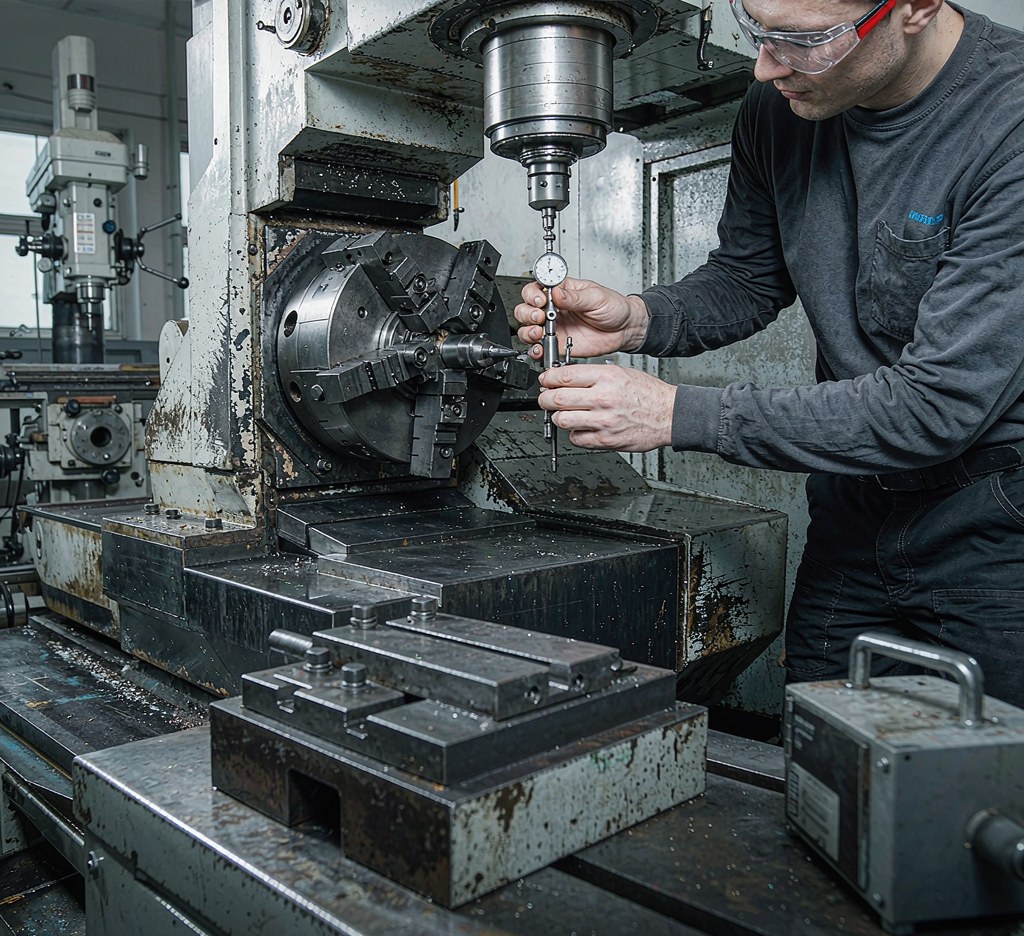
Mechanical inspection starts with the spindle. Run it through the full RPM range and listen for bearing noise, vibration, or thermal hotspots. A hot spindle housing after twenty minutes of running is a sign of bearing wear. A knocking noise under load is a sign of imminent failure. Use a test bar in the spindle and a dial indicator to measure runout at the nose and at 100 mm out on the bar. Runout over 0.01 mm at the nose or 0.03 mm at 100 mm indicates spindle bearing wear that will need to be addressed in the next service cycle.
Axis inspection covers the ways, ballscrews, and backlash on each axis. Jog X and Z through full travel at slow and rapid speeds. Listen for binding, stick slip, or dead zones. Run a backlash measurement by commanding a position, moving 5 mm away, and measuring the lost motion coming back. Industry tolerance on a used machine is typically 0.02 mm to 0.05 mm of backlash per axis. Higher numbers mean the machine has been compensating in the controller and the mechanical adjustment headroom is gone.
Turret inspection should cycle the turret through every station, multiple times, with tools of varying length. Watch for hesitation, indexing errors, or repeatability drift. Worn turret pockets cause tooling to sit high or at an angle, which translates into chatter and poor surface finish on parts. A turret that indexes cleanly through forty cycles with no alarms is a turret that will serve your shop reliably for the next several years.
Control inspection is a power on test with a simple G code program that exercises each axis, runs the spindle up, and performs a tool change. Watch for alarm logs on the screen, error messages during moves, and any hesitation during tool changes. Open the electrical cabinet, with permission, and look for dust, oil contamination, and any signs of overheating on drives or boards. A clean cabinet with organized wiring and intact conformal coatings on boards is a control that has lived in a clean shop. A dusty cabinet with rodent damage on the wiring is a control that has lived in a shop you do not want to emulate.
Supporting systems, including coolant, lubrication, hydraulics, and chip handling, are the fourth inspection bucket and the one most often skipped. Run the coolant pump and look at the flow at the nozzle. A clogged coolant system is a $2,000 to $5,000 service but a quick visual check catches it. Check the lubrication system pressure and look for dry ways. Inspect hydraulic hoses for leaks. These systems are not the machine itself, but if they fail in the first six months of ownership, the machine is down until they are fixed.
Documentation, including maintenance logs, parameter backups, manuals, electrical schematics, and parts lists, is the part most buyers skip and most regret skipping. A well documented used machine is materially more valuable than an undocumented machine that looks the same on the floor. The documentation is what lets your service techs troubleshoot the machine when it has a problem six months from now, and it is what lets the next owner service the machine when you eventually sell it.
Dive Deeper: Brand and Model Selection for Small Batch Work
Five brands dominate the small batch used CNC lathe market in North America and Europe: Haas, Mazak, DMG Mori, Doosan, and Okuma. Each has a specific strength, and each has a specific failure pattern to inspect for. The right brand for your shop depends on what you are machining, who your operators are, and how long you intend to keep the machine before the next upgrade.
Haas Automation is the volume leader in small CNC turning centers in North America. The Haas ST-10, ST-20, and ST-30 series are everywhere on the used market, supported by a deep parts network, and priced by the international foam at $25,000 to $55,000 for machines in good condition. Haas machines are easier to operate than the European or Japanese competitors, which is a real plus for shops without a dedicated CNC operator. The downside is that Haas machines from the 2010 to 2015 production window had some known issues with spindle bearings and tool turret indexing. Inspect these issues carefully on any Haas from that era.
Mazak is the premium choice for small batch work, particularly the Quick Turn, or QT, series. The QT-200 is the canonical small batch CNC lathe in many shops, with a 15 kW spindle, 4,000 RPM, an 8 inch chuck, and the Mazatrol conversational control. Used QT-200s in good condition trade at $60,000 to $110,000. Mazak machines hold their value better than Haas and are easier to resell when you upgrade. The labor pool for Mazak operators is narrower than for Fanuc or Haas, so factor that into your hiring plan.
DMG Mori is the precision leader, with the NLX 2500 being the canonical mid size precision lathe in the brand’s lineup. The premium is real, with used pricing at $80,000 to $120,000, but the resale value holds better than anything else in the used market. DMG Mori machines are also the most reliable in absolute terms, with documented mean time between failures that exceeds the brand average by 30% to 50% in industry surveys.
Doosan, now operating as DN Solutions in some markets, is the price performance leader in the small batch segment. The Lynx 220 series is well regarded for small batch work and trades at $50,000 to $80,000 used. Doosan machines are robust and well supported, though the dealer network is thinner in some regions than Haas or Mazak. For a shop outside a major metro area, this is a real consideration.
Okuma is the underrated premium choice. The LB3000 EX and the higher end LB4000 are exceptionally well built machines with the OSP-P300 control. Used pricing is $75,000 to $110,000 for an LB3000. Okuma machines from the 2010s era have a known way lube system issue that is well documented and fixable, but factor a $4,000 to $6,000 service into your evaluation when looking at machines from that production window.
| Brand | Typical Model | Used Price (3-7 yr) | Strength | Watch For |
|---|---|---|---|---|
| Haas | ST-20 | $25,000 – $55,000 | Parts availability, operator familiarity | Spindle bearing wear on 2010-2015 builds |
| Mazak | QT-200 | $60,000 – $110,000 | Conversational control, resale value | Mazatrol-only operators limit labor mobility |
| DMG Mori | NLX 2500 | $80,000 – $120,000 | Precision, build quality | Higher upfront price |
| Doosan | Lynx 220 | $50,000 – $80,000 | Price-performance ratio | Thinner dealer network in some regions |
| Okuma | LB3000 EX | $75,000 – $110,000 | Build quality, rigidity | Way-lube service on 2010s machines |
Dive Deeper: Total Cost of Ownership Beyond the Sticker Price
The purchase price on a used CNC lathe is the smallest line in a five year total cost of ownership spreadsheet. The five year TCO for a typical $75,000 used CNC lathe breaks down roughly as follows. Purchase price $75,000. Transport, rigging, and installation $9,000 to $19,000 depending on distance, foundation work, and electrical upgrades. Annual maintenance $4,000 to $7,000. Tooling and workholding initial $8,000 to $15,000. Spindle service reserve $10,000 to $20,000 over five years. Software, post processor, and integration $2,000 to $5,000. Floor space, power, and coolant utilities ongoing.
Add it up and a $75,000 used CNC lathe actually costs $130,000 to $170,000 over five years before counting operator labor and consumable tooling. Compare that to a new machine at $200,000 to $300,000 sticker plus $40,000 to $60,000 of the same soft costs. The used machine is still a 30% to 50% saving, but it is not the 50% to 70% saving the sticker price alone suggests. Make the comparison on total cost, not on sticker price, before you sign.
The items first time buyers routinely forget are these. A power supply upgrade if the machine was built for 480 V three phase and your building is 240 V, or vice versa. A new foundation or reinforced pad if your shop floor is not rated for the 6,000 to 12,000 pounds a CNC lathe brings to it. A step up or step down transformer if you are importing from overseas. A coolant tank and chip handling integration if the machine is going into a shop that does not already have centralized coolant. And operator training if the control is unfamiliar to your team.
Two financial scenarios to play out before signing. First, the all in landed cost of the used machine in your shop with everything ready to cut chips in week two. Second, the fully loaded cost of a comparable new machine with the same delivery timeline and the same commissioning window. The realistic comparison is rarely used versus new on sticker price alone. It is used versus new on total cost including commissioning, downtime risk, and the realistic probability of a major service event in the first three years of ownership.
Dive Deeper: Rigging, Installation, and Commissioning in Your Shop
The most expensive line item most used CNC lathe buyers forget is the rigging and installation. A 6,000 to 12,000 pound CNC lathe requires a professional rigger with an overhead crane or a heavy duty forklift, insurance for the move, foundation work to level the machine, electrical hookup including any phase conversion or transformer work, and a service technician to commission the machine once it is in place. None of these line items appear on the seller’s invoice, but every one of them appears on the total cost spreadsheet.
Typical rigging and installation costs for a used CNC lathe in North America. A 6,000 to 12,000 pound machine moved a single time within 500 miles runs $3,000 to $6,000 for rigging and trucking. Foundation leveling with epoxy grout adds $1,500 to $3,000. Electrical hookup with disconnect, transformer if needed, and machine grounding adds $2,000 to $5,000. Service technician commissioning including geometry check, backlash setting, spindle warm up, and test cut adds $2,500 to $5,000. The full commissioning package runs $9,000 to $19,000 on top of the purchase price.
The cheapest way to reduce this is to choose a machine located close to your shop. The second cheapest is to choose a machine whose power supply matches your shop’s existing electrical service. The third cheapest is to insist that the seller provides a video of the machine under power with the date and serial number visible, so you know what you are buying before it ships.
Commissioning in your shop should take a competent service tech two to three days. The tech should level the machine, set the spindle geometry, verify backlash on each axis, run a test part, and verify the control parameters against the manufacturer’s specification. If commissioning takes longer than three days, you bought the wrong machine. Walk away from any deal where the seller will not commit to a two to three day startup timeline with a written service report at the end.
Dive Deeper: Negotiating With Dealers, Brokers, and Direct Sellers
Used CNC lathes move through three sales channels: dealers, who take machines on consignment, refurbish them, and resell with a limited warranty; brokers, who connect buyers and sellers for a fee without taking title to the machine; and direct sellers, who are the original owner selling the machine themselves. Each channel has a different risk profile, a different price level, and a different negotiating posture.
Dealers offer the highest price and the most risk reduction. A dealer who has had the machine in their shop for thirty days has had time to inspect it, fix obvious issues, and put it under power. A thirty day limited warranty from a dealer covers the major mechanical components against defects. The price premium for buying from a dealer is typically 15% to 25% over a comparable private sale, but the inspection and warranty justify the premium for most first time buyers and for any shop that does not have a senior service tech on staff.
Brokers offer no warranty but access to a wider inventory. A broker may have access to 200 used machines for sale, including some that have not been formally put on the open market. The broker’s fee is typically 5% to 10% of the sale price, split between buyer and seller or paid entirely by the seller. The advantage of a broker is inventory access. The disadvantage is that the broker has typically done less inspection than a dealer, so the burden of inspection falls on you.
Direct sellers offer the lowest price and the most risk. A direct sale is typically as is, where is, with no warranty of any kind. A first time buyer should never buy direct without an independent inspection by a paid service technician who works for the buyer, not the seller. The inspection fee is $1,000 to $2,500 and pays for itself many times over by catching issues that would cost $10,000 to $30,000 to fix in the first year of ownership.
Negotiation tactics that work across all three sales channels. Ask for the machine’s full maintenance log before making an offer. Ask for a live video of the machine cutting, dated, with the serial number visible. Ask the seller to pay rigging if the machine is more than 500 miles away. Walk away once if the seller will not provide any of the above. The supply of used CNC lathes in 2026 is deep enough that any deal where the seller will not provide basic documentation is not the deal you want.
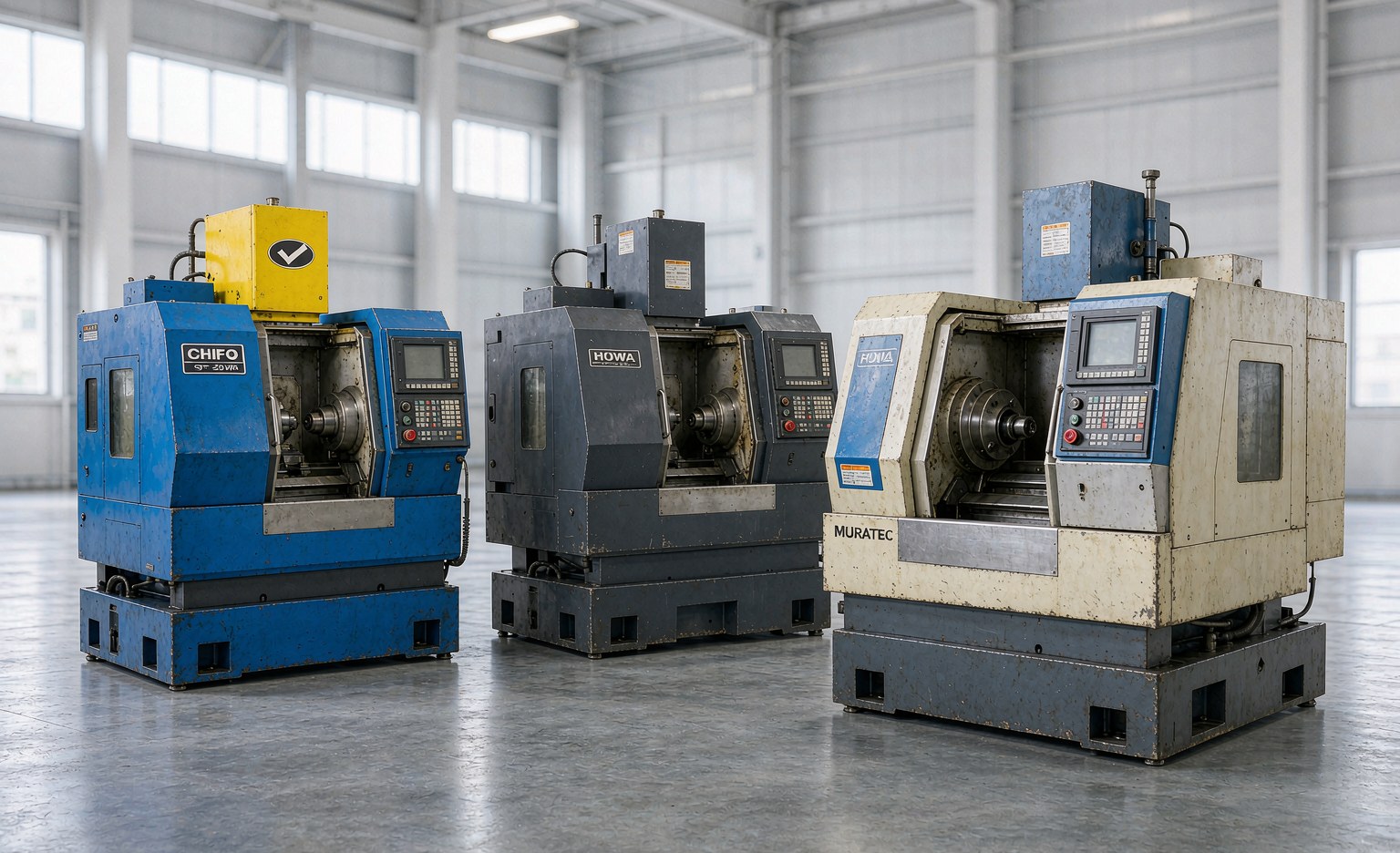
Comparison Table: Five Used CNC Lathes Worth Considering
| Model | Brand | Best For | Used Price | Operator Pool |
|---|---|---|---|---|
| Haas ST-20 | Haas | Entry-level small batch | $25,000 – $45,000 | Wide |
| Mazak QT-200 | Mazak | Mazatrol conversational work | $60,000 – $110,000 | Moderate |
| Doosan Lynx 220 | Doosan | Price-performance buyer | $50,000 – $80,000 | Moderate |
| DMG Mori NLX 2500 | DMG Mori | Precision work | $80,000 – $120,000 | Narrow |
| Okuma LB3000 EX | Okuma | Rigidity and resale value | $75,000 – $110,000 | Narrow |
Frequently Asked Questions
How many spindle hours is acceptable on a used CNC lathe?
Under 5,000 cutting hours is low usage and likely in good condition with documented maintenance. Five thousand to twelve thousand cutting hours is productive middle age and requires a careful inspection. Twelve thousand to twenty thousand cutting hours means budgeting for a spindle service in the first two to five years of new ownership. Over twenty thousand cutting hours and the machine is approaching end of rated spindle life, and you should plan a rebuild or replacement before purchase rather than after.
Should I buy a Fanuc controlled machine even if my shop runs Siemens?
Probably not. Switching an existing Siemens shop to a Fanuc controlled used lathe means retraining every operator who will touch the machine, building new post processors for your CAM system, and accepting one to two months of reduced productivity during the transition. The labor cost of the transition usually exceeds any savings from buying the Fanuc machine. Buy what your operators already run unless you have a strategic reason to add a new control platform to your shop.
What is the realistic total cost of ownership for a $50,000 used CNC lathe over five years?
Expect $90,000 to $115,000 all in. The breakdown typically runs purchase price $50,000, rigging and installation $8,000 to $15,000, initial tooling $8,000 to $15,000, annual maintenance $4,000 to $6,000 multiplied by five years, and a spindle service reserve of $10,000 to $15,000 over the period. Add operator labor and consumable tooling and the operational cost is $25,000 to $40,000 per year beyond the capital cost of the machine itself.
Should I buy from a dealer, broker, or direct seller?
For a first time buyer, buy from a dealer. The 15% to 25% price premium over a comparable private sale covers the dealer’s inspection, refurbishment, and thirty day limited warranty. For an experienced buyer with access to a trusted independent inspector, a direct sale can save $8,000 to $20,000 on the same machine. Brokers fall in the middle and are most useful when you are hunting for a specific machine that is not listed on the open market.
Is it worth buying a CNC lathe with live tooling and a sub spindle for small batch work?
Only if more than thirty percent of your work actually needs the live tooling or sub spindle capability. The premium for live tooling and sub spindle on a used machine is $25,000 to $50,000 over the equivalent 2 axis machine. If you are buying the capability to win new work that needs the features, the math works. If you are buying the capability on speculation, the math does not work and the machine will not pay back the premium.
How do I tell if a used CNC lathe has been crashed?
Look for telltale signs: dents on the turret or spindle housing, mismatched or freshly painted components that differ from the rest of the machine, hydraulic fluid leaks from the turret, axis alarms in the control error log, and uneven wear on the chuck jaws. Ask for the machine’s collision history directly. A seller who refuses to discuss the machine’s crash history is a seller to walk away from without further negotiation.
Conclusion
A used CNC lathe that is right for small batch production is a machine that lets your shop switch between thirty different jobs per month without losing productive time to setup, retraining, or repair. That machine is identified through physical inspection more than spreadsheet comparison, and it is bought through dealers more than through most other channels for first time buyers. The five things to remember are these. Match the machine specifications to your actual small batch work rather than to the most impressive spec sheet. Choose a control your team already runs. Inspect the spindle hours and the rest of the machine condition with the same rigor. Budget the rigging and installation costs before you sign the deal. And walk away from any machine whose seller will not provide documentation, a live cutting demo, or a thirty day warranty.
The used CNC lathe market in 2026 is deep enough that the right machine is available at the right price for any small batch buyer willing to do the inspection work. The deal that closes in week two with chips cutting is the deal that pays for itself in year two. The deal that closes because of sticker price alone is the deal that costs you a year of debugging before it makes a single good part.
Browse our current inventory of inspected used CNC lathes, request a quote on a specific model, or contact our specialists for a no cost consultation on which machine matches your small batch production mix.