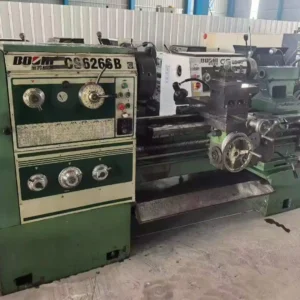
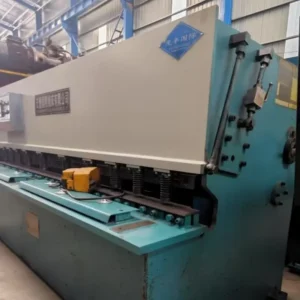
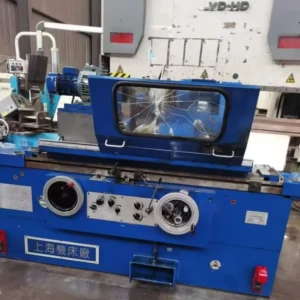
Buyers overpay for used press brakes and shear machines because they trust photos. A hidden frame crack or worn blade set erases the savings. A proper checklist is the fix.
A used press brake or shear machine is a good buy when the frame shows no cracks, the ram repeats within a few thousandths, hydraulics hold pressure, and blades or tooling still have life. Test with your own material before you pay.
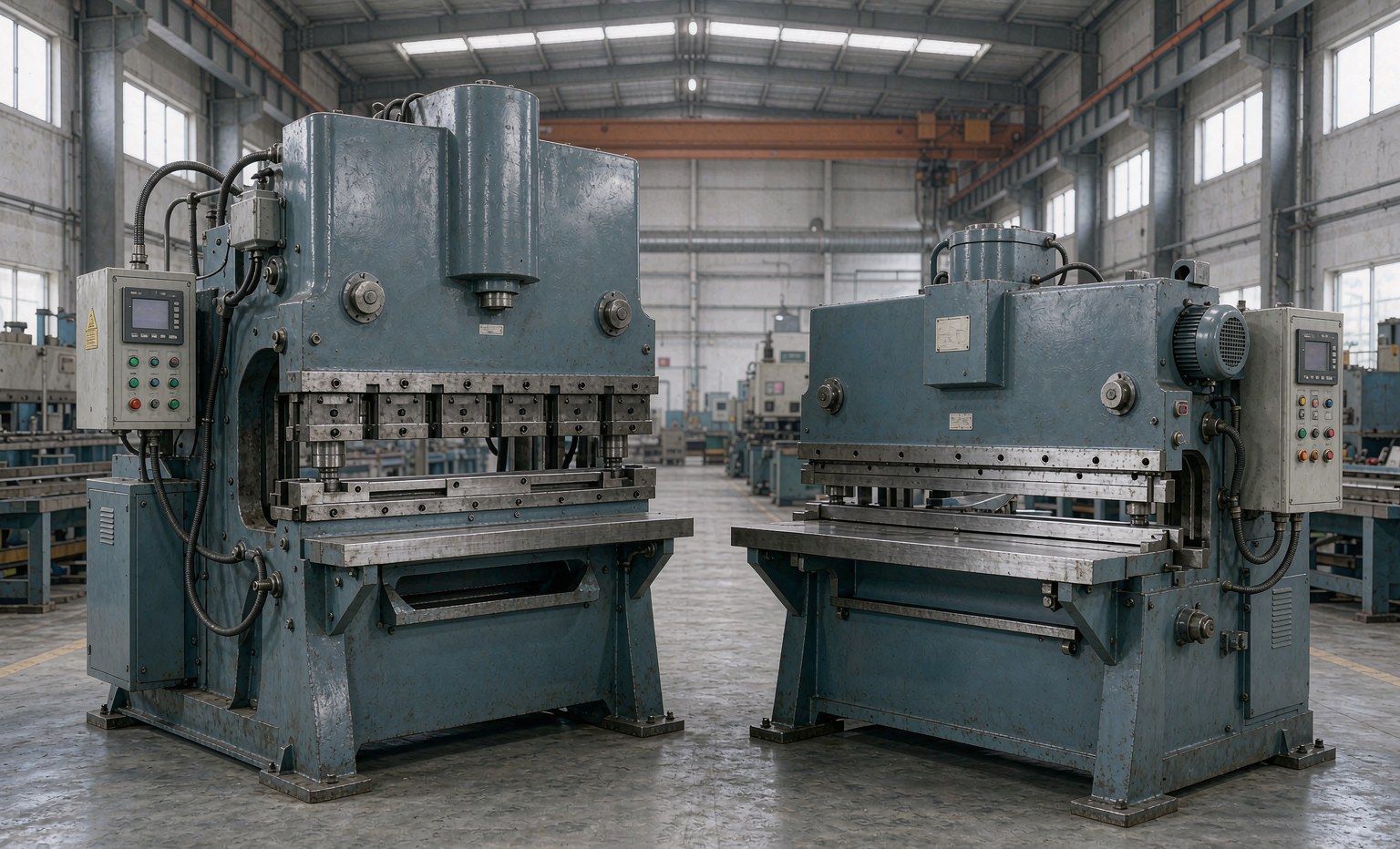
I have sold and inspected used press brakes and shear machines from our yard in Liaocheng for years, and I can tell you the pattern never changes. The buyer who asks the right questions on day one spends a fraction of what the buyer who ships first and inspects later. This guide is the checklist I wish every customer read before they wire a deposit. It covers what to inspect on a brake, how to judge a shear, and what prices and brands you should actually expect in 2026.
What Should You Inspect on a Used Press Brake?
A press brake can look perfect and still bend nothing straight. Ram wear, cylinder leaks, and dead controls hide under fresh paint. You need to know where to look first.
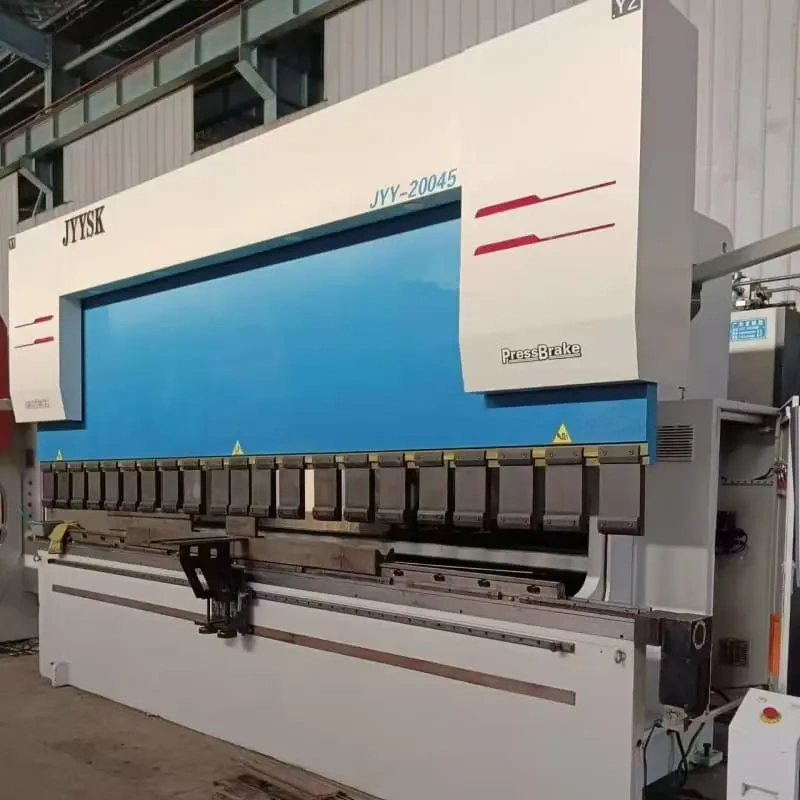
Start with the frame and ram. Walk the bed with a straightedge, measure ram parallelism with a dial indicator at three points, watch for cylinder rod leaks, and confirm the backgauge repeats within a couple of thousandths. Cracks at the side housings are deal-killers.
Frame, Ram, and Bed Come First
The frame is the one thing you cannot cheaply fix. Walk the full length of the bed with a straightedge. Look for wear or galling on the V-die rails. Then ask the seller to bend a test piece at full length and watch for visible deflection under load. Bring a dial indicator and measure ram parallelism at three points along the bed. More than a few thousandths of variation and you have a problem that will show up in every long part you bend.
Check the side housings closely. Cracks there are deal-killers. I once turned down a heavily discounted 175-ton brake because a hairline crack ran out from a corner housing weld. The seller called it “surface checking.” It was not. Also inspect the tool holders on both ram and bed. Many brakes carry segmented holders, and each one needs the same look for deformation and gouging. Note the tooling style too, because American, European, and New Standard systems do not mix without adapters.
Hydraulics: Where Most of the Money Is Lost
The hydraulic system tells you how the machine was really treated. Start at the cylinders. Look for oil weeping from the rod seals and scoring on the cylinder walls. A slow leak might only need a seal adjustment or repack. It might also need a full rebuild, and the difference is real money. Then check the oil itself. Milky oil means water contamination. Sludge or metal particles in the tank mean somebody skipped filter changes for years.
Run the machine and listen. Pump cavitation sounds like gravel in the lines. If the ram creeps down while holding at bottom dead center, the seals or valves need attention. Ask for the oil change history. A seller who can answer that question usually maintained the rest of the machine well. One that shrugs has usually skipped more than oil.
| Inspection point | How to check it | Red flag |
|---|---|---|
| Frame and side housings | Visual check at corners and welds | Any crack, any weld repair |
| Ram parallelism | Dial indicator at three bed points | More than a few thousandths variation |
| Bed surface | Straightedge along full length | Gouges, galling on V-die rails |
| Cylinder rods | Look for weeping and scoring | Oil trails, pitted or scored rods |
| Hydraulic oil | Check tank sight glass | Milky color, sludge, metal particles |
| Pressure holding | Hold ram at bottom dead center | Ram creeps down under load |
| Backgauge fingers | Visual and repeatability test | Bent fingers, sloppy lead screws |
Controls and Tooling Decide the Last Third of the Value
The control is where used press brakes become a minefield. Older Delem, Cybelec, and ESA controls are still serviceable, but replacement board availability varies wildly. Before you buy, write down the exact control model and search for parts. If you cannot find a single source for a replacement board, either walk away or budget for a retrofit. A retrofit is not the end of the world. We have seen modern Delem DA-58T and DA-66T controls fitted to machines from the 1980s, and those machines got another twenty years of life. Generic controls like Delem and Cybelec tend to keep parts and service support longer than OEM-specific control builds.
Power the machine up and test everything. Program a simple 90-degree bend. Check that the Y1, Y2, X, and R axes move smoothly. Open the electrical cabinet. Overheated contactors, loose wires, and unprofessional modifications tell you how the last owner treated the whole machine. A tidy cabinet is one of the most honest signals you will ever get.
Tooling matters more than buyers expect. A full set of precision tooling for a mid-size brake can be worth more than the machine itself. Some complete sets run well over ten thousand dollars. Get a written tooling list before you commit and verify every piece physically during inspection. Included tooling that is dented, cracked, or worn will cost you in scrapped parts. And do not forget safety. If the machine has no point-of-operation guarding, budget a light curtain or AKAS-style laser guard. That typically adds several thousand dollars depending on bed length.
How Do You Judge a Used Shearing Machine Before You Commit?
A shear is the machine everything else in the shop waits on. If it cuts slow, burred, or out of square, the whole building stalls. So judge the blade first, not the paint.
Judge a used shear by its blade condition, blade gap adjustment, cut squareness, and backgauge accuracy. Ask how many cutting edges remain and when the blades were last ground. A tired blade set means burred edges and a replacement bill before the machine earns anything.
Blades Tell the Whole Story
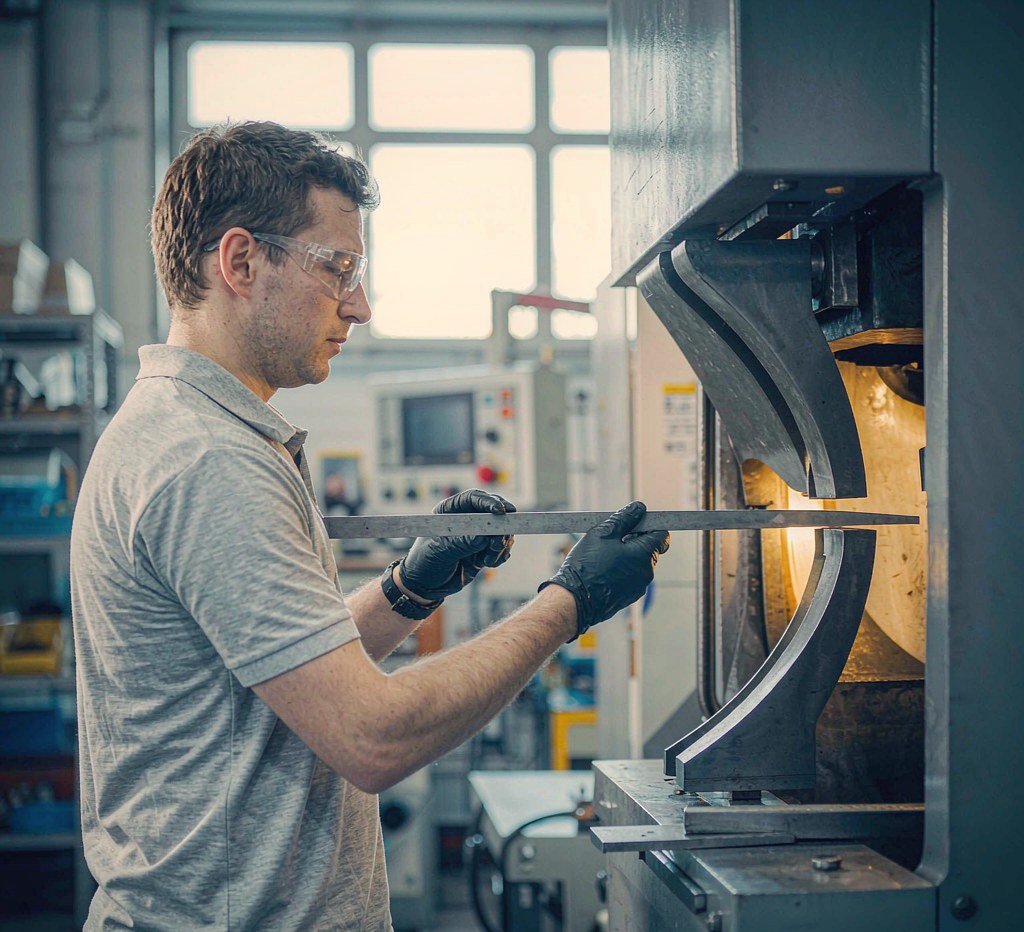
Blades are the single most important check on a used guillotine shear, and they are the one buyers forget most often. Blades are consumables. They are not cheap, and they can usually be reground only three to five times before they are undersized and must be replaced. A tired or badly set blade shows up as burr on the cut edge, roll-over, and a cut that is not square through the thickness. Ask when the blades were last ground, how many edges remain, and what a new set costs for that exact model. On some makes, that last number will make your eyes water.
Blade gap adjustment matters just as much. The gap should be set to roughly 5 to 10 percent of material thickness for a clean cut. Cutting 2 mm sheet and cutting 10 mm plate need very different clearances. If the machine has manual gap adjustment, somebody actually has to set it, and many shops never bother, which chews blades fast. Powered blade gap adjustment protects the machine from lazy settings. Also check blade material. Quality blades in tool steel such as 6CrW2Si hold an edge far longer, and a quality set of blades can handle tens of thousands of cuts between regrinds.
Swing Beam or Guillotine?
Two designs dominate the used market, and the difference decides what the machine will and will not do for you. Swing beam machines pivot the upper beam through an arc. They are simpler, well proven, and kinder on both purchase price and maintenance. Guillotine machines, also called variable rake machines, move the beam vertically and let you adjust the rake angle. That gives less distortion and twist on long thin strips and better precision on thick plate.
| Feature | Swing beam shear | Guillotine shear |
|---|---|---|
| Blade motion | Pivots through an arc | Vertical straight line |
| Precision | Fine for about plus or minus 0.5 mm work | Better, down to about plus or minus 0.2 mm |
| Thin strips under 50 mm | More twist on narrow strips | Adjustable rake prevents twist |
| Mechanism | Simpler, fewer parts | Strong guides, more rigid frame |
| Purchase and upkeep cost | Lower | Higher |
| Best for | Thin to medium sheet, general fabrication | Thick plate, precision work, varied materials |
For most general fabrication shops, a swing beam is the sensible machine. If you cut long narrow strips all day or you need tight tolerances on plate, look at a variable rake guillotine. One honest warning from our yard: if your work mixes aluminum, mild steel, and stainless, adjustable blade gap on a guillotine pays for itself quickly, because stainless cuts at meaningfully less capacity than the mild steel rating. A shear rated 6 mm in mild steel is not a 6 mm stainless machine.
Hold-Downs, Backgauge, and the Bits That Go Missing
A shear is only as accurate as its gauging. Check that the backgauge repeats accurately and moves smoothly through its full range. Worn feed screws or bent fingers create errors of tenths of a millimeter that translate straight into out-of-tolerance parts. Then look at the hold-downs. Worn or seized hold-down feet let the sheet lift during the cut, and the cut wanders. This is a common fault and an easy one to miss if you do not run a test cut.
Check the squaring arm and front support arms. These often go missing on used machines, and replacing them is annoying. Ask what accessories come with the machine before you agree on a price. Run a test cut on your own material if you can, and measure the edge for burr and squareness. Finally, inspect the hydraulics the same way you would on a press brake: leaks at hoses and seals, hose cracking and bulging, and oil condition in the tank. Hydraulic oil should be changed roughly every 2,000 operating hours, so a machine with no service record and dark oil has been coasting.
Which Brands and Prices Should You Expect on the Used Market?
Price lists online are all over the place. Some quotes are guesses, some are years old. Buyers need a realistic band before they negotiate, or every listing looks like a bargain.
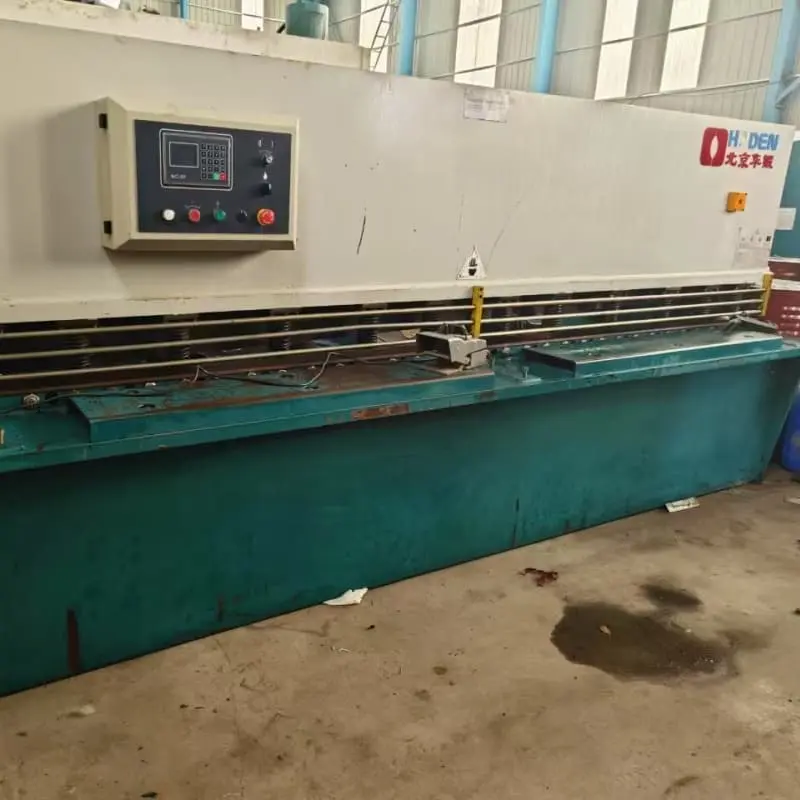
Used press brakes run from about 5,000 dollars for a small mechanical machine to over 250,000 dollars for a large CNC unit. Shears follow a similar spread. Brand, control type, tonnage, and included tooling drive the price more than age does.
What Used Machines Actually Cost
The table below sums up the price bands we see on current listings for both machine types. Treat them as negotiation anchors, not fixed numbers, because condition and tooling move each band.
| Machine type | Typical capacity | Used price range (USD) |
|---|---|---|
| Mechanical press brake | 50–200 tons | 5,000 – 15,000 |
| Manual hydraulic press brake (no CNC) | 50–150 tons | 10,000 – 25,000 |
| NC hydraulic press brake (basic control) | 100–250 tons | 15,000 – 45,000 |
| CNC hydraulic press brake (mid-range) | 100–300 tons | 30,000 – 90,000 |
| CNC hydraulic press brake (premium) | 100–300 tons | 50,000 – 175,000 |
| Large CNC hydraulic press brake | 400–1,000+ tons | 75,000 – 250,000+ |
| Electric or hybrid CNC press brake | 50–300 tons | 60,000 – 200,000+ |
| Used guillotine or swing beam shear | 4–13 mm, 2,000–4,300 mm cut | [Zora will replace] |
Brand reputation holds value. On brakes, names like Amada, Trumpf, Accurpress, Cincinnati, and LVD carry strong resale prices, and each has a distinct character. Amada RG and HFE series machines are known for build quality and reliable hydraulics. Trumpf electric TruBend models suit precision work. Accurpress machines are straightforward and easy to maintain. On shears, established makers such as Edwards, Morgan Rushworth, LVD, and Durma hold up on the used market, and recognized brands mean blades, parts, and support are far easier to find than on obscure machines nobody can service.
Why the Control Decides the Deal
Tonnage and bed length get all the attention, but the control often decides whether the deal is good. A brilliant machine with an obsolete control that nobody can fix is a liability. Modern touch screen controls position the backgauge automatically, store programs, and repeat settings exactly. On batch work, that is where the hours go back into the job. So before you negotiate on price, confirm the control still starts correctly, retains stored programs, and has a parts source. Also think about tonnage math. Bending mild steel needs roughly 1.2 tons per foot of bend length per 1/16 inch of thickness, so a 10-foot brake bending 1/4-inch mild steel needs about 150 tons. Stainless needs about 1.5 times more force, aluminum about 0.6 times. Always keep a 20 to 30 percent margin over your worst-case part.
Shipping and installation eat budgets too. A 12-foot, 175-ton brake weighs over 30,000 pounds, and rigging, freight, and offloading can add several thousand dollars depending on distance and port access. Get the freight quote in writing before you finalize any price.
Buy From Someone Who Answers After the Sale
This is where cross-border buying gets hard. A buyer of ours, Gulf Industrial Equipment LLC in Saudi Arabia, told us their previous suppliers sent machines that did not match the photos, with no testing videos and no inspection reports, and packing so weak that units arrived with transport damage. So we changed the process. Every machine now goes out with real photos and running test videos before order confirmation, we support SGS and other third-party inspection before shipment, and we pack in wooden cases with anti-rust protection. Their feedback was simple: this was the first used machinery supplier that provided real videos and inspection support before payment, and the machines arrived in good working order. That is the standard I would ask of any seller, including us. If a supplier cannot show you the machine running, treat the price as irrelevant.
Do not skip the paperwork either. Ask for the service log, the full operating manual with electrical and hydraulic diagrams, and any conformity documents your market requires. Missing documents turn minor repairs into long downtimes, because your technician is tracing wiring without a diagram. For more on checking any machine tool before purchase, see our used machinery inspection checklist. If you are weighing CNC lathes or milling machines next, our guide to buying used lathes covers the spindle and backlash tests. And when a deal looks too good to be true, read how we handle third-party inspection support before shipment.
Conclusion
Buy used press brakes and shear machines with a checklist, a test bend, and a written freight quote. Frames, hydraulics, blades, and controls decide the real cost. Ask for running videos and inspection before you pay.