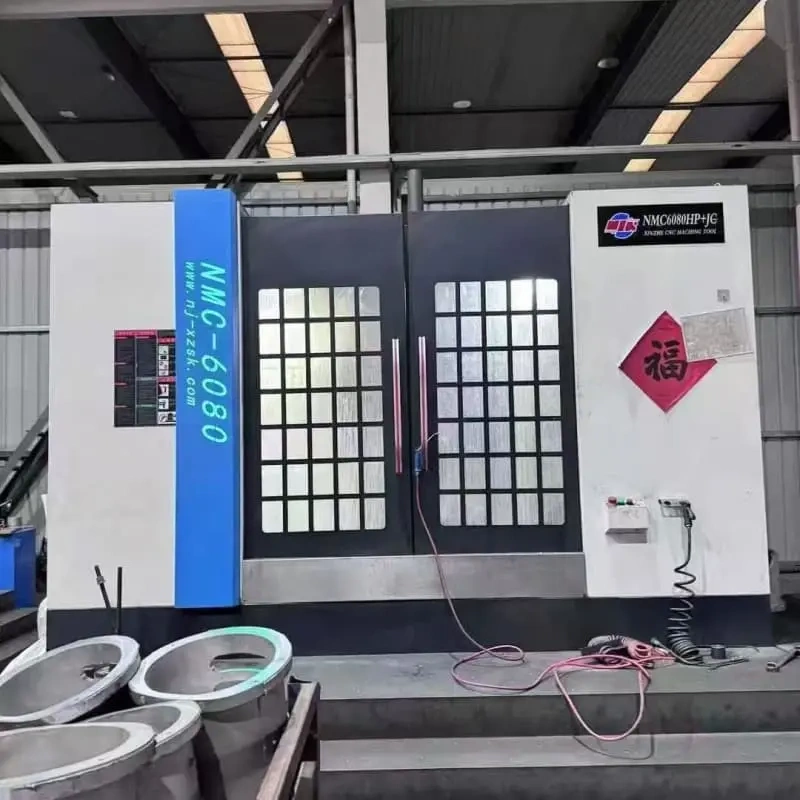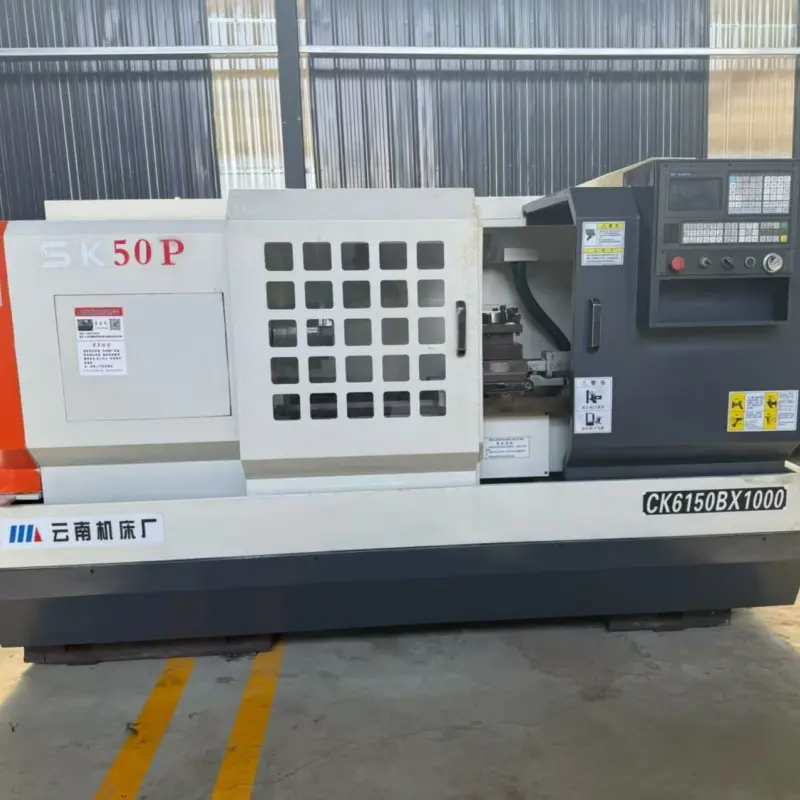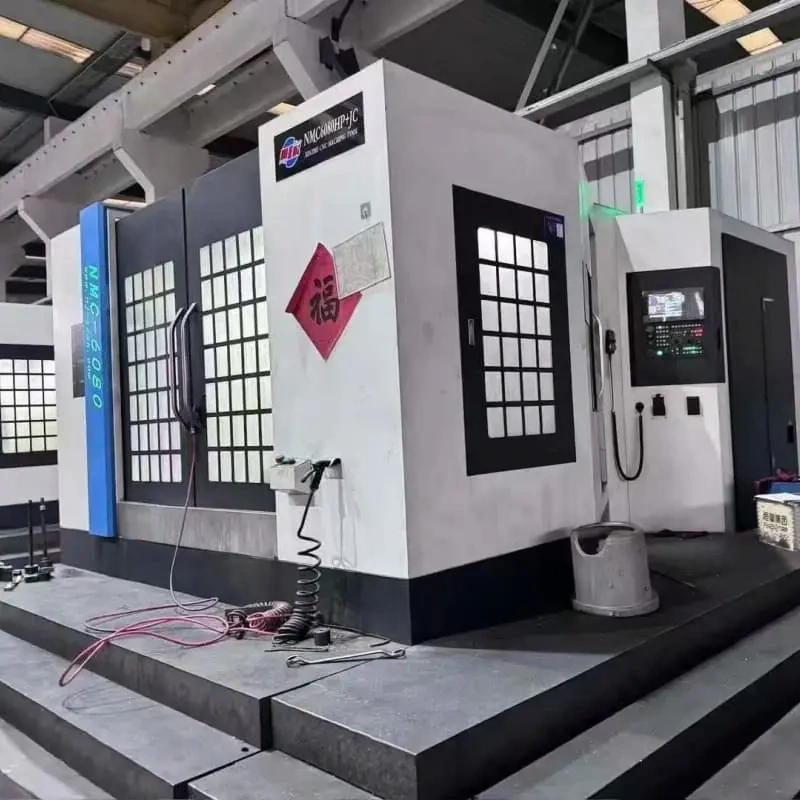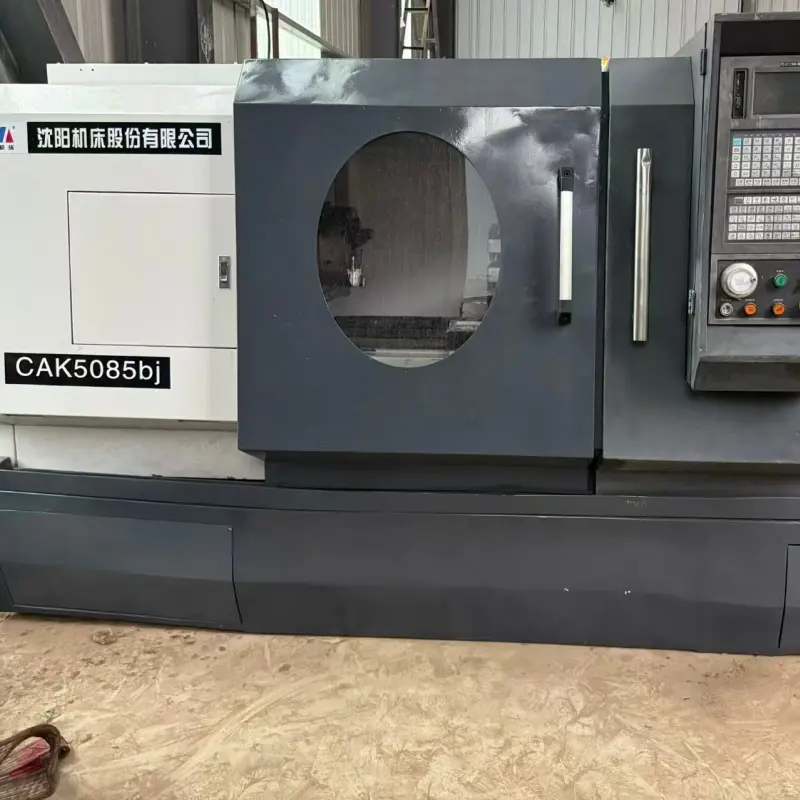
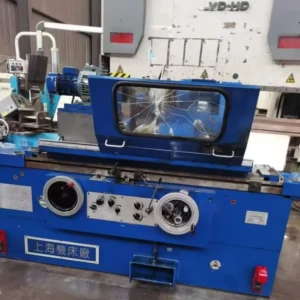
Buying used metalworking machinery from overseas can save a real 30 to 50 percent over a new unit, but the discount is meaningless if the machine arrives with a worn spindle, undocumented electrical quirks, or a bill for demurrage you never budgeted. I have seen both sides of that transaction in our yard in Liaocheng, and the gap between a smooth import and a painful one almost always comes down to whether the buyer did the same handful of checks before shipping.
A used metalworking machine is worth importing when the seller proves mechanical condition with documented measurements (runout, backlash, guideway wear), backs the sale with SGS or CCIC class pre-shipment inspection, structures payment around pre-shipment acceptance, and uses shipping terms — typically FOB or CIF — that match the buyer’s real risk appetite instead of pushing every risk onto the importer.
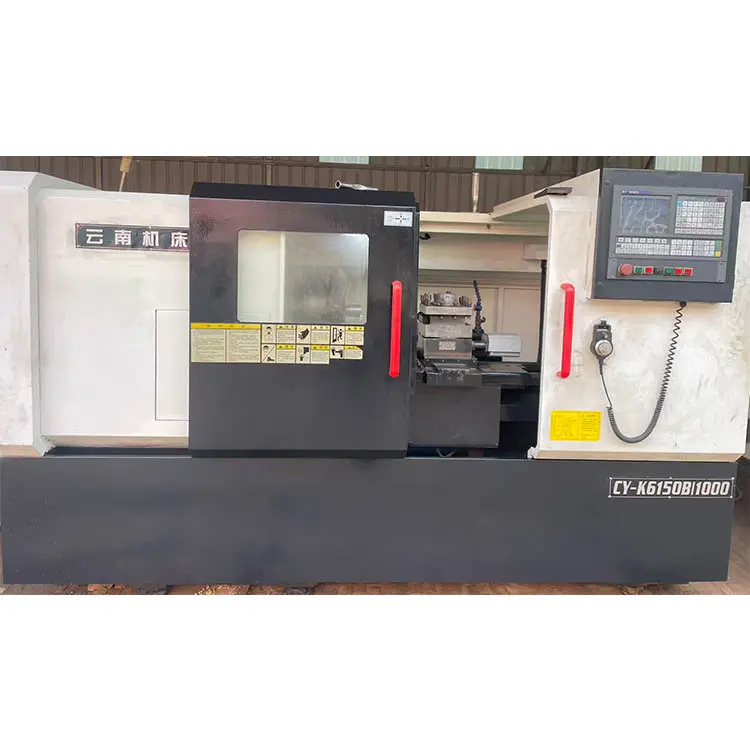
Most overseas buyers we work with start by searching for the lowest ex-works price on a CNC lathe, a milling machine, or a press brake. By the time they reach us, they have usually been burned at least once — a machine arrived looking nothing like the photos, the controller turned out to be a different version, or the seller stopped answering emails after the wire cleared. The four sections that follow lay out the real risks, the inspection routine we run on every machine we ship, the payment and shipping structure that protects buyers, and the post-arrival steps that close the remaining gap.
What Are the Real Risks When Importing Used Metalworking Machinery?
Overseas used-machinery purchases combine two independent risk layers: the risk that the machine itself is worn, misrepresented, or out-of-spec, and the cross-border risk that shipping, customs, currency, and enforcement make any post-purchase dispute slow and expensive. When both layers go wrong at once, the savings disappear and the importer is left with a heavy anchor on the shop floor. Most of the calls we take from new buyers fall into the same handful of failure modes, and they map almost one-to-one to the gaps below.
Mechanical Risk — Wear You Cannot See in a Photo
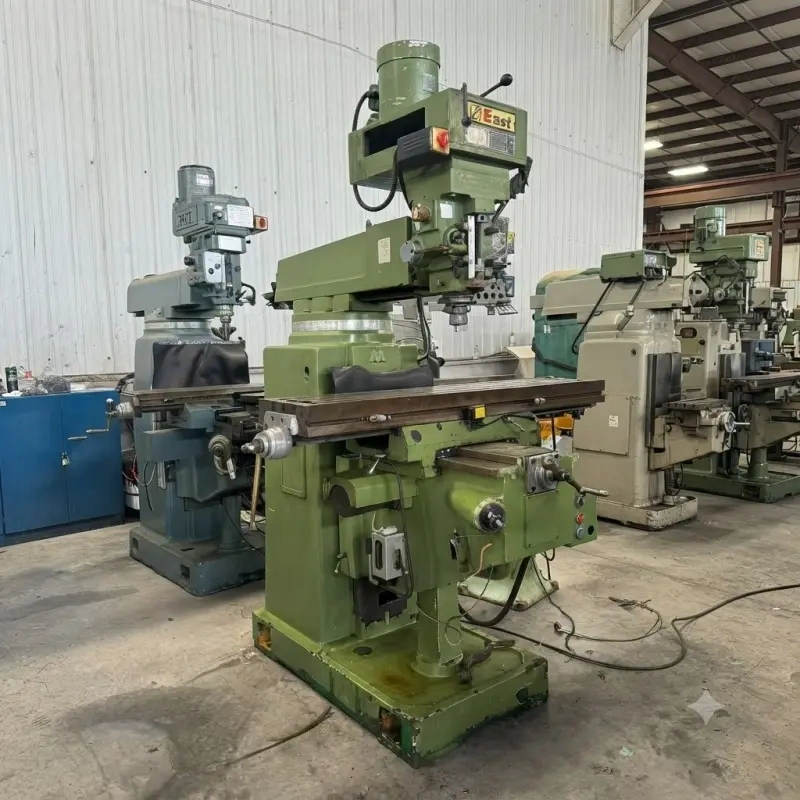
The first risk layer is mechanical. A used machine’s value depends on the condition of its spindle, guideways, ballscrews, hydraulics, and lubrication system, and most of those do not show up in any listing photo. Spindle radial runout above 0.03 mm on a precision lathe, or above 0.05 mm on a general-purpose lathe, is a clear sign of bearing wear that will shorten tool life. Guideway straightness deviation above 0.05 mm per metre usually means scraping or replacement is needed before the machine can hold tolerance. Ballscrew backlash above 0.02 mm on a CNC machine is the same kind of warning sign. None of these numbers are visible from a buyer’s office; they only show up when a qualified technician runs the machine and writes the numbers down.
Electrical and Control Risk
The second layer is electrical and control. A used Fanuc or Siemens controller can boot perfectly but still hide corrupted parameters, mismatched servo drive firmware, or a missing options board. Motors rated for 50 Hz run poorly on 60 Hz supplies; 380 V and 415 V systems need transformers in markets that expect 400 V three-phase. Grounding and EMC layouts that satisfied one country’s regulations can fail another country’s import inspection outright. These are the kinds of issues that turn into retrofits the buyer never budgeted for, and they are especially common on machines that were decommissioned quickly from a closing factory.
Documentation and Compliance Risk
The third layer is documentation. Used metalworking machinery is a regulated import category in most major markets. China requires a CCIC pre-shipment inspection certificate on high-risk categories (machine tools, injection moulding machines, printing presses, construction machinery), and the buyer’s country will almost certainly require its own pre-shipment inspection, language-localised manuals, and a CE or equivalent compliance mark for the destination. If the seller cannot produce a CCIC report, a clear nameplate, or a maintenance log, expect the consignment to be held at the port while the missing paperwork is sourced — and demurrage charges stack daily.
Financial and Logistical Risk
The fourth layer is financial and logistical. Buying on EXW terms pushes loading, inland transport, and export clearance onto the buyer; on FOB terms the seller handles loading and export clearance; on CIF terms the seller additionally books freight and insurance. EXW is the cheapest quote and the most expensive total landed cost in a disputed shipment, because every handling stage is an opportunity for damage or a paperwork failure that the buyer has no leverage to fix. Currency moves, Letter-of Credit fees, and customs duties can each add 5 to 15 percent above the listed ex-works price, and that buffer should be priced in from the start.
The takeaway from the four layers above is that no single mitigation covers them all. Mechanical risk needs inspection, electrical risk needs both inspection and a compatibility check, documentation risk needs sellers with mature export operations, and financial risk needs a payment structure that mirrors the inspection outcome. The next section walks through what that inspection actually has to cover.
How Do You Verify Mechanical and Electrical Condition Before Shipment?
A used metalworking machine is worth importing only when its current condition has been measured and recorded against a written acceptance threshold. Photos and short running videos are useful for first impressions, but they cannot tell you the runout on a spindle, the backlash in an axis, or the temperature drift in a bearing after an hour under load. Every machine we ship out of our yard in Liaocheng passes the same six-step routine before it is signed off for export, and the same routine is what I recommend any importer insist on — either by sending a third-party inspector or by asking the seller to share the written report.
Mechanical Inspection — Spindle, Guideways, and Drive Train
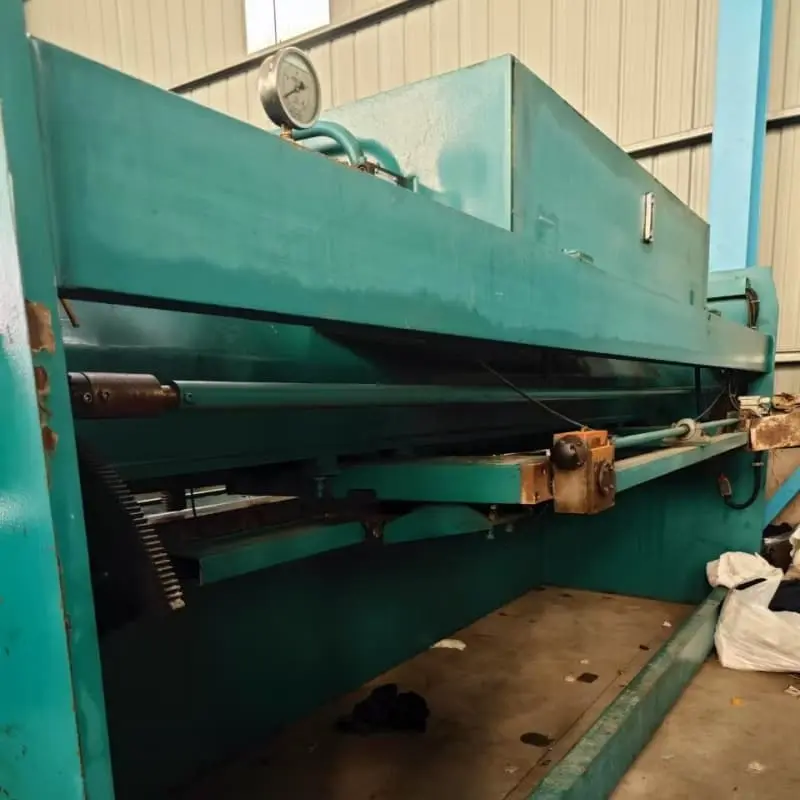
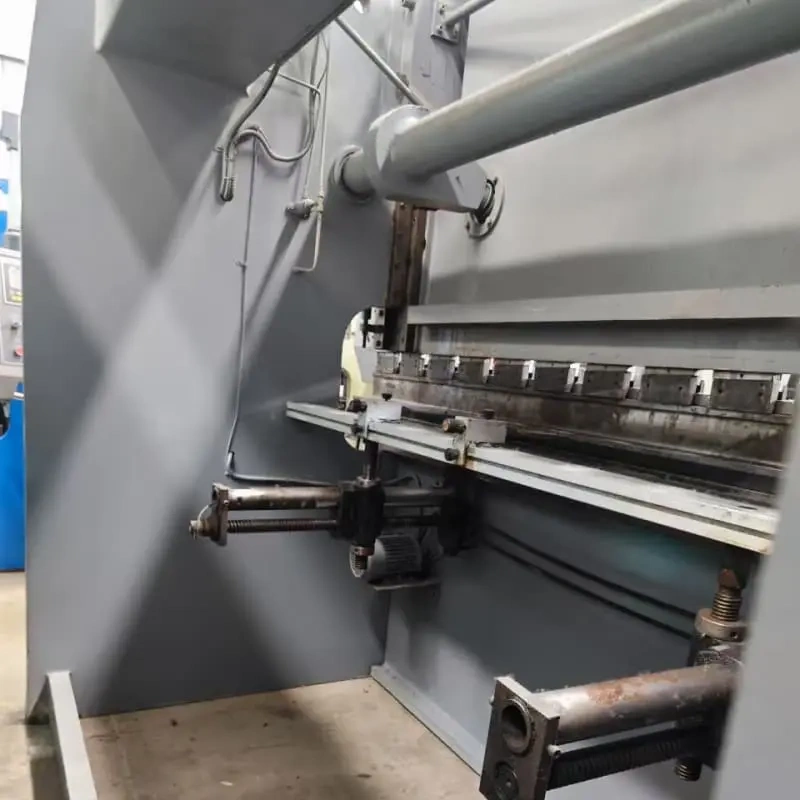
The first step is a cold mechanical check. With the machine unpowered, the technician rotates the spindle by hand and reads radial runout with a dial indicator. Numbers above 0.03 mm on a precision CNC lathe, or above 0.05 mm on a general-purpose lathe, are a sign of bearing wear and should be priced into the deal. The same technician then moves each axis by hand and reads backlash: anything above 0.02 mm on a CNC machine or above 0.05 mm on a conventional machine means the gibs or ballscrews need attention. Guideways are checked with a dial indicator or straightedge; deviations above 0.05 mm per metre indicate that scraping or replacement is on the horizon.
Electrical and Control Inspection
The second step is electrical. The cabinet is opened, the wiring is checked for frayed insulation or overheating marks, and the controller is powered up so the alarm history, parameter backup, and software version can be read. A Fanuc or Siemens controller with an unknown history should not be accepted without a parameter backup file in the buyer’s hands. Motors and servos are jogged through their full travel; any hesitation, alarm, or encoder error is a red flag. Voltage, frequency, and grounding compatibility with the buyer’s site are written into the report so the buyer can plan a transformer or panel rework before the machine arrives.
Functional and Cutting Tests
The third step is functional. The machine is powered through a full dry run — all axes at rapid traverse, the spindle at its rated RPM, the tool changer cycled through every station. Any binding, abnormal noise, or temperature rise above 60 °C after a 30-minute run is documented. Where the workshop layout allows, the inspector then runs a short cutting test on a workpiece that matches the buyer’s intended use (aluminium on a milling machine, mild steel on a lathe), and measures dimensional deviation against the machine’s published tolerance. A deviation above 0.1 mm on roughing cuts or above 0.02 mm on finishing cuts is the threshold we treat as a sign that refurbishment is needed.
Acceptance Thresholds and the Decision Rule
The fourth step is the formal acceptance table. Before any money moves, the buyer and seller should agree on the numeric thresholds below, and the contract should make payment conditional on every line passing. The numbers are not arbitrary — they are the level at which a used machine can still hold the tolerance the buyer’s shop needs without an immediate overhaul.
| Inspection Area | What Is Measured | Acceptable Threshold | Action If Exceeded |
|---|---|---|---|
| Spindle radial runout (CNC lathe) | Dial indicator on spindle nose | ≤ 0.03 mm | Budget for bearing replacement |
| Guideway straightness | Dial indicator along full travel | ≤ 0.05 mm / m | Budget for scraping or replacement |
| Ballscrew backlash (CNC) | Dial indicator on axis | ≤ 0.02 mm | Adjust gibs or replace ballscrew |
| Spindle temperature drift | Thermocouple after 30 min run | ≤ 60 °C | Inspect lubrication, bearing health |
| Test cut deviation (finishing) | Caliper or CMM on test part | ≤ 0.02 mm | Refuse shipment or renegotiate price |
| Test cut deviation (roughing) | Caliper on test part | ≤ 0.1 mm | Acceptable for non-precision work |
| Controller alarm history | Read from CNC | No active alarms, documented history | Demand parameter backup file |
| Electrical voltage compatibility | Nameplate vs buyer site | Match without transformer | Budget for transformer or panel rework |
Maintenance Records and Usage History
The fifth step is paperwork. The seller should be able to produce a maintenance log covering the last three to five years, ideally including records of major overhauls such as spindle bearing replacement or guideway scraping. A machine with 3,000 hours a year for ten years is meaningfully more worn than one with 1,000 hours a year for the same period, even if both nameplates show the same manufacturing year. The usage profile matters: a lathe that ran in a clean automotive shop has had a different life than a lathe that ran in a foundry or in a workshop near the coast. Both can be perfectly good, but the buyer should know which one they are paying for.
Third-Party Inspection — When You Cannot Be There Yourself
The sixth step is independent eyes. For shipments outside our direct reach we arrange third-party inspections through certified machinery inspectors, and the buyer should always insist that the inspector’s report is written in a structured format with photographs, measurements, and clearly graded findings — not a one-page courtesy letter. The report is the buyer’s protection if a dispute arises after payment, and it is also the document the buyer’s bank or leasing company will usually require before releasing finance. We never ship a machine without a written report on file, and we recommend buyers walk away from any seller who refuses to provide one.
The inspection routine above is the mechanical and electrical half of due diligence. The other half — payment structure, shipping terms, and post-arrival contingency — is what turns a successful inspection into a successful import.
How Should You Structure Payment and Shipping to Protect Yourself?
A well-inspected machine can still become a bad import if the payment terms push all the risk onto the buyer or if the shipping terms leave the consignment under-insured. The cheapest quote is rarely the cheapest landed cost, and the buyers who come back to us for repeat orders are almost always the ones who paid a little more per machine for a structure that protected them when something went sideways. Three levers matter: payment structure, Incoterm, and shipping documentation.
Payment Structure That Mirrors the Inspection Outcome
Never transfer 100 percent of the purchase price before inspection is complete. The two structures we see most often are partial deposit plus balance after pre-shipment acceptance, and Letter of Credit (LC) for higher-value transactions. A 30 percent deposit on order signing is reasonable to lock the machine, the remaining 70 percent is released against the inspection report and a pre-shipment video. For machines above a mid-five-figure USD value, an LC at sight against shipping documents adds a second layer of protection — the bank releases payment only when the bill of lading, commercial invoice, packing list, and CCIC inspection certificate all match. Escrow services work for smaller transactions but add a fee, and milestone-based payments (deposit, mid-production video, pre-shipment inspection, on-board video) are common on complex orders.
Incoterms — Choose the One That Matches Your Risk Appetite
The Incoterm chosen on the purchase contract decides who pays for and owns each leg of the journey, and that decision cascades into the buyer’s exposure if something goes wrong.
| Incoterm | Seller Responsibility | Buyer Responsibility | Best Fit For |
|---|---|---|---|
| EXW (Ex Works) | Make machine available at seller’s premises | Loading, inland transport, export clearance, ocean freight, insurance, import clearance | Experienced importers with their own logistics team in China |
| FOB (Free On Board) | Loading onto vessel at port of shipment | Ocean freight, insurance, import clearance | Buyers who want seller to handle export paperwork but want to choose their own freight forwarder |
| CIF (Cost, Insurance, Freight) | Ocean freight and insurance to destination port | Import clearance, inland transport to final site | First-time importers who want one quote that covers most of the journey |
| DAP (Delivered At Place) | All transport and insurance to buyer’s named place | Import clearance and duties | Buyers who want door-to-door service from a trusted seller |
EXW looks cheapest on paper and is the most expensive in a disputed shipment. If the buyer has no team on the ground in China, FOB or CIF moves the loading and export-clearance burden onto the seller, and that single shift removes a category of paperwork failures. CIF also bundles insurance, which means the buyer has a clean claim path if the machine is damaged in transit.
Shipping Documentation and Pre-Shipment Evidence
For every cross-border shipment, the seller should provide the bill of lading, commercial invoice, packing list, CCIC pre-shipment inspection certificate (where applicable), and a nameplate photograph that matches the invoice. The buyer should request a pre-shipment video of the machine running under power inside its export crate, and a set of photographs showing the crate sealed and the container number painted on the outside. Those five minutes of documentation have settled more disputes than any contract clause, because they convert a “the machine was already broken when it got here” argument into either an obvious shipping-damage claim or a clear pre-shipment condition record.
Insurance and Currency Hedging
Ocean cargo insurance is cheap relative to the value of the machine — typically 0.3 to 0.5 percent of the cargo value — and should be treated as non-optional. For higher-value orders, a separate inland-transit leg from the buyer’s port to the final site also needs cover. On the currency side, locking the exchange rate at the time the LC is issued removes the surprise of a 5 to 10 percent move in either direction between order and arrival, and for buyers paying in USD from a non-USD revenue base that hedge alone often justifies the LC fee.
The payment and shipping structure above protects the buyer’s money and the machine itself. The final layer of protection is what happens after the machine has cleared customs and is being commissioned in the buyer’s workshop.
What Post-Arrival Steps Close the Remaining Risk Gap?
Even a machine that passed inspection and arrived on the right shipping terms still has a 15 to 30 percent contingency budget that the buyer should expect to spend in the first three to six months. That budget covers the inevitable commissioning adjustments — bearing replacements, gear oil changes, electrical rewiring, hydraulic seal refreshes, and any safety upgrades the destination country’s regulations require. Buyers who plan for it from the start treat those costs as expected, not as surprises, and they keep their production schedule on track.
First 30 Days — Commissioning and Baseline Measurement
When the machine arrives, the buyer’s team should run a fresh set of measurements on the same dial indicator and straightedge that the pre-shipment inspector used. Spindle runout, guideway straightness, backlash, and a test cut on a known workpiece should all be repeated and compared against the inspection report. If the numbers match, the machine has survived transit cleanly. If they have shifted, the buyer has a documented basis for a shipping-damage or warranty claim. The commissioning phase is also when the buyer’s electricians wire the machine into the local supply, set the controller parameters to the buyer’s preferred defaults, and run the machine empty for the first eight hours to bed in the lubrication system.
First 90 Days — Wear-Part Refresh and Operator Training
The first three months are the right window for a planned refresh of wear parts. Hydraulics get a fluid change and seal inspection; the way covers come off so the slides can be wiped down and re-greased; the ATC grippers and chuck are checked; the lubrication system is flushed. None of this is a sign of a bad machine — it is the same commissioning routine a new machine would receive from its OEM. Operator training matters as much as the mechanical refresh. A used machine with a controller the operators have never seen before will lose hours to alarms and parameter mistakes, and a structured two-to-five-day training pass pays for itself the first time a production schedule has to be recovered.
First Six Months — Spare Parts Inventory and Documentation
The half-year mark is when the buyer should have a small spare-parts inventory in place: a spare set of way-cover wipers, a spare ATC gripper, a spare set of filters, a spare encoder battery, and a small stock of the most common hydraulic seals. For machines on obsolete controls, a backup of the parameter file and a copy of the ladder logic should be stored both on the controller and on a USB drive in the workshop manager’s drawer. We have seen buyers avoid week-long downtime simply because they kept a current parameter backup on a labelled USB stick from day one.
Documentation Trail for the Buyer’s Own Records
Every inspection, every maintenance task, every alarm and every parameter change should be logged from day one. The maintenance log does not have to be elaborate — a spreadsheet with date, task, technician, and parts used is enough — but it must be consistent. When the time comes to resell or trade in the machine, that log is worth 10 to 20 percent of the machine’s value because the next buyer can see exactly what was done.
When the Risk Equation Still Tilts Negative
The honest answer to “should I import this used machine at all” is that some deals should be walked away from. If the seller refuses pre-shipment inspection, if the inspection report comes back with more than two red flags in the table above, if the seller insists on 100 percent payment upfront, or if the Incoterm is EXW and the buyer has no team in China, the savings do not justify the exposure. A 30 percent discount on a USD 80,000 machine looks attractive; the same 30 percent discount on a machine that arrives with a bad spindle and no warranty is a USD 24,000 write-off that most small shops cannot absorb. Walking away is a legitimate outcome of due diligence, and it is the one outcome that costs nothing.
The same four layers of risk — mechanical, electrical, documentation, financial — and the same four mitigations — independent inspection, payment structure, shipping terms, post-arrival commissioning — apply whether the buyer is bringing in a single CNC lathe for a job shop or a container of milling machines for a regional distributor. The order of operations is always the same: confirm the machine’s condition with written measurements, structure payment around those measurements, choose an Incoterm that matches the buyer’s logistics capability, and budget a realistic contingency for the first six months. A used metalworking machine imported with that discipline delivers the savings that make overseas sourcing worth the effort. A used metalworking machine imported without that discipline is one of the most expensive ways to add capacity to a workshop.